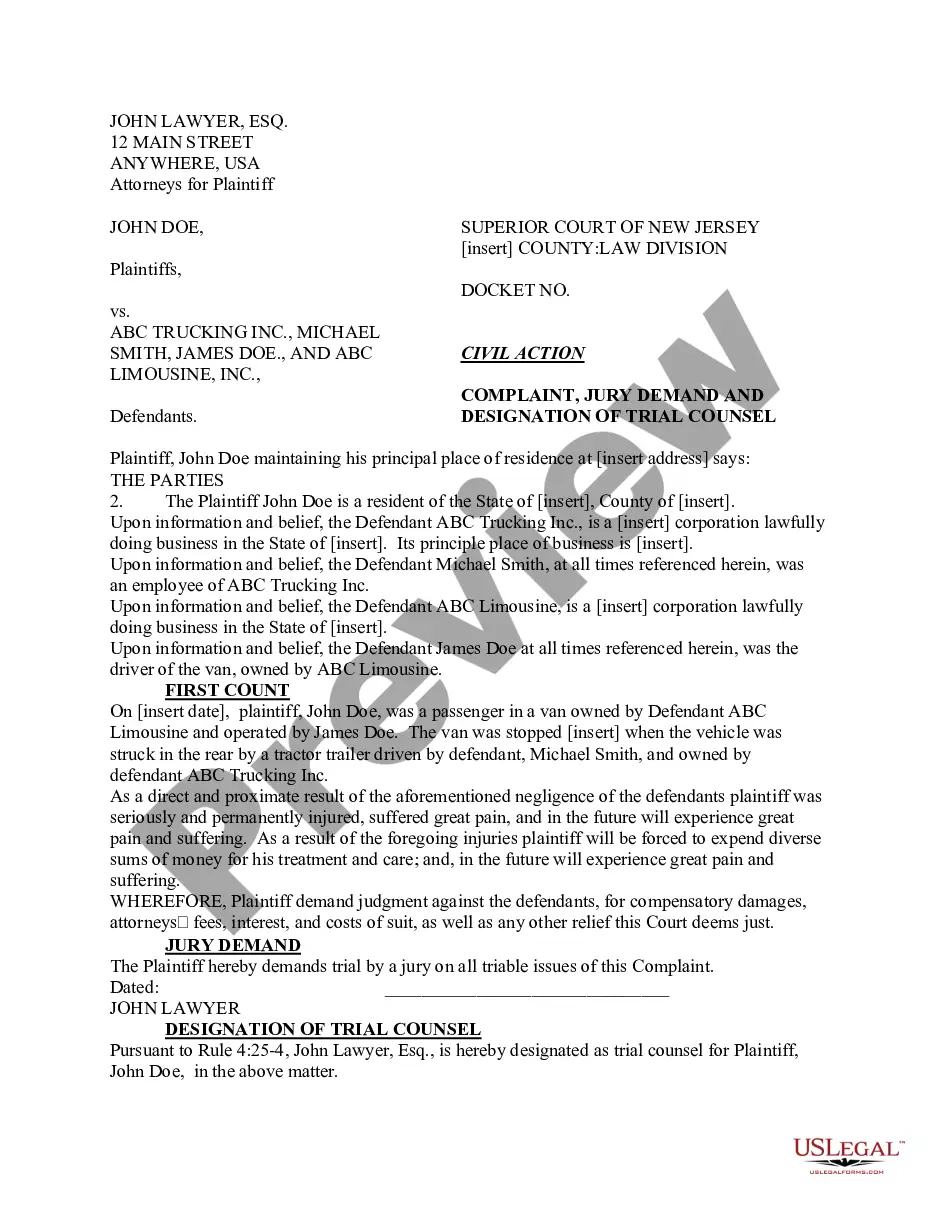
Miscellaneous Issues - Alter Ego - Subsidiary as Alter Ego of Parent Corporation
About this form
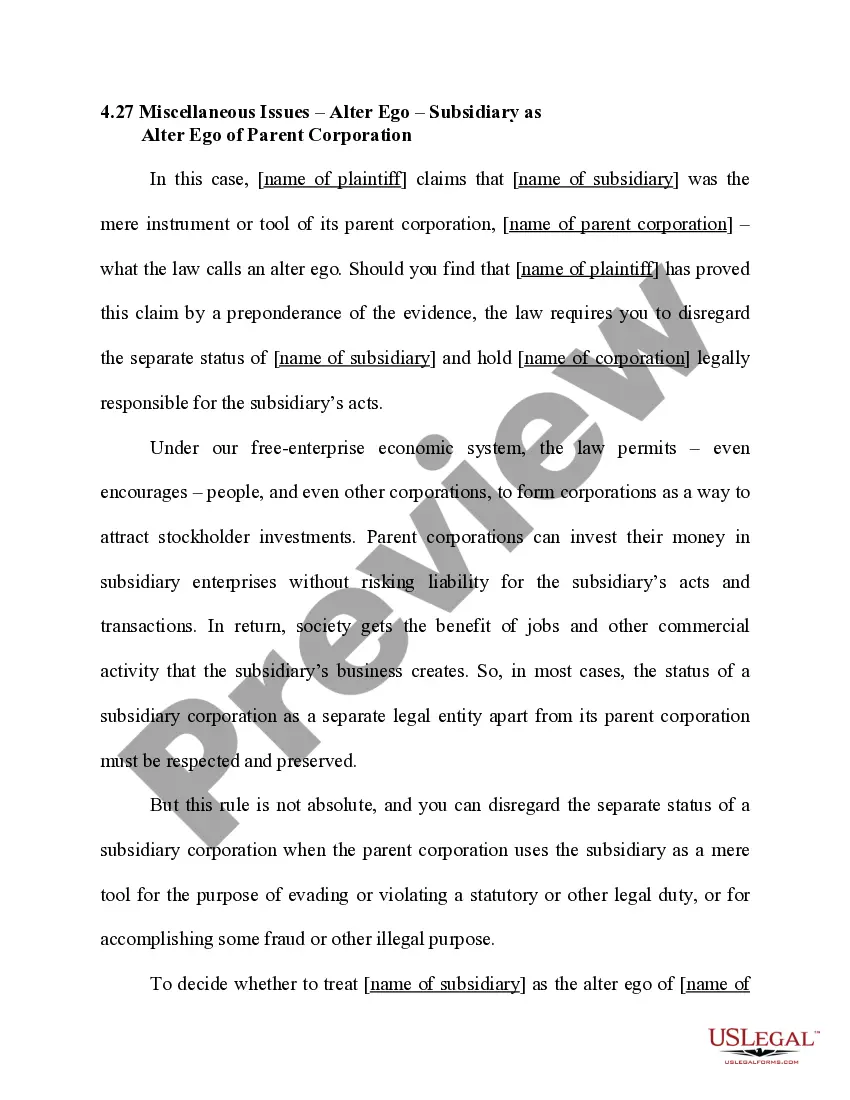
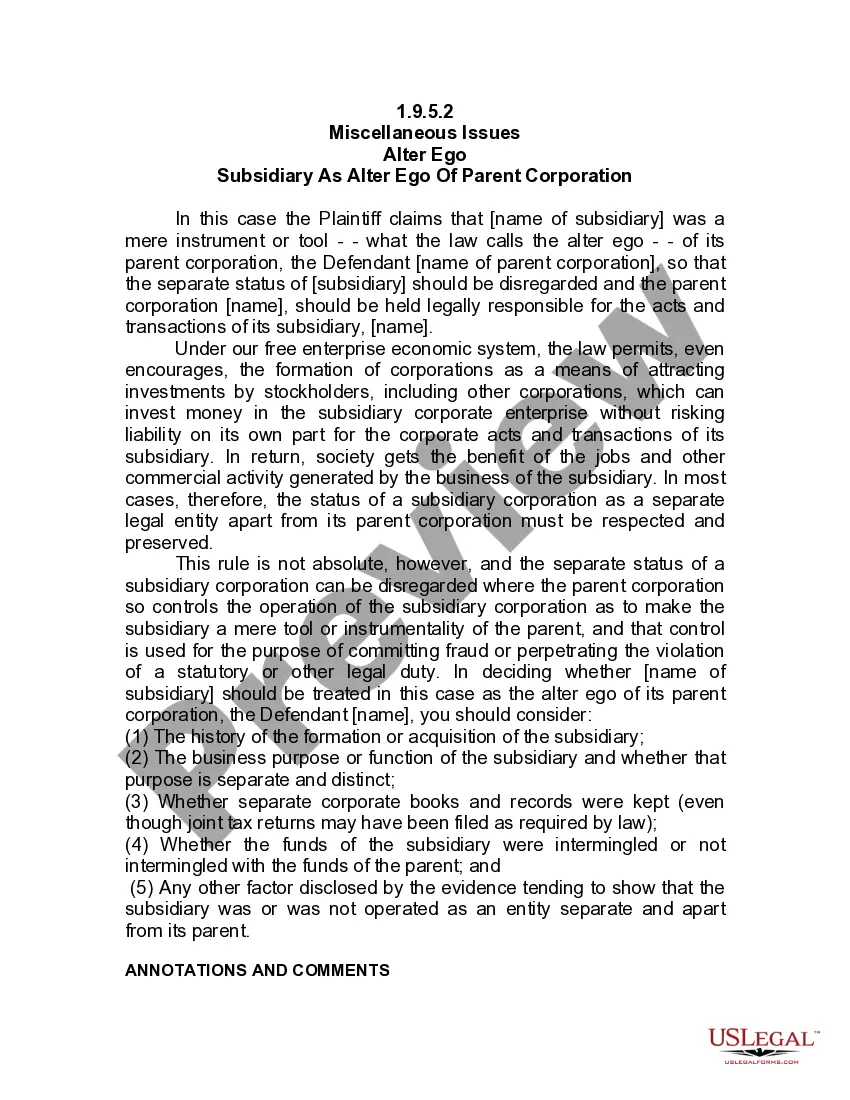
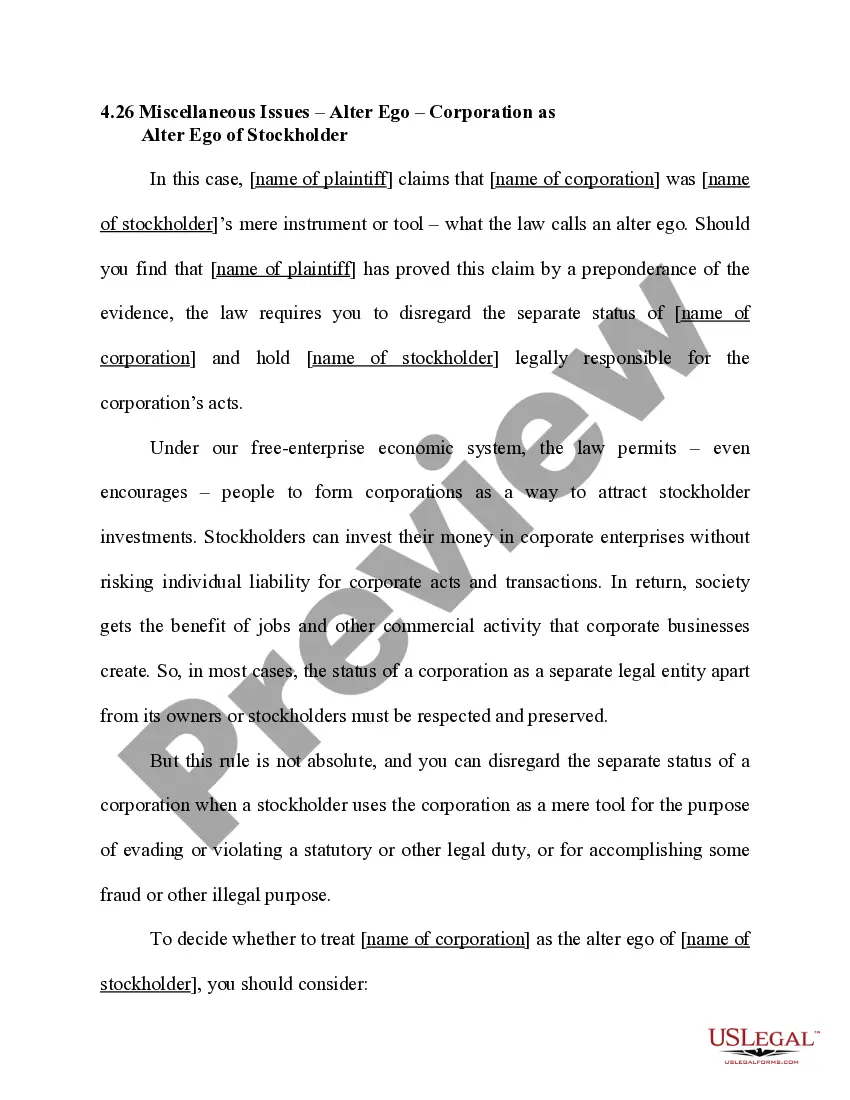
This form deals with issues related to the legal concept of "alter ego," specifically addressing situations where a subsidiary is considered the alter ego of its parent corporation. It outlines the criteria used to determine if the separate legal status of a subsidiary should be disregarded, holding the parent corporation legally responsible for the subsidiary's actions. This form is different from standard corporate formation documents, focusing specifically on liability in legal claims involving parent and subsidiary relationships.
Main sections of this form
- Background on the alter ego doctrine and its relevance to corporate law.
- Criteria for establishing liability of the parent corporation for the actions of its subsidiary.
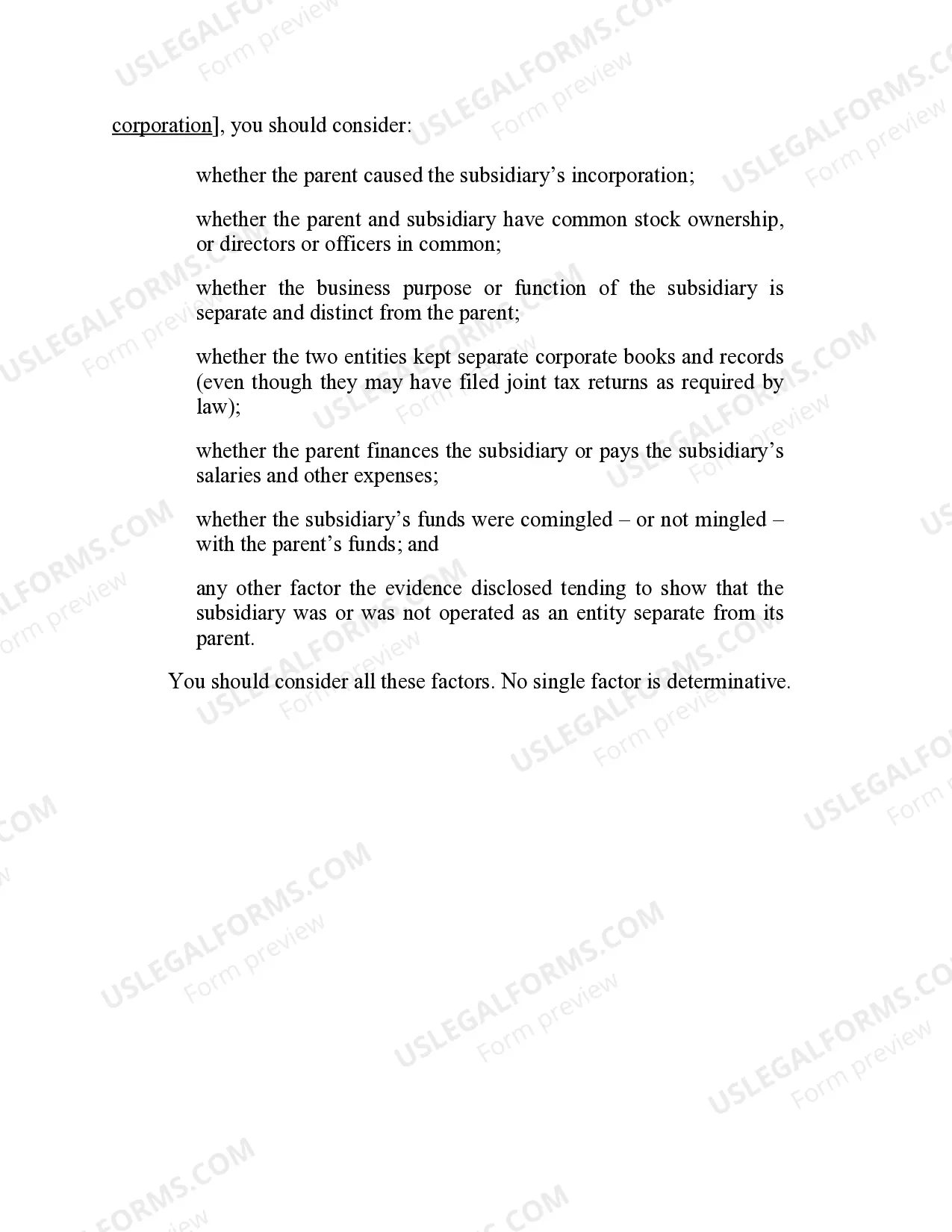
- Considerations regarding the incorporation and operational independence of the subsidiary.
- Factors to evaluate, including ownership structure, financial practices, and record-keeping.
- Guidance on how to analyze evidence presented in legal disputes.
When to use this form
This form is useful in legal cases where a plaintiff alleges that a subsidiary corporation operates solely as a tool of its parent company. It may be utilized during trial proceedings to guide jurors in understanding the criteria for imposing liability on a parent corporation based on the subsidiary's actions, particularly in cases involving claimed fraud or statutory violations.
Who should use this form
Eligible users of this form include:
- Attorneys representing plaintiffs in corporate liability cases.
- Corporations involved in legal disputes regarding the actions of their subsidiaries.
- Corporate legal departments seeking to understand the implications of the alter ego doctrine.
- Jurors or judges needing guidance on the legal concepts during trial proceedings.
Steps to complete this form
- Identify the plaintiff and the parent and subsidiary corporations involved in the case.
- Examine the evidence regarding the formation and operation of the subsidiary.
- Consider all relevant factors including ownership, common officers, and financial dependencies.
- Determine if the subsidiary was operated as a separate legal entity from the parent.
- Prepare to discuss each factor with supporting evidence during legal proceedings.
Notarization guidance
Notarization is generally not required for this form. However, certain states or situations might demand it. You can complete notarization online through US Legal Forms, powered by Notarize, using a verified video call available anytime.
Get your form ready online
Our built-in tools help you complete, sign, share, and store your documents in one place.
Make edits, fill in missing information, and update formatting in US Legal Forms—just like you would in MS Word.
Download a copy, print it, send it by email, or mail it via USPS—whatever works best for your next step.
Sign and collect signatures with our SignNow integration. Send to multiple recipients, set reminders, and more. Go Premium to unlock E-Sign.
If this form requires notarization, complete it online through a secure video call—no need to meet a notary in person or wait for an appointment.
We protect your documents and personal data by following strict security and privacy standards.

Make edits, fill in missing information, and update formatting in US Legal Forms—just like you would in MS Word.

Download a copy, print it, send it by email, or mail it via USPS—whatever works best for your next step.

Sign and collect signatures with our SignNow integration. Send to multiple recipients, set reminders, and more. Go Premium to unlock E-Sign.

If this form requires notarization, complete it online through a secure video call—no need to meet a notary in person or wait for an appointment.

We protect your documents and personal data by following strict security and privacy standards.
Typical mistakes to avoid
- Failing to provide sufficient evidence demonstrating the parent-subsidiary relationship.
- Overlooking the importance of maintaining separate corporate records.
- Not fully understanding the impact of financial dependencies between parent and subsidiary.
- Neglecting to consider all factors rather than just one or two in deliberations.
Benefits of using this form online
- Convenience of accessing the form from anywhere with an internet connection.
- Editable templates that allow for customization to fit specific cases.
- Reliable information drafted by licensed attorneys, ensuring legal compliance.
- Quick downloads that save time compared to traditional methods.
Legal use & context
- The alter ego doctrine is widely accepted in corporate law but is highly fact-specific.
- Understanding when to apply the alter ego theory is critical for legal practitioners.
- Successful claims often hinge on demonstrating a lack of separation between the parent and subsidiary.
Looking for another form?
Form popularity
FAQ
Determining the Alter Ego It should be noted that an entity can be the alter ego of another entity, in cases in which Company A owns and operated Company B. All of the following factors have been used to determine if the charge of alter ego applies: Gross under-capitalization. Failure to observe corporate formalities.
Determining the Alter Ego It should be noted that an entity can be the alter ego of another entity, in cases in which Company A owns and operated Company B. All of the following factors have been used to determine if the charge of alter ego applies: Gross under-capitalization. Failure to observe corporate formalities.
The corporate veil can be pierced if the parent company dominates the subsidiary to the point that the subsidiary shows no separate corporate interests of its own, and the plaintiff demonstrates that an injustice or wrong will likely result to the plaintiff if the corporate veil is not pierced.
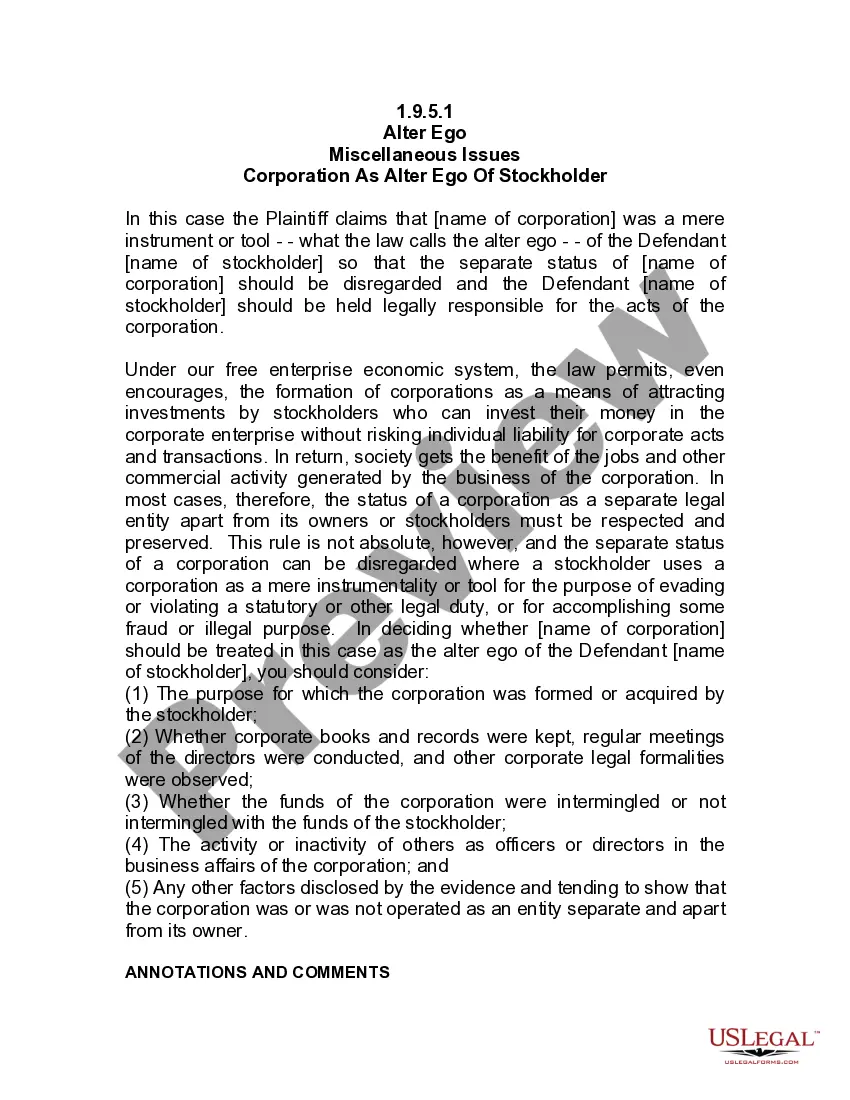
Alter ego is a legal doctrine whereby the court finds that a corporation lacks a separate identity from an individual or corporate shareholder. The court applies this rule to ignore the corporate status of a group of stockholders, officers, and directors of a corporation with respect to their limited liability.
Treating corporate assets by an individual as if they were his own. Failing to maintain minutes and adequate corporate records. Treating the corporation as a mere shell for the business of an individual or other corporation. Concealing the identity of responsible ownership, or concealing personal business activities.
A parent corporation is the alter ego of a subsidiary corporation if it controls and directs its activities so that it will have limited liability for its wrongful acts.
Alter ego is a legal doctrine whereby the court finds that a corporation lacks a separate identity from an individual or corporate shareholder. The court applies this rule to ignore the corporate status of a group of stockholders, officers, and directors of a corporation with respect to their limited liability.
The corporate veil can be pierced if the parent company dominates the subsidiary to the point that the subsidiary shows no separate corporate interests of its own, and the plaintiff demonstrates that an injustice or wrong will likely result to the plaintiff if the corporate veil is not pierced.