Causing Interstate Travel in Execution of a Scheme to Defraud 18 U.S.C. Sec. 2314 (Second Paragraph)
Overview of this form
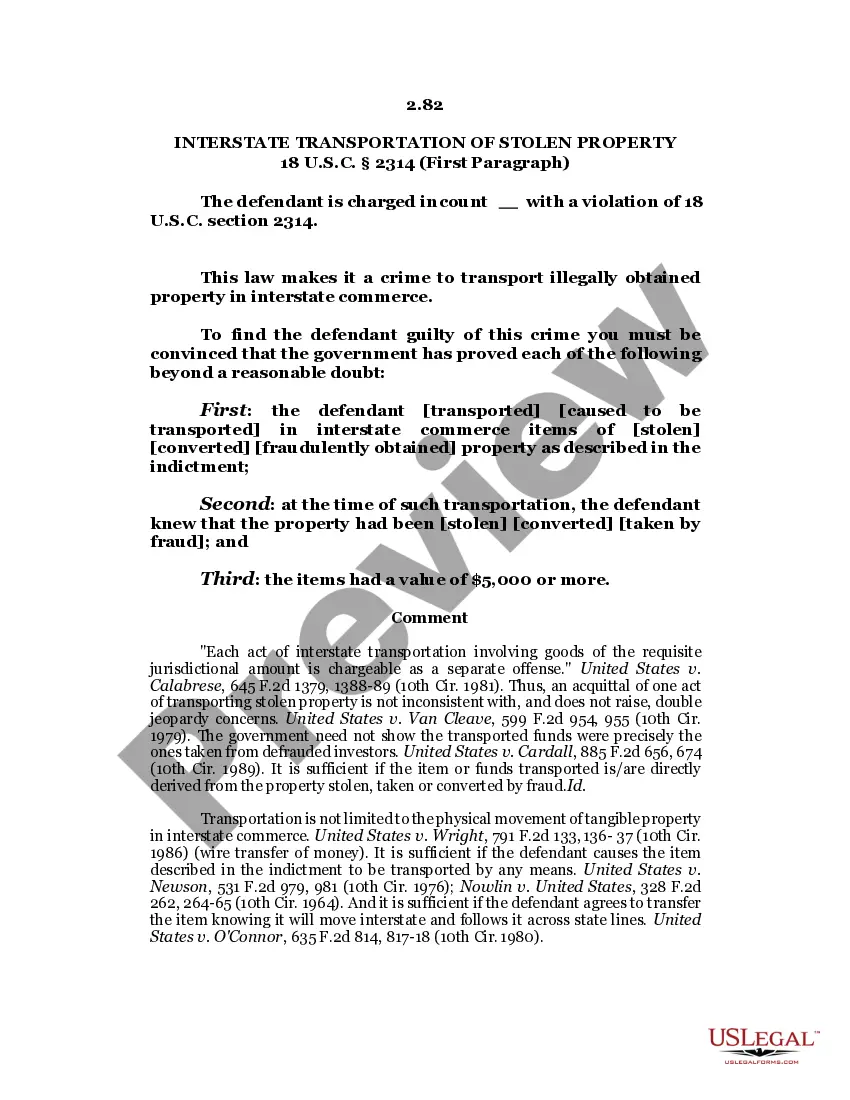
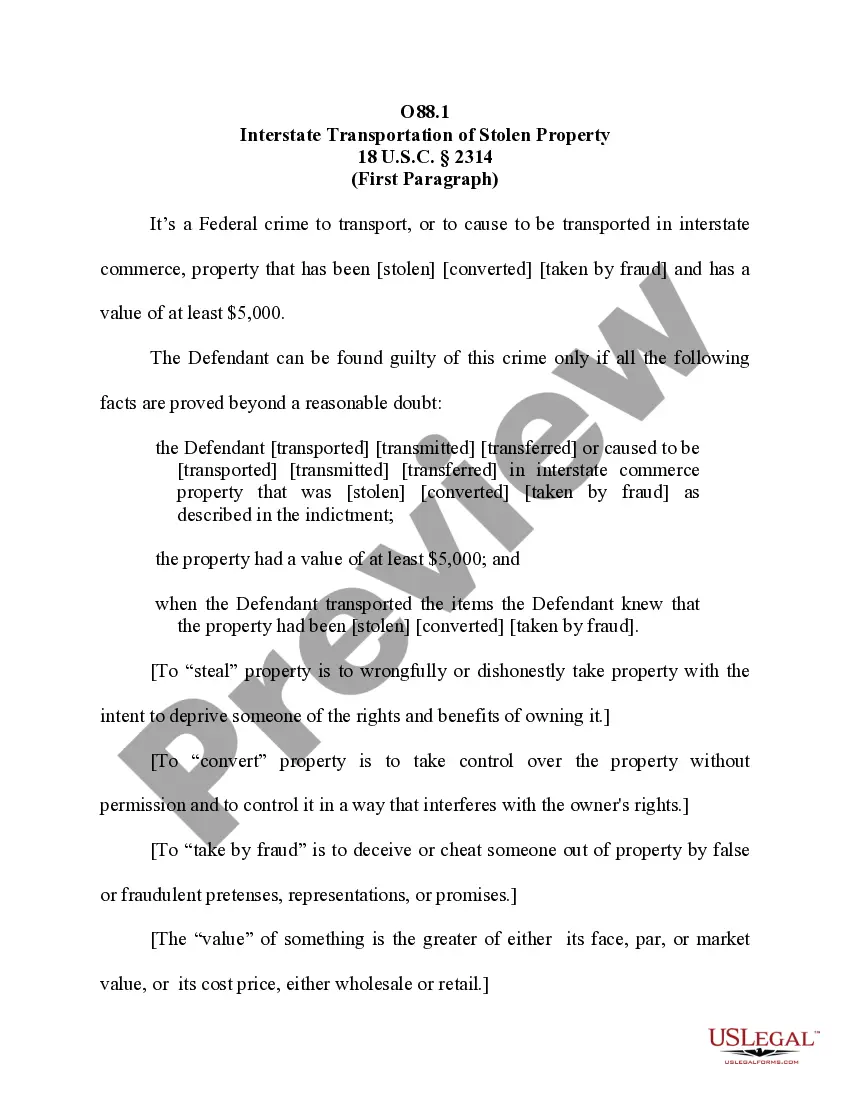
This form, titled "Causing Interstate Travel in Execution of a Scheme to Defraud," aligns with 18 U.S.C. § 2314. It outlines the specific federal crime of inducing or transporting someone across state lines to conduct a fraudulent scheme. This form is essential for legal practitioners and individuals involved in cases of federal fraud, ensuring a clear understanding of the criteria for prosecution and defense in such matters. Unlike other legal documents, this form focuses specifically on fraud-related interstate actions, providing structured guidance based on federal law.
What’s included in this form
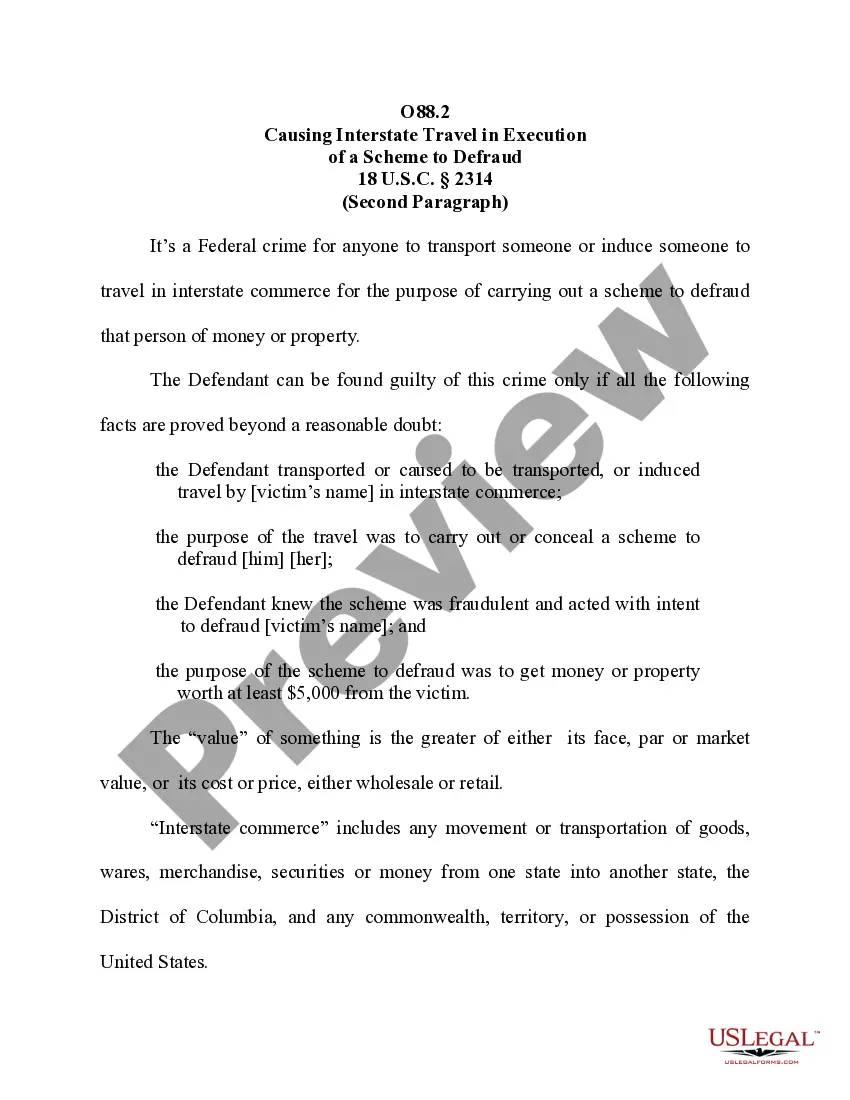
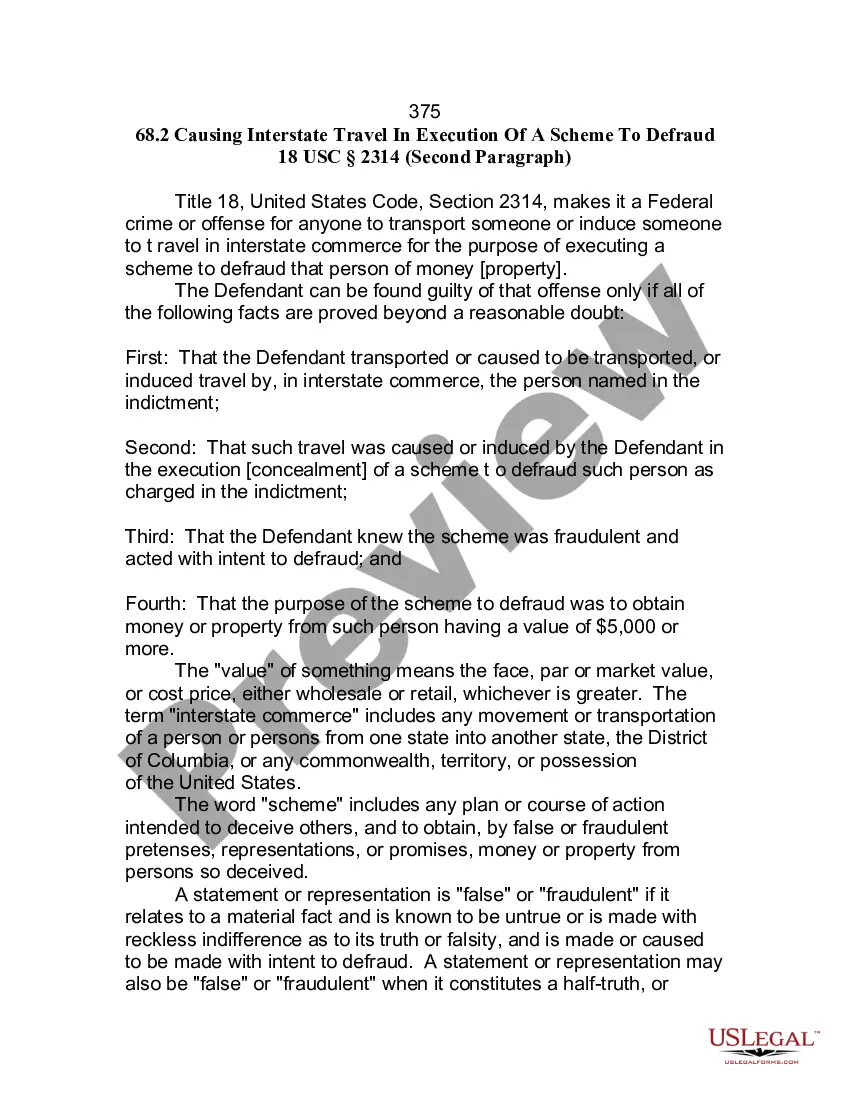
- The definition of federal crime related to interstate travel and fraud.
- Criteria for establishing guilt, including actions and intent.
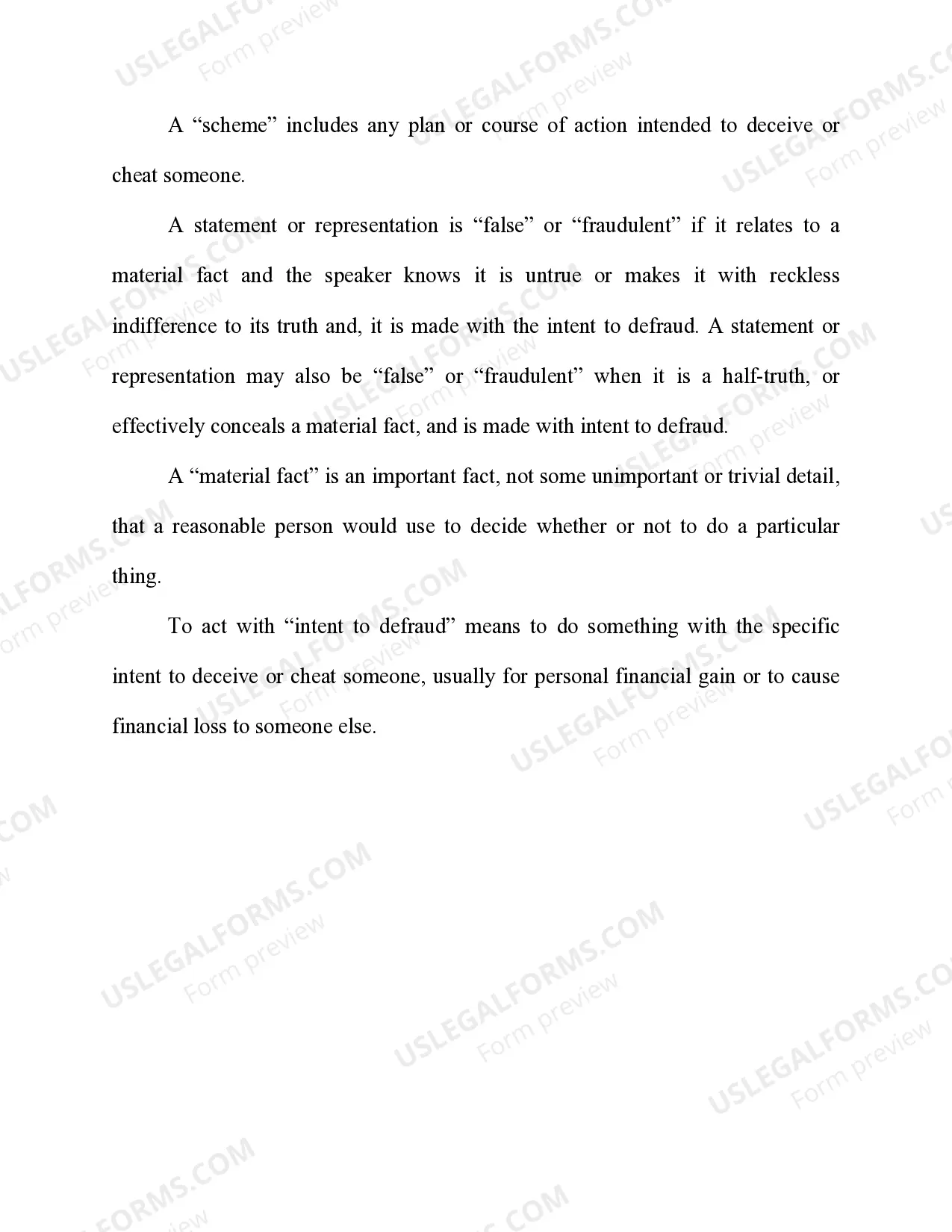
- Clarification of terms such as "material fact" and "intent to defraud."
- Details on what constitutes interstate commerce.
- Explanation of the monetary value involved in the fraudulent scheme.
Situations where this form applies
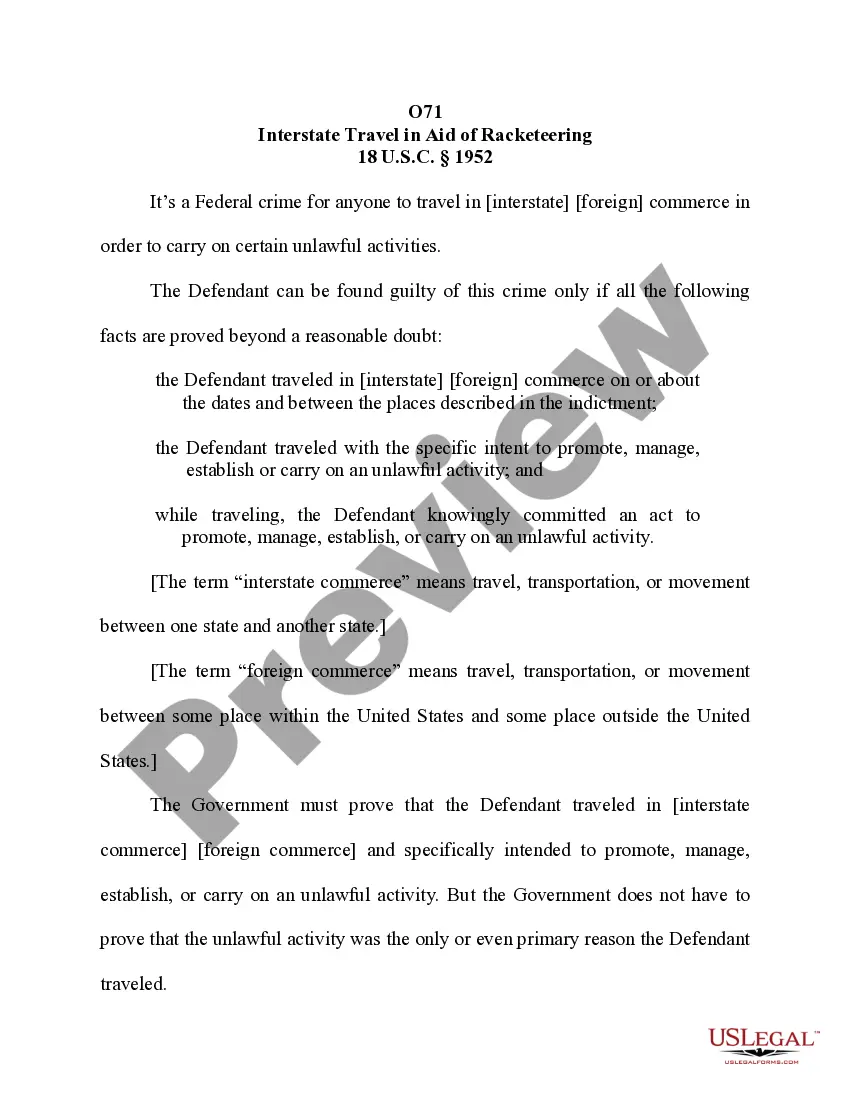
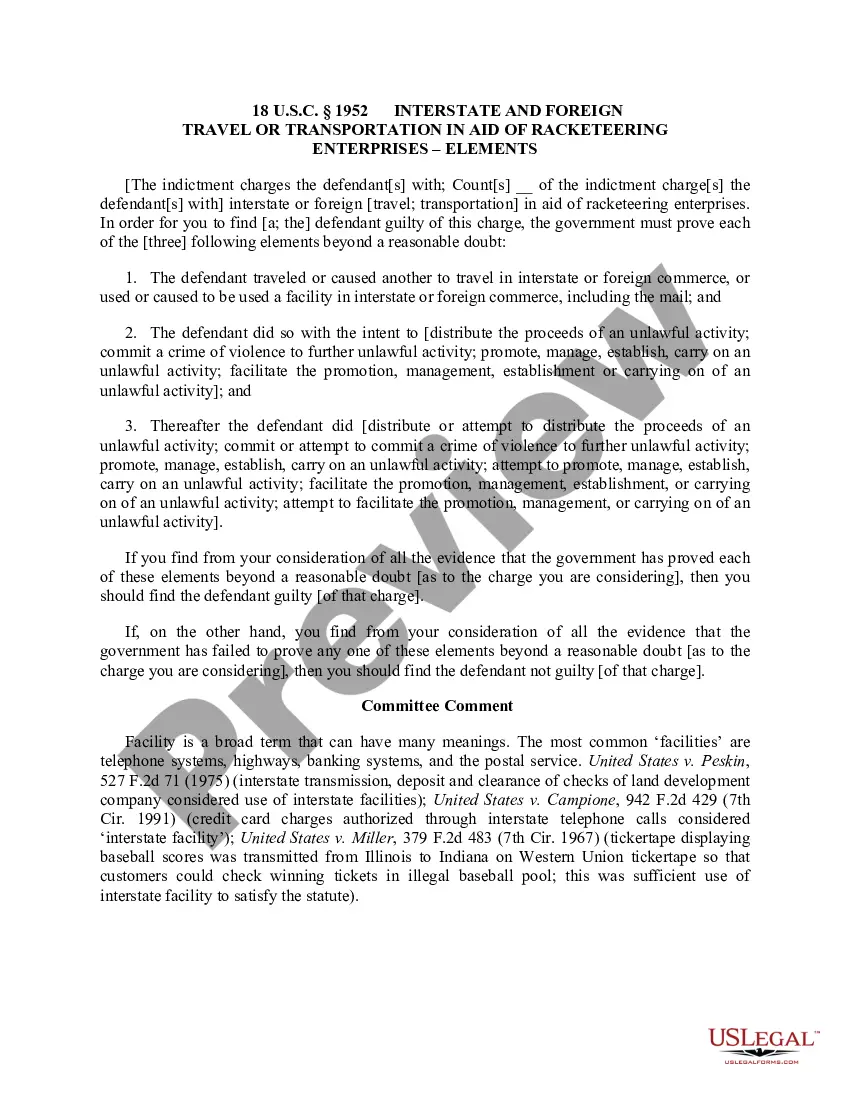
This form is used in cases where an individual is accused of facilitating interstate travel for fraudulent purposes. It applies in criminal proceedings related to schemes aimed at defrauding others of substantial financial value, specifically cases where the amount involved exceeds five thousand dollars. Legal professionals and defendants may refer to this form when preparing for trial, determining charges, or crafting legal arguments related to such federal offenses.
Who can use this document
- Defendants in federal fraud cases involving interstate travel.
- Prosecutors seeking to establish charges under federal law.
- Defense attorneys preparing for trial on behalf of clients.
- Legal scholars studying fraud law and interstate commerce.
Instructions for completing this form
- Identify the defendant and the victim involved in the case.
- Explain the actions taken to transport or induce travel by the victim.
- State the specific intent and knowledge of the fraudulent scheme.
- Document the financial value that the scheme intended to obtain.
- Review the completeness and accuracy of all statements before submission.
Notarization guidance
This form does not typically require notarization unless specified by local law. Ensure to verify any specific state or local requirements that may apply to your situation.
Get your form ready online
Our built-in tools help you complete, sign, share, and store your documents in one place.
Make edits, fill in missing information, and update formatting in US Legal Forms—just like you would in MS Word.
Download a copy, print it, send it by email, or mail it via USPS—whatever works best for your next step.
Sign and collect signatures with our SignNow integration. Send to multiple recipients, set reminders, and more. Go Premium to unlock E-Sign.
If this form requires notarization, complete it online through a secure video call—no need to meet a notary in person or wait for an appointment.
We protect your documents and personal data by following strict security and privacy standards.

Make edits, fill in missing information, and update formatting in US Legal Forms—just like you would in MS Word.

Download a copy, print it, send it by email, or mail it via USPS—whatever works best for your next step.

Sign and collect signatures with our SignNow integration. Send to multiple recipients, set reminders, and more. Go Premium to unlock E-Sign.

If this form requires notarization, complete it online through a secure video call—no need to meet a notary in person or wait for an appointment.

We protect your documents and personal data by following strict security and privacy standards.
Common mistakes to avoid
- Failing to accurately identify all parties involved.
- Omitting critical details about the fraudulent scheme.
- Not providing sufficient evidence of the interstate aspect of the crime.
- Misunderstanding the intent required to establish guilt.
Advantages of online completion
- Convenient access to legal language drafted by licensed attorneys.
- Editability allows for customization based on unique case details.
- Immediate download means quick access when time-sensitive legal matters arise.
- Reliable format ensures compliance with federal legal standards.
Legal use & context
- This form is crucial for establishing federal charges related to fraudulent schemes involving interstate travel.
- It serves as a prosecutorial tool to clarify the legal obligations and definitions relevant to the case.
- Proper use can aid in preventing misinterpretations of the fraud laws at the federal level.
Main things to remember
- The form outlines the criteria necessary to prove a federal crime of fraud related to interstate travel.
- Understanding the components and requirements is essential for both prosecution and defense.
- Use this form when dealing with any case involving interstate commerce and fraudulent activity.
Looking for another form?
Form popularity
FAQ
§ 2314 are that the defendant: (1) unlawfully transported or caused to be transported in interstate or foreign commerce; (2) goods, wares, merchandise, securities, or money having a value of $5,000 or more which are stolen, converted or taken by fraud; and (3) knowing the same to be stolen, converted or taken by fraud.
Title 18, United States Code § 2 now provides: (a) Whoever commits an offense against the United States or aids, abets, counsels, commands, induces or procures its commission, is punishable as a principal.
But Section 641 also states that, if the value of the stolen property is $1000 or less, that person shall be fined and imprisoned for no longer than 1 year. The $1000 threshold, therefore, is necessary to make a Section 641 offense into a felony; smaller theft from the government is only a misdemeanor.
18 U.S.C. § 2314 makes it a crime to transport stolen goods over state lines if you knew the property was stolen. Receiving, possessing, selling, concealing, or disposing of the stolen goods, knowing they were stolen, is a related federal crime and punishable under 18 U.S.C. § 2315.
The National Stolen Property Act of 1934 (NSPA) (18 U.S.C. §§ 2314 et seq.) prohibits the transportation in interstate or foreign commerce of any goods with a value of $5,000 or more with the knowledge that they were illegally obtained, and prohibits the "fencing" of such goods.
18 U.S. Code § 2314 - Transportation of stolen goods, securities, moneys, fraudulent State tax stamps, or articles used in counterfeiting. Shall be fined under this title or imprisoned not more than ten years, or both.