INFERRING REQUIRED MENTAL STATE
What is this form?
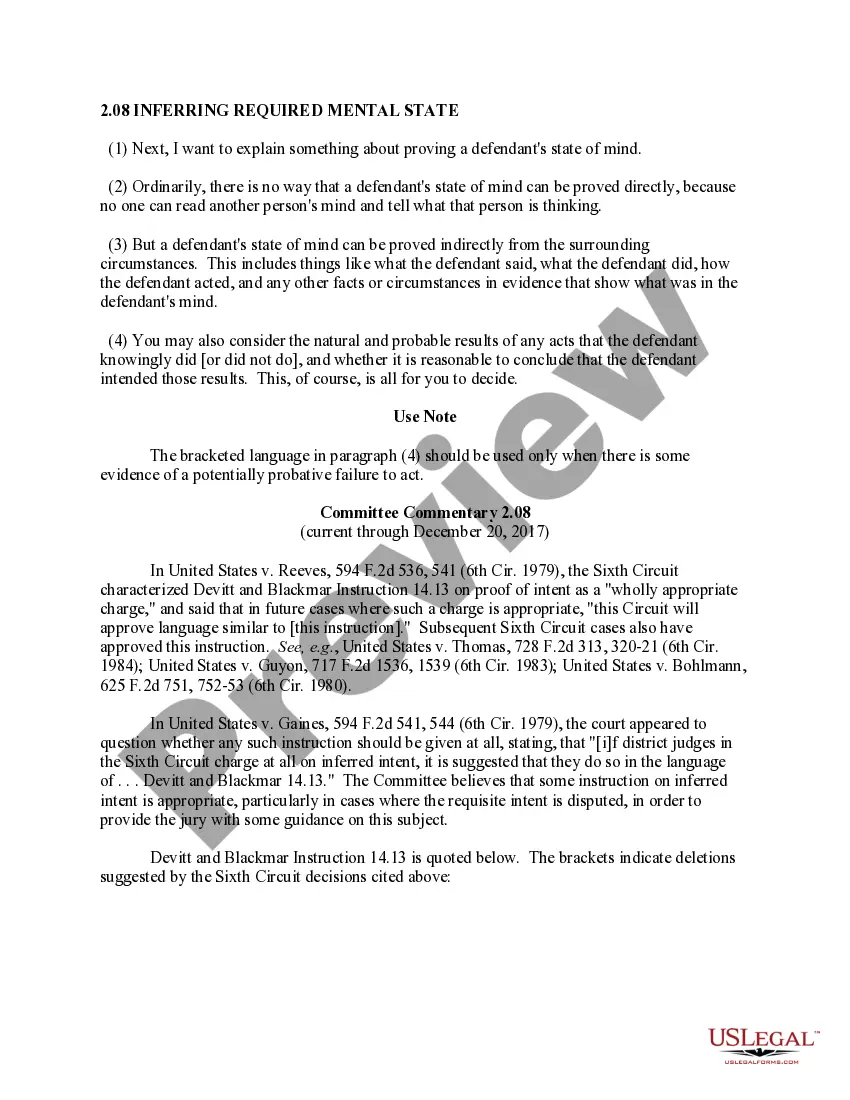
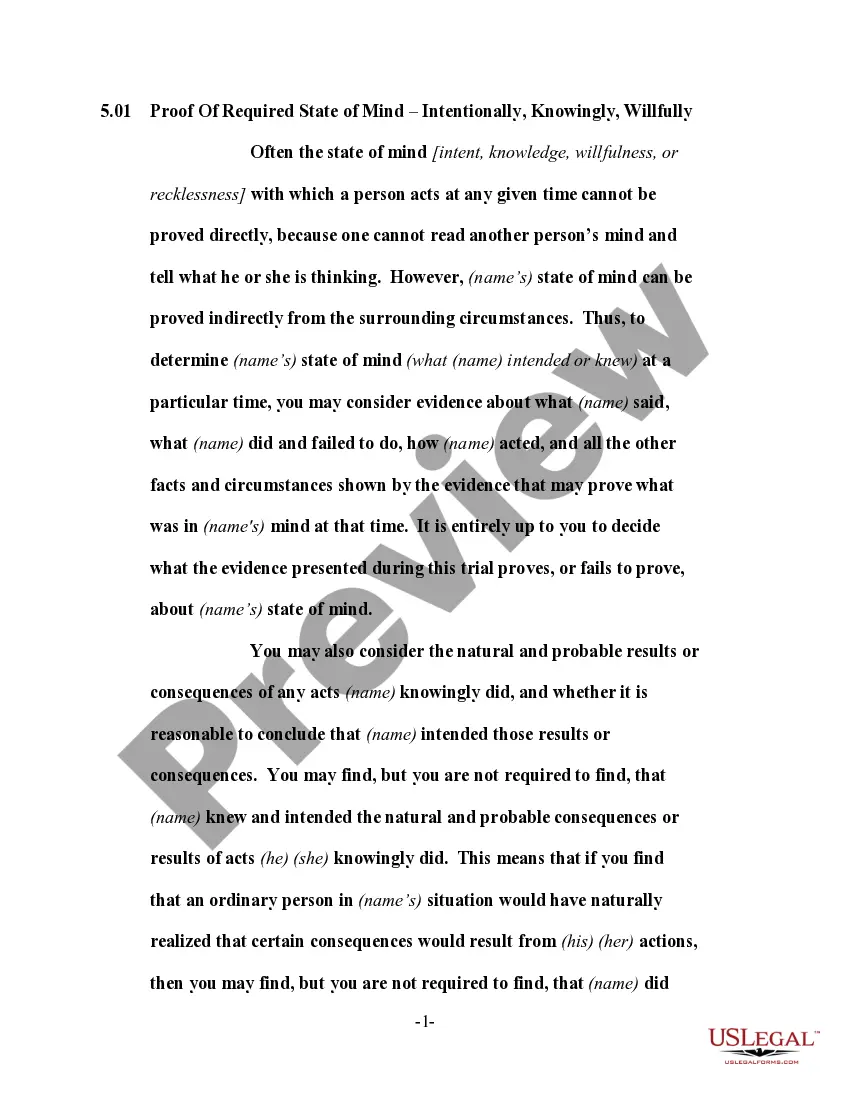
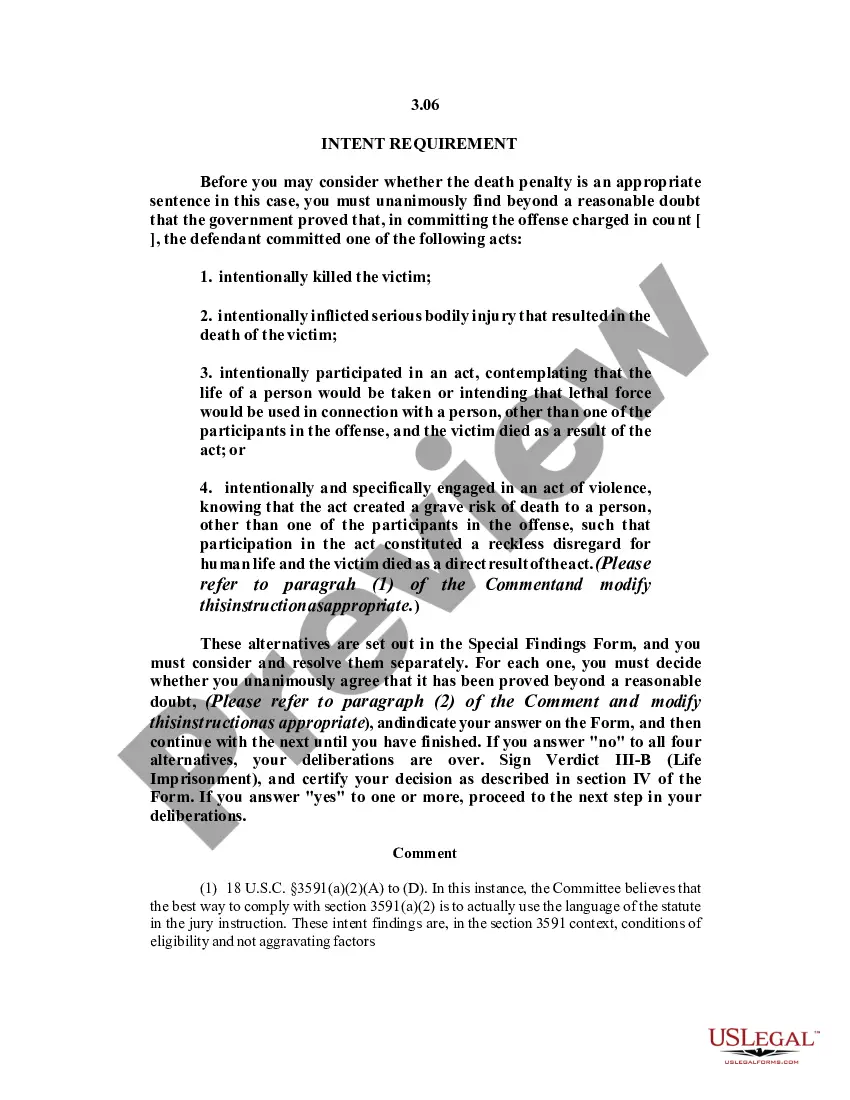
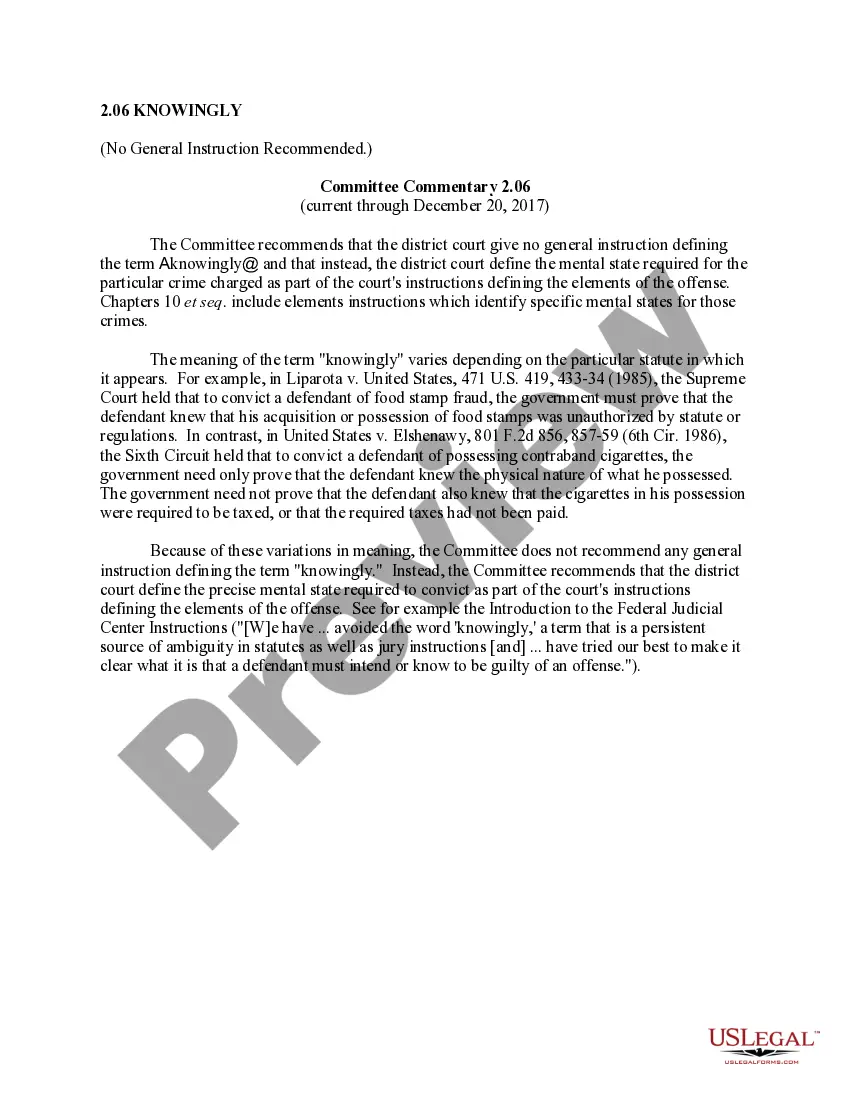
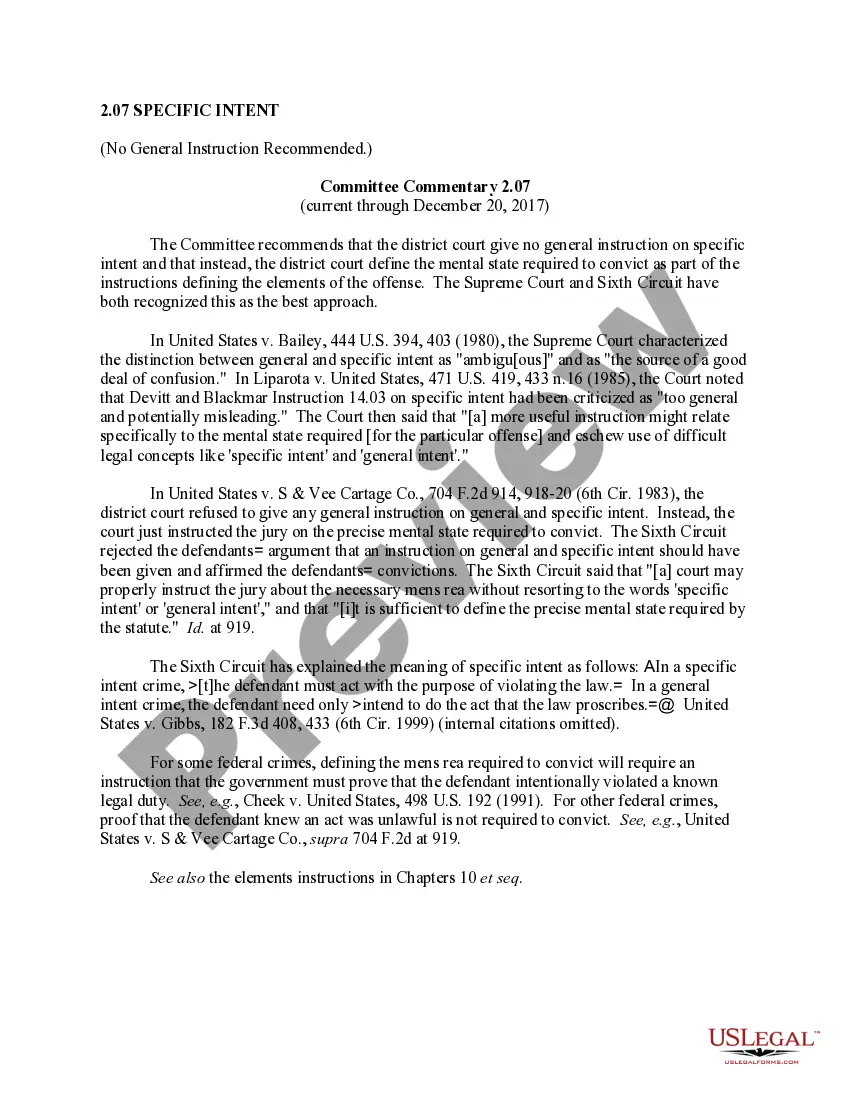
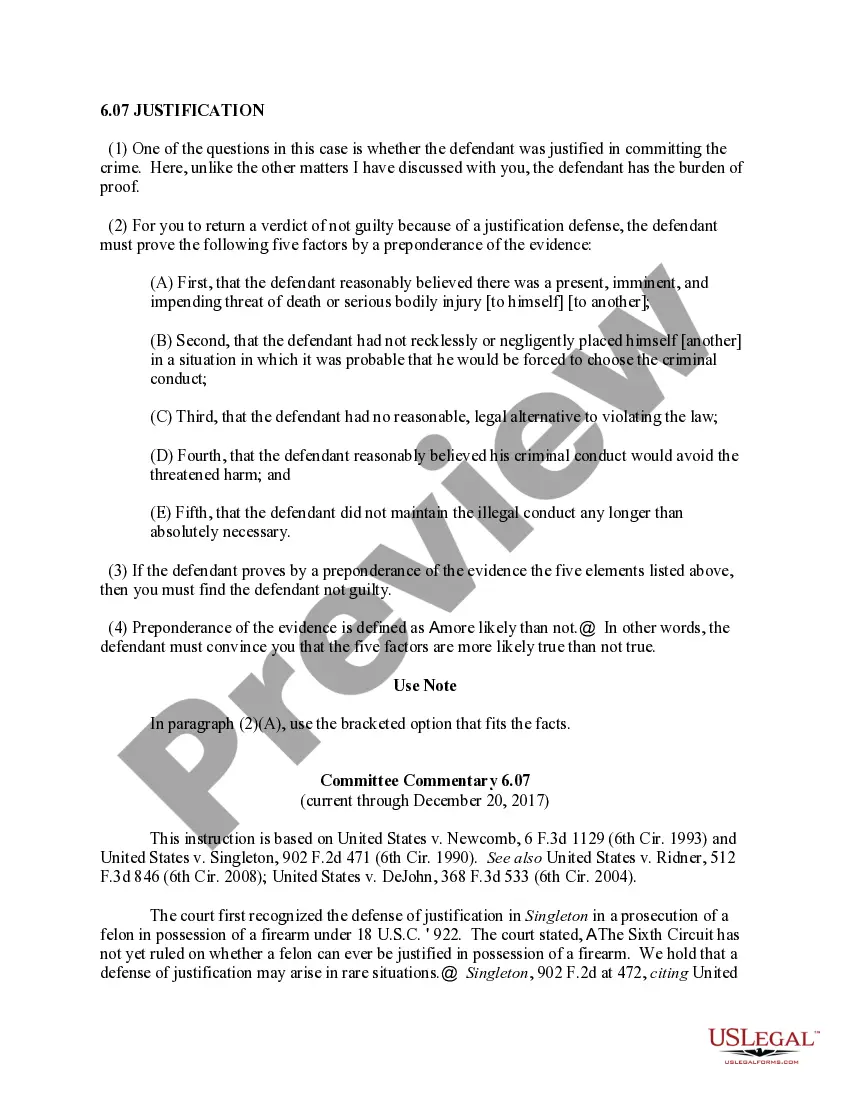
The Inferring Required Mental State form is a legal guideline used in criminal trials to explain how a jury can assess a defendant's state of mind. This instruction clarifies that while a defendant's thoughts cannot be directly proven, their intentions can be inferred from their actions and surrounding circumstances. This separates it from other legal forms that may address mental state in different contexts, making it crucial for understanding intent in legal proceedings.
Key components of this form
- Introduction to inferring state of mind: Brief overview of the concept of mental state in criminal law.
- Indirect proof: Explanation on how a defendant's mental state can be established through actions and words.
- Consideration of circumstances: Discussion of relevant factors that may indicate intent.
- Acceptable language for jury instructions: Suggested language for courts to guide jury understanding of inferred intent.

When to use this form
This form is typically used in criminal cases where the defendant's intent is a key factor in determining guilt or innocence. It is particularly relevant when the prosecution must prove that the defendant acted with a specific mental state or intent regarding the alleged crime.
Who can use this document
This form is suitable for:
- Judges who need a reliable jury instruction for cases where mental state is in dispute.
- Prosecutors seeking to clearly communicate the standard for inferring intent to the jury.
- Defense attorneys who need to understand how mental state may be presented or challenged in court.
Instructions for completing this form
To effectively use this form, you can follow these steps:
- Read the instructions carefully to understand the purpose of the inferring required mental state.
- Gather evidence and testimony related to the defendant's actions and words in the context of the case.
- Consider the natural and probable consequences of the defendant's actions.
- Draft jury instructions based on the suggested language provided in the form.
- Review the final instructions for clarity and alignment with the case specifics before presenting them to the jury.
Does this form need to be notarized?
Notarization is generally not required for this form. However, certain states or situations might demand it. You can complete notarization online through US Legal Forms, powered by Notarize, using a verified video call available anytime.
Get your form ready online
Our built-in tools help you complete, sign, share, and store your documents in one place.
Make edits, fill in missing information, and update formatting in US Legal Forms—just like you would in MS Word.
Download a copy, print it, send it by email, or mail it via USPS—whatever works best for your next step.
Sign and collect signatures with our SignNow integration. Send to multiple recipients, set reminders, and more. Go Premium to unlock E-Sign.
If this form requires notarization, complete it online through a secure video call—no need to meet a notary in person or wait for an appointment.
We protect your documents and personal data by following strict security and privacy standards.

Make edits, fill in missing information, and update formatting in US Legal Forms—just like you would in MS Word.

Download a copy, print it, send it by email, or mail it via USPS—whatever works best for your next step.

Sign and collect signatures with our SignNow integration. Send to multiple recipients, set reminders, and more. Go Premium to unlock E-Sign.

If this form requires notarization, complete it online through a secure video call—no need to meet a notary in person or wait for an appointment.

We protect your documents and personal data by following strict security and privacy standards.
Mistakes to watch out for
- Assuming direct proof of intent without considering circumstantial evidence.
- Using unclear language in jury instructions that could lead to misunderstanding.
- Failing to address both actions and omissions of the defendant in the context of intent.
Why complete this form online
- Convenience: Easily downloadable and ready to use for court cases.
- Editability: Customize the form to fit specific case needs or legal standards.
- Reliability: Developed by licensed attorneys, ensuring legal validity and relevance.
- Inferring required mental state is essential in establishing a defendant's intent in criminal cases.
- Understanding this instruction can aid in protecting the rights of the defendant while maintaining judicial fairness.
- Jury guidance using this form helps ensure proper deliberation based on legal standards.
Looking for another form?
Form popularity
FAQ
States of Consciousness Awareness. bias. Consciousness. Hypnosis. Priming. Sleep. Trance.
Theory of Mind (ToM) ToM refers to the capacity of inferring other's mental states (Premack and Woodruff, 1978). It implies coordination of several neural hubs, such as the medial prefrontal cortex (PFC), the bilateral temporo-parietal junction and the medial parietal cortex.
The Three States of Mind Emotional Mind. Intellectual Mind. Sound Mind.
We use these four perspectives ? physical, emotional, mental and spiritual ? to provide the foundation for a sense of wholeness, both as a concept and an experience. Together, they represent the dynamic human experience of well-being or wholeness.
Researchers propose that five key aspects of theory of mind develop sequentially for all children between the ages of three and five: diverse desires (DD), diverse beliefs (DB), knowledge access (KA), false beliefs (FB), and hidden emotions (HE).
There is a great variety of types of mental states including perception, bodily awareness, thought, belief, desire, motivation, intention, deliberation, decision, pleasure, emotion, mood, imagination and memory. Some of these types are precisely contrasted with each other while other types may overlap.
Sigmund Freud divided human consciousness into three levels of awareness: the conscious, preconscious, and unconscious. Each of these levels corresponds and overlaps with his ideas of the id, ego, and superego.
When you combine the types of focus (internal and external) with the ways we focus (helpful and harmful) you get four distinct states of mind: autopilot, critical, thinking, and engaged.