CONSPIRACY TO COMMIT AN OFFENSE (18 U.S.C. ' 371) B BASIC ELEMENTS
What this document covers
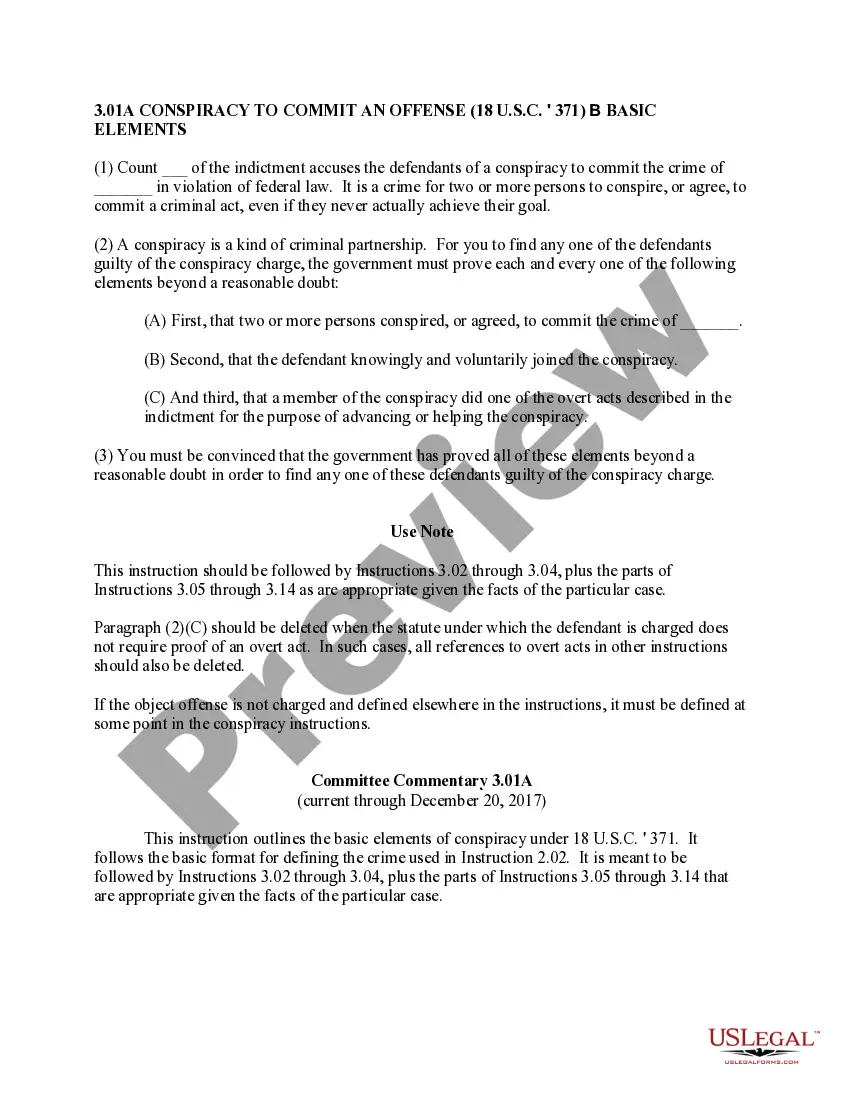
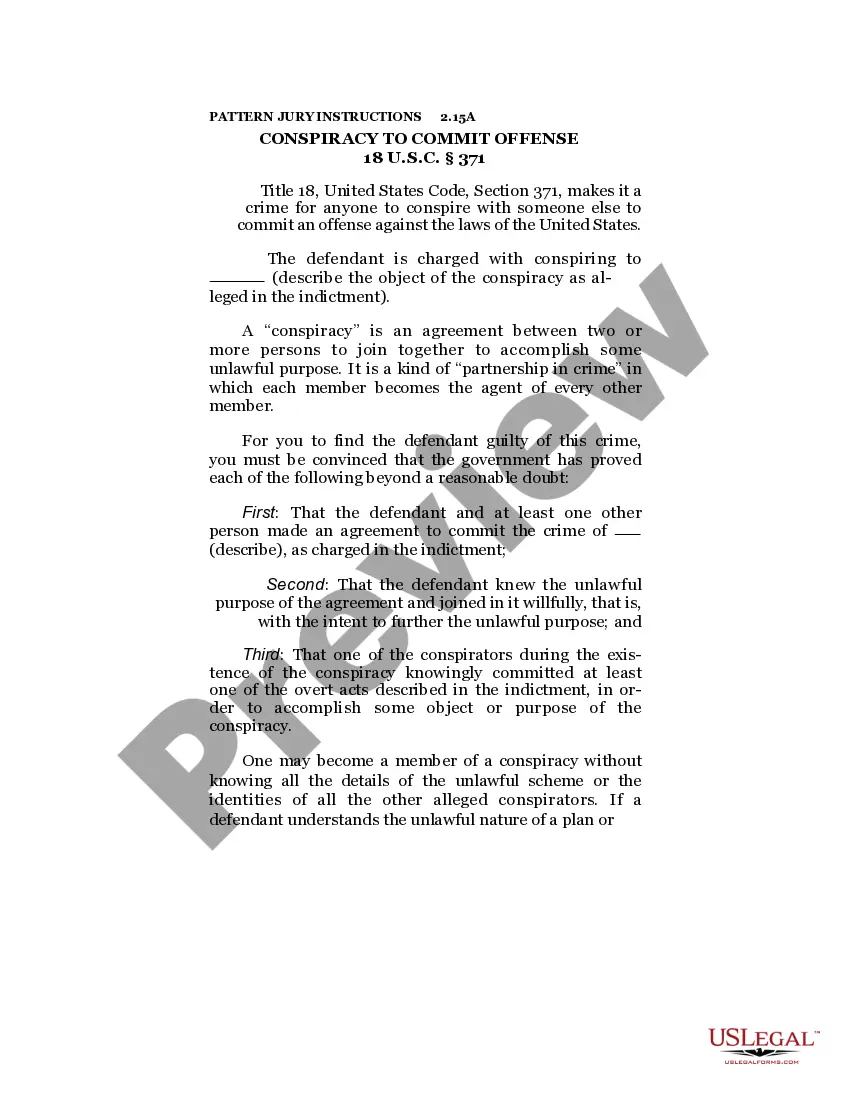
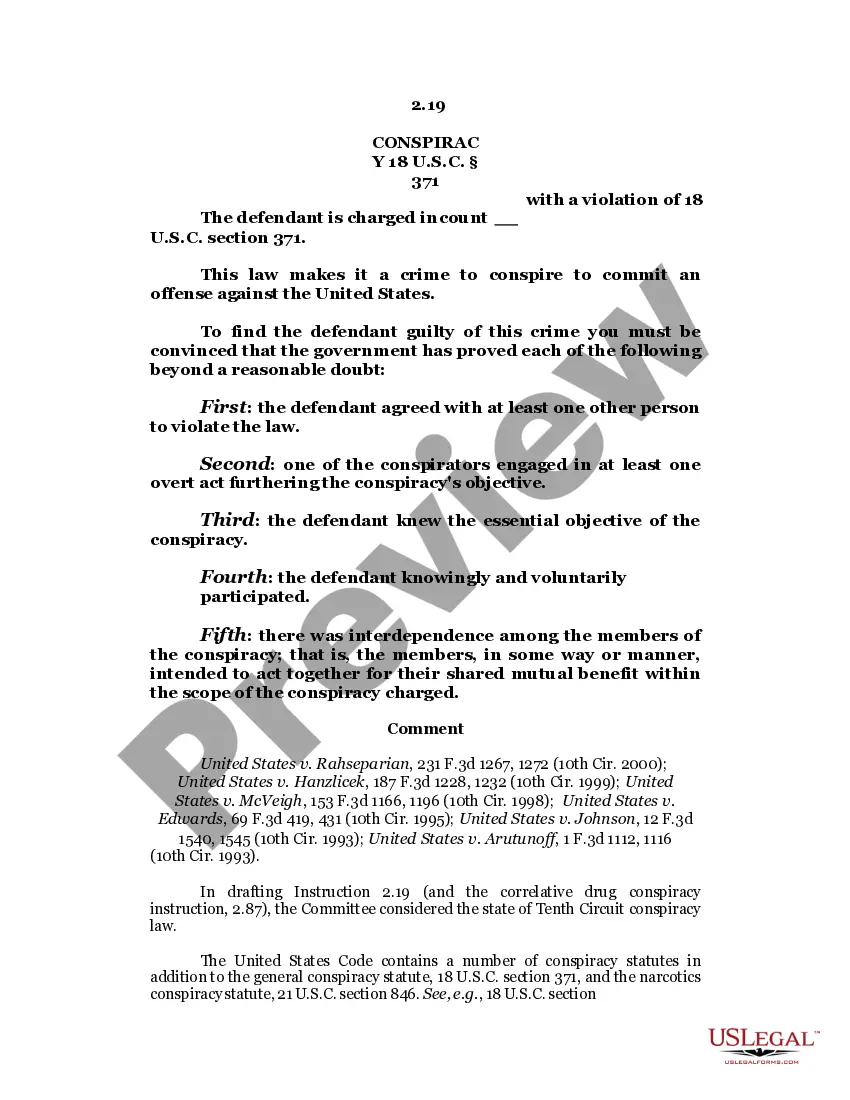
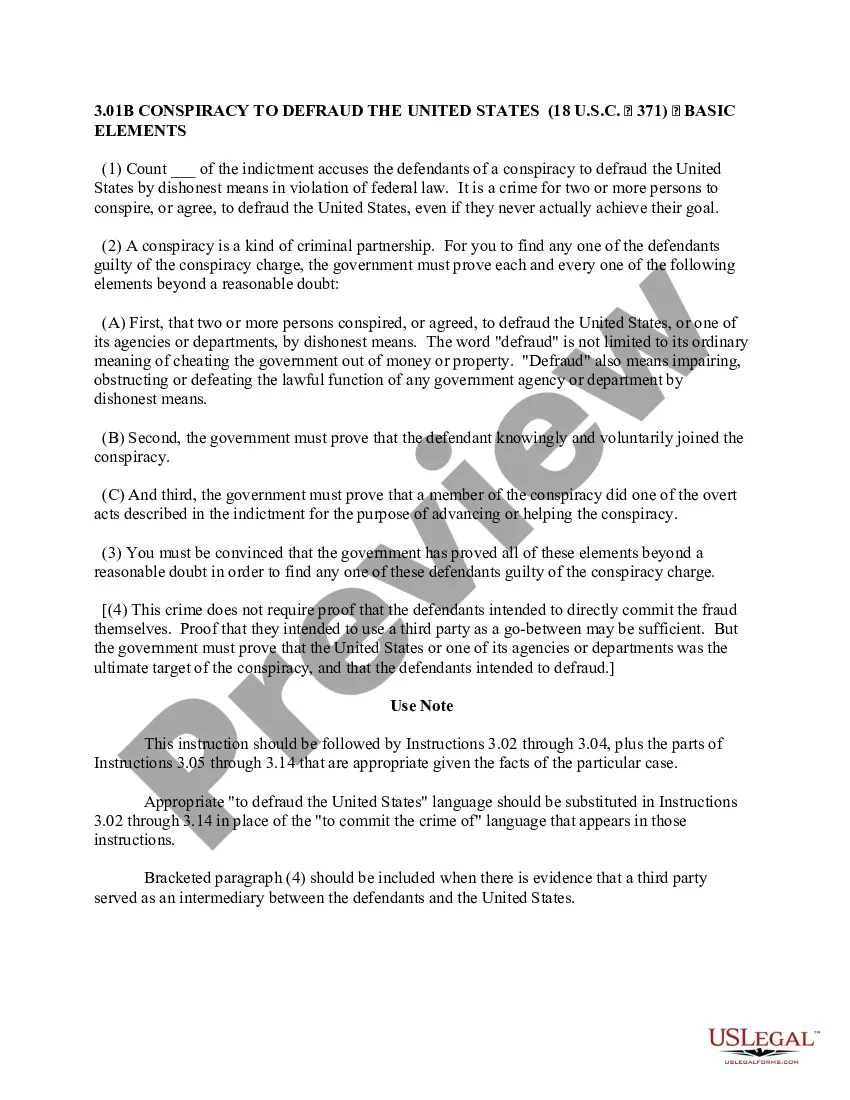
The Conspiracy to Commit an Offense (18 U.S.C. § 371) Basic Elements form outlines the legal framework for understanding the crime of conspiracy as defined by federal law. This form specifies what constitutes a conspiracy and the essential elements that must be proven for a guilty verdict. It differs from other legal forms related to specific crimes by focusing on the agreement and intention behind a criminal act, rather than the act itself. Utilizing this form helps users clarify the crime of conspiracy, which can involve multiple parties and intentions, even if the planned crime is not ultimately executed.
Main sections of this form
- Definition of conspiracy as an agreement between two or more people to commit a crime.
- Elements the government must prove for a guilty verdict, including participation and intent.
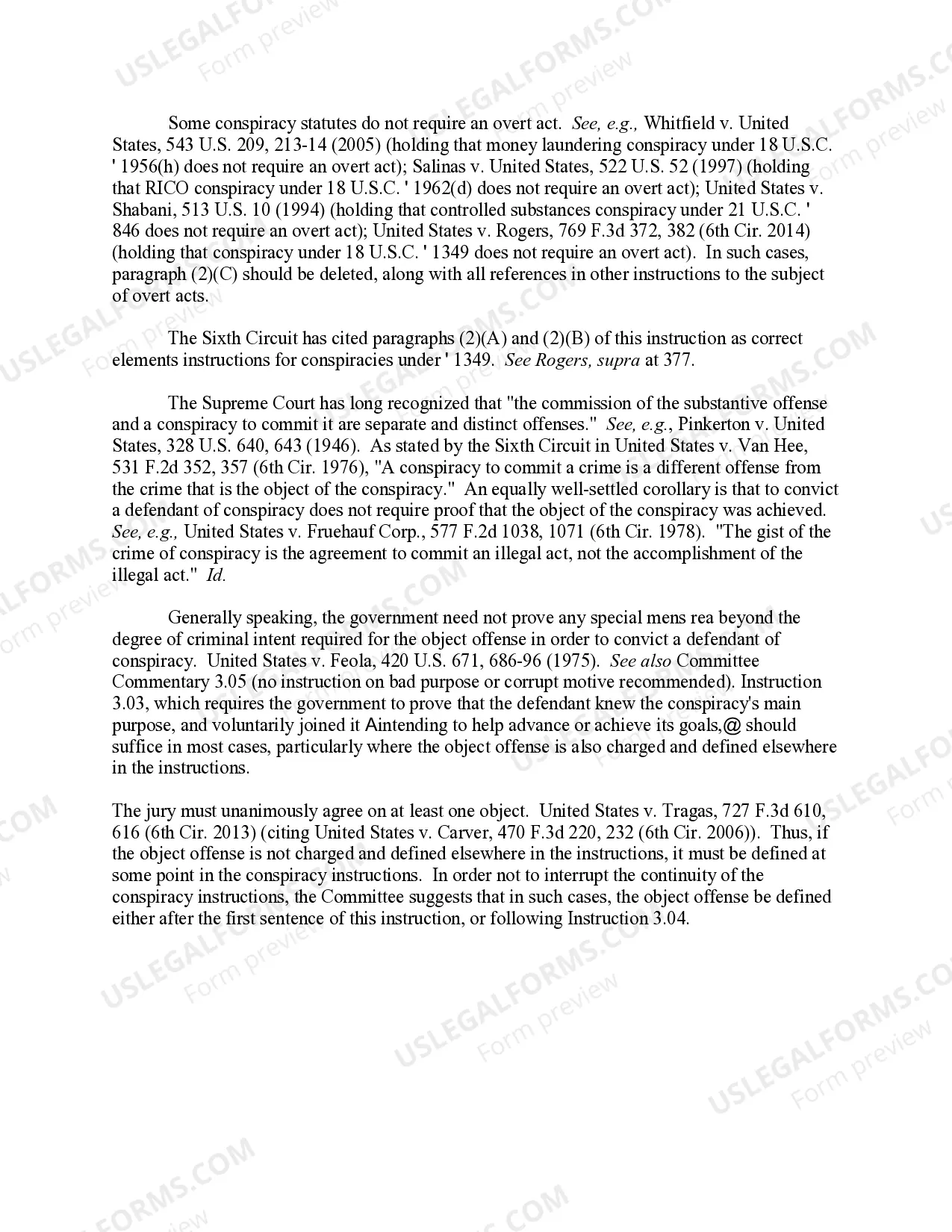
- Clarification on overt acts and how they relate to proving a conspiracy charge.
- Guidance on necessary jury instructions based on the specifics of a case.
When to use this document
This form is essential when addressing legal accusations of conspiracy to commit a crime under federal law. It can be used in a variety of scenarios, such as when multiple defendants are involved in an alleged agreement to engage in unlawful activity. The form is particularly important in cases where the government pursues conspiracy charges, even if the planned criminal act is not completed. Additionally, it is useful during jury instructions to ensure jurors understand the elements required to establish guilt.
Who can use this document
- Legal professionals preparing for a conspiracy case involving multiple defendants.
- Defendants accused of conspiracy seeking clarity on the charges they face.
- Juries needing a reference for the concepts and elements of conspiracy in their deliberation.
- Attorneys crafting defenses based on the nuances of conspiracy law.
Completing this form step by step
- Identify the crime the defendants are accused of conspiring to commit and fill in the blank.
- Confirm there are at least two individuals involved in the conspiracy.
- Ensure the evidence supports that each defendant knowingly joined the conspiracy.
- Verify that an overt act taken to further the conspiracy is included in the case.
- Review the instructions for jury guidance based on the specifics of the case.
Notarization guidance
This form usually doesn’t need to be notarized. However, local laws or specific transactions may require it. Our online notarization service, powered by Notarize, lets you complete it remotely through a secure video session, available 24/7.
Get your form ready online
Our built-in tools help you complete, sign, share, and store your documents in one place.
Make edits, fill in missing information, and update formatting in US Legal Forms—just like you would in MS Word.
Download a copy, print it, send it by email, or mail it via USPS—whatever works best for your next step.
Sign and collect signatures with our SignNow integration. Send to multiple recipients, set reminders, and more. Go Premium to unlock E-Sign.
If this form requires notarization, complete it online through a secure video call—no need to meet a notary in person or wait for an appointment.
We protect your documents and personal data by following strict security and privacy standards.

Make edits, fill in missing information, and update formatting in US Legal Forms—just like you would in MS Word.

Download a copy, print it, send it by email, or mail it via USPS—whatever works best for your next step.

Sign and collect signatures with our SignNow integration. Send to multiple recipients, set reminders, and more. Go Premium to unlock E-Sign.

If this form requires notarization, complete it online through a secure video call—no need to meet a notary in person or wait for an appointment.

We protect your documents and personal data by following strict security and privacy standards.
Typical mistakes to avoid
- Failing to establish that each defendant voluntarily joined the conspiracy.
- Not proving that at least one overt act was committed to advance the conspiracy.
- Assuming conspiracy charges will automatically imply guilt for the intended crime.
- Neglecting to review the specific federal statutes that apply to the case.
Why complete this form online
- Access to forms anytime, allowing for immediate preparation and reference.
- Easy editing and ensuring accuracy without the need for physical documentation.
- Reliability in using attorney-drafted templates that follow legal standards.
- Ability to customize the form based on specific case details while maintaining compliance.
Legal use & context
- The crime of conspiracy exists separately from the crime it seeks to further.
- The agreement to commit a crime is prosecutable even without completion of the crime.
- Close attention to federal statutes is crucial in determining the legality of conspiracy charges.
Looking for another form?
Form popularity
FAQ
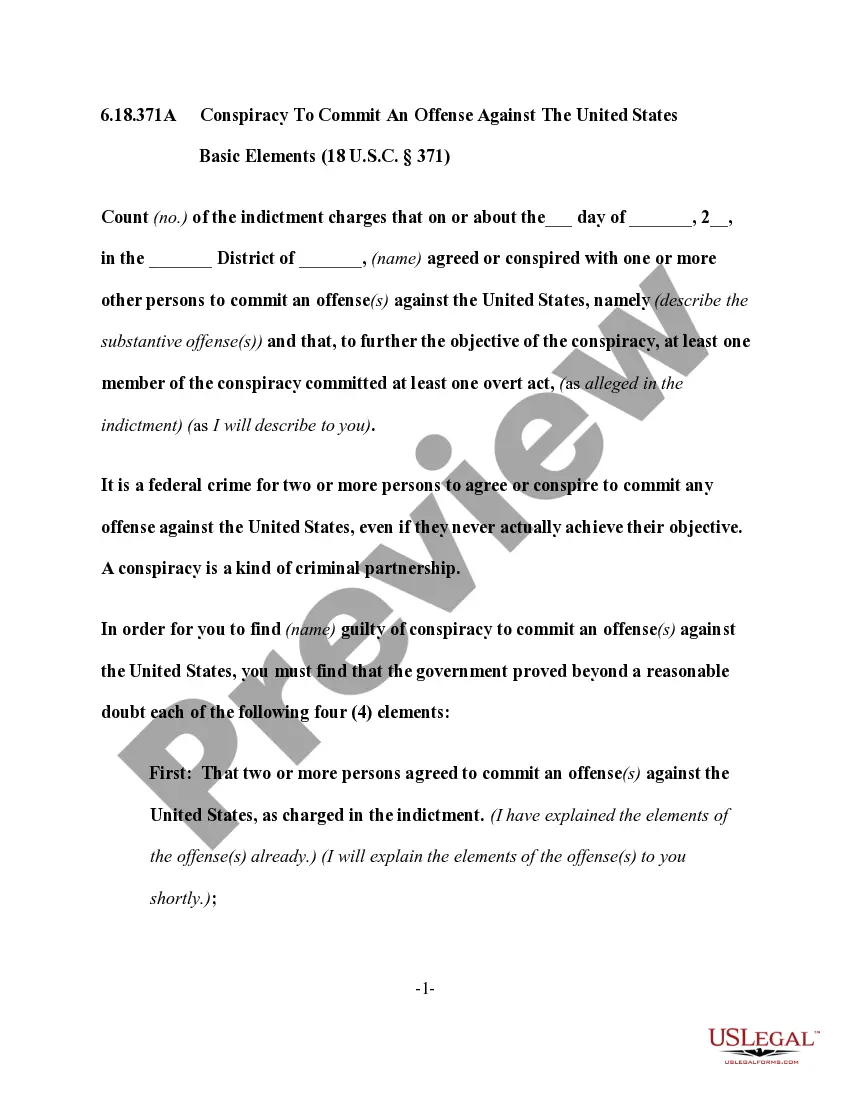
The general conspiracy statute, 18 U.S.C. § 371, creates an offense "if two or more persons conspire either to commit any offense against the United States, or to defraud the United States, or any agency thereof in any manner or for any purpose.
Under 18 U.S.C. 371, a conviction of conspiracy can result in a maximum of 5 years in prison per count and fines up to $250,000, regardless of whether the plot succeeded. The penalty for conviction under 18 U.S.C. 1349 could be significantly less or more, depending on the underlying crime you're charged with.
Whoever enters into any agreement, combination, or conspiracy to defraud the United States, or any department or agency thereof, by obtaining or aiding to obtain the payment or allowance of any false, fictitious or fraudulent claim, shall be fined under this title or imprisoned not more than ten years, or both.
Properly set forth the essential elements of conspiracy, which are: (1) a mutual agreement or understanding, (2) knowingly entered by the defendant, with (3) an intent to jointly commit a crime.
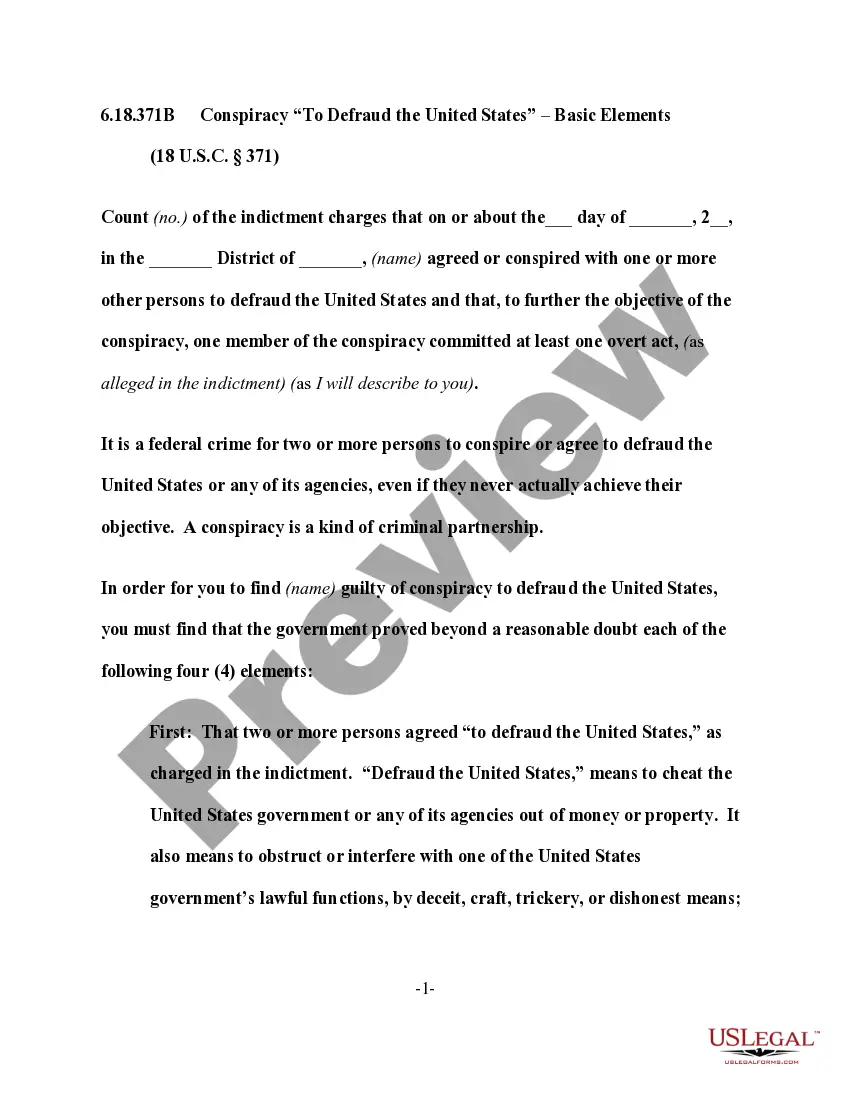
To "convict someone under the 'defraud clause' of 18 U.S.C. § 371, the government need only show (1) he entered into an agreement (2) to obstruct a lawful function of the government (3) by deceitful or dishonest means and (4) at least one overt act in furtherance of the conspiracy." Id.; United States v.
Elements of a Conspiracy 1 Two or more people agreed to commit a crime. 2 All conspirators had the specific intent to commit the crime. 3 At least one of the conspirators committed an overt act (most states)
As a felony, violation of 18 U.S.C. § 371 carries a fine or imprisonment for up to five years. However, if the offense which is the subject of the conspiracy is charged as a misdemeanor, the punishment for the conspiracy cannot exceed the maximum punishment for the misdemeanor.
To "convict someone under the 'defraud clause' of 18 U.S.C. § 371, the government need only show (1) he entered into an agreement (2) to obstruct a lawful function of the government (3) by deceitful or dishonest means and (4) at least one overt act in furtherance of the conspiracy." Id.; United States v.