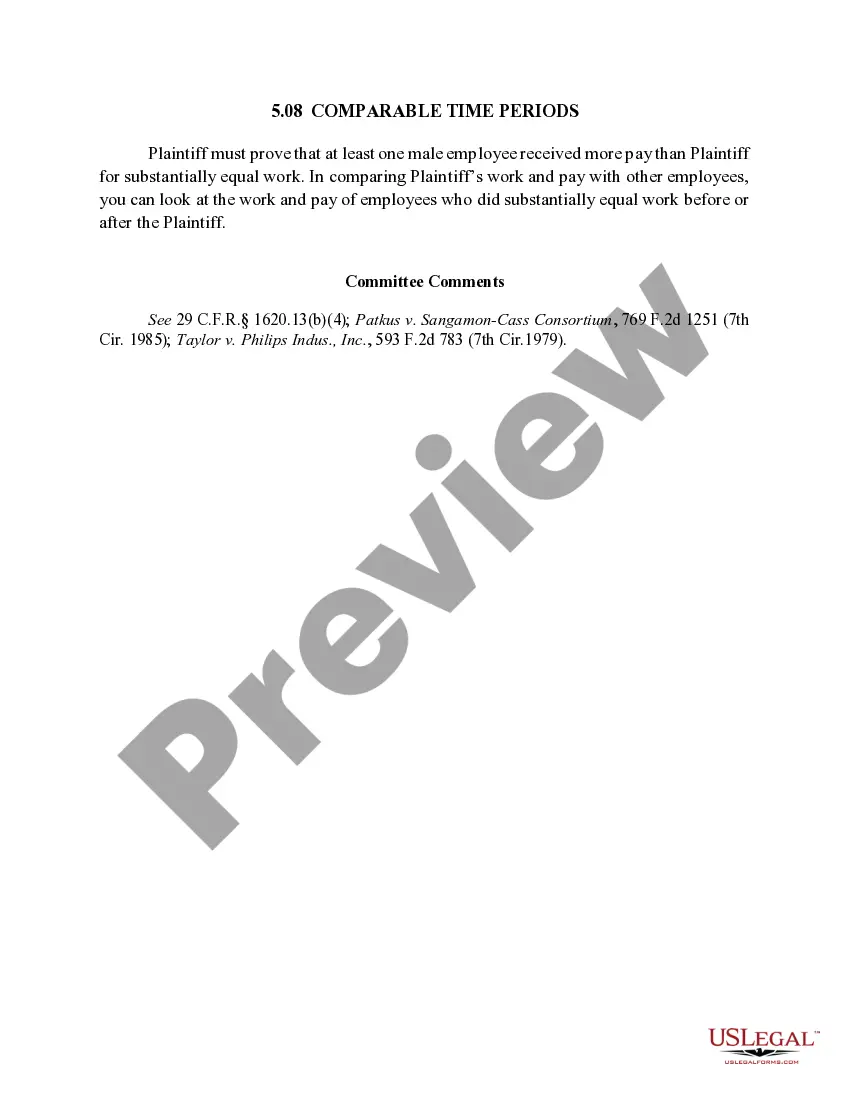
5.08 Comparable Time Periods
What this document covers
The Comparable Time Periods form is an essential legal template used in employment discrimination cases. It helps the plaintiff demonstrate that a male employee was paid more for substantially equal work. This form is particularly related to wage disparity issues and is based on the Official Pattern Jury Instructions adopted by the Federal 7th Circuit Court. It is important to use this form when comparing compensation received by the plaintiff with that of similarly situated employees who performed equal work at different times.
Main sections of this form
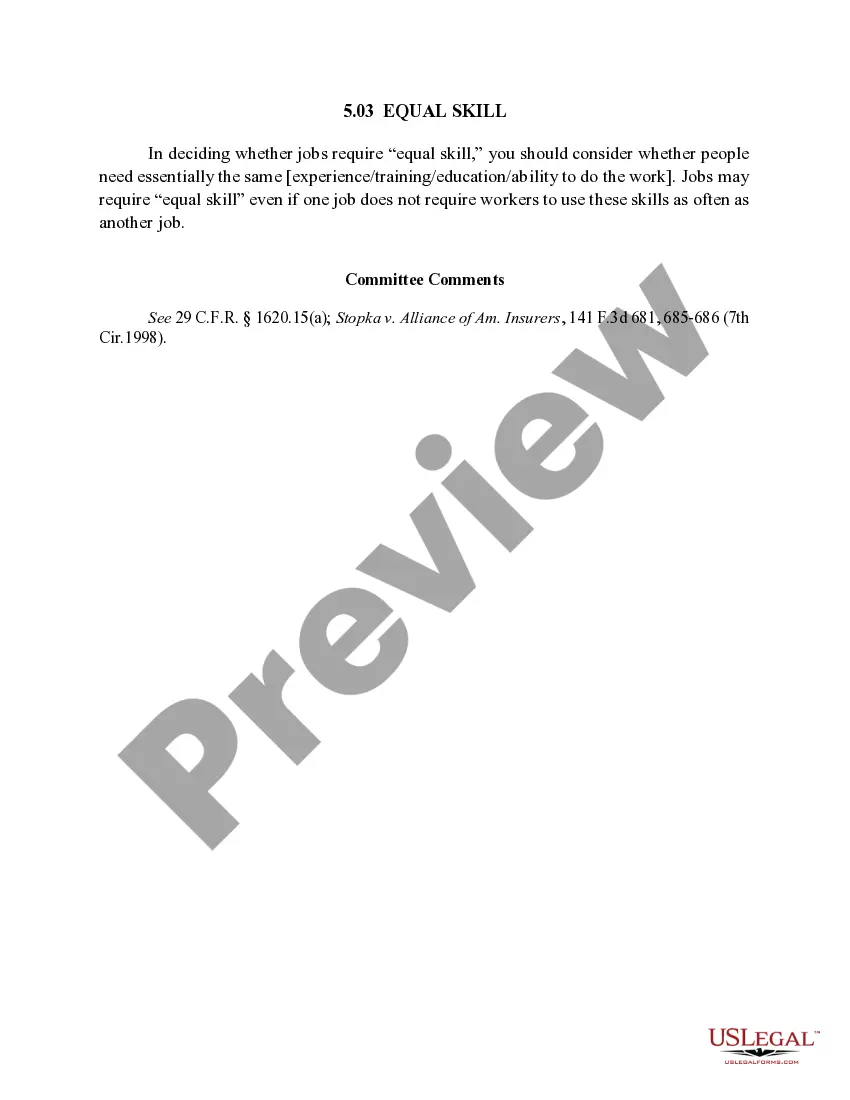
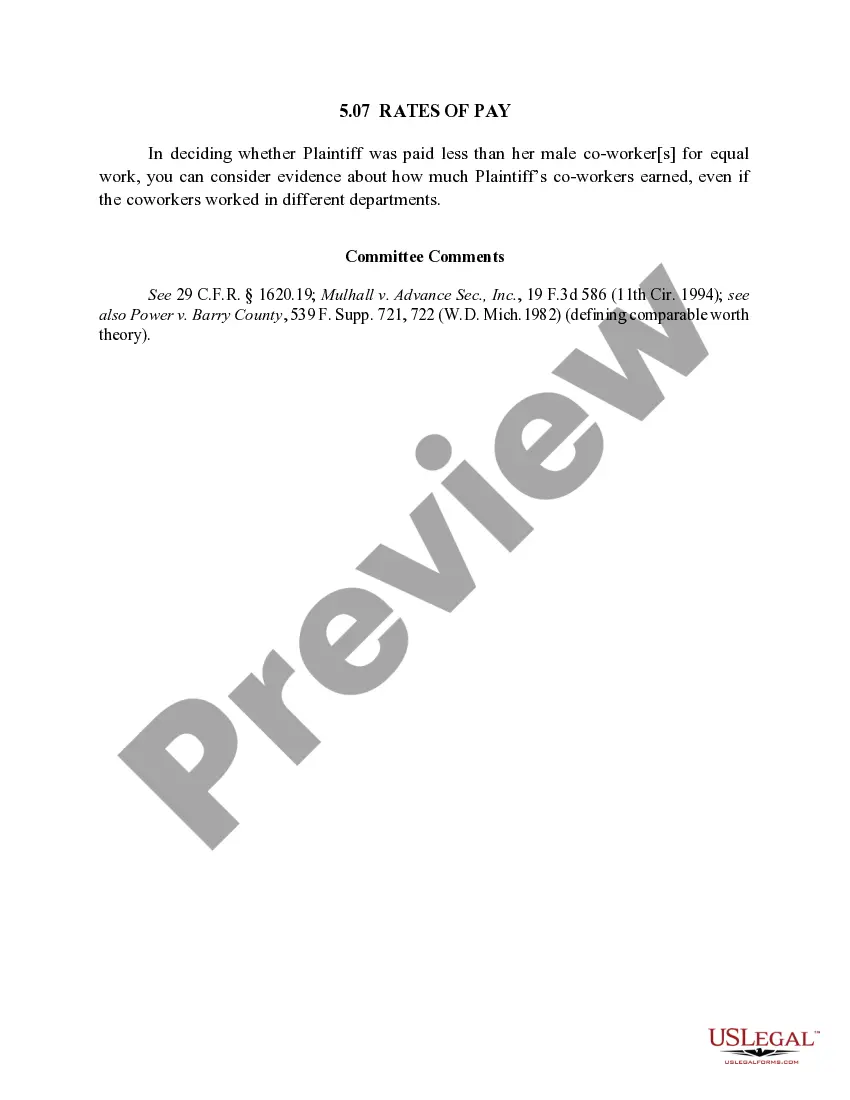
- Definition of comparable time periods for wage comparisons.
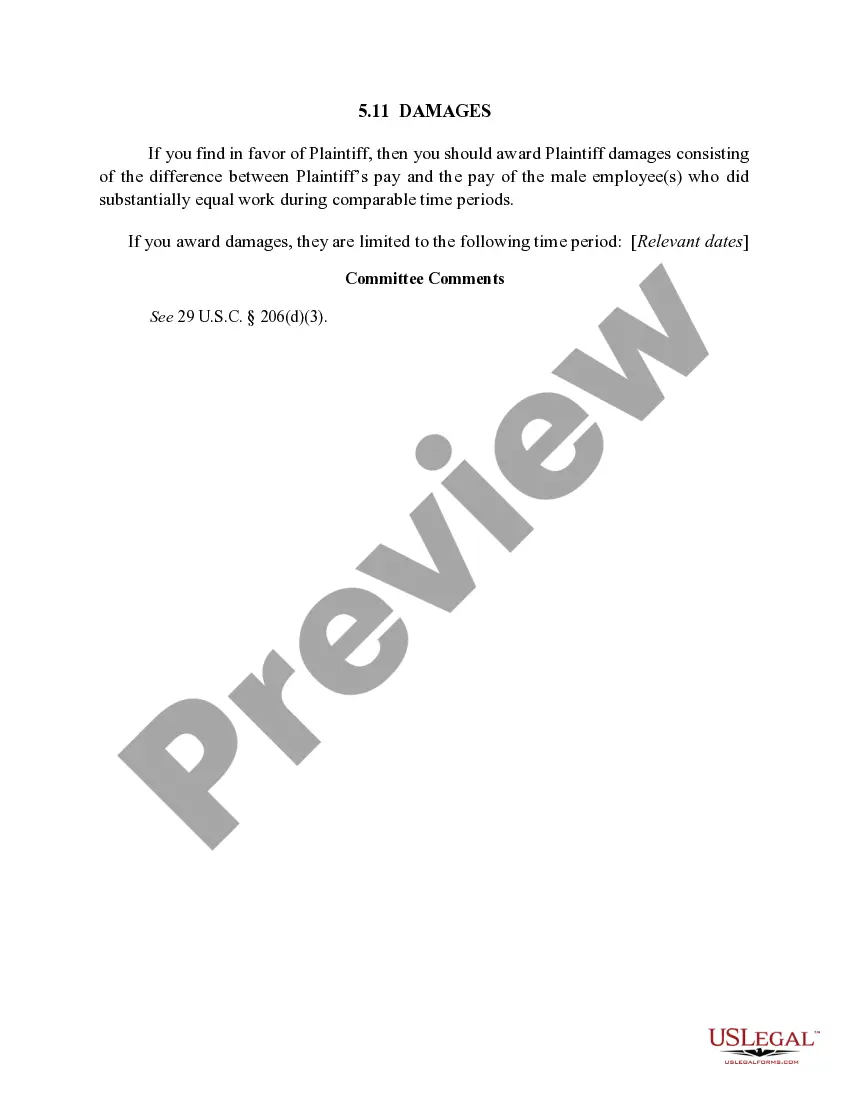
- Requirement for the plaintiff to show a male employee received a higher wage.
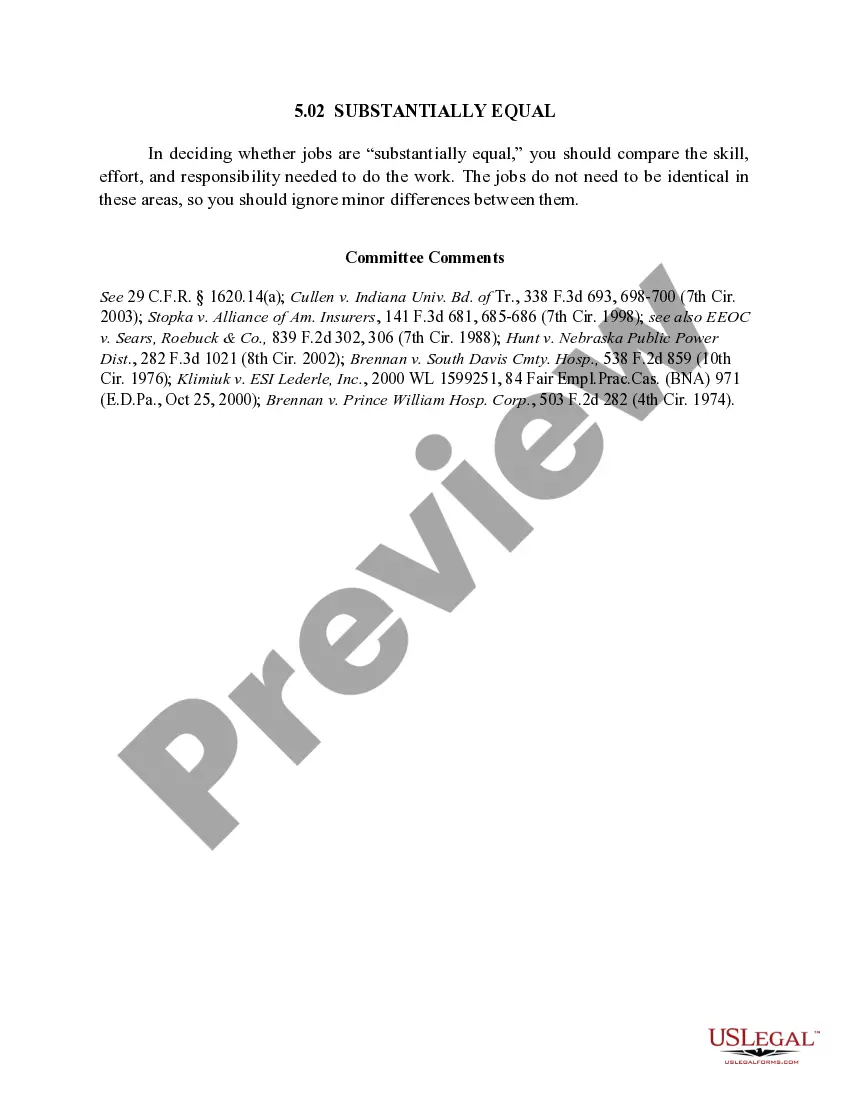
- Guidance on assessing substantially equal work performed.
- Reference to relevant legal precedents and regulations.

Situations where this form applies
This form is used in employment discrimination cases where wage disparities are in question. For example, a plaintiff who believes they are being paid less than male counterparts for performing the same job can utilize this form to present evidence. It is also applicable when asserting claims under equal pay laws to establish grounds for legal action.
Intended users of this form
- Employees who suspect wage discrimination based on gender.
- Individuals pursuing claims related to the Equal Pay Act.
- Legal representatives assisting plaintiffs in discrimination lawsuits.
- Anyone needing to demonstrate wage comparability in employment litigation.
Steps to complete this form
- Identify the plaintiff and the male employee being compared.
- Gather documentation of the wages paid to both employees.
- Provide a detailed description of the work performed by both parties, ensuring they are substantially equal.
- Refer to any relevant legal precedents stated in the form to support your claims.
- Sign and date the form to affirm its accuracy and authenticity.
Does this document require notarization?
This form usually doesn’t need to be notarized. However, local laws or specific transactions may require it. Our online notarization service, powered by Notarize, lets you complete it remotely through a secure video session, available 24/7.
Get your form ready online
Our built-in tools help you complete, sign, share, and store your documents in one place.
Make edits, fill in missing information, and update formatting in US Legal Forms—just like you would in MS Word.
Download a copy, print it, send it by email, or mail it via USPS—whatever works best for your next step.
Sign and collect signatures with our SignNow integration. Send to multiple recipients, set reminders, and more. Go Premium to unlock E-Sign.
If this form requires notarization, complete it online through a secure video call—no need to meet a notary in person or wait for an appointment.
We protect your documents and personal data by following strict security and privacy standards.

Make edits, fill in missing information, and update formatting in US Legal Forms—just like you would in MS Word.

Download a copy, print it, send it by email, or mail it via USPS—whatever works best for your next step.

Sign and collect signatures with our SignNow integration. Send to multiple recipients, set reminders, and more. Go Premium to unlock E-Sign.

If this form requires notarization, complete it online through a secure video call—no need to meet a notary in person or wait for an appointment.

We protect your documents and personal data by following strict security and privacy standards.
Avoid these common issues
- Failing to provide sufficient documentation of pay and job responsibilities.
- Not clearly establishing that the work performed is substantially equal.
- Ignoring the specifics of federal or state employment laws relevant to the case.
Advantages of online completion
- Immediate access to a professionally drafted template that adheres to legal standards.
- Editability allows customization to meet specific needs.
- Convenience of downloading and saving the form for future use.
- Guidance on legal requirements saves time and mitigates errors.
Looking for another form?
Form popularity
FAQ
The total CO2 equivalent (CO2-eq) concentration of all long-lived GHGs is currently estimated to be about 455 ppm CO2-eq, although the effect of aerosols, other air pollutants and land-use change reduces the net effect to levels ranging from 311 to 435 ppm CO2-eq (high agreement, much evidence).
Another way to refer to climate forcings is to call them climate drivers. Natural climate drivers include changes in the sun's energy output, regular changes in Earth's orbital cycle, and large volcanic eruptions that put light-reflecting particles into the upper atmosphere.
Since the Industrial Revolution, human activities have released large amounts of carbon dioxide and other greenhouse gases into the atmosphere, which has changed the earth's climate. Natural processes, such as changes in the sun's energy and volcanic eruptions, also affect the earth's climate.
To reach a 1.5-degree pathway, new cultivation approaches would need to prevail, leading to a 53 percent reduction in the intensity of methane emissions from rice cultivation by 2050. Finally, about one-third of global food output is currently lost in production or wasted in consumption.
These changes are measured by the amount of warming or cooling they can produce, which is called ?radiative forcing.? Changes that have a warming effect are called ?positive? forcing, while changes that have a cooling effect are called ?negative? forcing.
Answer and Explanation: The three types of climate forcing are changes in solar irradiance, albedo, and atmospheric gases.
Volcanic eruptions, changes in the Sun's radiative output, and the mostly anthropogenic changes in greenhouse gases, tropospheric aerosols, and land use are the main climate forcings for surface temperatures over the last 2,000 years.
Greenhouse gases produced by human activities have caused an overall warming influence on the Earth's climate since 1750. The largest contributor to warming has been carbon dioxide, followed by methane and black carbon.