6.03 Prisoner/Detainee First Amendment Retaliation Claim
Understanding this form
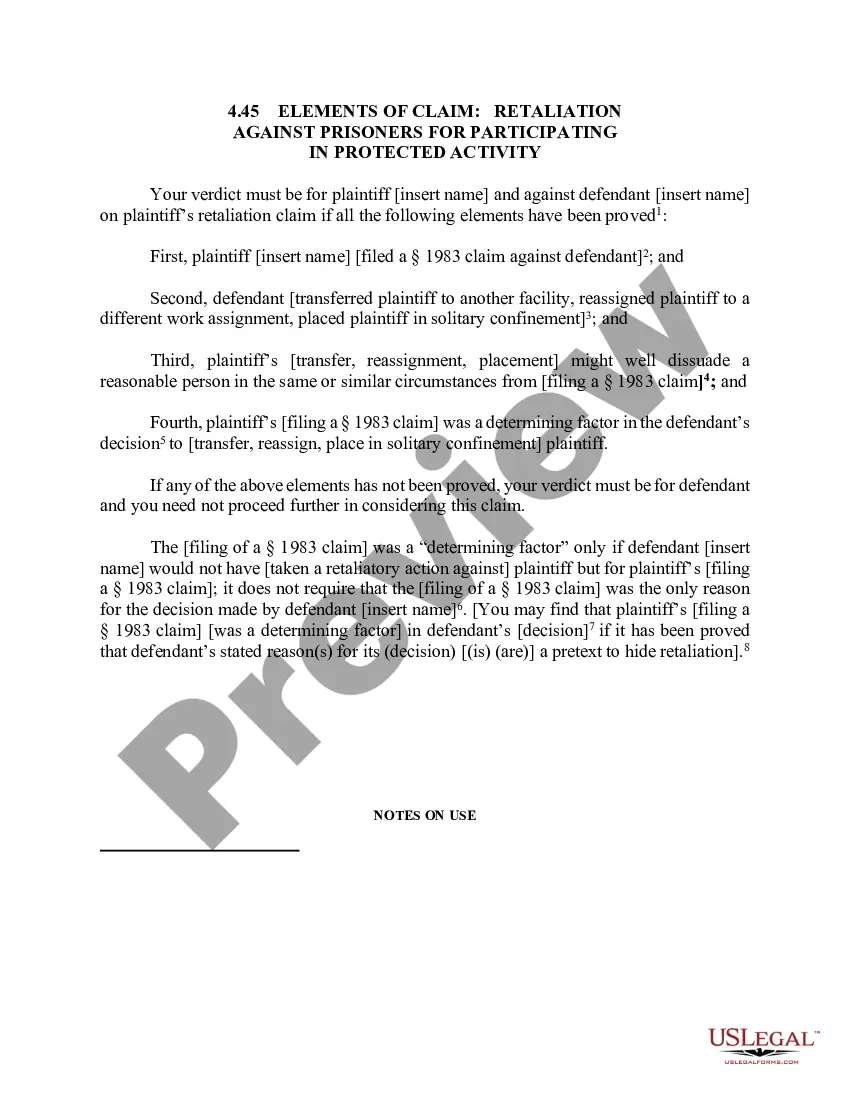
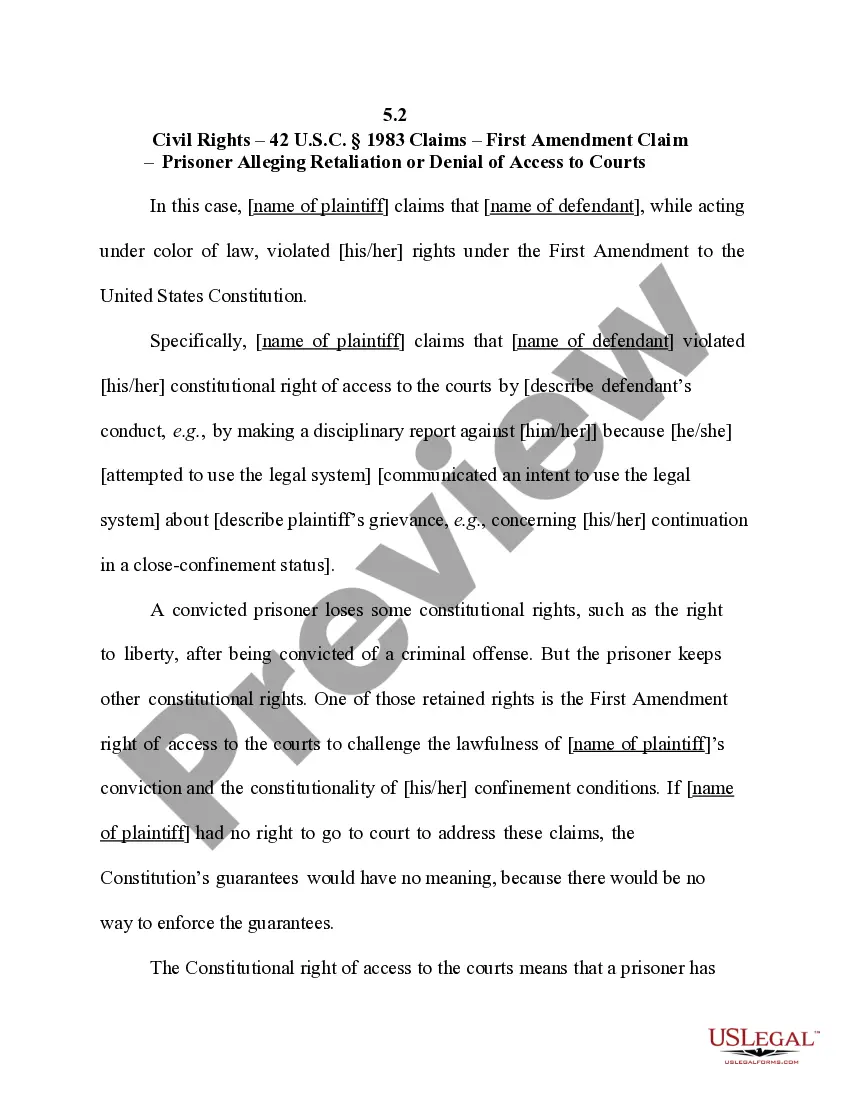
The Prisoner/Detainee First Amendment Retaliation Claim form is designed for inmates who believe they have been punished for exercising their constitutional rights. This form serves to outline the specifics of the alleged retaliation from prison officials and to establish a legal claim based on violations of the First Amendment. It is essential in differentiating these claims from other inmate grievances and wrongful treatment cases.
Form components explained
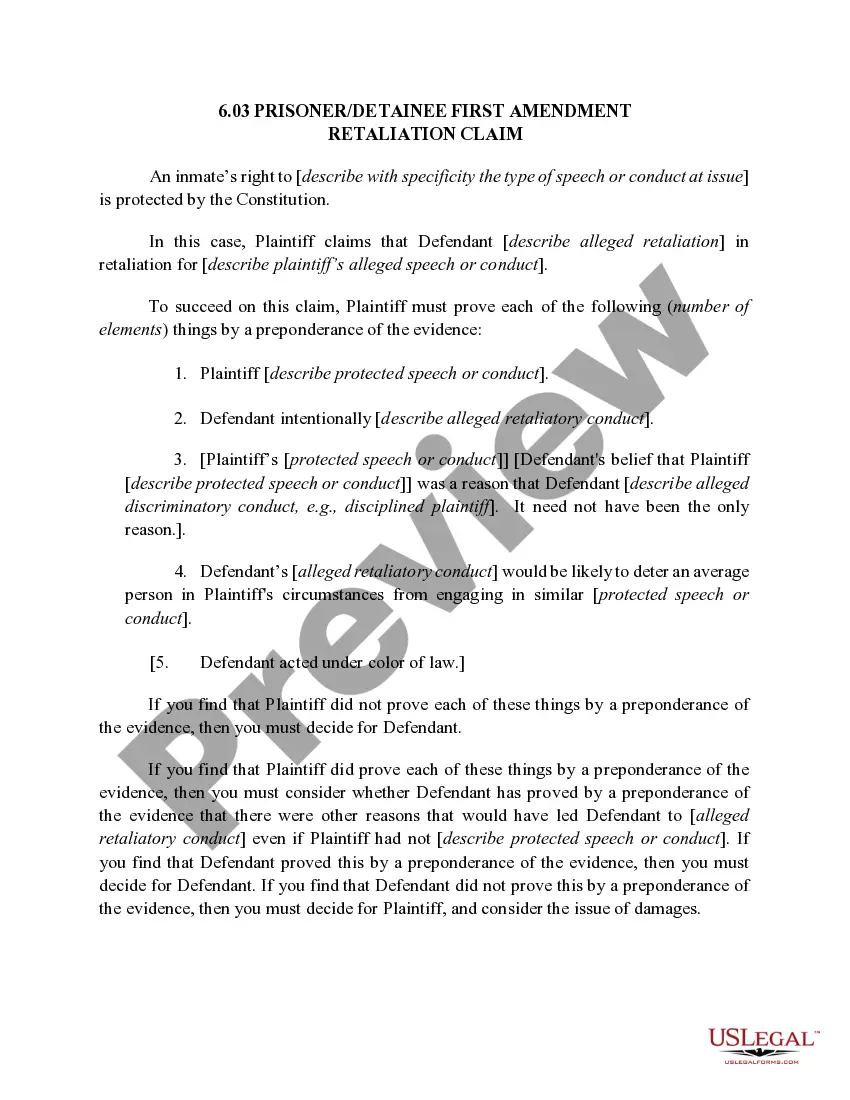
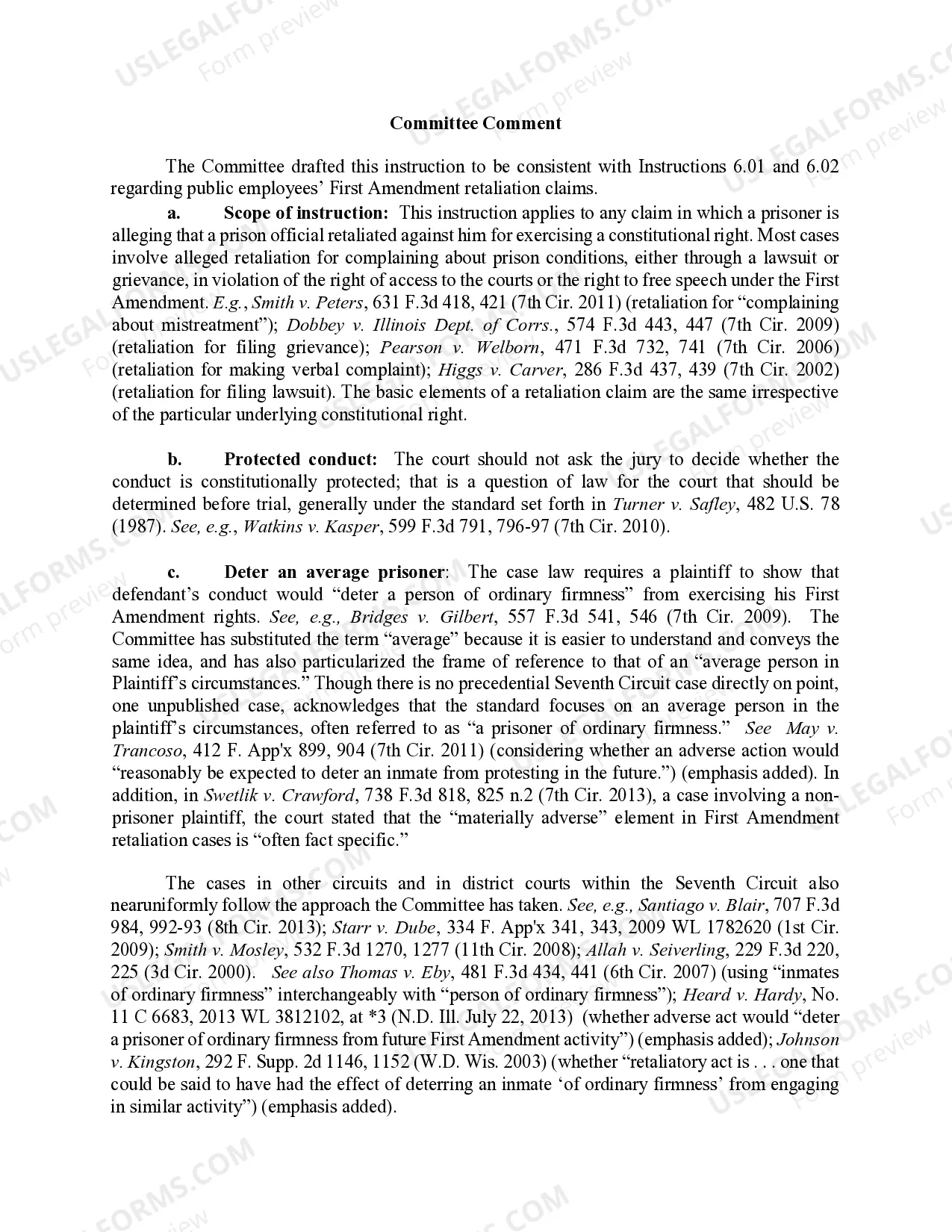
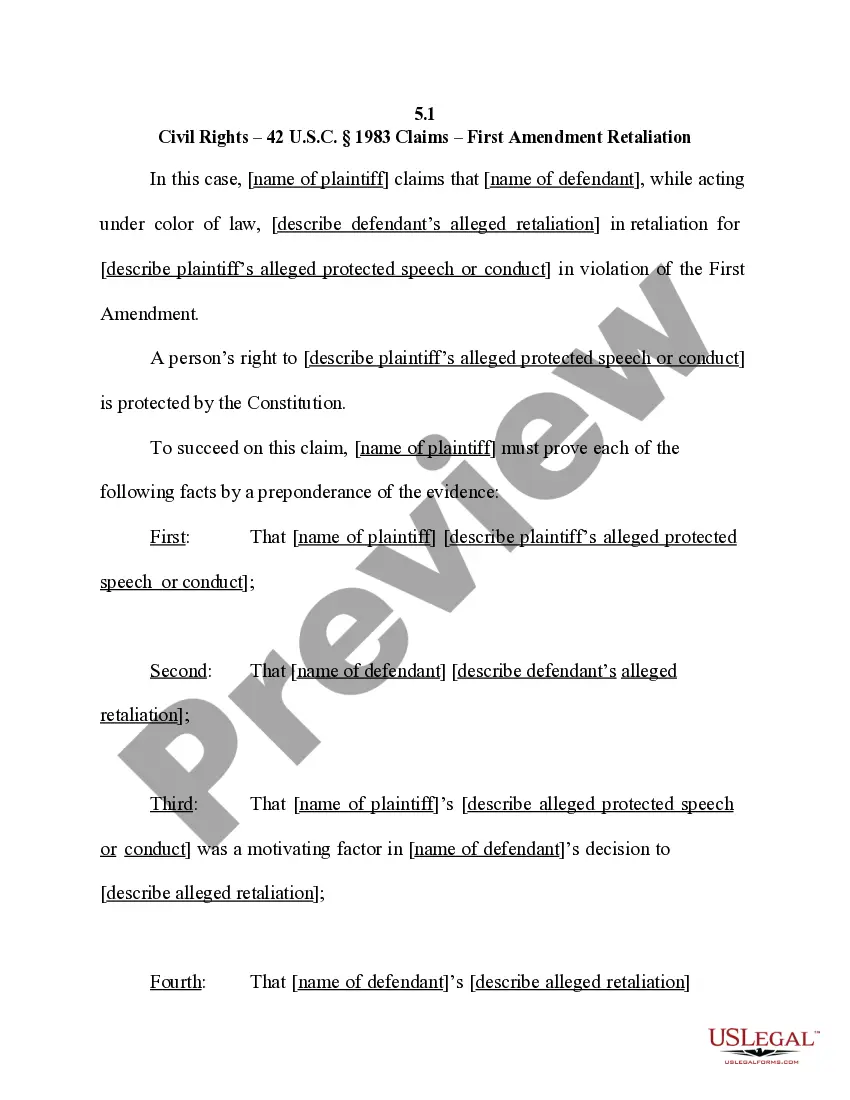
- Description of the protected speech or conduct at issue.
- Details of the alleged retaliatory actions taken by the defendant.
- Evidence of the connection between the protected conduct and the defendant's actions.
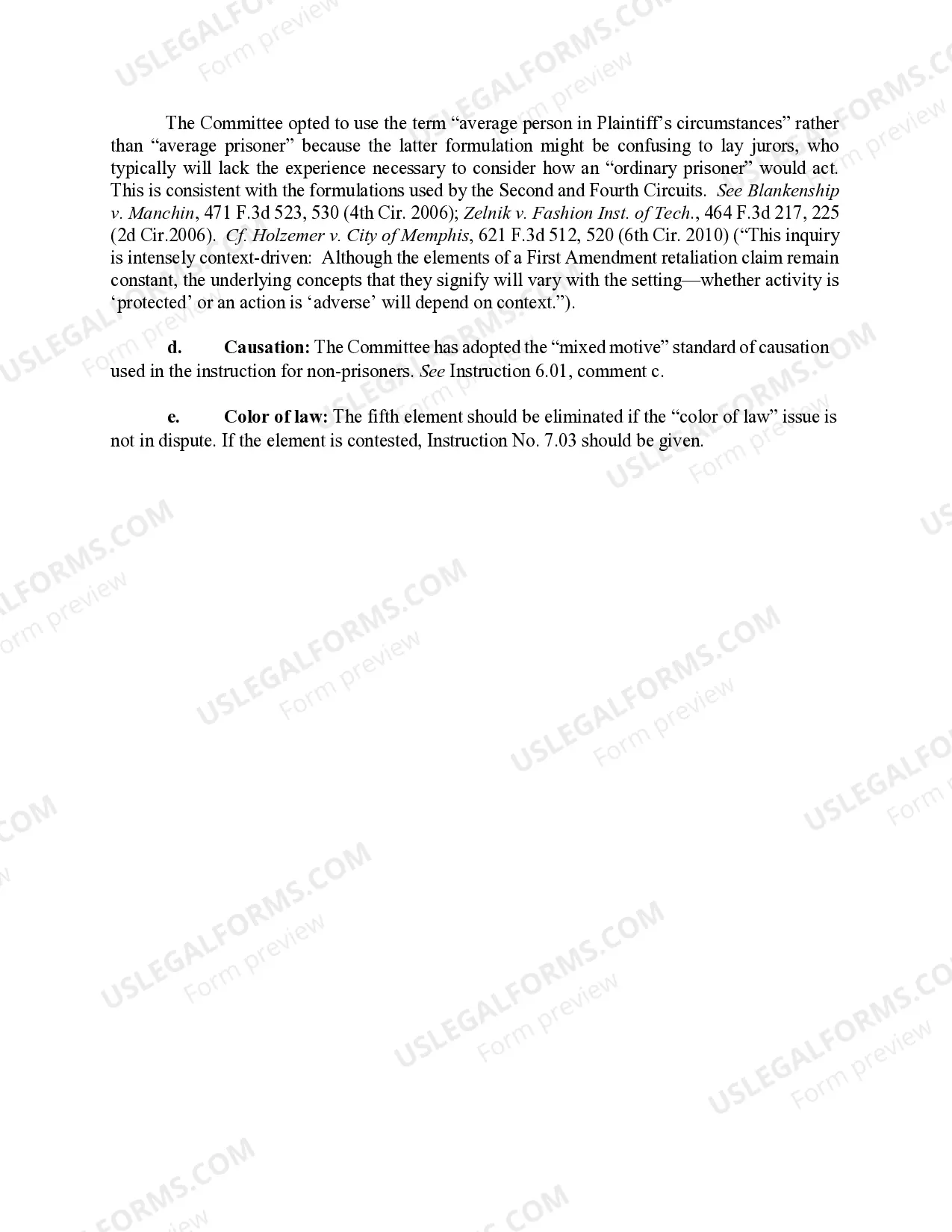
- Assessment of whether the defendant's conduct would deter an average person from similar protected actions.
- Clarification on whether the defendant acted under color of law (if the issue is contested).

When this form is needed
This form is necessary when a prisoner believes they have faced retaliation for exercising their First Amendment rights, such as filing a grievance, making complaints about mistreatment, or engaging in speech or expression related to prison conditions. It should be used to establish a clear and legal basis for a claim in a federal court setting.
Who this form is for
- Inmates who believe their rights have been violated by prison officials.
- Individuals filing lawsuits regarding claims of First Amendment retaliation.
- Prisoners who have experienced adverse actions after making grievances or complaints.
How to prepare this document
- Identify and clearly describe the protected speech or conduct that led to the retaliation.
- Specify the retaliatory actions taken by the defendant against you.
- Establish the connection between your protected actions and the retaliatory conduct.
- Assess whether the retaliatory actions would deter an average person in your position.
- Include any necessary information regarding the context of the defendant's actions, including color of law if in dispute.
Is notarization required?
Notarization is not commonly needed for this form. However, certain documents or local rules may make it necessary. Our notarization service, powered by Notarize, allows you to finalize it securely online anytime, day or night.
Get your form ready online
Our built-in tools help you complete, sign, share, and store your documents in one place.
Make edits, fill in missing information, and update formatting in US Legal Forms—just like you would in MS Word.
Download a copy, print it, send it by email, or mail it via USPS—whatever works best for your next step.
Sign and collect signatures with our SignNow integration. Send to multiple recipients, set reminders, and more. Go Premium to unlock E-Sign.
If this form requires notarization, complete it online through a secure video call—no need to meet a notary in person or wait for an appointment.
We protect your documents and personal data by following strict security and privacy standards.

Make edits, fill in missing information, and update formatting in US Legal Forms—just like you would in MS Word.

Download a copy, print it, send it by email, or mail it via USPS—whatever works best for your next step.

Sign and collect signatures with our SignNow integration. Send to multiple recipients, set reminders, and more. Go Premium to unlock E-Sign.

If this form requires notarization, complete it online through a secure video call—no need to meet a notary in person or wait for an appointment.

We protect your documents and personal data by following strict security and privacy standards.
Typical mistakes to avoid
- Failing to clearly define the protected conduct involved in the claim.
- Neglecting to provide specific details of the alleged retaliatory actions.
- Not establishing a clear causal link between the protected conduct and the defendant's actions.
- Omitting evidence that shows the retaliatory action would deter an ordinary person.
Why use this form online
- Easy access and immediate download of the form in a user-friendly format.
- Editable Word document allows for customization according to individual circumstances.
- Access to legal forms drafted by licensed attorneys ensures legal compliance.
Legal use & context
- The Prisoner/Detainee First Amendment Retaliation Claim is based on recognized constitutional rights.
- Legal precedents reinforce the protection of inmates against retaliation for exercising speech rights.
- This form is designed to be used in federal court proceedings under the jurisdiction of the 7th Circuit Court.
Looking for another form?
Form popularity
FAQ
To bring a First Amendment retaliation claim, the plaintiff must allege that (1) it engaged in constitutionally protected activity; (2) the defendant's actions would 'chill a person of ordinary firmness' from continuing to engage in the protected activity; and (3) the protected activity was a substantial or motivating
The five freedoms it protects: speech, religion, press, assembly, and the right to petition the government. Together, these five guaranteed freedoms make the people of the United States of America the freest in the world.
COURTS HAVE GRANTED BOTH SENTENCED INMATES AND DETAINEES EXPANDED RIGHTS TO RELIGIOUS ASSEMBLY AND SPEECH - OTHER FIRST AMENDMENT RIGHTS DESERVE EQUAL PROTECTION.
21, 2019). A Section 1983 First Amendment retaliation claim requires the plaintiff to show (1) she engaged in protected speech, (2) the government's retaliatory conduct adversely affected that speech and (3) a causal link exists between the conduct and the adverse effect.
First Amendment prohibits retaliation by government for exercising protected expression. Generally speaking, the First Amendment prohibits government officials from retaliating against persons for exercising First Amendment freedoms.
To make out a prima facie case of First Amendment retaliation, plaintiff must show: (1) that she engaged in speech protected by the First Amendment; (2) that she was subjected to an adverse employment action that would chill a person from continuing to engage in that speech; and (3) causation, i.e., plaintiff's
A Section 1983 First Amendment retaliation claim requires the plaintiff to show (1) she engaged in protected speech, (2) the government's retaliatory conduct adversely affected that speech and (3) a causal link exists between the conduct and the adverse effect.
If the officer retaliates against such a person by pulling him over, arresting him, or using excessive force, he is guilty of First Amendment retaliation.