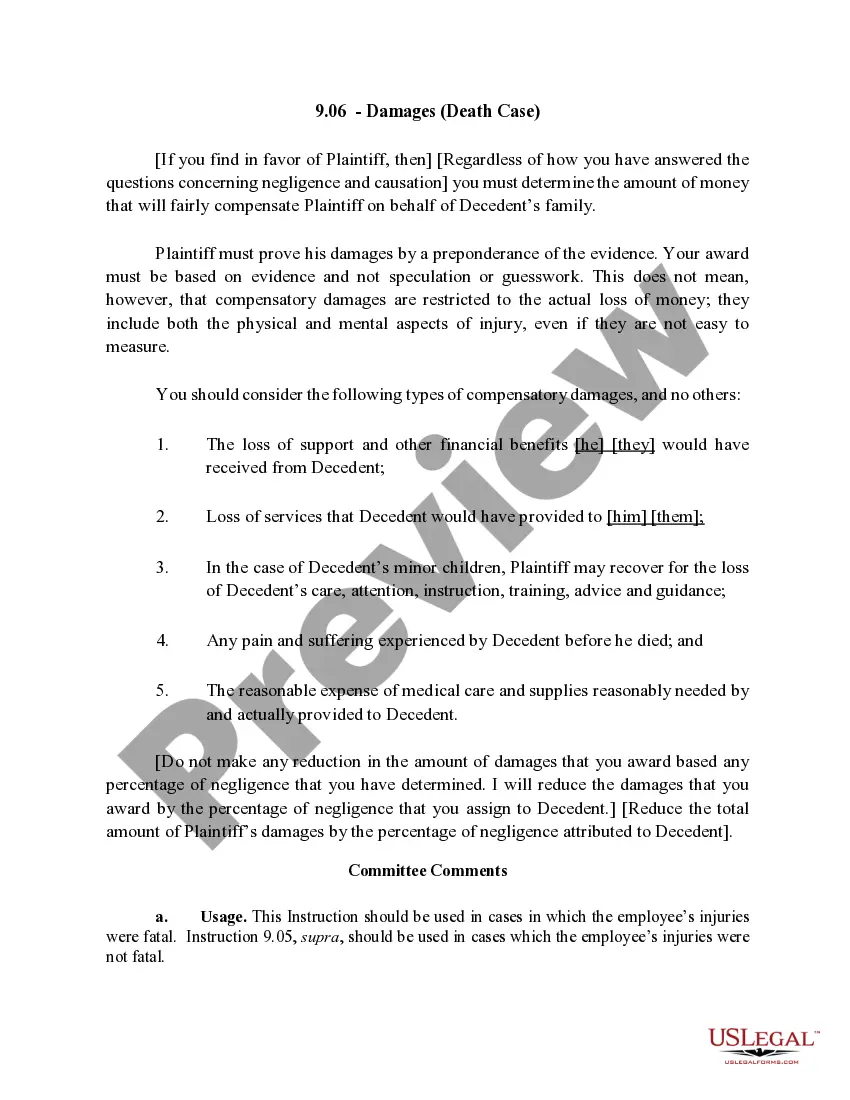
9.06 Damages (Death Case)
What is this form?
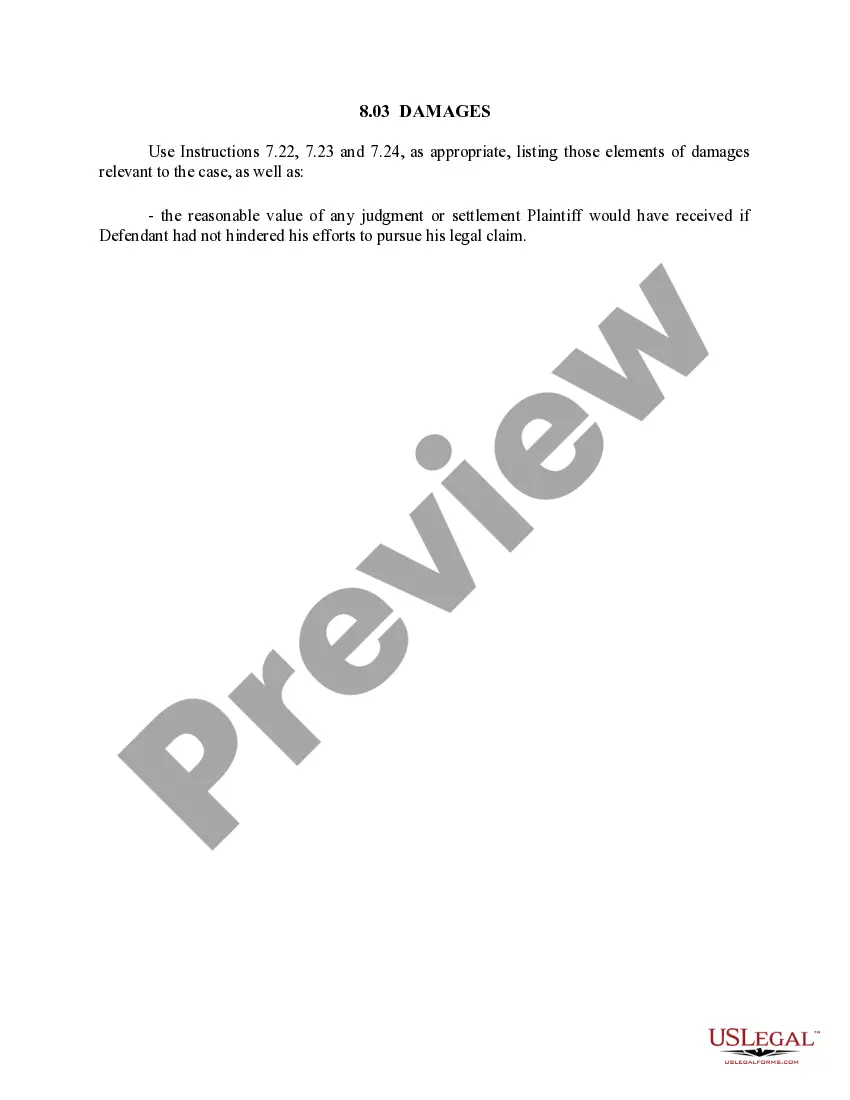
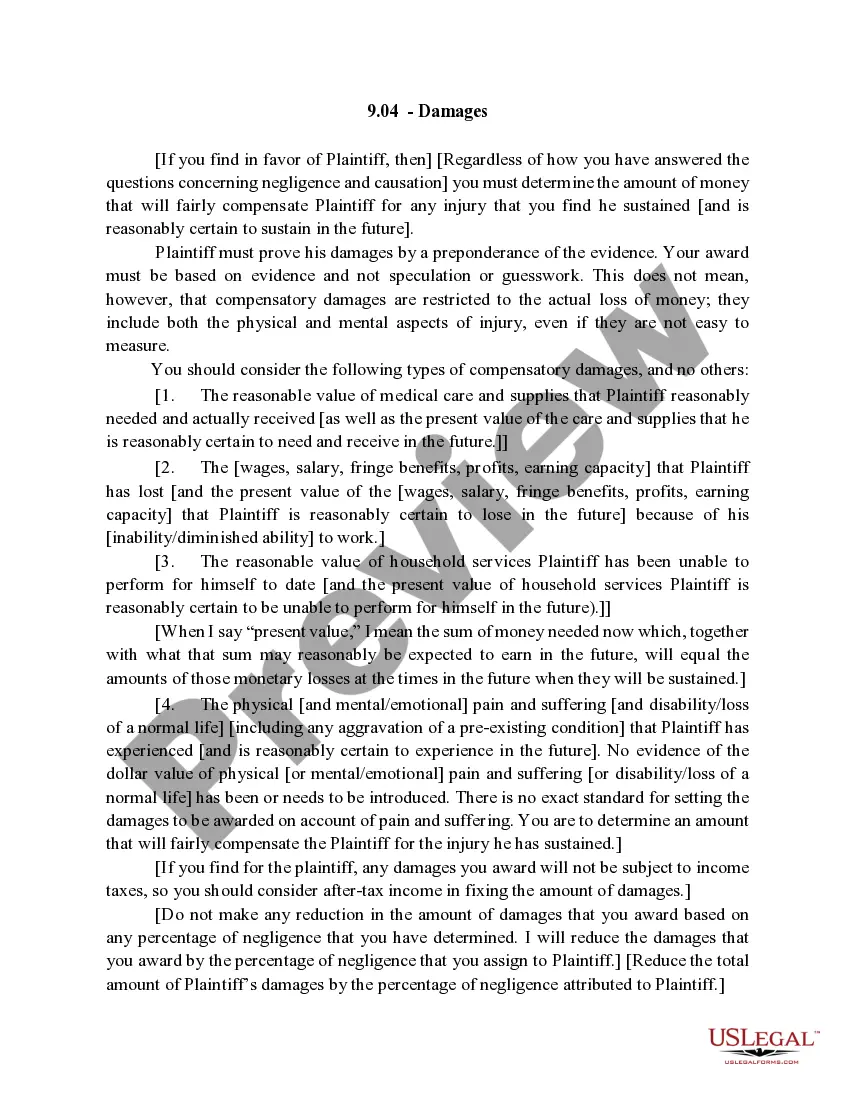
The 9.06 Damages (Death Case) form is an official pattern jury instruction used in wrongful death cases under the Federal Employers Liability Act (FELA). Its purpose is to guide juries in calculating compensatory damages for the family of a decedent who has died as a result of negligence. This form is designed for cases where the injuries of an employee were fatal, differentiating it from other instructions used for non-fatal injuries.
Form components explained
- Criteria for determining the amount of damages to compensate the decedent's family.
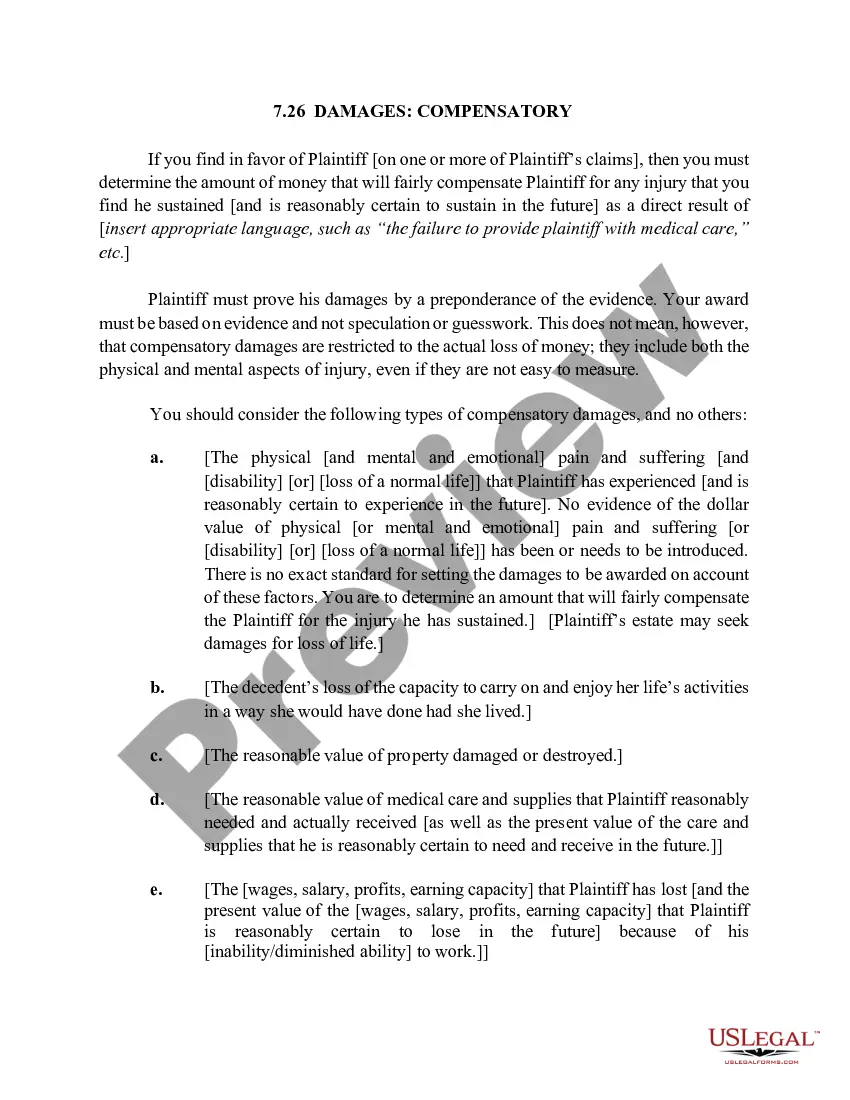
- Types of compensatory damages to consider, including loss of support, loss of services, and pain and suffering.
- Instructions on how to award damages without speculation or guesswork.
- Provisions for determining negligence and its impact on the awarded damages.
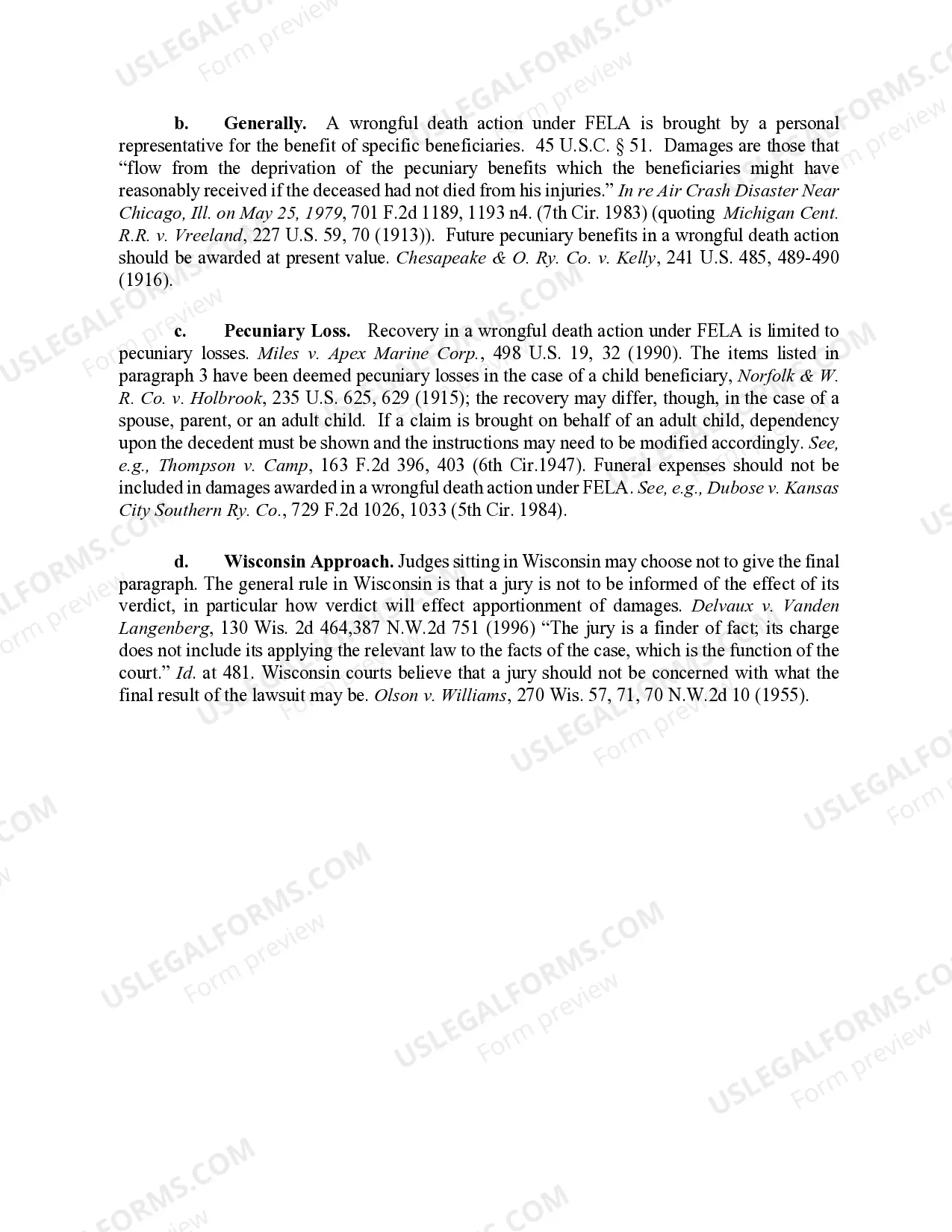
- Legal context regarding pecuniary losses and beneficiaries' recovery rights.
Situations where this form applies
This form should be used in wrongful death cases where an employee's fatal injuries were the result of negligence. It provides the necessary instructions for jurors to fairly assess and award damages that the surviving family members would have received had the decedent not died. It is crucial for cases involving fatalities to ensure that proper compensation is awarded based on the evidence presented.
Who needs this form
- Personal representatives of the decedent acting on behalf of the family.
- Attorneys representing plaintiffs in wrongful death cases.
- Jurors who are tasked with determining damages in a wrongful death trial.
Steps to complete this form
- Identify the plaintiff and the decedent, providing clear names and relevant details.
- Review evidence related to the financial support and services the decedent provided to their family.
- Assess and document any pain and suffering experienced by the decedent prior to death.
- Calculate medical expenses incurred that are directly related to the decedent's fatal injuries.
- Determine the appropriate compensation amount based on the evidence, avoiding speculation.
Does this document require notarization?
This form does not typically require notarization to be legally valid. However, some jurisdictions or document types may still require it. US Legal Forms provides secure online notarization powered by Notarize, available 24/7 for added convenience.
Get your form ready online
Our built-in tools help you complete, sign, share, and store your documents in one place.
Make edits, fill in missing information, and update formatting in US Legal Forms—just like you would in MS Word.
Download a copy, print it, send it by email, or mail it via USPS—whatever works best for your next step.
Sign and collect signatures with our SignNow integration. Send to multiple recipients, set reminders, and more. Go Premium to unlock E-Sign.
If this form requires notarization, complete it online through a secure video call—no need to meet a notary in person or wait for an appointment.
We protect your documents and personal data by following strict security and privacy standards.

Make edits, fill in missing information, and update formatting in US Legal Forms—just like you would in MS Word.

Download a copy, print it, send it by email, or mail it via USPS—whatever works best for your next step.

Sign and collect signatures with our SignNow integration. Send to multiple recipients, set reminders, and more. Go Premium to unlock E-Sign.

If this form requires notarization, complete it online through a secure video call—no need to meet a notary in person or wait for an appointment.

We protect your documents and personal data by following strict security and privacy standards.
Typical mistakes to avoid
- Including non-pecuniary losses, such as emotional distress, when the focus should be on quantifiable financial impact.
- Failing to substantiate claims with clear evidence, leading to awards based on guesswork.
- Neglecting to document the precise nature of the decedent's contributions and support to the family.
Benefits of using this form online
- Convenient access to legal resources from anywhere, saving time and effort.
- Editability allows users to tailor the form to their specific case needs.
- Reliability, with forms drafted by licensed attorneys ensuring compliance with legal standards.
Summary of main points
- The 9.06 Damages (Death Case) form is essential for calculating damages in wrongful death cases.
- Compensatory damages cover both tangible and intangible losses experienced by the decedent's family.
- Proper documentation and evidence are crucial for justifying the awarded damages.
Looking for another form?
Form popularity
FAQ
Every state in the US will have its own laws and limitations regarding wrongful death compensation. In the state of Florida, no cap on wrongful death claims exists.
How may we help you? Every state in the US will have its own laws and limitations regarding wrongful death compensation. In the state of Florida, no cap on wrongful death claims exists.
The damages available in a wrongful death action in Texas include the following: The lost earning capacity of the decedent. The loss of an inheritance, including what the decedent would have reasonably been expected to earn and gift had he or she lived. The loss of companionship, society, comfort, and love.
Wrongful death cases settle for a range of figures. The average in Florida is around $500,000 to $1 million. Damages can amount to more or less than this average, and the amount able to be paid depends on insurance coverage and the defendant's individual financial worth.
Punitive Damage Caps in Florida The Florida punitive damages statute allows an award of up to three times the amount of compensatory damages, or $500,000, whichever amount is higher. So, if you were awarded $1 million in compensatory damages, you could not be awarded more than $3 million in punitive damages.
The state of Florida does impose damage caps on the amount of money that can be awarded as punishment for perceived wrongdoing attached to a personal injury complaint. The law limits punitive damages to three times the amount of compensatory damages, or $500,000.
There is no set limit on the amount of financial compensation that may be awarded in a wrongful death lawsuit in Louisiana. There is a $500,000 cap on medical malpractice cases and cases against government agencies, however.
In addition, the jury may give damages not exceeding $750,000 for the loss of comfort, society and companionship of the deceased, including any damages for emotional distress arising from the same facts as those constituting the underlying claim, to the persons for whose benefit the action is brought.