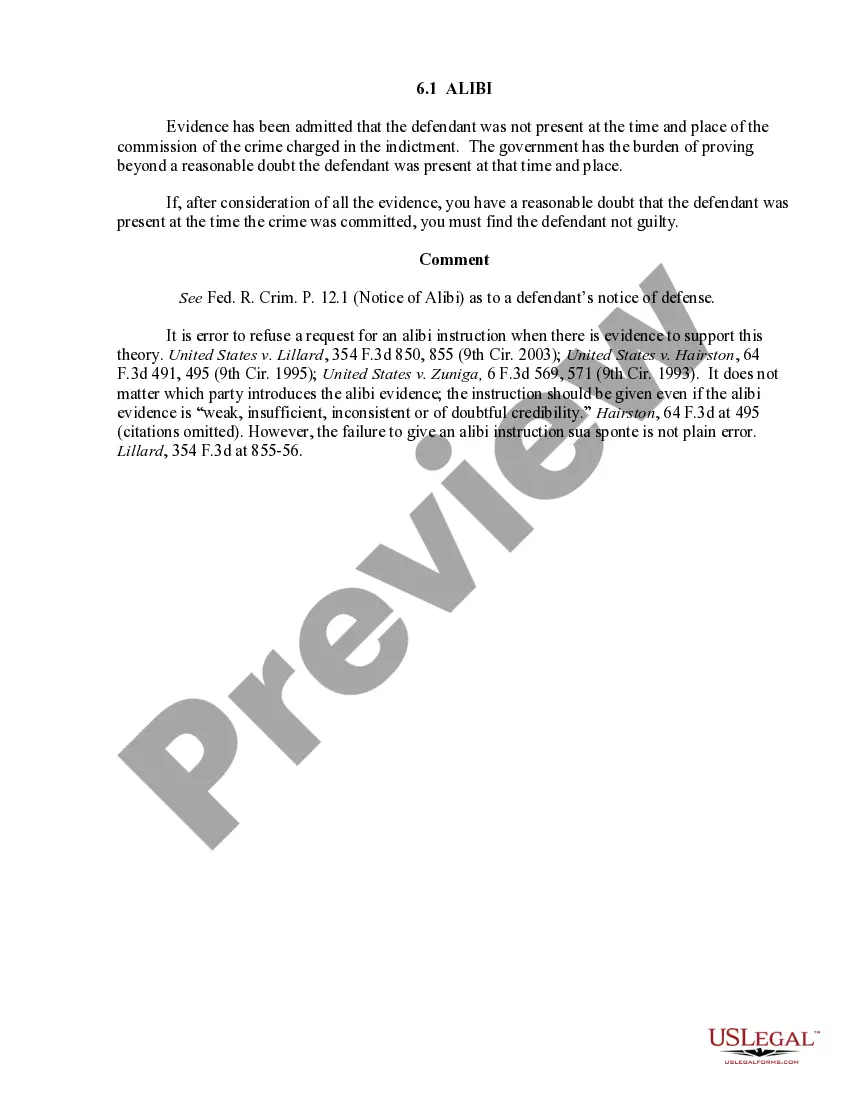
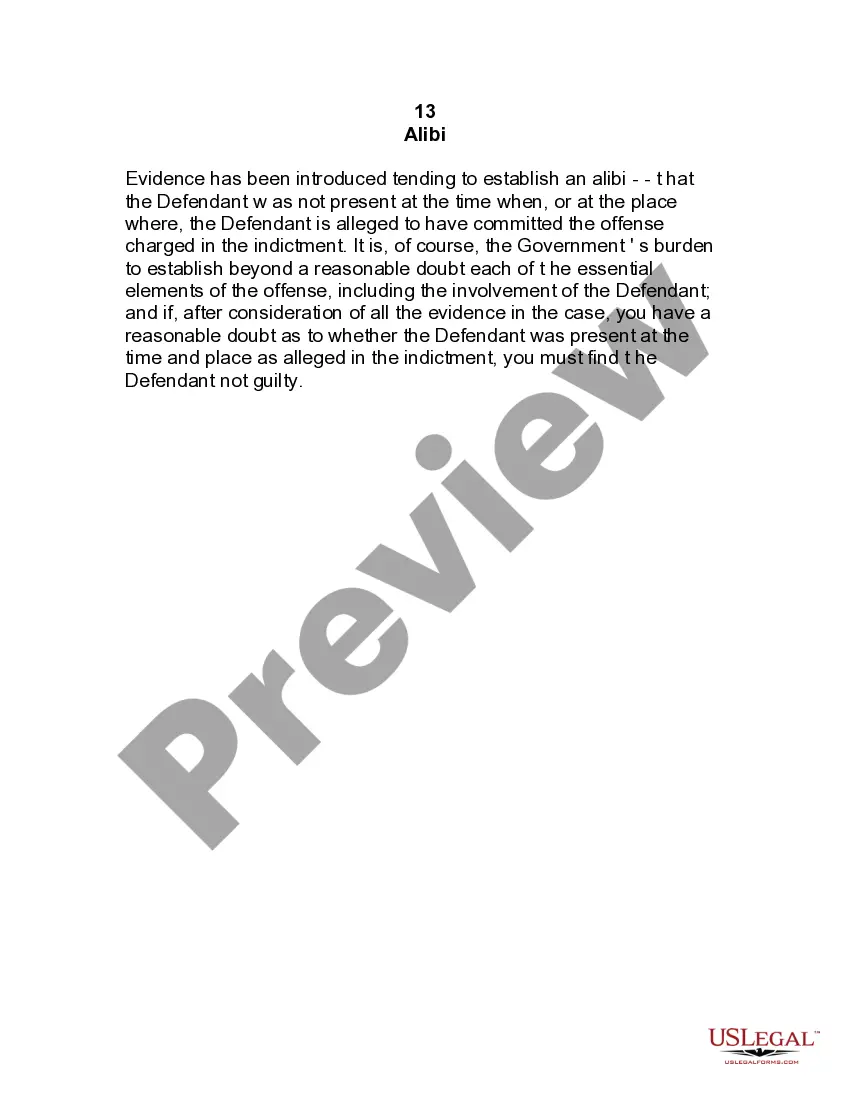
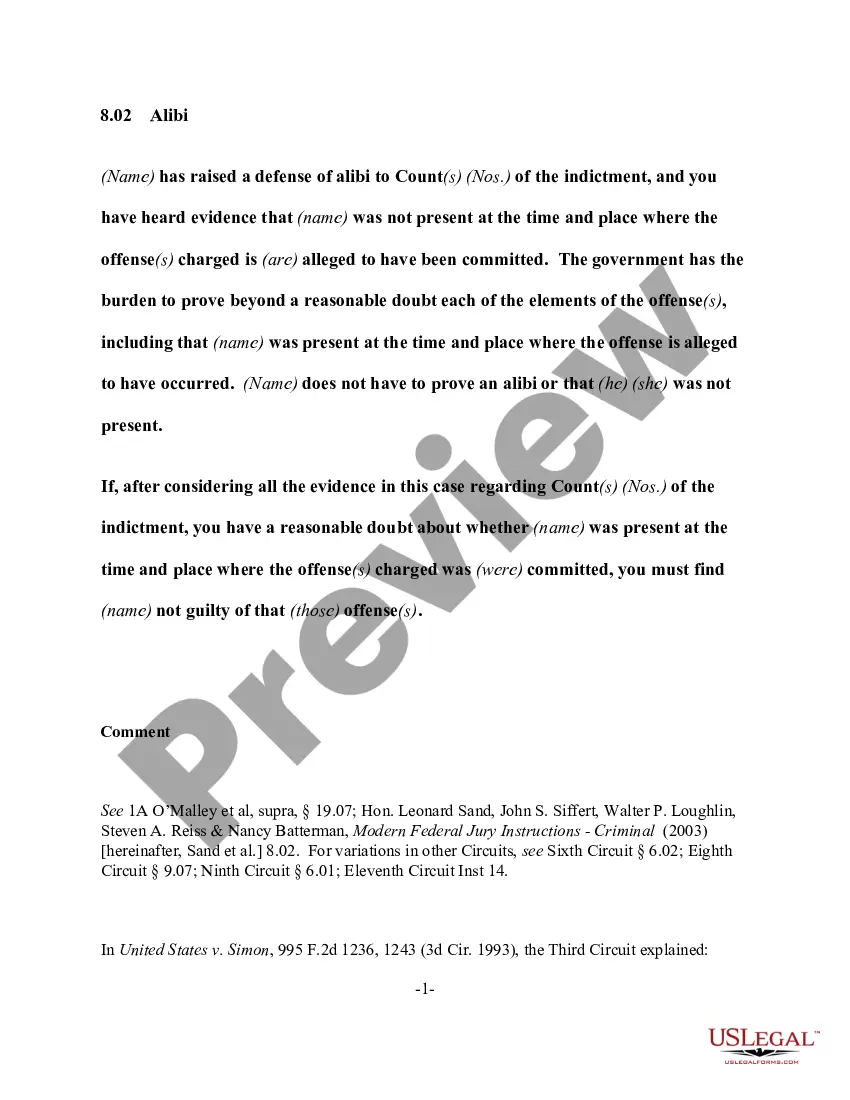
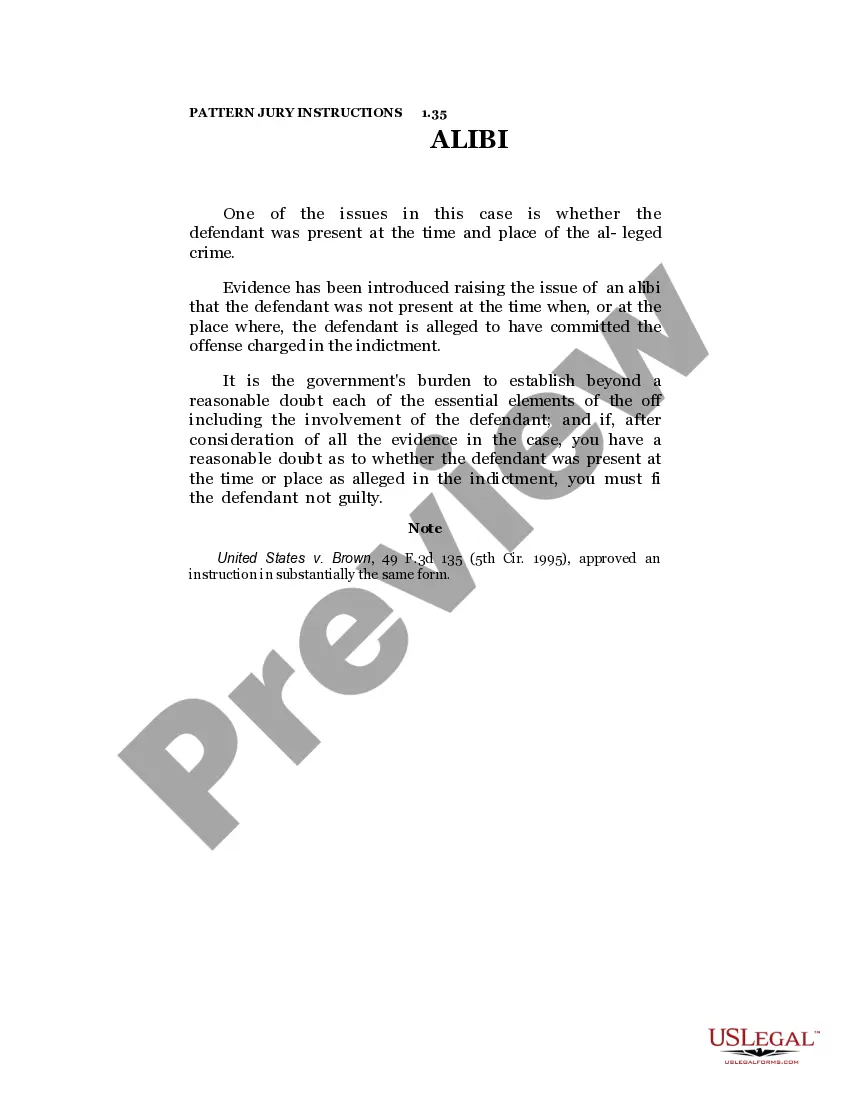
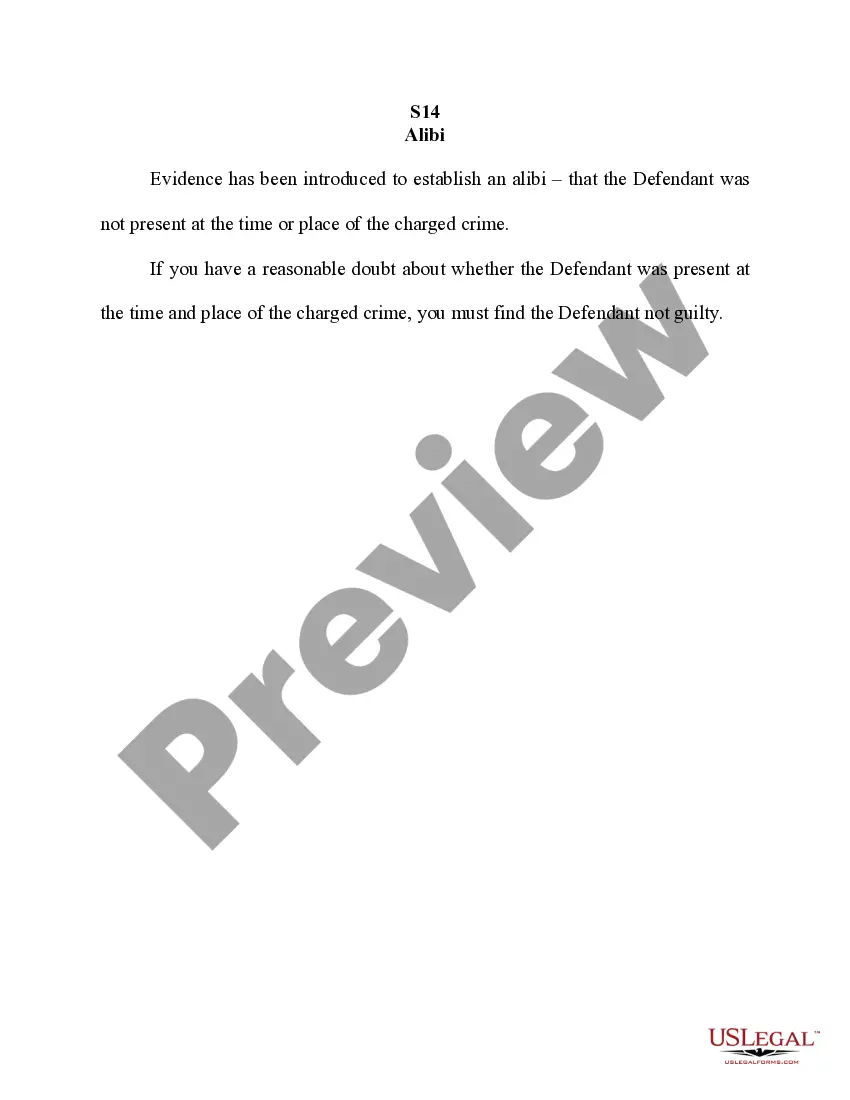
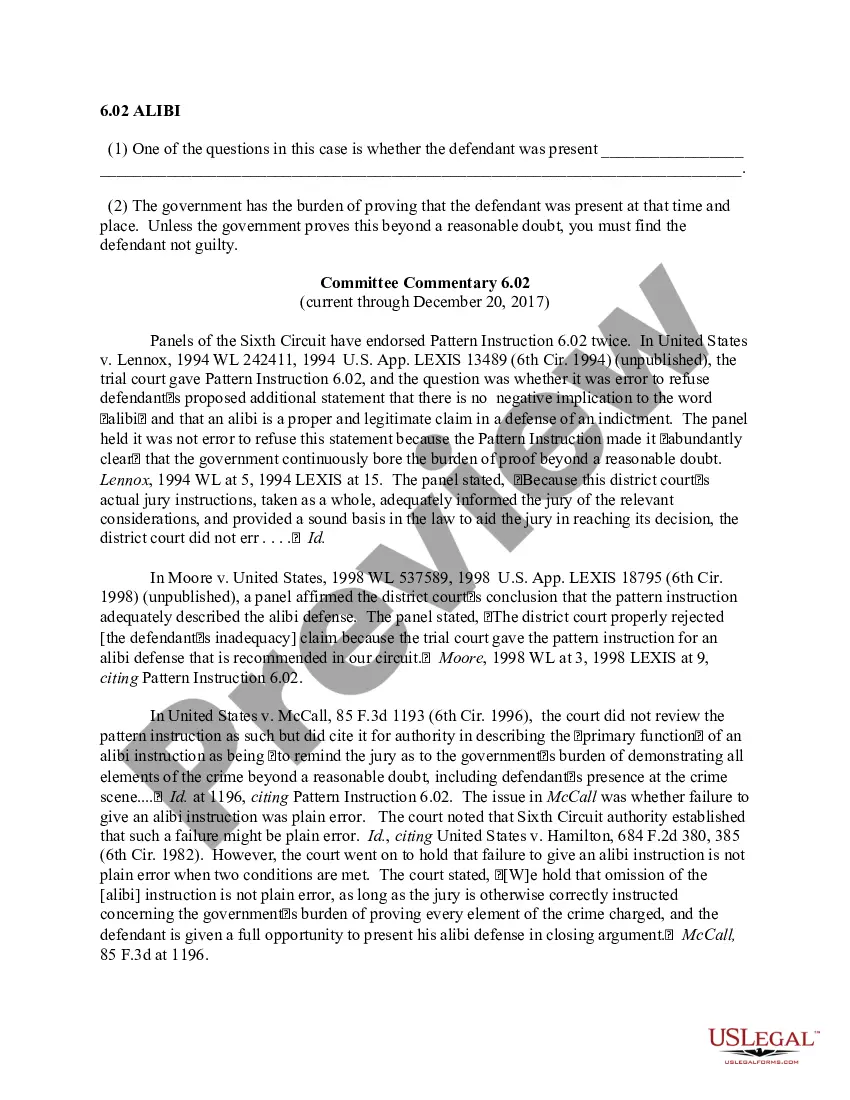
6.1 Alibi

Is notarization required?
Notarization is generally not required for this form. However, certain states or situations might demand it. You can complete notarization online through US Legal Forms, powered by Notarize, using a verified video call available anytime.
Get your form ready online
Our built-in tools help you complete, sign, share, and store your documents in one place.
Make edits, fill in missing information, and update formatting in US Legal Forms—just like you would in MS Word.
Download a copy, print it, send it by email, or mail it via USPS—whatever works best for your next step.
Sign and collect signatures with our SignNow integration. Send to multiple recipients, set reminders, and more. Go Premium to unlock E-Sign.
If this form requires notarization, complete it online through a secure video call—no need to meet a notary in person or wait for an appointment.
We protect your documents and personal data by following strict security and privacy standards.

Make edits, fill in missing information, and update formatting in US Legal Forms—just like you would in MS Word.

Download a copy, print it, send it by email, or mail it via USPS—whatever works best for your next step.

Sign and collect signatures with our SignNow integration. Send to multiple recipients, set reminders, and more. Go Premium to unlock E-Sign.

If this form requires notarization, complete it online through a secure video call—no need to meet a notary in person or wait for an appointment.

We protect your documents and personal data by following strict security and privacy standards.
Looking for another form?

Form popularity
FAQ
Alibi as a noun is defined as a defense to a criminal charge alleging that the accused was somewhere other than at the scene of the crime at the time it occurred. For example, A could not confirm B's alibi that B was at the dentist office at the time of the robbery.
Alibi as a noun is defined as a defense to a criminal charge alleging that the accused was somewhere other than at the scene of the crime at the time it occurred. For example, A could not confirm B's alibi that B was at the dentist office at the time of the robbery.
The noun alibi is the same word as its Latin root, alibi, which means "excuse." When you provide an alibi, you are giving proof ? a certified excuse ? that you could not have committed a crime.
An alibi is proof that shows that a person wasn't at the scene of a crime as the crime was being committed. Though this form of evidence is often looked at suspiciously in police drama shows, it makes for a very strong defense in the real world.
An alibi defense, however, is not an affirmative defense and must be disproven by a prosecutor if raised by the defense. In order to successfully raise an alibi defense, it is important to present evidence showing that a defendant was somewhere else at the time a crime occurred.
What is the law in California? California criminal law recognizes the alibi defense as a valid defense in a criminal case. Note that it is not necessary that an accused proves an alibi. Alibi evidence only needs to raise a reasonable doubt that the defendant was not present at the scene of the crime.
Self-defense, entrapment, insanity, necessity, and respondeat superior are some examples of affirmative defenses.
An alibi defense is showing evidence a defendant was not at the scene when the crime occurred. Simply put, under criminal law, an alibi is a legal defense strategy where a defendant provides evidence they couldn't have committed the crime because they were somewhere else when the crime occurred.