Wear and Tear Information Sheet
Understanding this form
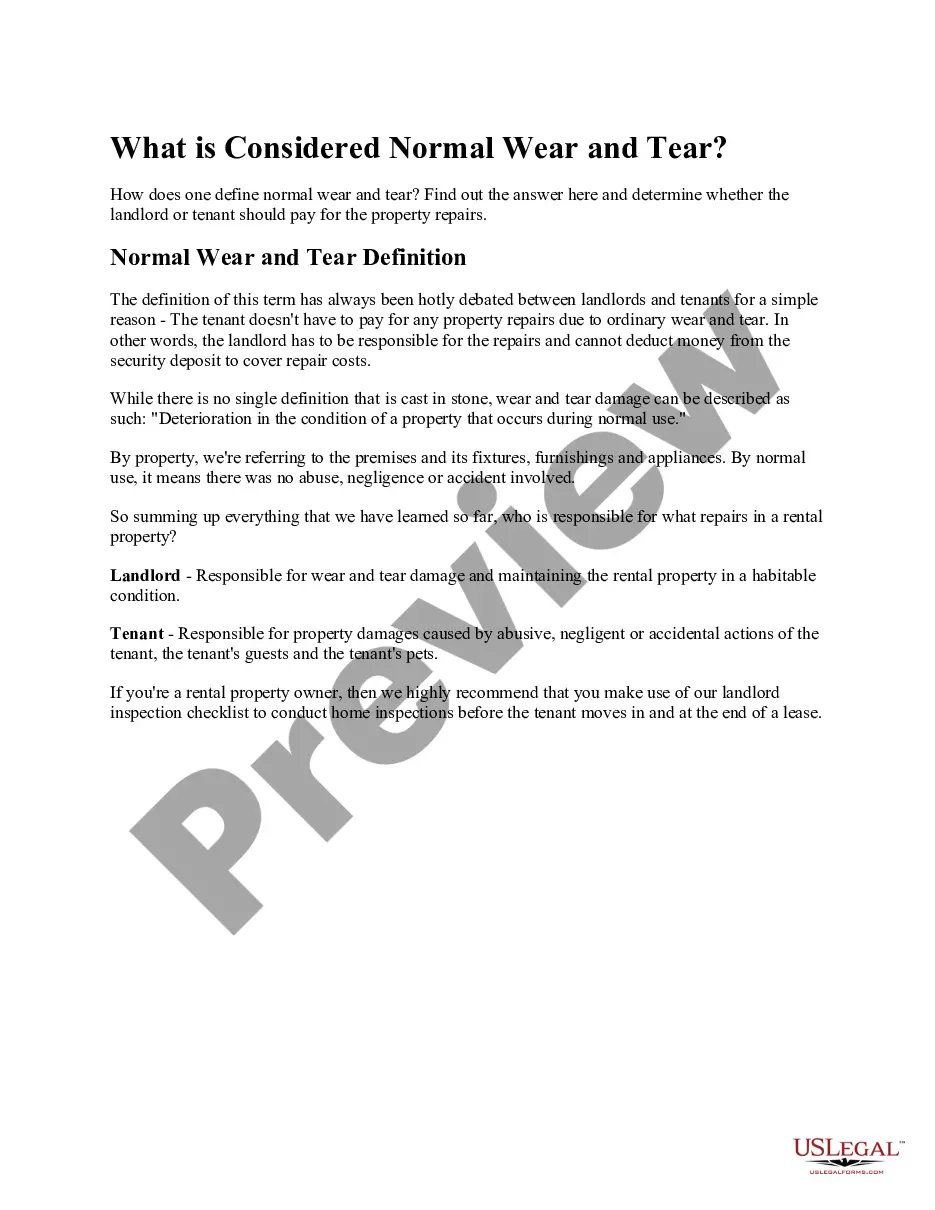
The Wear and Tear Information Sheet is a valuable document used during the tenant move-in or move-out process to record the condition of a rental property. This form helps distinguish between normal wear and tear and damages, making it clear which party is responsible for repairs. It can be customized to meet individual needs, ensuring that all relevant property conditions are noted accurately.
Key components of this form
- Definition of normal wear and tear
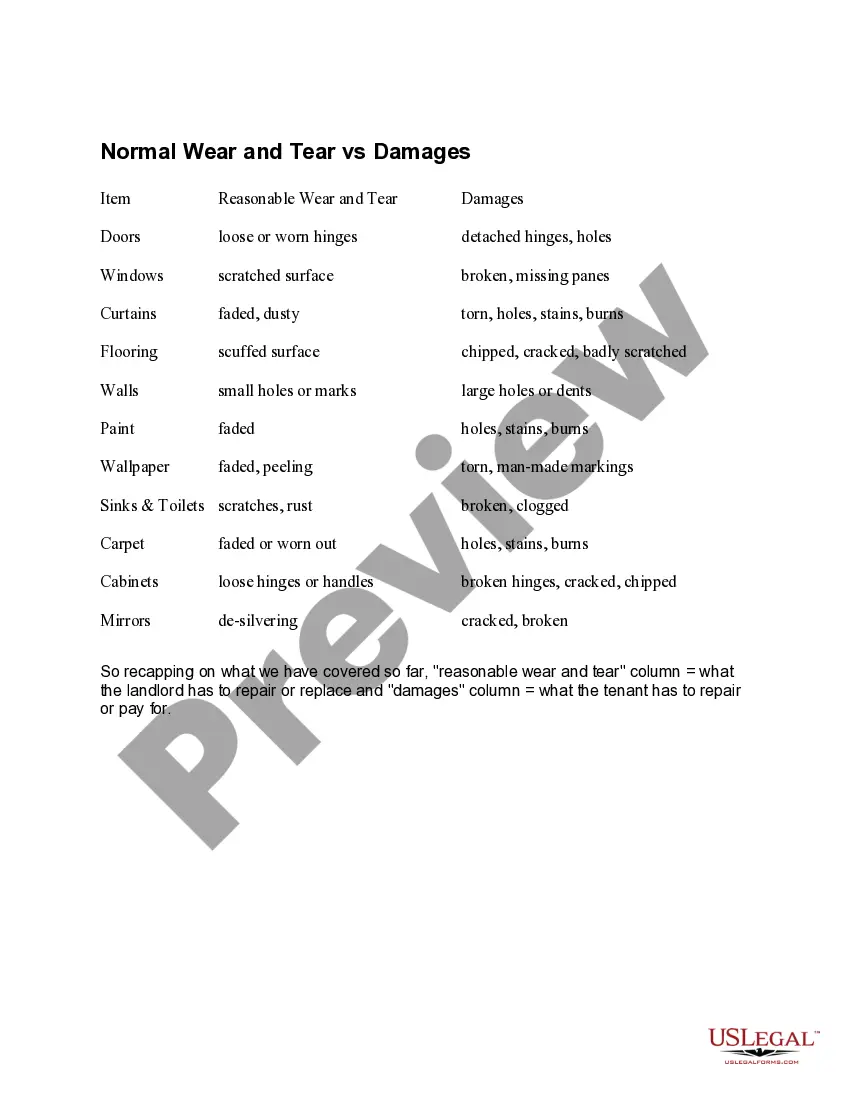
- Comparison of reasonable wear and tear versus damages
- Checklist for property conditions, including specific items such as doors, windows, and flooring
- Space for tenant and landlord signatures
- Instructions for documenting damage during inspection
When this form is needed
This form should be used during the move-in and move-out phases of a rental agreement. It assists landlords and tenants in recording the property's condition, helping to prevent disputes regarding security deposits. It is especially helpful when a tenant is vacating a property, as both parties can refer to this document to determine if any charges for damages are applicable.
Who needs this form
- Landlords who wish to document the condition of their rental properties
- Tenants wanting to ensure a fair assessment of property conditions
- Property managers overseeing rentals and handling tenant communications
Completing this form step by step
- Identify the parties involved, including landlord and tenant names.
- Specify the rental property's address and details.
- Document the condition of each relevant item in the property, noting any existing wear and tear.
- Differentiate between normal wear and tear and actual damages using the provided checklist.
- Ensure both parties sign and date the sheet to confirm agreement.
Notarization requirements for this form
This form does not typically require notarization unless specified by local law. It is important for both parties to keep copies of the completed form for their records.
Get your form ready online
Our built-in tools help you complete, sign, share, and store your documents in one place.
Make edits, fill in missing information, and update formatting in US Legal Forms—just like you would in MS Word.
Download a copy, print it, send it by email, or mail it via USPS—whatever works best for your next step.
Sign and collect signatures with our SignNow integration. Send to multiple recipients, set reminders, and more. Go Premium to unlock E-Sign.
If this form requires notarization, complete it online through a secure video call—no need to meet a notary in person or wait for an appointment.
We protect your documents and personal data by following strict security and privacy standards.

Make edits, fill in missing information, and update formatting in US Legal Forms—just like you would in MS Word.

Download a copy, print it, send it by email, or mail it via USPS—whatever works best for your next step.

Sign and collect signatures with our SignNow integration. Send to multiple recipients, set reminders, and more. Go Premium to unlock E-Sign.

If this form requires notarization, complete it online through a secure video call—no need to meet a notary in person or wait for an appointment.

We protect your documents and personal data by following strict security and privacy standards.
Common mistakes
- Failing to document existing damages before a tenant moves in.
- Not distinguishing clearly between normal wear and tear and damages.
- Leaving the form unsigned by both parties, which can lead to disputes.
Benefits of completing this form online
- Convenience of instant download and access anywhere.
- Easy customization to fit specific property needs.
- Legally reliable templates drafted by licensed attorneys.
Looking for another form?
Form popularity
FAQ
Some examples of fair wear and tear are worn carpets, faded curtains, minor scuffs and scrapes on walls, worn keys and dirty windows.
For example, a worn carpet is to be expected, but a stained and ripped carpet would be defined as damage. A worn kitchen countertop would be classed as wear and tear, but burn marks across the worktop are evidently damage. To establish whether the damage has exceeded 'normal wear and tear', consider the: product age.
Wear is what happens during normal use of the property and changes that occur with ageing. The property can also deteriorate over time through exposure to the environment. Dirt, grime, grease and damage is not considered wear and tear.
Hardwood Floors: The average useful life of hardwood floors is 25 years. Fading of such flooring due to sunlight exposure is normal wear and tear, as would light surface scratches. However, deeply scratched hardwood floors or pieces of the hardwood missing would be considered tenant damage.
Normal Wear & Tear means the gradual reduction in a Covered Component's operating performance or ability to perform the functions for which it was designed, taking into account the Vehicle's age and kilometres travelled.
Generally, normal wear and tear involves any of the following: Slight damage to the walls, including nail holes, chips, scratches, smudges, or dents. It can also encompass faded paint or slightly damaged wallpaper. Carpet thinning or fading, or scuffed floors from normal walking.
Usually, there isn't a legal upper limit on damage-related fees, as the cost is largely determined by the kind of repair that's needed to bring the unit back into the same state it was in before the tenant moved into the unit.