Pipeline Easement
What is this form?
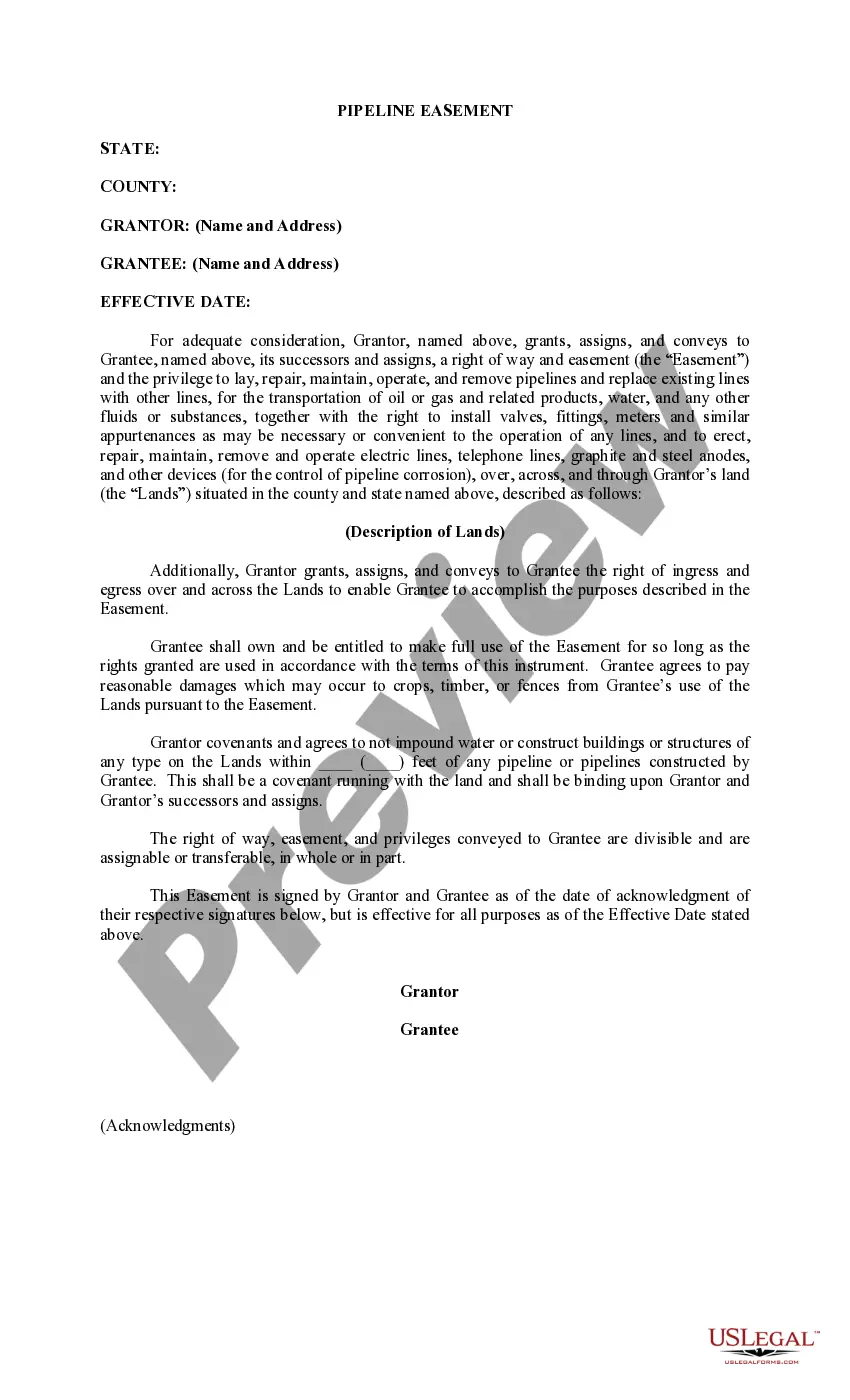
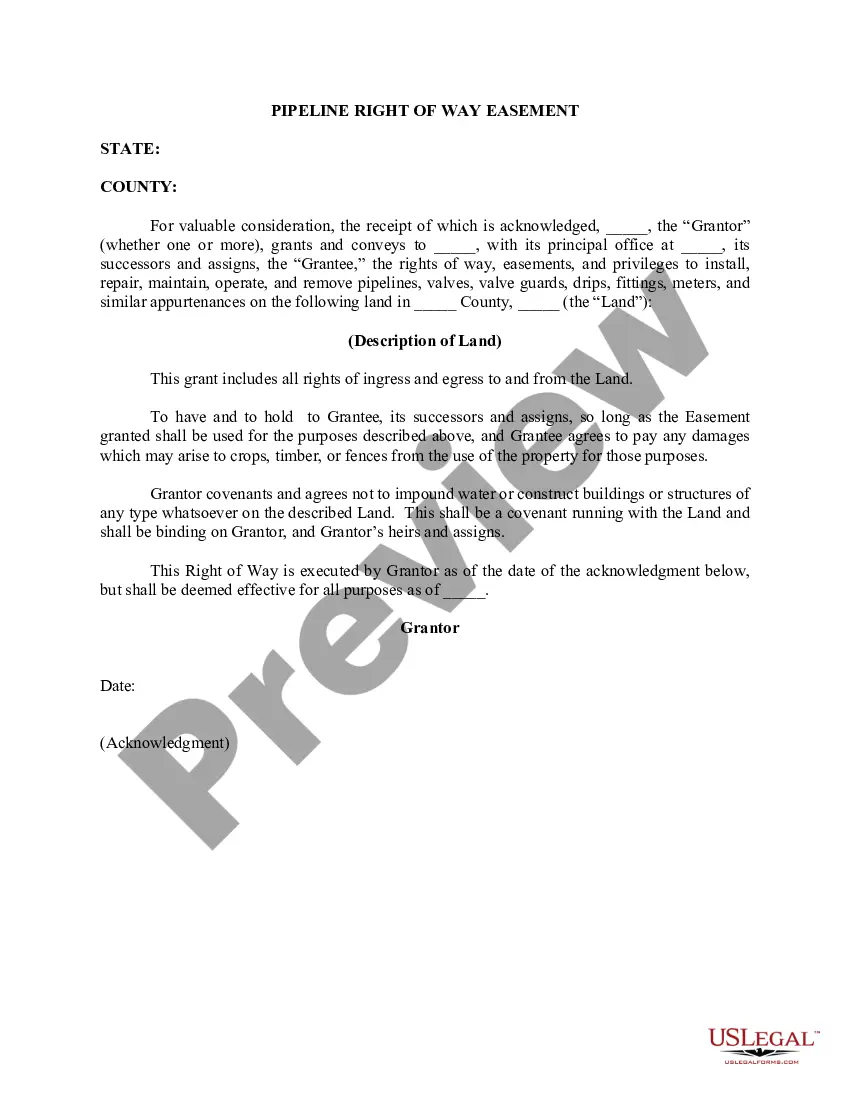
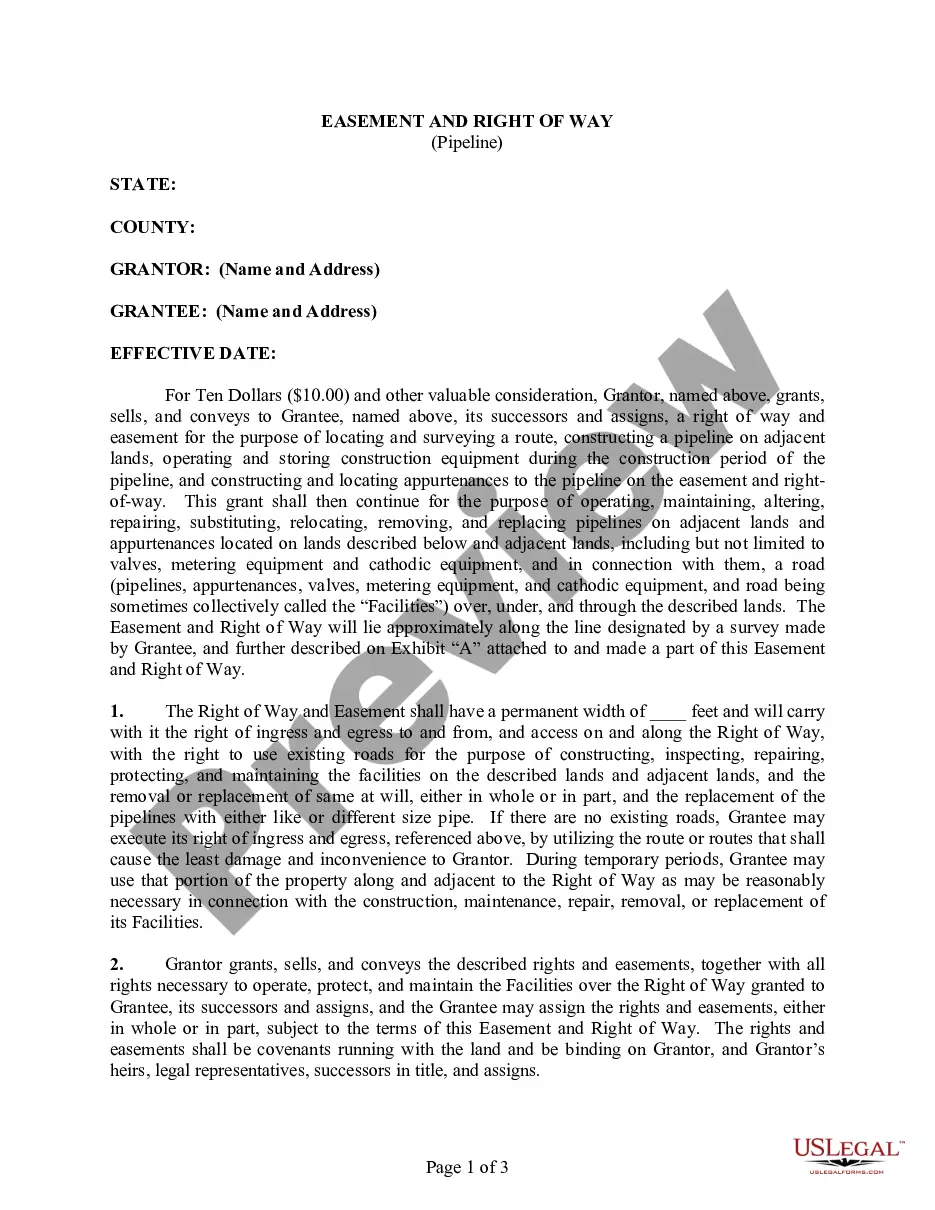
The Pipeline Easement form is a legal document that grants a right of way and easement for the installation and maintenance of pipelines on a specific property. This form outlines the rights given to the Grantee, including the privilege to lay, repair, and operate pipelines for transporting oil, gas, and other fluids. Unlike other forms related to land use, this easement focuses specifically on pipeline-related activities, ensuring both parties' rights and responsibilities are clearly defined.
Form components explained
- Grantor and Grantee identification: Names and addresses of both parties.
- Description of the easement: Specific rights granted for pipeline installation and maintenance.
- Property description: Detailed description of the land where the easement applies.
- Terms of use: Conditions under which the easement can be exercised, including limitations on the Grantor.
- Right of ingress and egress: Granting access to the Grantee for pipeline-related activities.
When this form is needed
This form should be utilized when a property owner (Grantor) wishes to allow another party (Grantee) to install and maintain pipelines on their property. It is particularly relevant in situations where the transportation of oil, gas, or other fluids is required, such as in the contexts of energy production, agricultural irrigation, or industrial use.
Intended users of this form
- Property owners looking to grant easements for pipeline installation.
- Energy companies or contractors needing access to lay pipelines on private land.
- Legal representatives managing property transactions involving easements.
Steps to complete this form
- Identify the parties: Enter the names and addresses of the Grantor and Grantee.
- Specify the property: Provide a detailed description of the land where the easement applies.
- Enter the effective date: Fill in the date when the easement agreement becomes effective.
- Detail the rights granted: Clearly outline the scope of the easement, including any limitations.
- Sign and date: Both parties should sign the form and include the date for acknowledgment.
Does this document require notarization?
Notarization is required for this form to take effect. Our online notarization service, powered by Notarize, lets you verify and sign documents remotely through an encrypted video session, available 24/7.
Get your form ready online
Our built-in tools help you complete, sign, share, and store your documents in one place.
Make edits, fill in missing information, and update formatting in US Legal Forms—just like you would in MS Word.
Download a copy, print it, send it by email, or mail it via USPS—whatever works best for your next step.
Sign and collect signatures with our SignNow integration. Send to multiple recipients, set reminders, and more. Go Premium to unlock E-Sign.
If this form requires notarization, complete it online through a secure video call—no need to meet a notary in person or wait for an appointment.
We protect your documents and personal data by following strict security and privacy standards.

Make edits, fill in missing information, and update formatting in US Legal Forms—just like you would in MS Word.

Download a copy, print it, send it by email, or mail it via USPS—whatever works best for your next step.

Sign and collect signatures with our SignNow integration. Send to multiple recipients, set reminders, and more. Go Premium to unlock E-Sign.

If this form requires notarization, complete it online through a secure video call—no need to meet a notary in person or wait for an appointment.

We protect your documents and personal data by following strict security and privacy standards.
Common mistakes to avoid
- Failing to provide a precise description of the property.
- Not clearly defining the rights and limitations of the easement.
- Omitting signatures or effective dates, which can invalidate the document.
Why complete this form online
- Convenience: Download and complete the form at your own pace.
- Editability: Easily modify sections as needed to fit specific circumstances.
- Reliability: Forms are prepared by licensed attorneys to ensure legal compliance.
Looking for another form?
Form popularity
FAQ
How much money should landowners get when an oil or gas pipeline crosses their land? As it stands, landowners receive a one-time payment roughly based on the length of the pipeline, with rates varying from $5 to $50 per foot or more for a Marcellus or Utica shale pipeline right-of-way agreement.
Easements are treated as a recovery of the basis of the property first, with any excess proceeds treated as capital gain, which is taxed at a lower rate than ordinary income. The basis of property that offsets an easement is limited to the basis of the affected acres or square footage.
If an easement is 50 rods long, that is almost an acre. In a recent case, a pipeline company paid some owners $180 per rod and others $767 per rod for the same project.
Pipelines can reduce property values by 5 to 40 percent by making them less attractive to potential buyers, according to local Realtors.
A pipeline easement specifically gives the easement holder the right to build and maintain a pipeline on a landowner's property. It doesn't grant the easement holder actual ownership of the land, just a right to use the land for pipeline purposes.