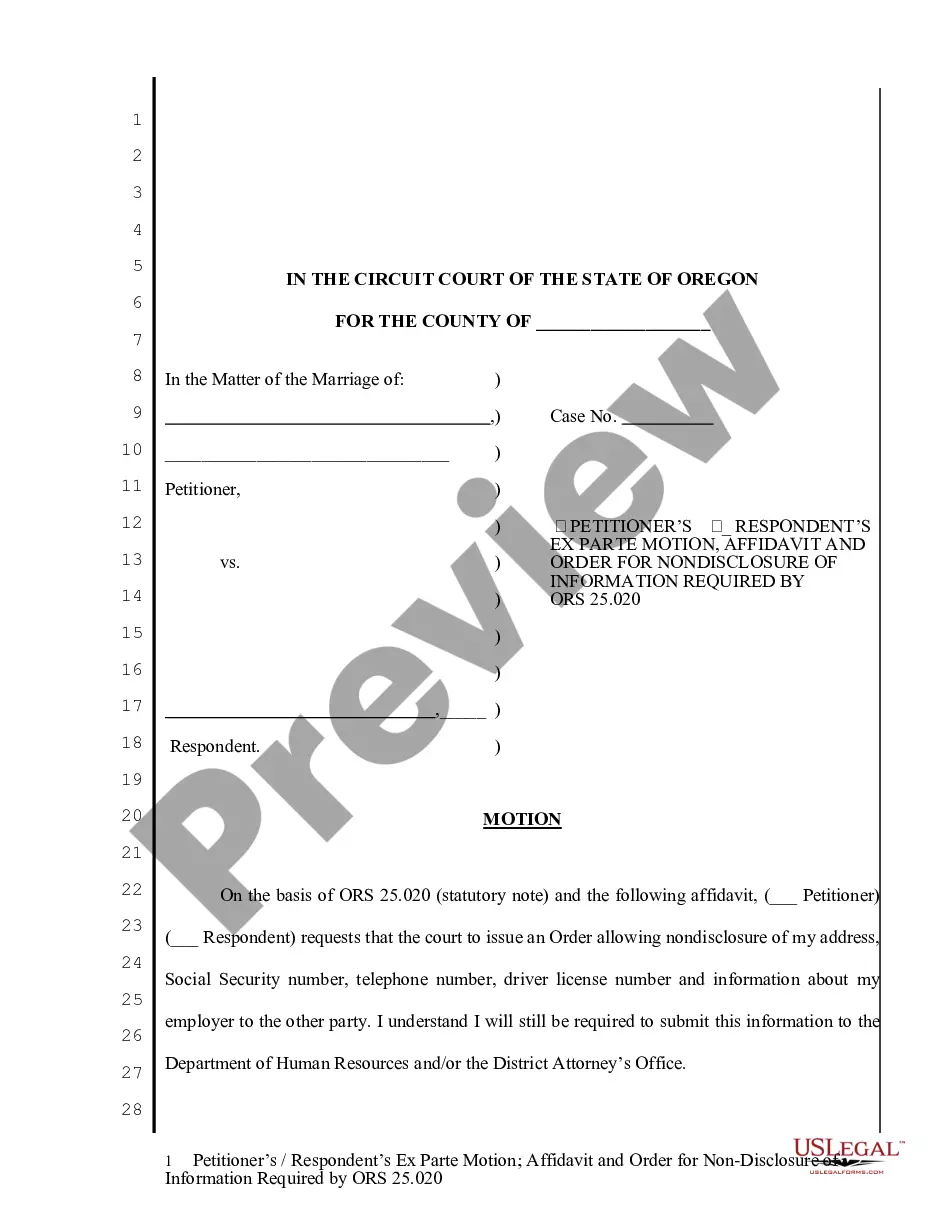
Ratification and Rental Division Order from Lessor to Lessee
What is this form?
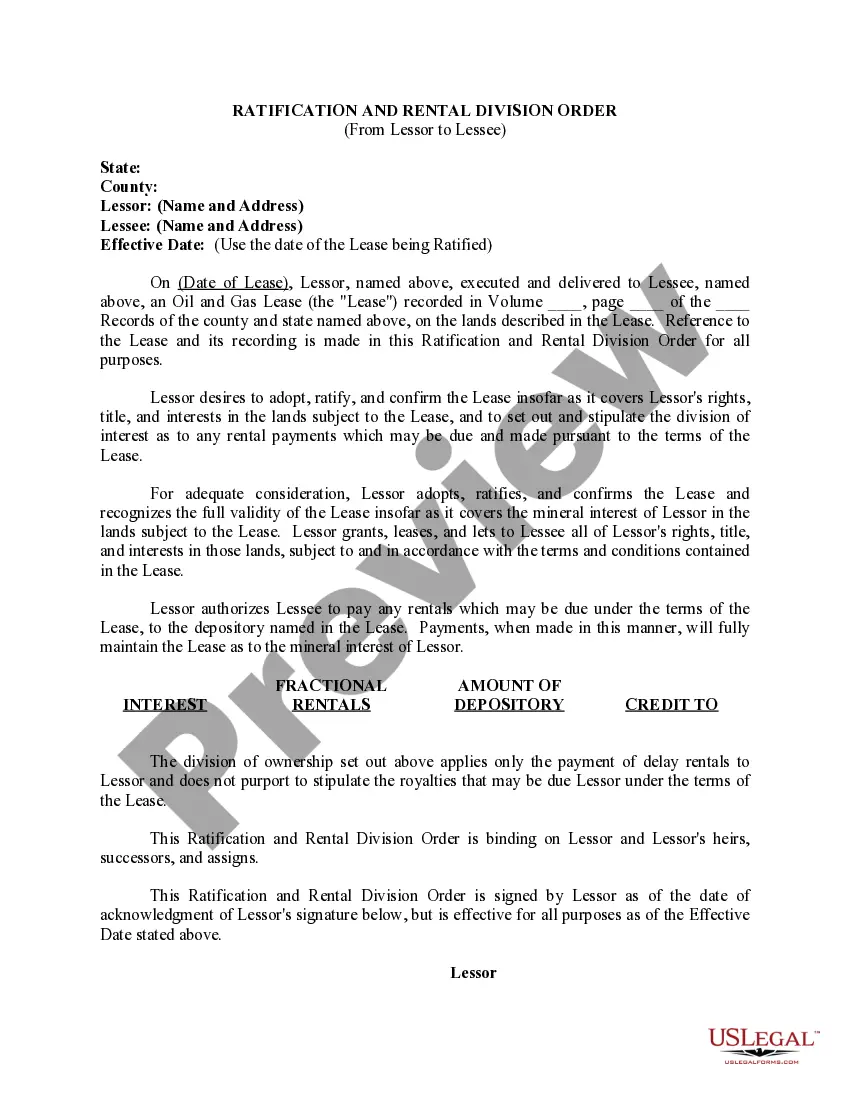
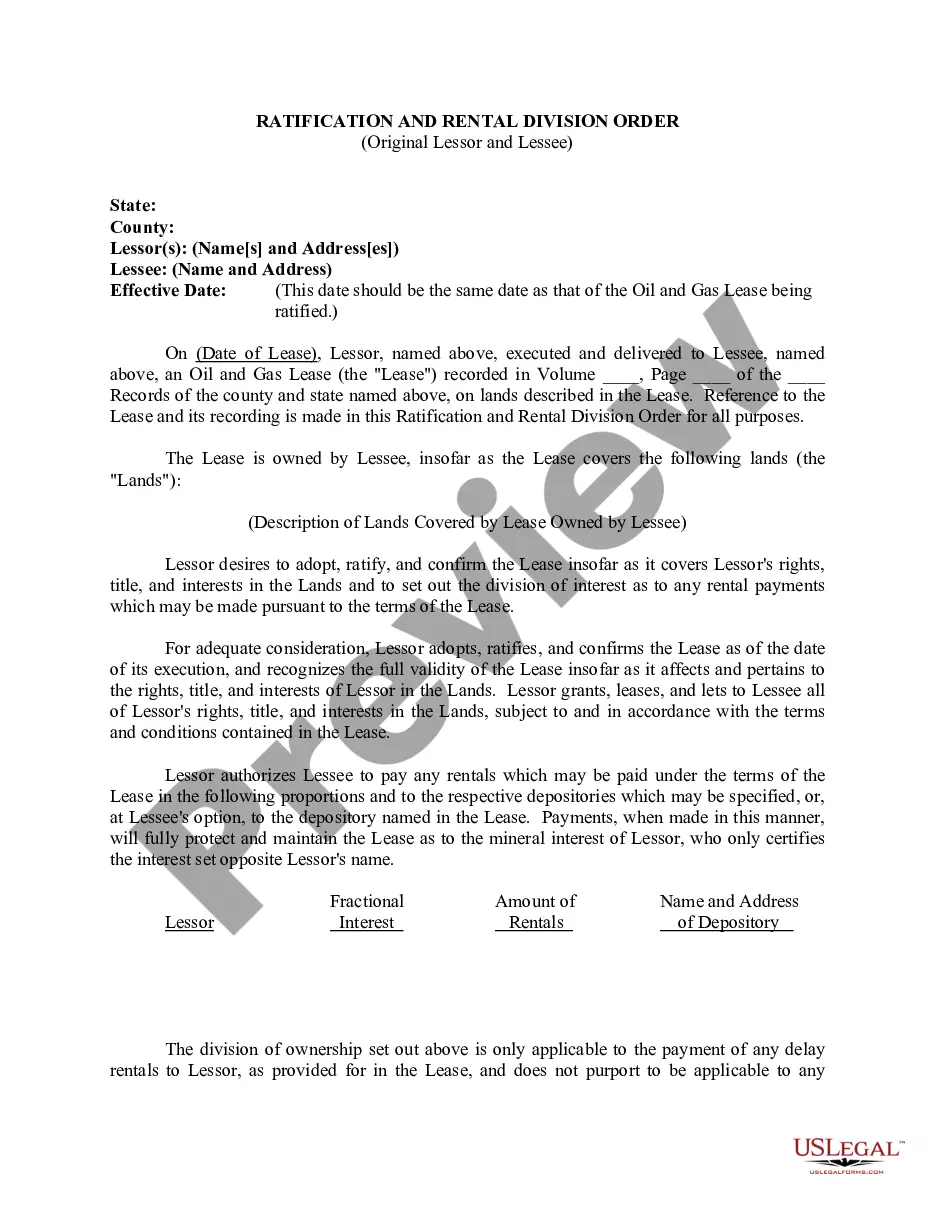
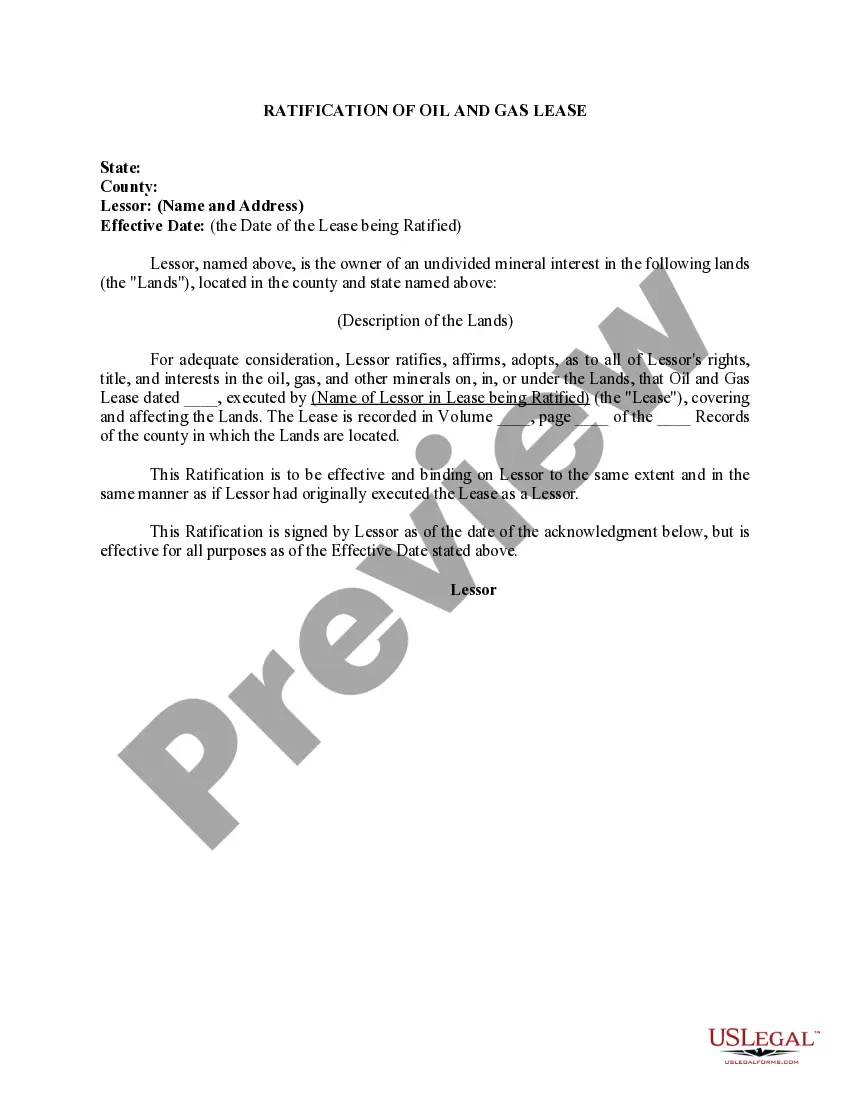
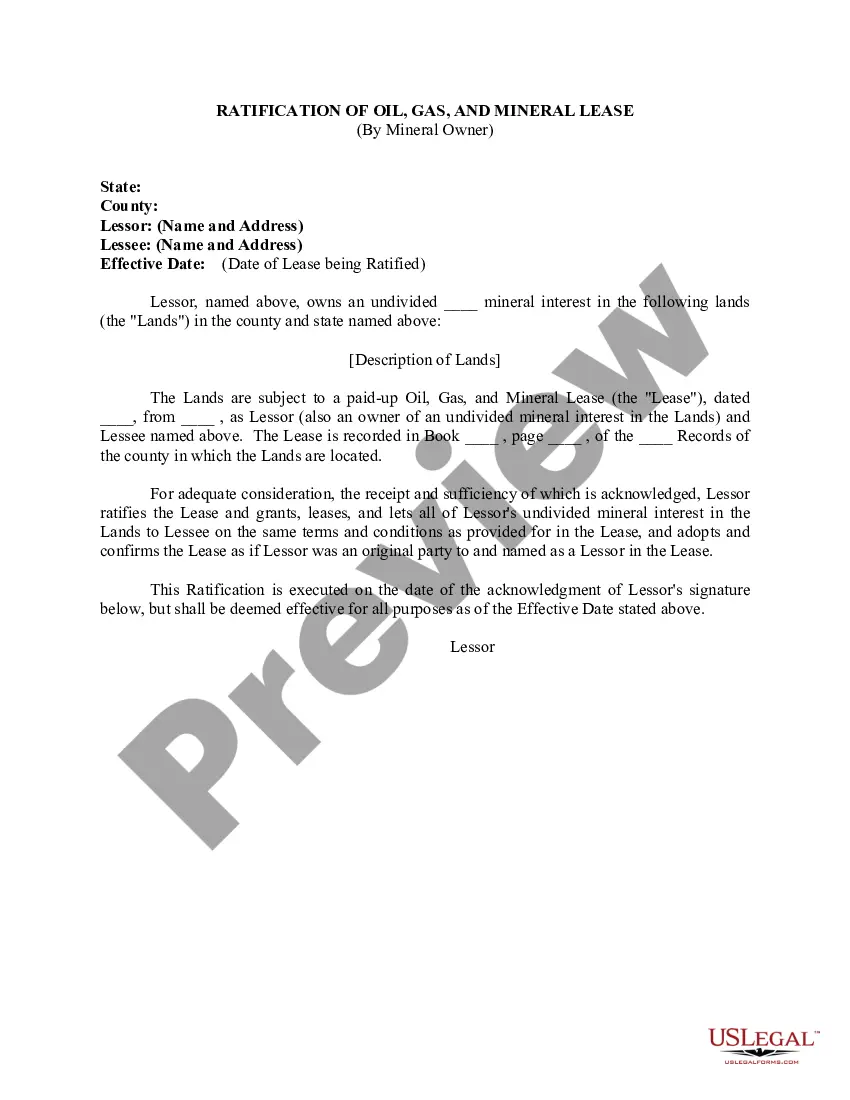
The Ratification and Rental Division Order from Lessor to Lessee is a legal document that allows a property owner (Lessor) to formally adopt and confirm an existing lease agreement related to their land, specifically regarding oil and gas lease transactions. This form clarifies the division of rental payments due under the lease, thereby solidifying the Lessor's rights and interests. Unlike other lease forms, this document serves a dual purpose of ratification and specifying rental distributions, making it essential in oil and gas transactions.
Form components explained
- Identification of the Lessor and Lessee, including names and addresses
- Effective date of the lease being ratified
- Details of the original lease, including recording information
- Statement confirming the Lessor's rights and interests in the lease
- Authorization for the Lessee to handle rental payments
- Division of interest for rental payments
- Signatures of the Lessor for acknowledgment
When to use this document
This form should be used when a property owner wants to confirm an existing oil and gas lease and outline the terms for rental payments. It is typically relevant when there is a need for clarification of responsibilities regarding rental distributions or when the Lessor seeks to enforce their rights under an existing lease agreement. This situation may arise during lease renegotiations or when there are changes in ownership of the property.
Who this form is for
- Property owners (Lessors) who have existing oil and gas lease agreements
- Lessee (tenants) involved in oil and gas rental agreements
- Legal professionals advising clients on lease transactions
- Individuals or entities looking to clarify their interests in rental payments under a lease
How to complete this form
- Identify the Lessor and Lessee by entering their names and addresses.
- Specify the effective date, which is the date of the lease being ratified.
- Fill in the details of the original lease, including the volume and page number of its record.
- Adopt and confirm the lease by acknowledging the Lessor's rights and interests.
- Authorize rental payments to be made to the specified depository as outlined in the lease.
- Have the Lessor sign and date the form to finalize the agreement.
Does this form need to be notarized?
This document requires notarization to meet legal standards. US Legal Forms provides secure online notarization powered by Notarize, allowing you to complete the process through a verified video call, available 24/7.
Get your form ready online
Our built-in tools help you complete, sign, share, and store your documents in one place.
Make edits, fill in missing information, and update formatting in US Legal Forms—just like you would in MS Word.
Download a copy, print it, send it by email, or mail it via USPS—whatever works best for your next step.
Sign and collect signatures with our SignNow integration. Send to multiple recipients, set reminders, and more. Go Premium to unlock E-Sign.
If this form requires notarization, complete it online through a secure video call—no need to meet a notary in person or wait for an appointment.
We protect your documents and personal data by following strict security and privacy standards.

Make edits, fill in missing information, and update formatting in US Legal Forms—just like you would in MS Word.

Download a copy, print it, send it by email, or mail it via USPS—whatever works best for your next step.

Sign and collect signatures with our SignNow integration. Send to multiple recipients, set reminders, and more. Go Premium to unlock E-Sign.

If this form requires notarization, complete it online through a secure video call—no need to meet a notary in person or wait for an appointment.

We protect your documents and personal data by following strict security and privacy standards.
Common mistakes
- Failing to include the correct effective date, leading to potential legal disputes.
- Omitting the complete names and addresses of the Lessor and Lessee.
- Not specifying the details of the original lease, which can cause ambiguity.
- Forgetting to sign the document, rendering it invalid.
Advantages of online completion
- Convenience of downloading and completing the form from anywhere.
- Editability allows users to customize the document as needed before finalization.
- Access to templates drafted by licensed attorneys ensures legal reliability.
Looking for another form?
Form popularity
FAQ
Net revenue is the amount that is shared among the property owners. To determine net revenue interest, multiply the royalty interest by the owner's shared interest. For example, if you have a 5/16 royalty, your net royalty interest would be 25% multiplied by 5/16, which equals 7.8125% calculated to four decimal places.
A stipulation of interest is a contract that consists of mutual conveyances, and therefore, it must conform to the requirements of both a contract and conveyance.This requires the affiant to state all facts necessary to establish inheritance of a decedent's real estate as well as proportional interest.
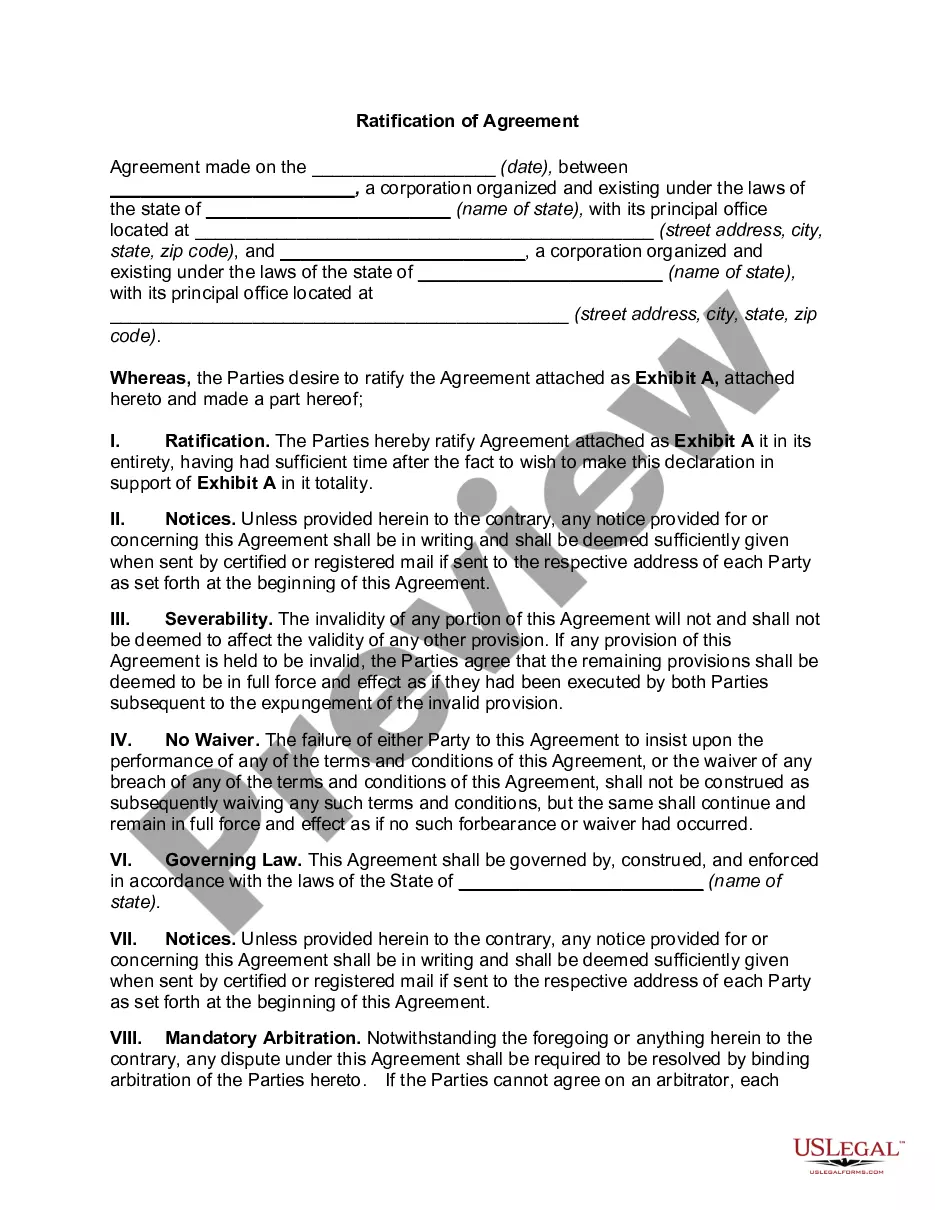
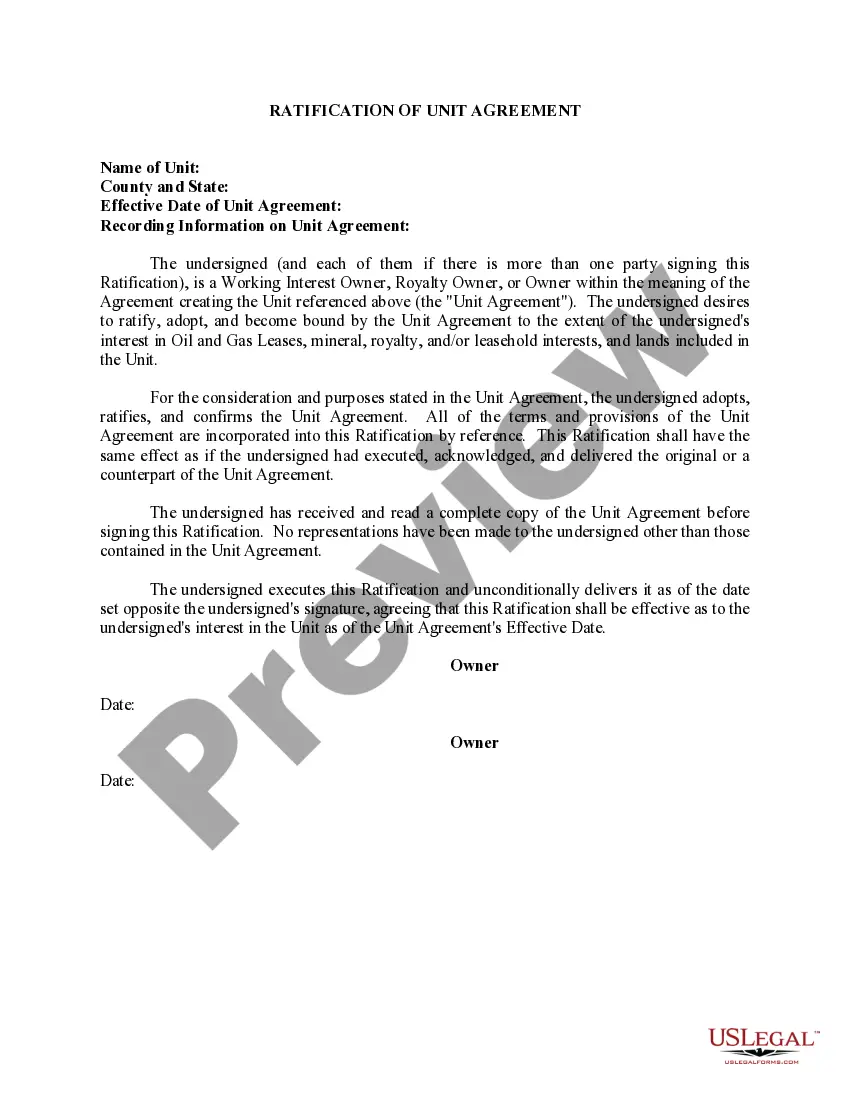
To ratify a lease means that the landowner and oil & gas producer, as current lessor and lessee of the land, agree (or re-agree) to the terms of the existing lease.
A division order is a record of your interest in a specific well. It contains your decimal interest, interest type, well number and well name. Division orders are issued to all that own an interest in a specific well after that well has achieved first sales of either oil or gas.
A royalty is the portion of production the landowner receives. A royalty clause in the oil or gas title process will typically give a percentage of the lease that the company pays to the owner of the mineral rights, minus production costs. Royalties are free from costs and charges, other than taxes.
A Division Order (DO's), also known as a Division of Interest (DOI), is the instrument which details the proportional ownership of produced minerals, including oil, liquids, natural gas, etc., in a well or unitized area of production.
A non-executive mineral interest means the owner of the mineral interest has ceded their right to lease the interest. The non-executive mineral owner still reserves the right to receive their share of any bonus or royalty paid in relation to the involved mineral interest lease as granted by the holder.
A landowner can also insert a clause in the lease to take royalty either in kind or in value. Taking royalty in kind means that the Lessor can take physical possession of the oil, gas or liquids once they leave the ground, and he may market the production himself.
A non-participating royalty interest owner has a right to all or a portion of the royalty from gross production, but does not have the right to execute a lease, receive a bonus or any delay rentals.