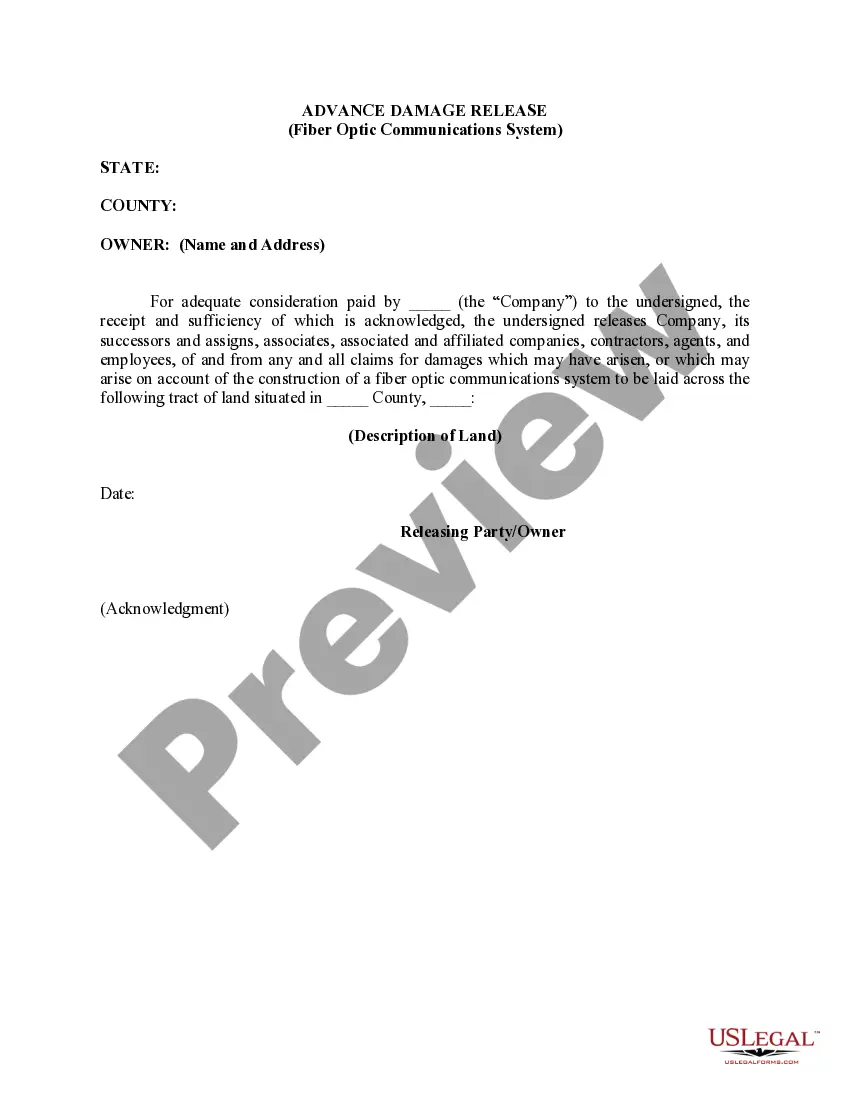
Advance Damage Release (Fiber Optic Communications System)
What this document covers
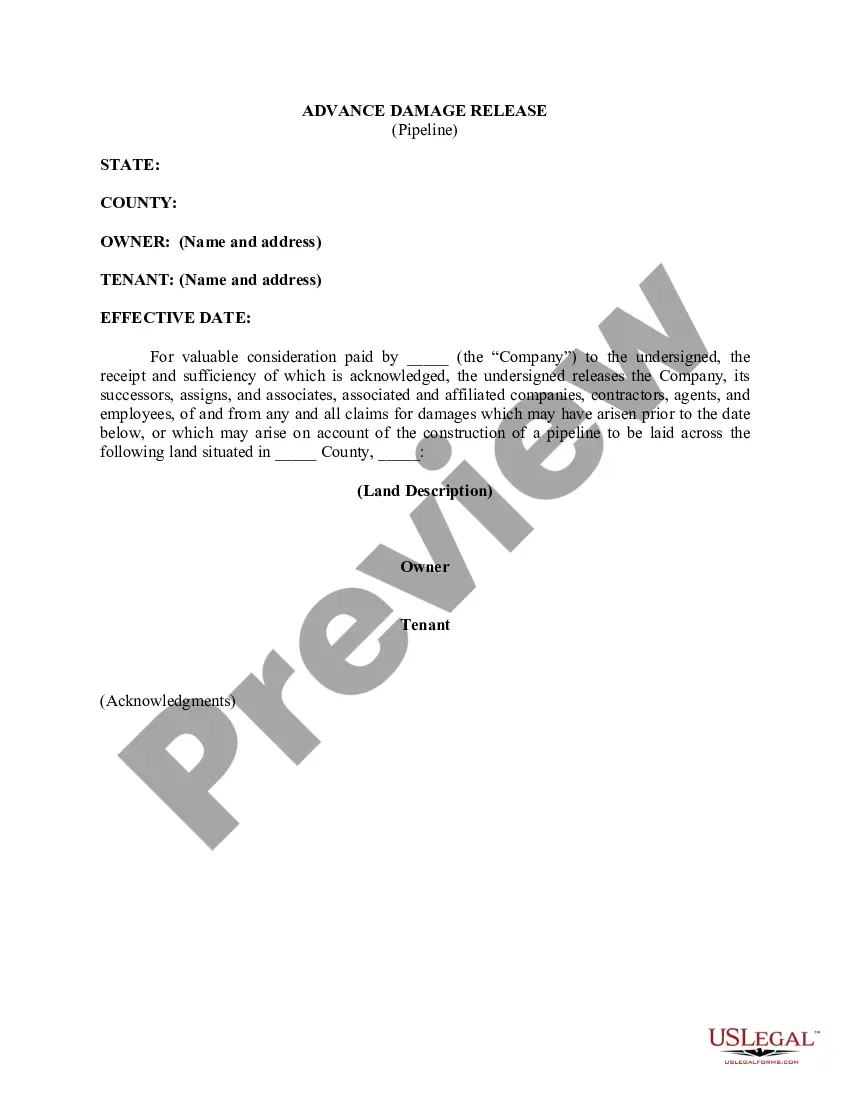
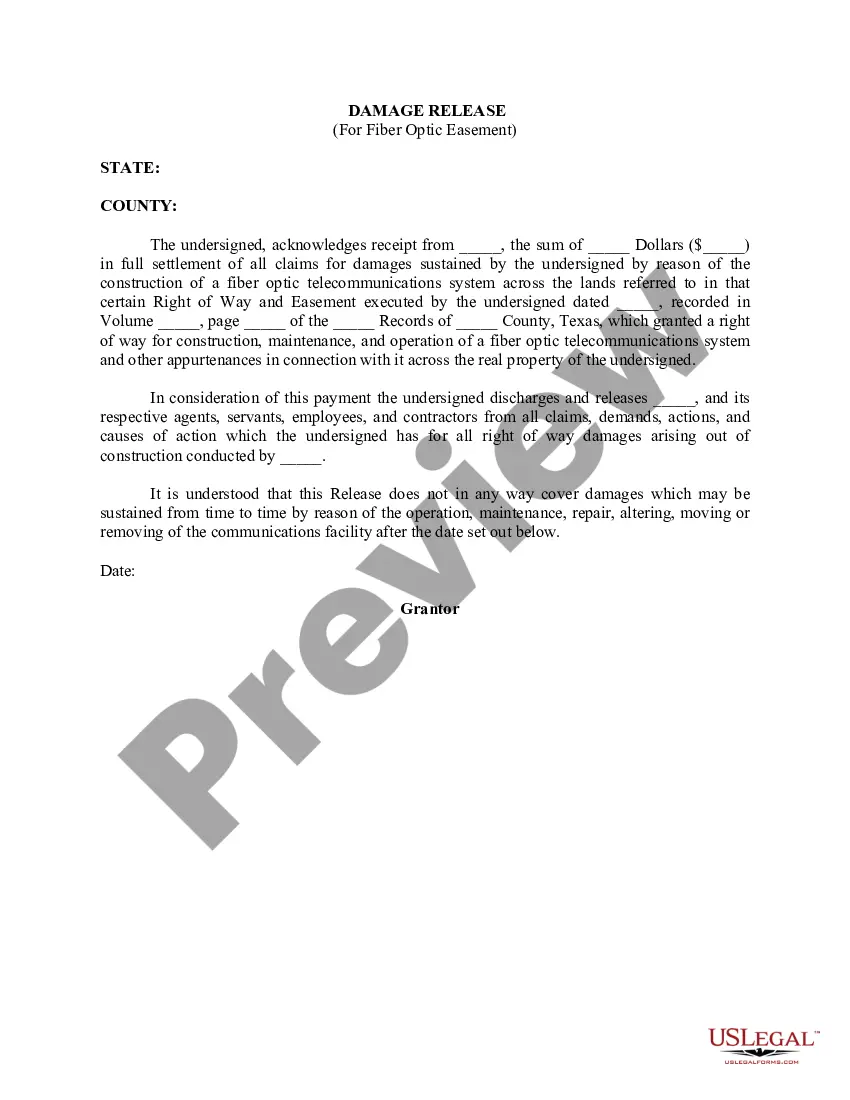
The Advance Damage Release form for fiber optic communications systems is a legal document that releases a company from liability for any damages that may occur during the construction of a fiber optic system on specific tracts of land. This form is crucial for protecting companies against future claims related to damages and distinguishes itself from other types of release forms by specifically addressing the context of fiber optic installations.
Main sections of this form
- State and County: The location where the fiber optic communications system will be laid.
- Owner Information: Name and address of the property owner releasing the company from liability.
- Consideration Clause: Recognition of the payment made by the company to the owner.
- Description of Land: Details of the specific tract of land affected by the construction.
- Signature and Acknowledgment: Signature of the releasing party to confirm the release.
When this form is needed
This form should be used when a company plans to construct a fiber optic communications system on private or commercial land and wishes to obtain a release from the property owner to avoid future liability for damages. It is essential in scenarios where construction work could potentially result in property damage, thereby providing legal protection to the company.
Who should use this form
The following individuals or entities should use this form:
- Contractors or companies involved in the construction of fiber optic systems.
- Landowners who are allowing construction on their property.
- Legal representatives acting on behalf of either party in the construction agreement.
Steps to complete this form
- Identify the relevant state and county where the fiber optic system will be installed.
- Fill in the name and address of the landowner in the designated section.
- Specify the company that is being released from liability and detail the consideration paid.
- Describe the land where the fiber optic system will be constructed accurately.
- Sign and date the form to finalize the release agreement.
Does this document require notarization?
In most cases, this form does not require notarization. However, some jurisdictions or signing circumstances might. US Legal Forms offers online notarization powered by Notarize, accessible 24/7 for a quick, remote process.
Get your form ready online
Our built-in tools help you complete, sign, share, and store your documents in one place.
Make edits, fill in missing information, and update formatting in US Legal Forms—just like you would in MS Word.
Download a copy, print it, send it by email, or mail it via USPS—whatever works best for your next step.
Sign and collect signatures with our SignNow integration. Send to multiple recipients, set reminders, and more. Go Premium to unlock E-Sign.
If this form requires notarization, complete it online through a secure video call—no need to meet a notary in person or wait for an appointment.
We protect your documents and personal data by following strict security and privacy standards.

Make edits, fill in missing information, and update formatting in US Legal Forms—just like you would in MS Word.

Download a copy, print it, send it by email, or mail it via USPS—whatever works best for your next step.

Sign and collect signatures with our SignNow integration. Send to multiple recipients, set reminders, and more. Go Premium to unlock E-Sign.

If this form requires notarization, complete it online through a secure video call—no need to meet a notary in person or wait for an appointment.

We protect your documents and personal data by following strict security and privacy standards.
Common mistakes to avoid
- Failing to include all necessary details about the land.
- Not obtaining the required signatures from all parties involved.
- Leaving out the consideration clause, which is essential for legal validity.
Advantages of online completion
- Convenience of filling out and downloading the form from any location.
- Editable format allows for easy customization based on specific situations.
- Access to professionally drafted templates ensures legal reliability.
Legal use & context
- This form provides a legal release, which can protect both parties during fiber optic installations.
- Ensures clarity regarding responsibilities and liabilities associated with property damage.
- Can be used as evidence in court if disputes arise related to the installation process.
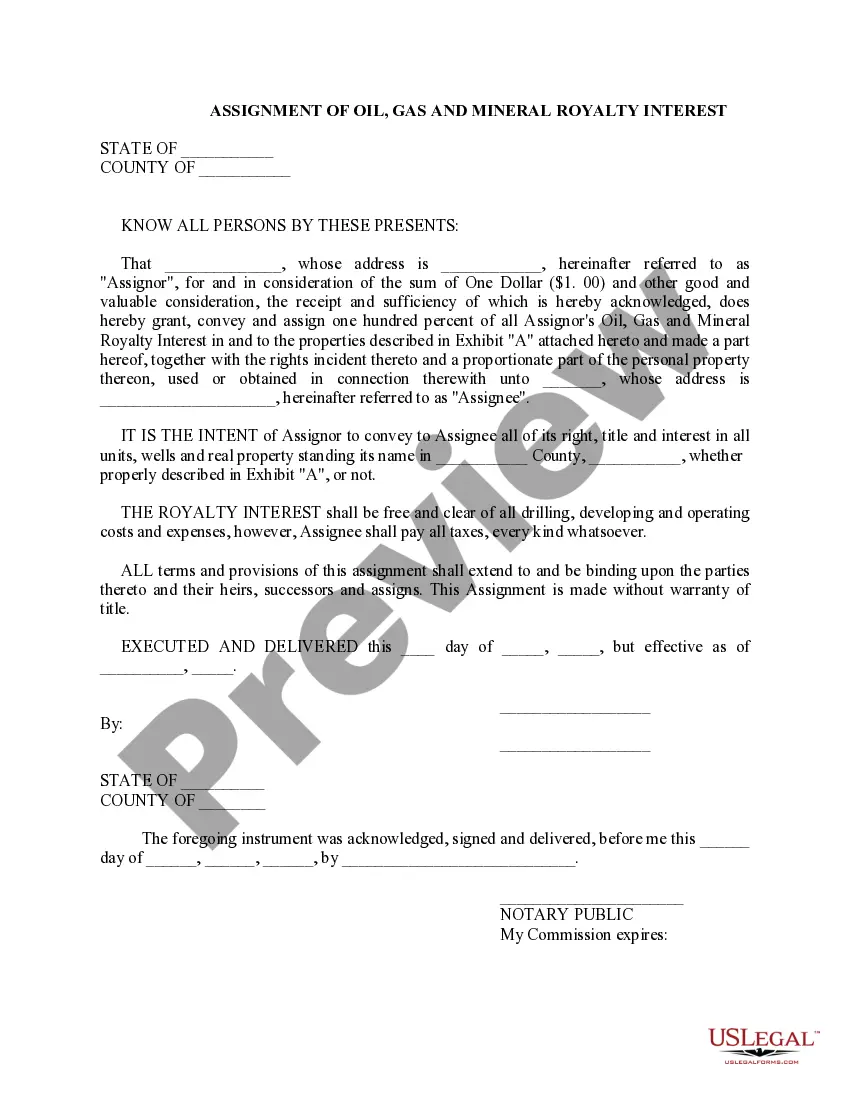
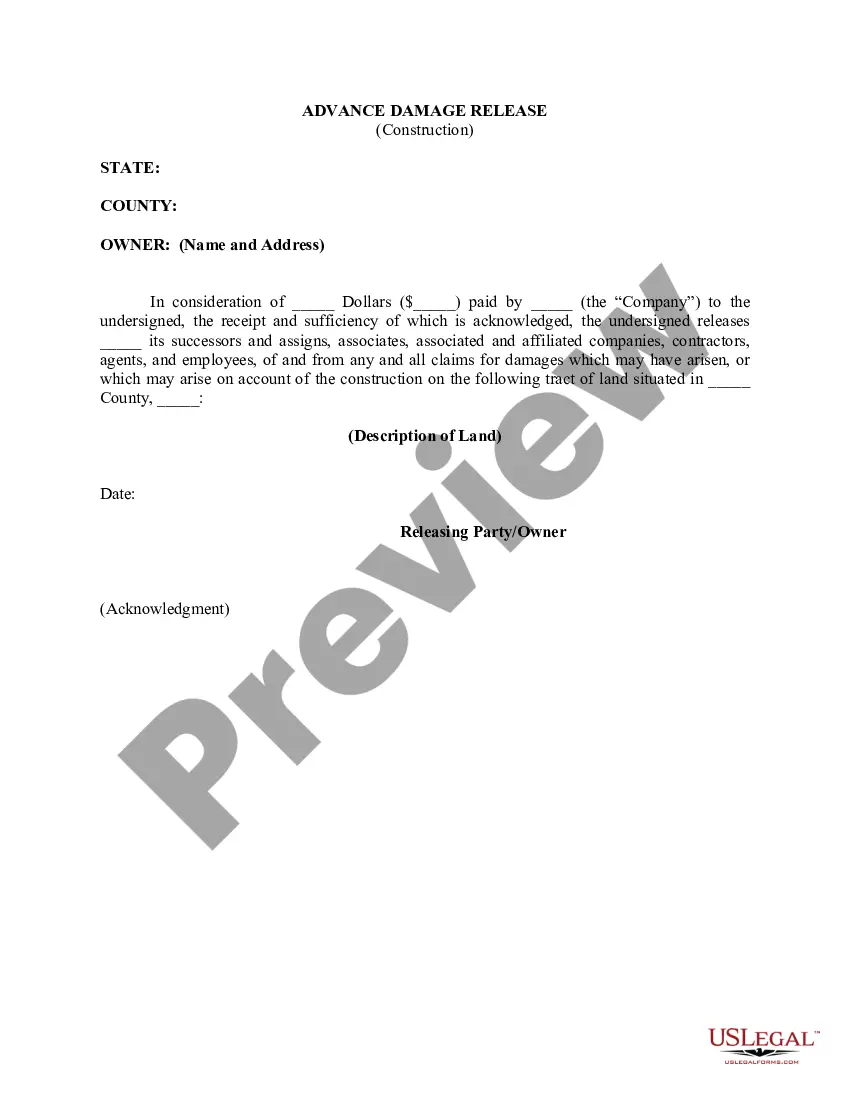
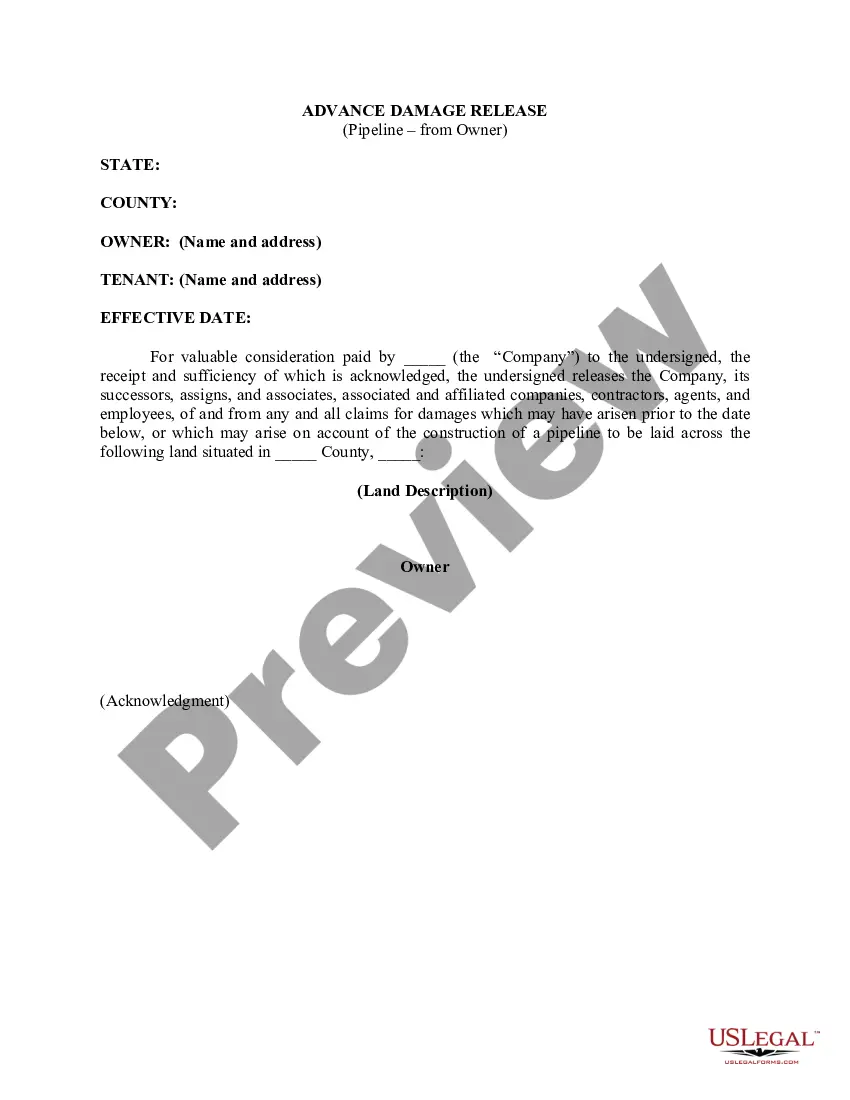
Looking for another form?



Form popularity
FAQ
Fiber-optic communication is a method of transmitting information from one place to another by sending pulses of infrared light through an optical fiber.This type of communication can transmit voice, video, and telemetry through local area networks or across long distances.
The three basic elements of a fiber optic cable are the core, the cladding and the coating. Core: This is the light transmission area of the fiber, either glass or plastic. The larger the core, the more light that will be transmitted into the fiber.
There's not a single documented case of someone with a fiber-optic-related eye injury anywhere on the internet. In contrast, people cut fingers off on table saws every day even knowing how dangerous they are. I wouldn't go out of your way trying to get hurt, but it's just not a thing. Big, real lasers are dangerous.
While optical fiber doesn`t carry electricity, it does transmit light, which, in some instances, can damage the eye. The glass fiber itself also poses a danger, potentially becoming embedded in or under the skin.
A more serious hazard of optical fiber work is the fibers themselves. Fibers are pieces of glass. And like all glass, they can cause injury.(Modern optical fiber cables are very safe, and pose no danger to you.
A fiber optic cable consists of five main components: core, cladding, coating, strengthening fibers, and cable jacket. Core: This is the physical medium that transports optical signals from an attached light source to a receiving device.
Most fiber-optic networks use light invisible to the human eye, no matter what the power level. And if the power is high enough to be a problem, the damage is most likely irreversible. So don't look into fibers!
In summary, a fiber optic installation does not carry any risk in terms of electromagnetic radiation. Since such radiation does not occur in fiber optic transmission, there is also no evidence of its impact on human health through fiber optics.
During nine years of follow-up, 20,126 men and 11,330 women died. Risk of death was lower among study participants who ate the most fiber. On average, men ate 13 to 29 grams of fiber per day, and women ate 11 to 26 grams.