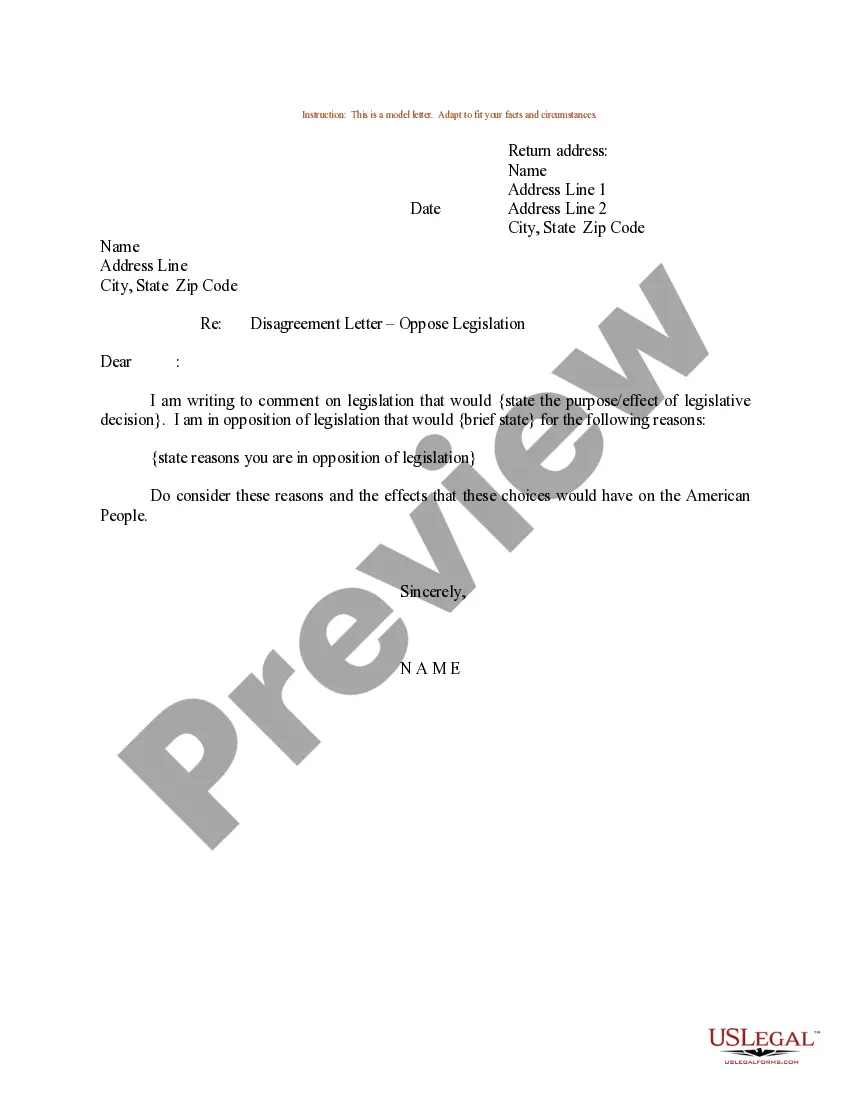
Vermont Sample Letter for Opposition to Legislation
Description
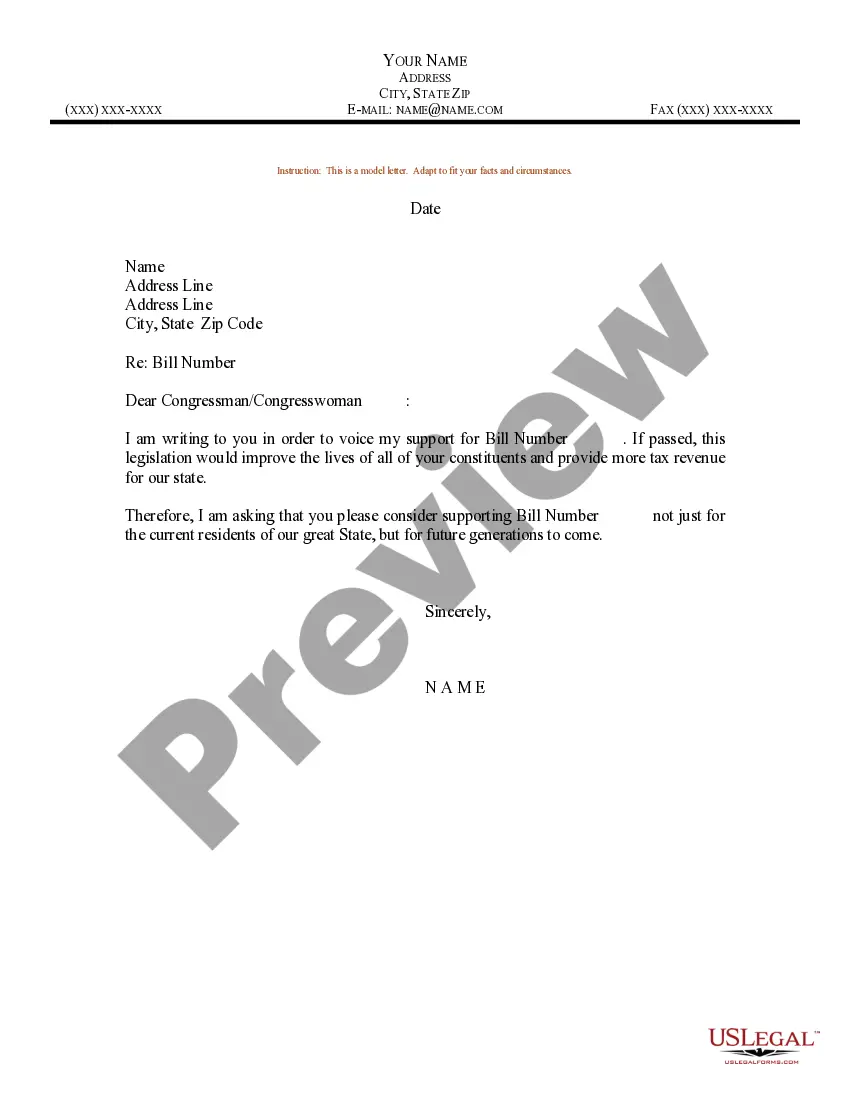
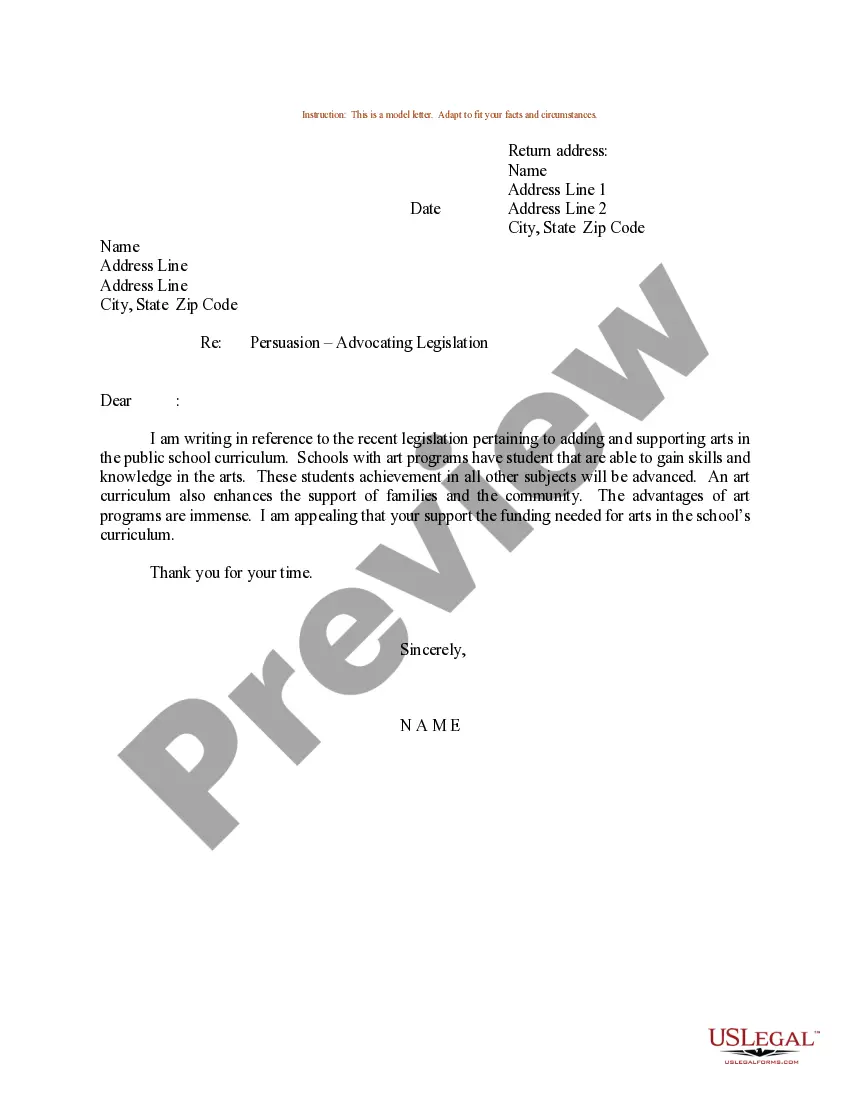
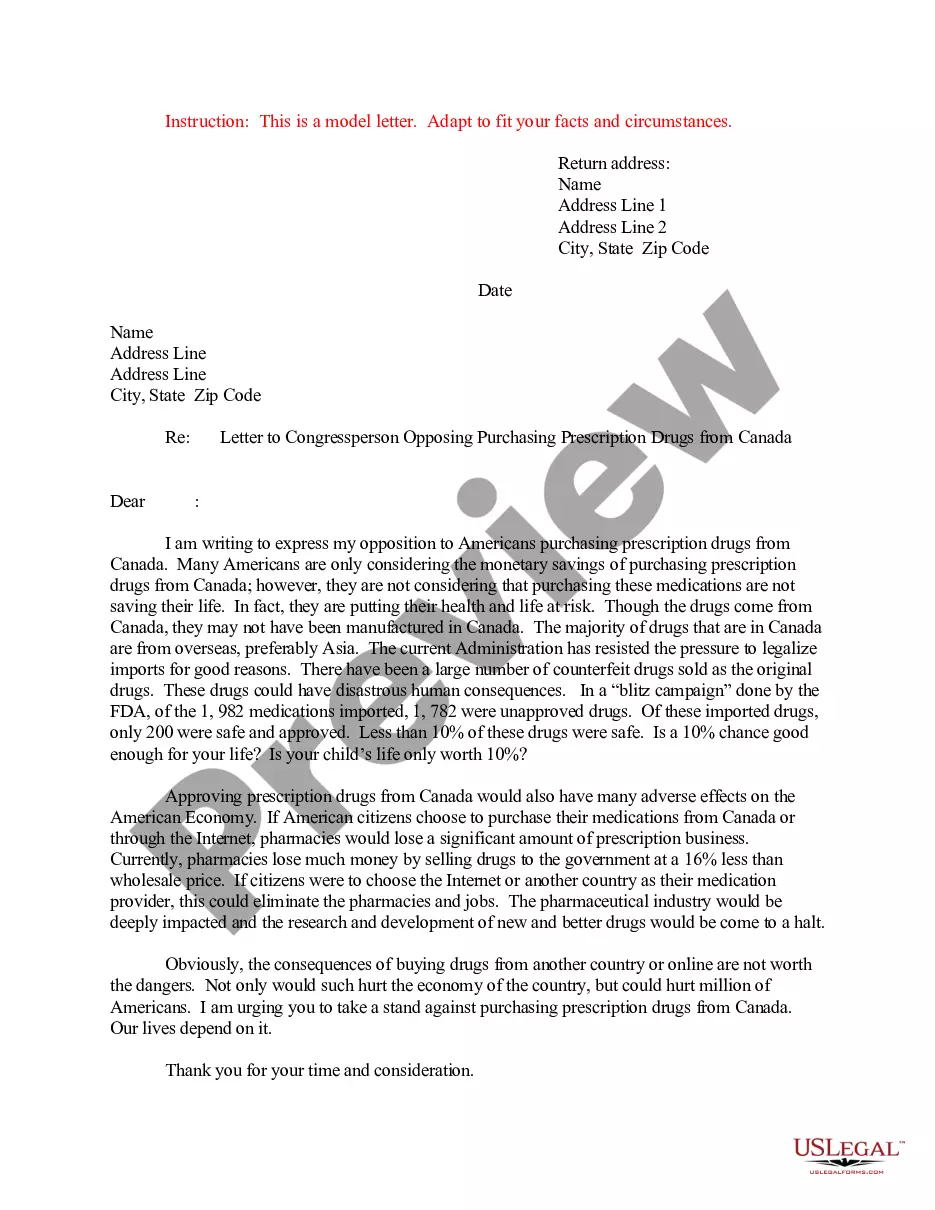
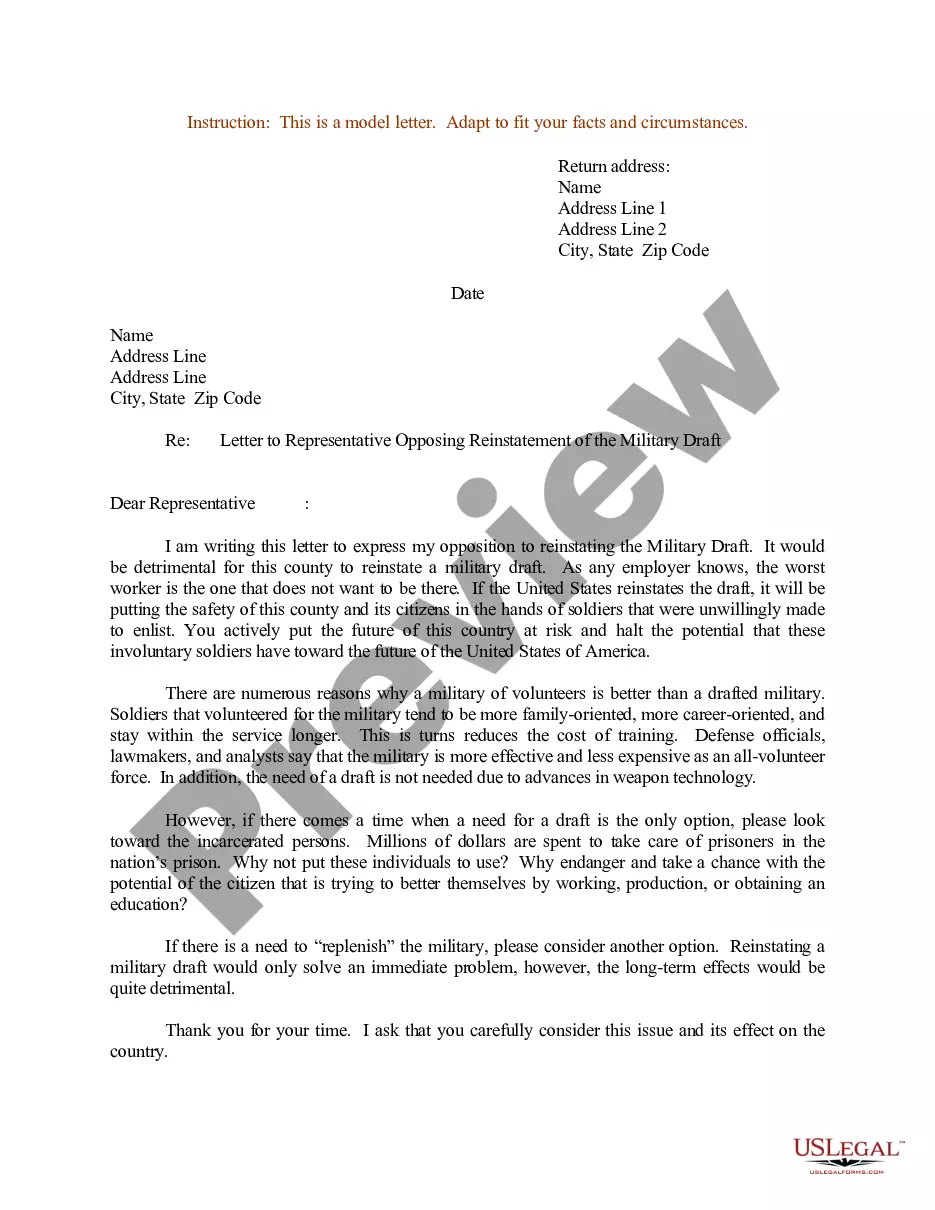
How to fill out Sample Letter For Opposition To Legislation?
Finding the appropriate legal document template can be challenging. Of course, there are numerous designs available online, but how can you acquire the legal document you require? Utilize the US Legal Forms website. The service provides a plethora of templates, including the Vermont Sample Letter for Opposition to Legislation, suitable for both business and personal needs. All templates are verified by experts and comply with state and federal regulations.
If you are already registered, Log In to your account and click the Download button to obtain the Vermont Sample Letter for Opposition to Legislation. Use your account to search for the legal documents you have previously purchased. Navigate to the My documents tab in your account and retrieve an additional copy of the document you require.
If you are a new user of US Legal Forms, here are simple steps for you to follow: First, ensure you have selected the correct form for your city/state. You can review the form using the Preview button and examine the form details to confirm it is suitable for your needs. If the form does not fulfill your requirements, use the Search field to find the appropriate form.
US Legal Forms is the largest collection of legal templates where you can find a wide range of document formats. Take advantage of the service to download professionally-crafted documents that adhere to state regulations.
- Once you are confident the form is adequate, click the Get now button to download the form.
- Choose the pricing plan you desire and input the necessary information.
- Create your account and place an order using your PayPal account or credit card.
- Select the format and download the legal document template to your device.
- Complete, edit, print, and sign the received Vermont Sample Letter for Opposition to Legislation.
Form popularity
FAQ
Here are some important tips for your letter:Use letterhead.Verify the correct spelling of the legislator's name.Verify the correct title to use when addressing the legislator.Keep it short (one page maximum).Identify the issue.If the issue is a particular bill, verify the full name and bill number.More items...
Explore this articleWriting Your Legislator.Address your legislator by his or her official title.Identify your issue.Make a compelling argument.Anticipate opposition.Ask your legislature to take action.
State your subject clearly in the email subject line or first sentence of the letter. Stick to just one issue in the letter. Identify yourself as a constituent. State your views, support them with your expert knowledge and, when appropriate, cite the bill number of relevant legislation (e.g., H.R.
Use Proper Salutation. The salutation should be "Dear Representative Smith" or Dear Senator Smith" or "Dear Assemblyman Smith" depending on the office held. The address should read: Honorable Jim Smith, Address, City, State, Zip.
Follow these 6 steps to create a concise, strong advocacy message for any audience.Open with a statement that engages your audience.Present the problem.Share a story or give an example of the problem.Connect the issue to the audience's values, concerns or self-interest.Make your request (the ask).
Use your personal or. business address.Address your. legislator properly.State your. relafionship to the.Be factual. Be personal.Request a response. Include your fitle.Concentrate on a. single issue.Be specific about. what you want.Keep your letter. to one page.
Here are some important tips for your letter:Use letterhead.Verify the correct spelling of the legislator's name.Verify the correct title to use when addressing the legislator.Keep it short (one page maximum).Identify the issue.If the issue is a particular bill, verify the full name and bill number.More items...
First Paragraph: My name is Your Name and I'm writing to ask that you Action.Establish the relationship. Introduce yourself and how you're related to the recipient.State your what and your why. Limit yourself to one specific action so as to not draw attention away from the issues you may find more important!
Addresses for each senator can be found on the senator's website or state's web page.The following standard address can be also be used: The Honorable (Name) United States Senate. Washington, D.C. 20510. For correspondence to a Senate committee or to a Senate committee chair: (Name of Committee) United States Senate.