Washington Deed of Trust - Long Form - with individual acknowledgment
Understanding this form
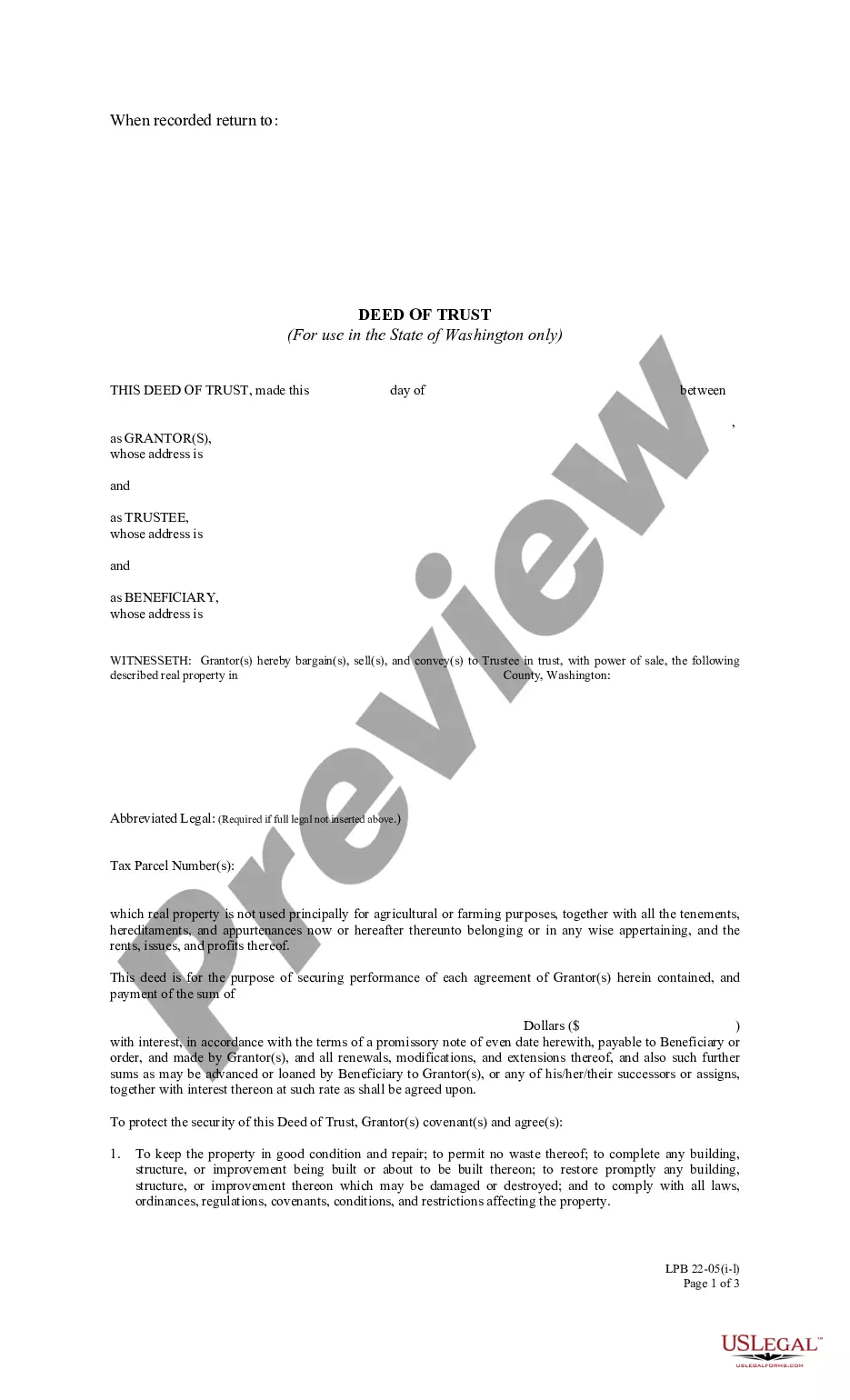
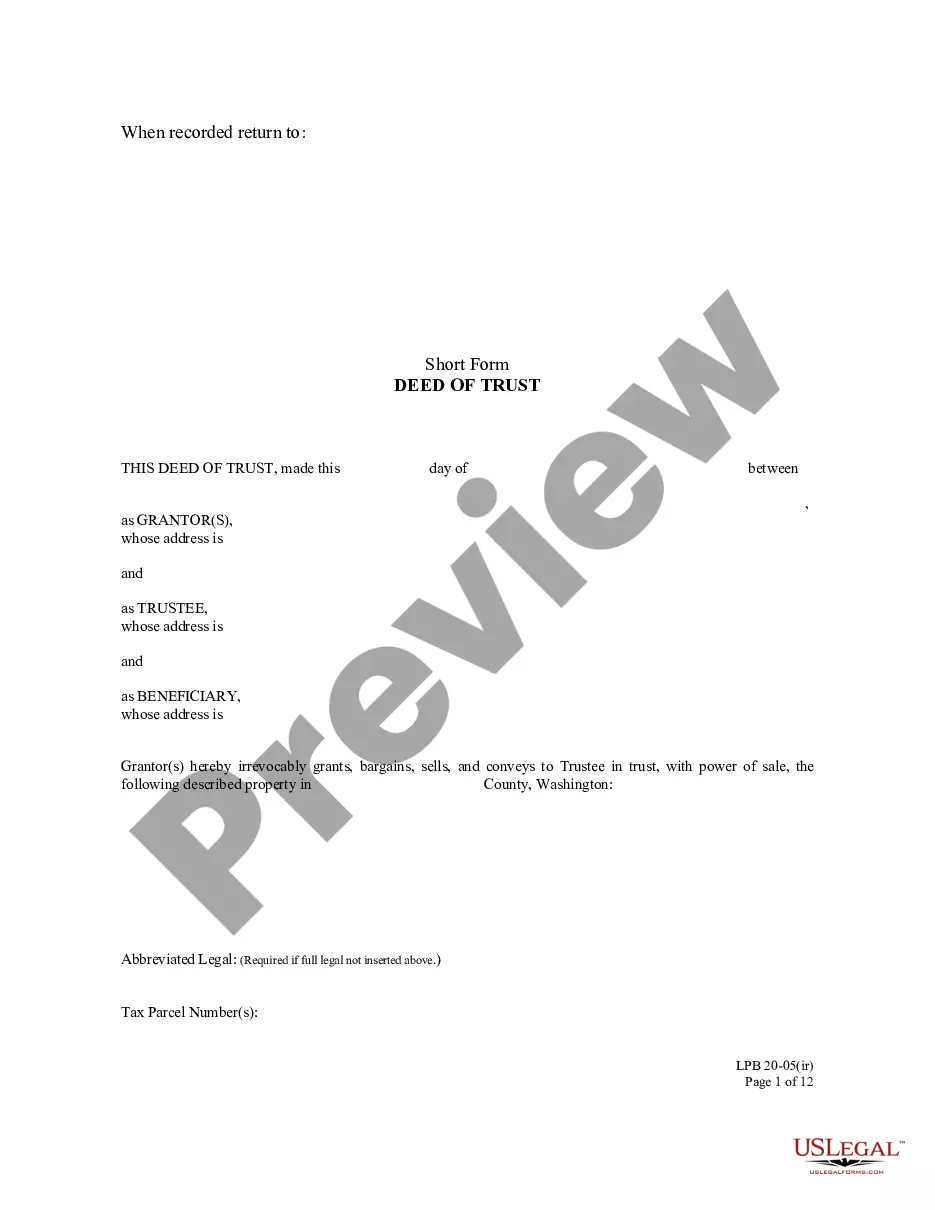
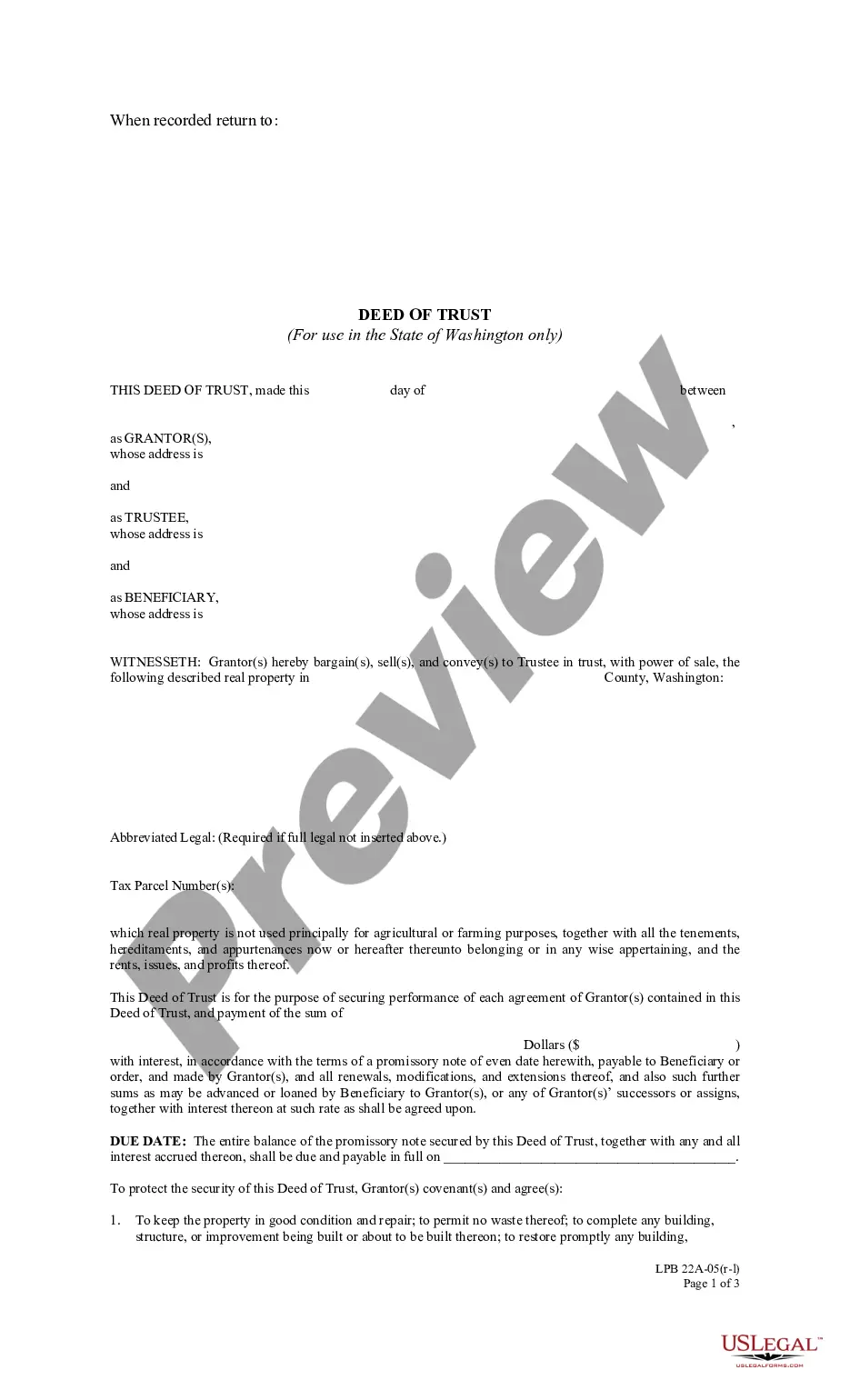
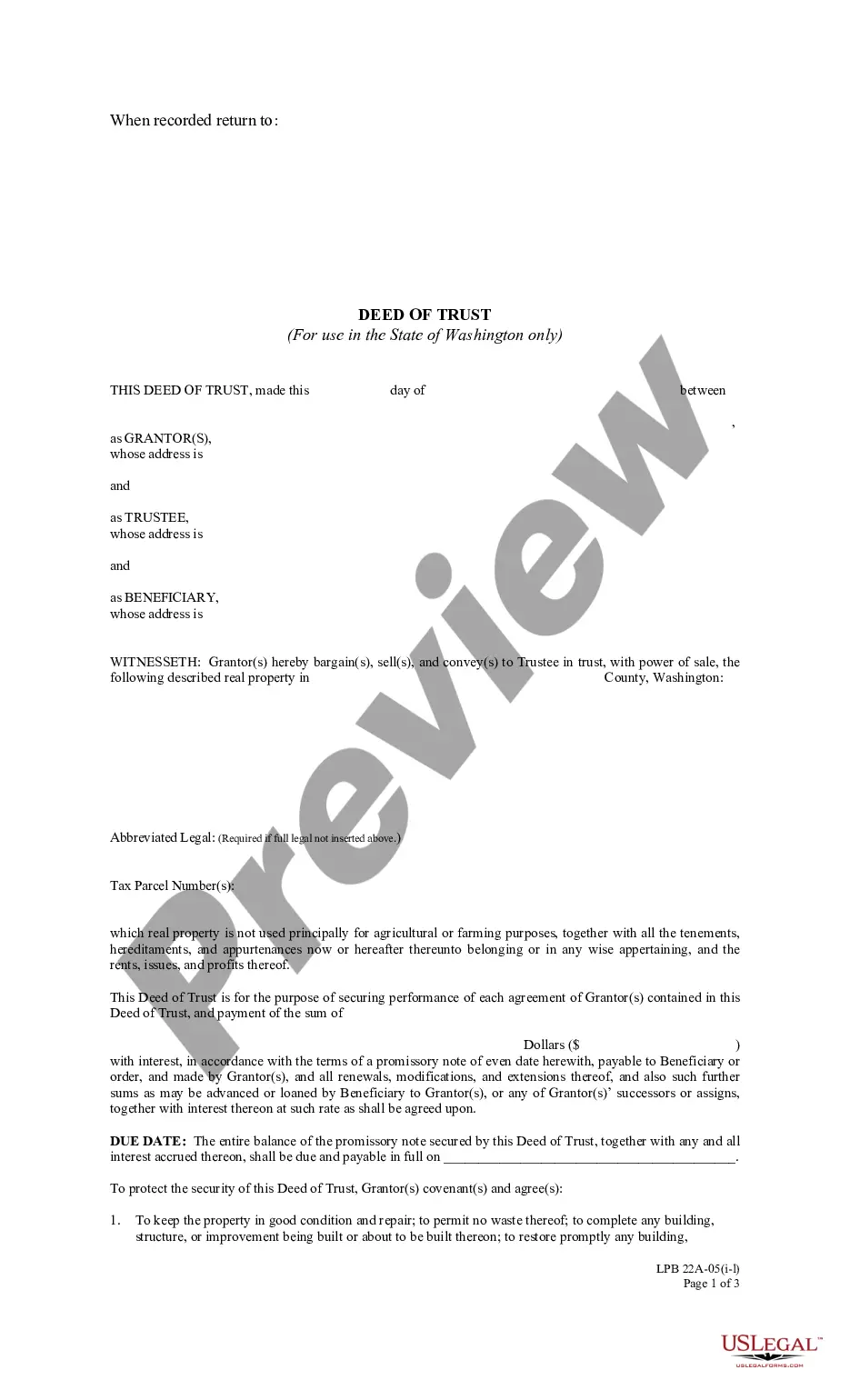
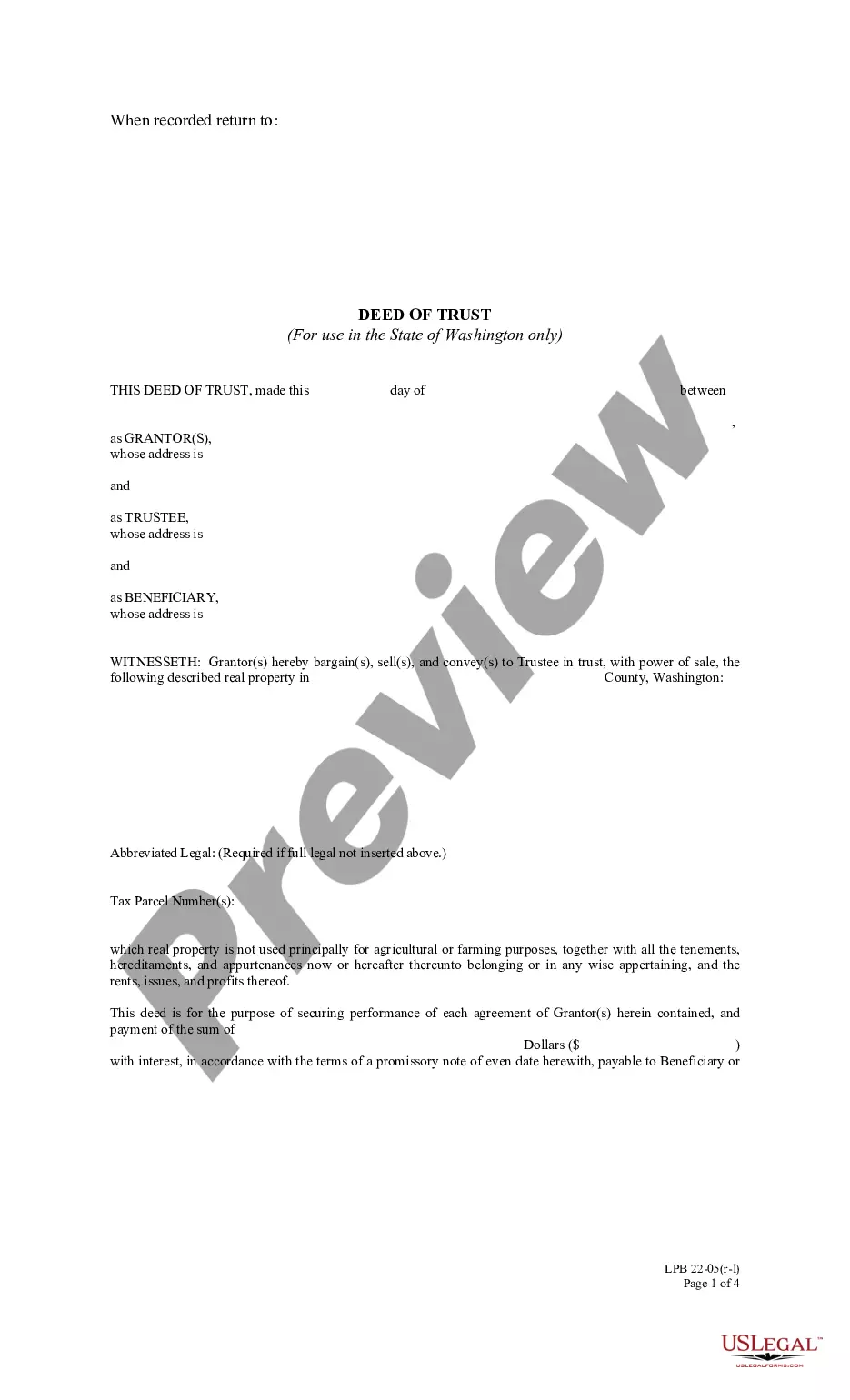
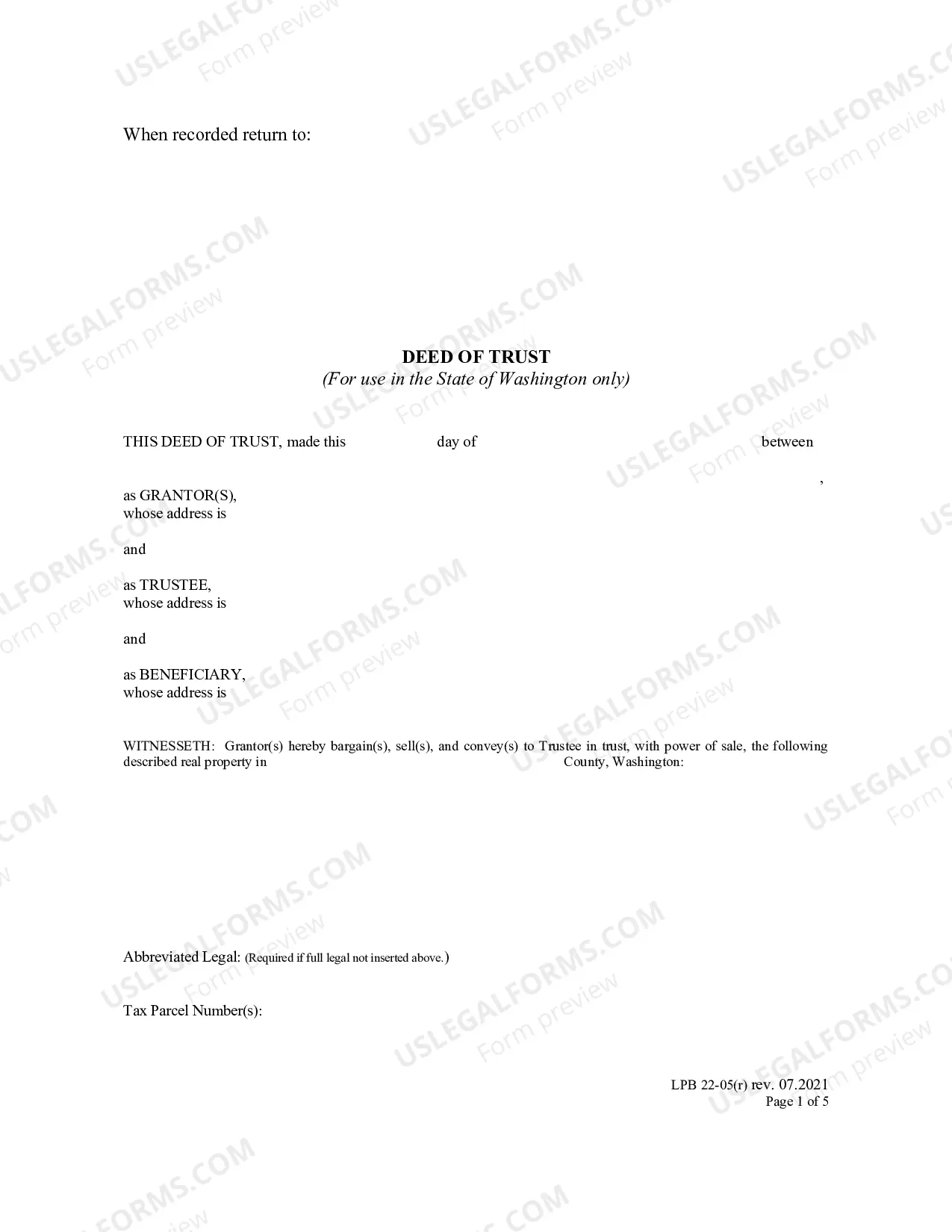
The Deed of Trust - Long Form with individual acknowledgment is a legal document used in Washington to facilitate land transactions. It outlines the agreement between the grantor, trustee, and beneficiary regarding the secured property. Unlike other forms such as a mortgage, this form allows for a power of sale in the event of default, making it a robust option for real estate financing.
What’s included in this form
- Identification of grantor(s), trustee, and beneficiary along with their addresses.
- Detailed description of the real property being secured.
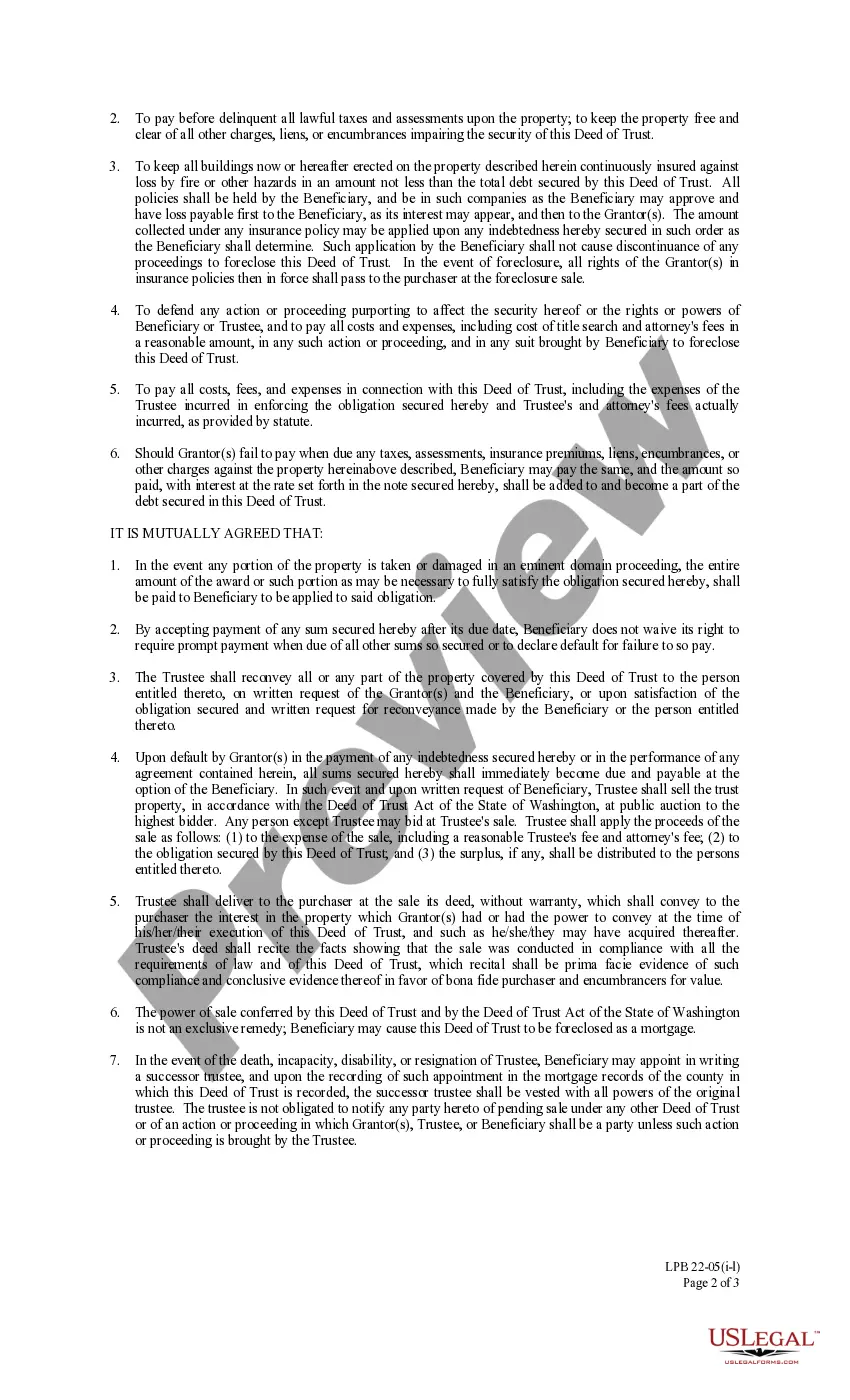
- Covenants by the grantor regarding the property's upkeep, tax payments, and insurance.
- Provisions for action in case of default or foreclosure.
- Authorization for trustee to sell the property under specified conditions.
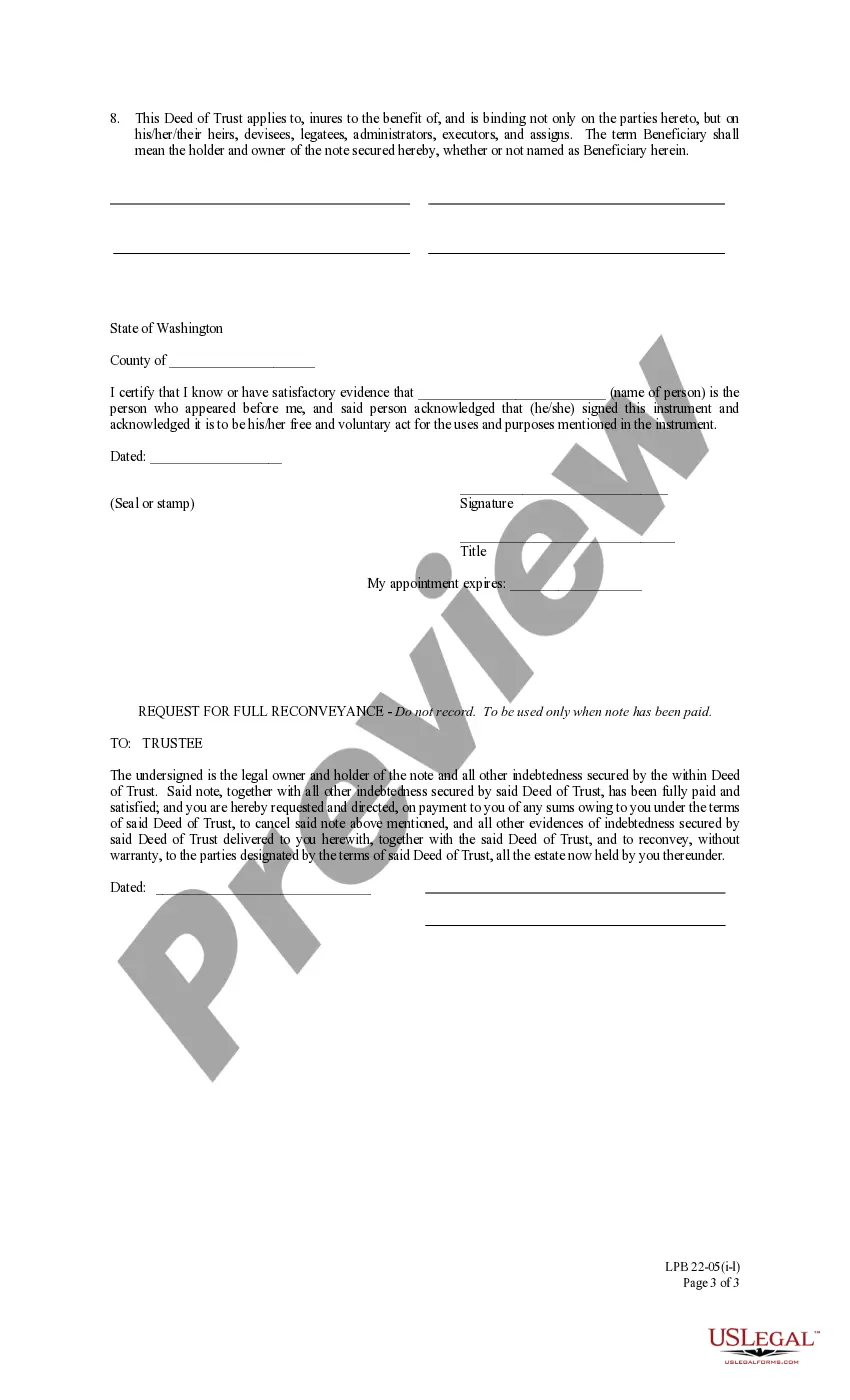
- Notary acknowledgment section ensuring the legitimacy of the signatures.
Common use cases
You should use the Deed of Trust when you are securing a loan with real estate as collateral. This form is particularly useful for lenders who wish to ensure that they can reclaim property in the event of borrower default. It can also be used when transferring property to a trustee for management purposes, ensuring all obligations are met by the grantor.
Who can use this document
- Lenders or financial institutions providing loans secured by real property.
- Borrowers who are obtaining financing for real estate transactions.
- Trustees appointed to manage or sell the property under specified conditions.
- Property owners looking to formalize a loan agreement with real estate collateral.
How to prepare this document
- Identify and fill in the names and addresses of the grantor(s), trustee, and beneficiary.
- Provide a detailed description of the property, including the legal description and tax parcel number.
- Enter the agreed loan amount and interest terms as specified in the promissory note.
- Include any specific covenants or requirements related to property maintenance and taxes.
- Ensure the form is signed by all relevant parties and notarized where applicable.
Does this form need to be notarized?
Yes, this form must be notarized to be legally valid. By using US Legal Formsâ integrated online notarization, you can complete this process securely via a video call, ensuring a convenient and legally equivalent solution without the need to travel.
Get your form ready online
Our built-in tools help you complete, sign, share, and store your documents in one place.
Make edits, fill in missing information, and update formatting in US Legal Forms—just like you would in MS Word.
Download a copy, print it, send it by email, or mail it via USPS—whatever works best for your next step.
Sign and collect signatures with our SignNow integration. Send to multiple recipients, set reminders, and more. Go Premium to unlock E-Sign.
If this form requires notarization, complete it online through a secure video call—no need to meet a notary in person or wait for an appointment.
We protect your documents and personal data by following strict security and privacy standards.

Make edits, fill in missing information, and update formatting in US Legal Forms—just like you would in MS Word.

Download a copy, print it, send it by email, or mail it via USPS—whatever works best for your next step.

Sign and collect signatures with our SignNow integration. Send to multiple recipients, set reminders, and more. Go Premium to unlock E-Sign.

If this form requires notarization, complete it online through a secure video call—no need to meet a notary in person or wait for an appointment.

We protect your documents and personal data by following strict security and privacy standards.
Common mistakes
- Failing to include all required parties and their addresses.
- Not providing a complete legal description of the property.
- Leaving out necessary signatures or not obtaining notarization.
- Misunderstanding or omitting specific covenants that affect property maintenance and taxes.
Advantages of online completion
- Convenient access to the form from anywhere, allowing for quick completion.
- Editability to customize the document as needed to reflect specific agreements.
- Reliable information as forms are created by licensed attorneys.
- Instant downloads provide immediate access to necessary documents without delays.
Legal use & context
- This Deed of Trust is a legally binding agreement and can be enforced in Washington courts.
- It outlines the rights and obligations of all parties regarding the secured property and mortgage payments.
- Proper execution and recording of the deed provide legal protection to the Beneficiary's interest in the property.
Summary of main points
- The Deed of Trust is essential for securing a loan with real estate in Washington State.
- Proper completion and notarization are critical for the document's legality.
- Recognizing the responsibilities involved in the agreement can prevent future legal issues.
Looking for another form?
Form popularity
FAQ
Whether you have a deed of trust or a mortgage, they both serve to assure that a loan is repaid, either to a lender or an individual person. A mortgage only involves two parties the borrower and the lender. A deed of trust adds an additional party, a trustee, who holds the home's title until the loan is repaid.
As you stated in your question, it is recorded among the land records, and your lender keeps the original. When you pay off the loan, the lender will return the deed of trust with the promissory note. This document is rather lengthy and quite legalistic.
Some owners are put off using solicitors duke to the deed of trust cost. Individuals can write out their own, and use someone else as a witness. However, this may have errors or not be a legally binding document. The investment of getting a deed of trust when buying a property is often worth it in the long term.
Party information: names and addresses of the trustor(s), trustee(s), beneficiary(ies), and guarantor(s) (if applicable) Property details: full address of the property and its legal description (which can be obtained from the County Recorder's Office)
The person who owns the property usually signs a promissory note and a deed of trust. The deed of trust does not have to be recorded to be valid.
A trust deed is a legal document that sets out the rules for establishing and operating your fund. It includes such things as the fund's objectives, who can be a member and whether benefits can be paid as a lump sum or income stream. The trust deed and super laws together form the fund's governing rules.
In financed real estate transactions, trust deeds transfer the legal title of a property to a third partysuch as a bank, escrow company, or title companyto hold until the borrower repays their debt to the lender. Trust deeds are used in place of mortgages in several states.
A deed of trust acts as an agreement between youthe homebuyerand your lender. It states not just that you'll repay the loan, but that a third party called the trustee will hold legal title to the property until you do. A deed of trust is the security for your loan, and it's recorded in the public records.
A deed of trust is an agreement between a home buyer and a lender at the closing of a property. It states that the home buyer will repay the loan and that the mortgage lender will hold the legal title to the property until the loan is fully paid.