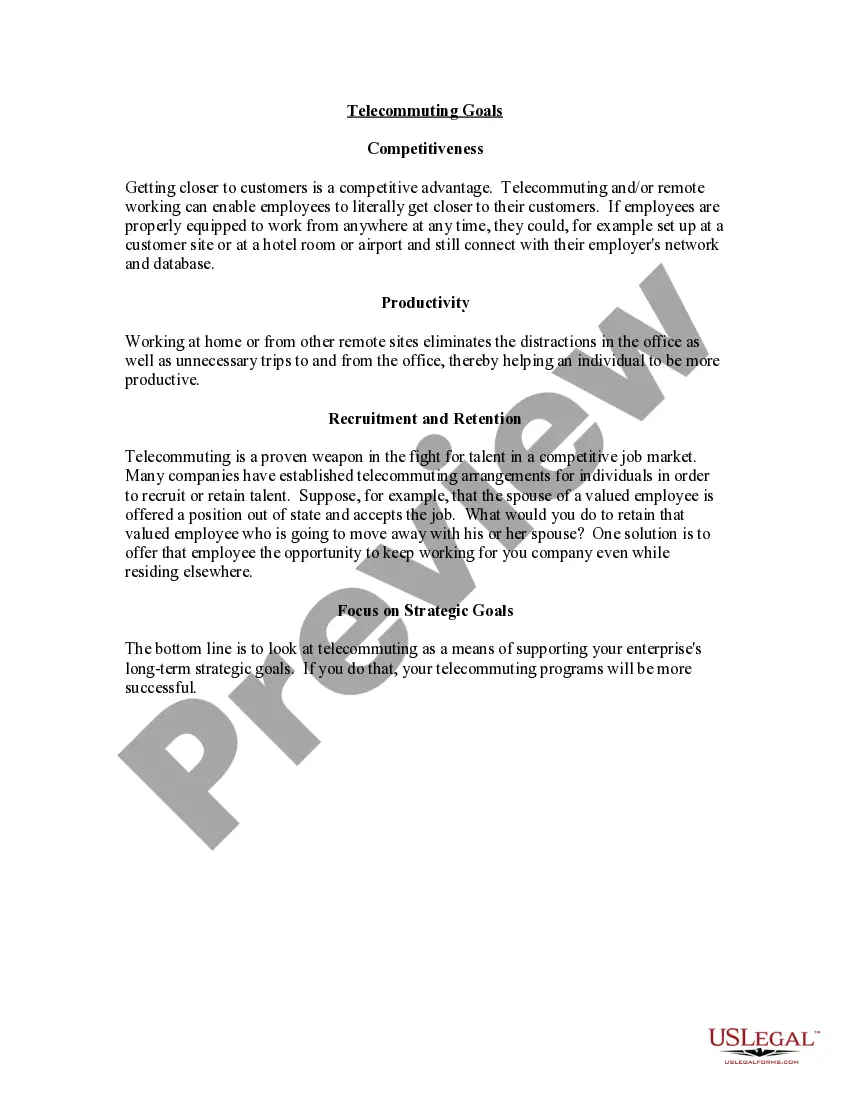
Washington Telecommuting Goals
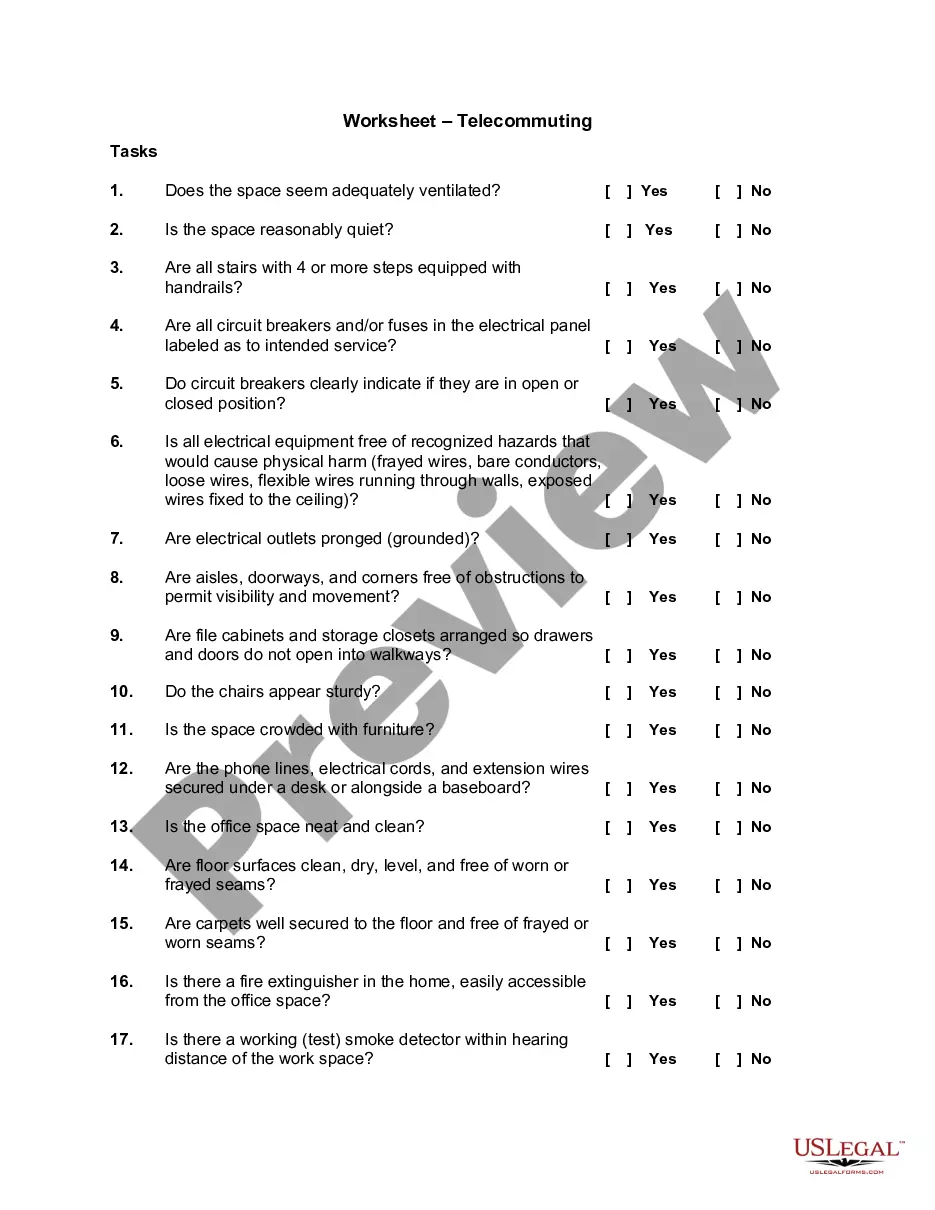
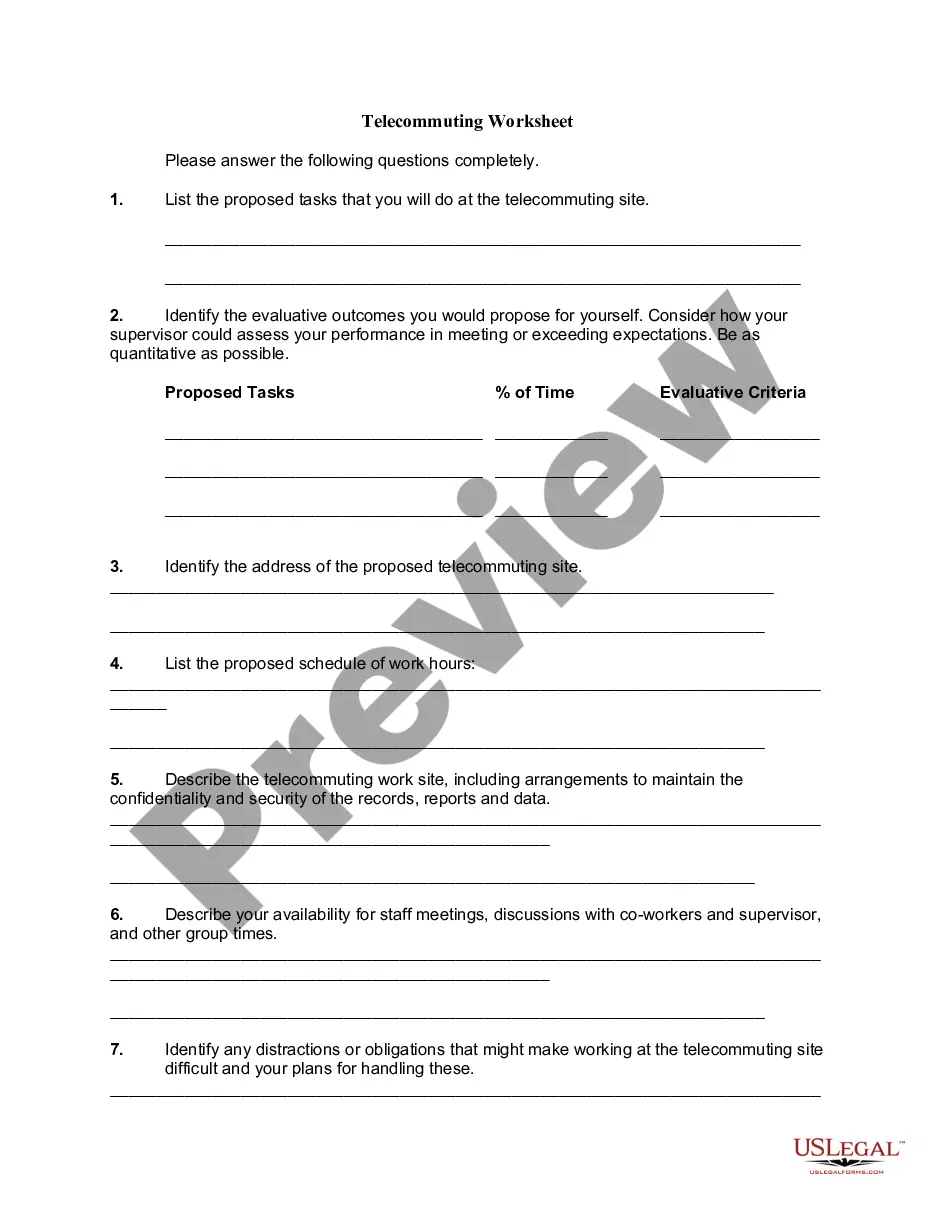
Description
Get your form ready online
Our built-in tools help you complete, sign, share, and store your documents in one place.
Make edits, fill in missing information, and update formatting in US Legal Forms—just like you would in MS Word.
Download a copy, print it, send it by email, or mail it via USPS—whatever works best for your next step.
Sign and collect signatures with our SignNow integration. Send to multiple recipients, set reminders, and more. Go Premium to unlock E-Sign.
If this form requires notarization, complete it online through a secure video call—no need to meet a notary in person or wait for an appointment.
We protect your documents and personal data by following strict security and privacy standards.

Make edits, fill in missing information, and update formatting in US Legal Forms—just like you would in MS Word.

Download a copy, print it, send it by email, or mail it via USPS—whatever works best for your next step.

Sign and collect signatures with our SignNow integration. Send to multiple recipients, set reminders, and more. Go Premium to unlock E-Sign.

If this form requires notarization, complete it online through a secure video call—no need to meet a notary in person or wait for an appointment.

We protect your documents and personal data by following strict security and privacy standards.
Looking for another form?
How to fill out Telecommuting Goals?
Finding the appropriate legal document template can be challenging.
Clearly, there are numerous formats accessible online, but how do you locate the legal form you need.
Utilize the US Legal Forms website. The service offers thousands of templates, including the Washington Telecommuting Goals, which you can employ for both business and personal purposes.
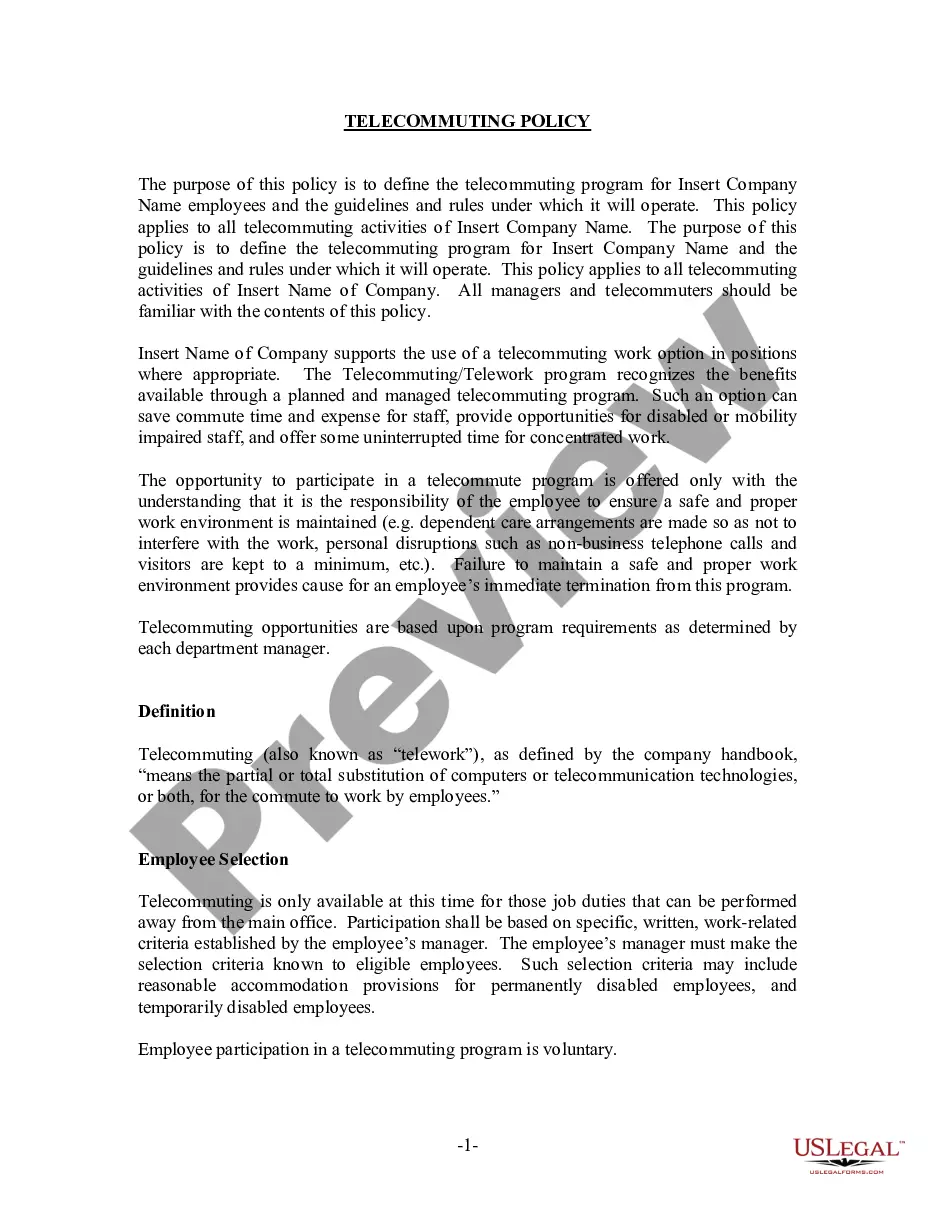
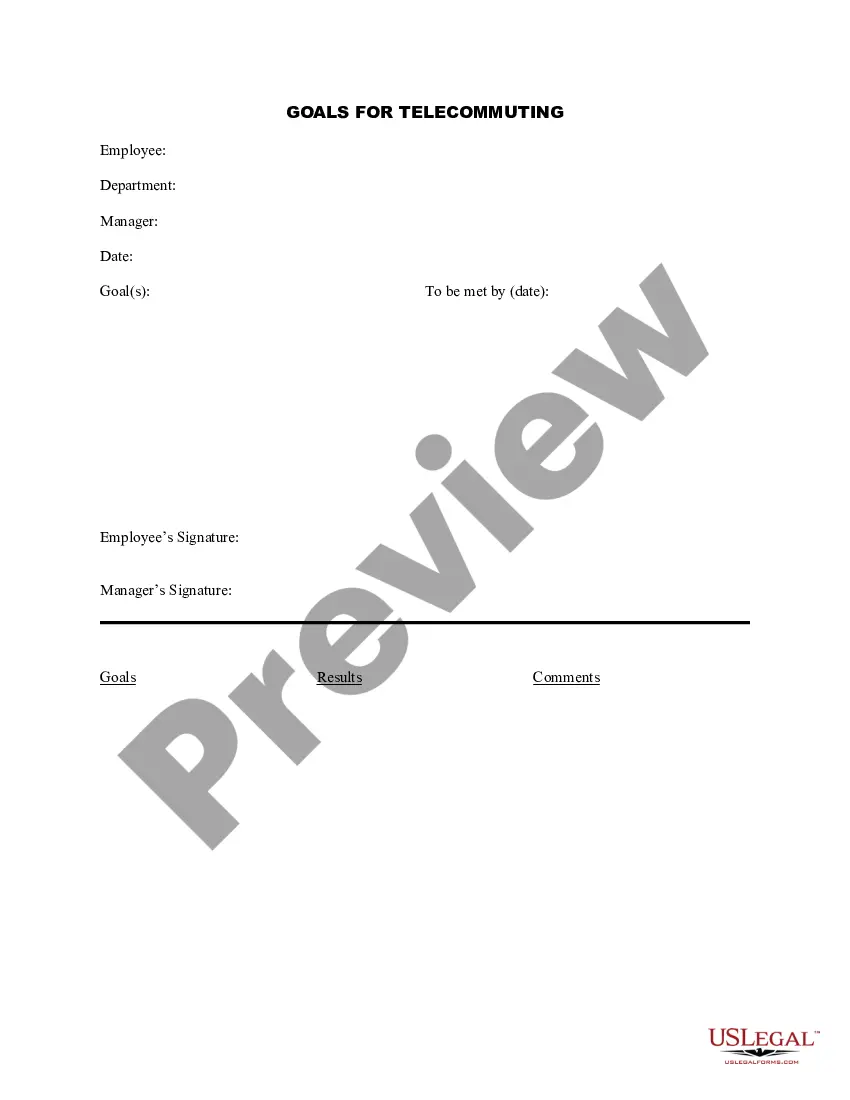
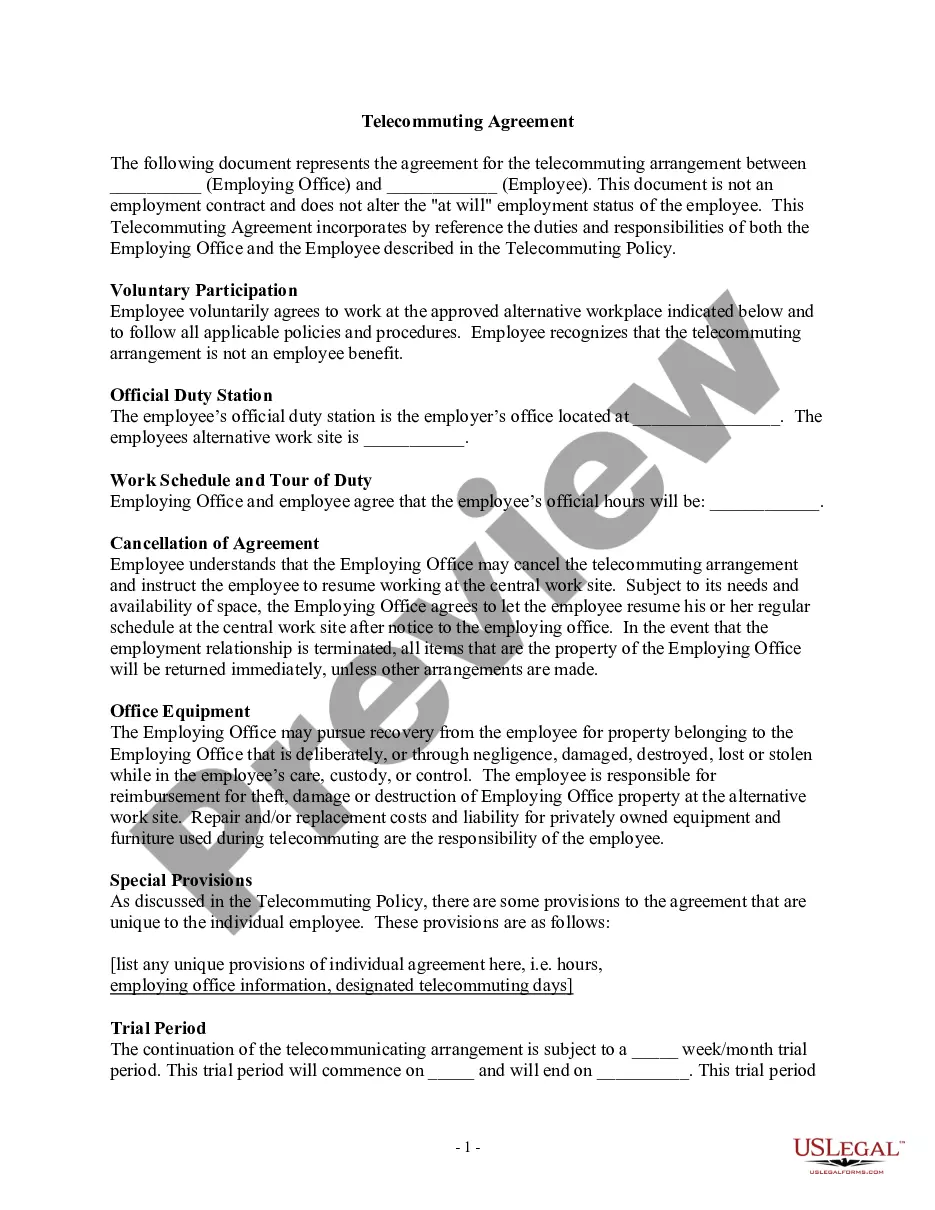
You can preview the form using the Preview option and review the form description to confirm it is suitable for you.
- All forms are reviewed by experts and comply with federal and state regulations.
- If you are already registered, Log In to your account and click the Download button to obtain the Washington Telecommuting Goals.
- Use your account to browse the legal forms you have previously obtained.
- Go to the My documents section of your account and download another copy of the document you need.
- If you are a new user of US Legal Forms, here are simple steps you should follow.
- First, ensure you have selected the correct form for your city/county.
Form popularity
FAQ
If a person has moved to another state, or lives and works in another state, if they still meet the minimum 820-hour requirement, they could still receive PFML from Washington. Over time, it may be less likely that they will be able to meet the 820-hour threshold.
Pros and Cons of TelecommutingYou do not have to spend time commuting back and forth from work.It is easier to focus without the usual workplace distractions.There are no transportation costs.It can provide a better balance of work and personal pursuits.More items...
Telecommuting is a flexible work arrangement that enables employees to achieve a more successful balance between work responsibilities and family life. Telecommuting allows employees to work at home, on the road or in a satellite location for all or part of their workweek.
7 advantages of telecommuting1) Higher employee satisfaction.2) Better work-life balance.3) Increased flexibility.4) Reduced operational costs.5) Reduced expenses for employees.6) Easier to focus.7) There's zero commuting necessary.1) You need the right technology to be effective.More items...?
The remote work policy outlines what's expected when working remotely. It should go into detail about all aspects of remote work. This includes expectations of working hours, legal rights, and cybersecurity requirements. Although this might sound challenging, with the right guidance, it won't be!
These include:Secure web-based timekeeping.Secure web-based document management.Web-based phone application.Video Conferencing application.Secure web-based HR.Tech support.
The New Rules for Remote Work: Pandemic EditionCommunicate clearly and be decisive.Lead by example.Be extra flexible.Adjust work expectations.Rethink meetings.Move to more asynchronous work.Accept that productivity will probably suffer.Focus on outcomes rather than monitoring activities.More items...?
7 advantages of telecommuting1) Higher employee satisfaction.2) Better work-life balance.3) Increased flexibility.4) Reduced operational costs.5) Reduced expenses for employees.6) Easier to focus.7) There's zero commuting necessary.1) You need the right technology to be effective.More items...?
6 benefits of teleworkingWork-life balance and flexible working hours.Saving time and money.Pollution reduction.Reduced conflict in companies.Improves concentration.It allows you to work from anywhere.
The purpose of the Telecommuting Policy is to provide employees with the guidelines and controls for working remotely. Teleworking, or telecommuting, is the concept of working from home or another location on a full- or part-time basis. Teleworking is not a formal, universal employee benefit.