A "boundary line" is a legal term that refers to the area that a plot of land covers. It is generally determined by using either a property surveyor or GPS technology. The description of your boundary lines can usually be found in the property's recorded title.
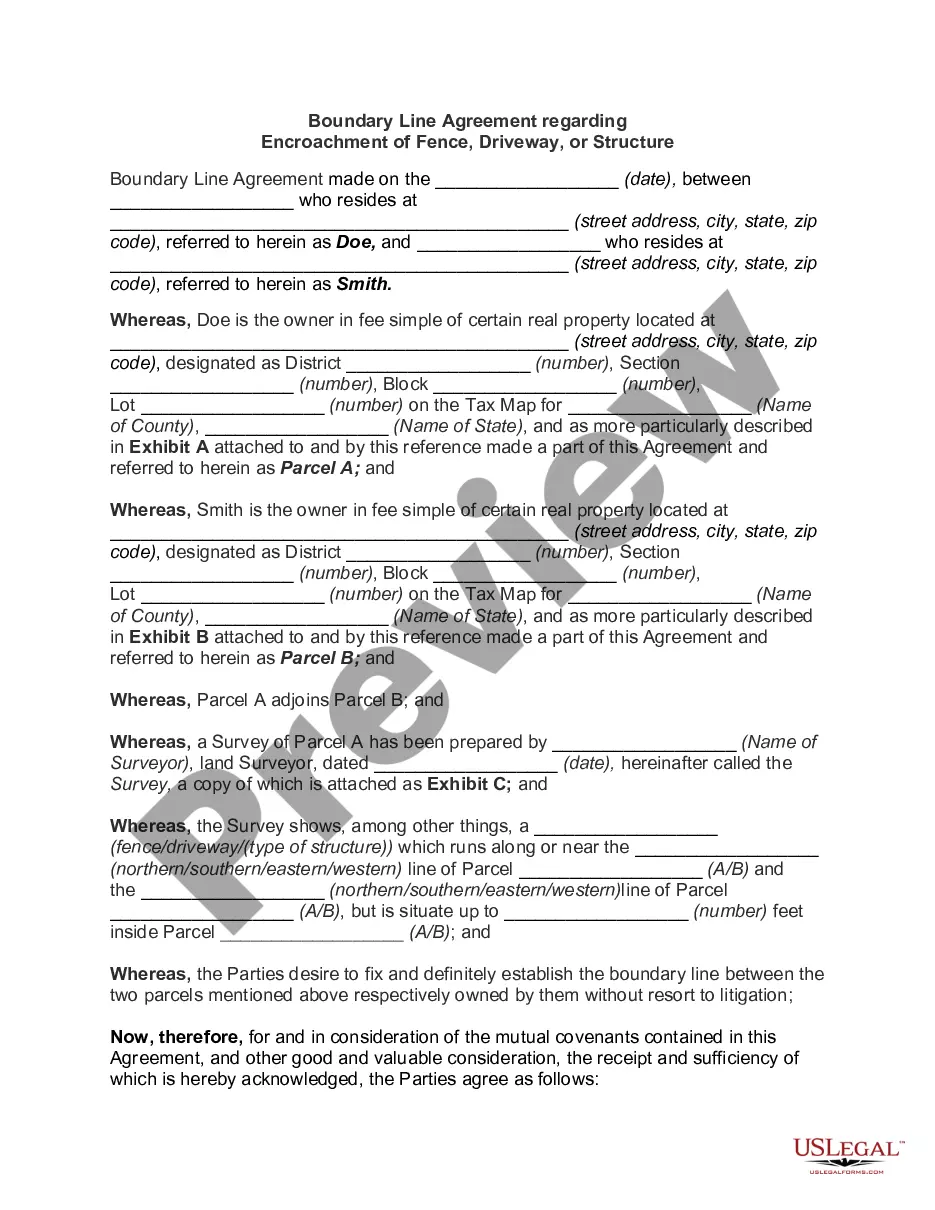
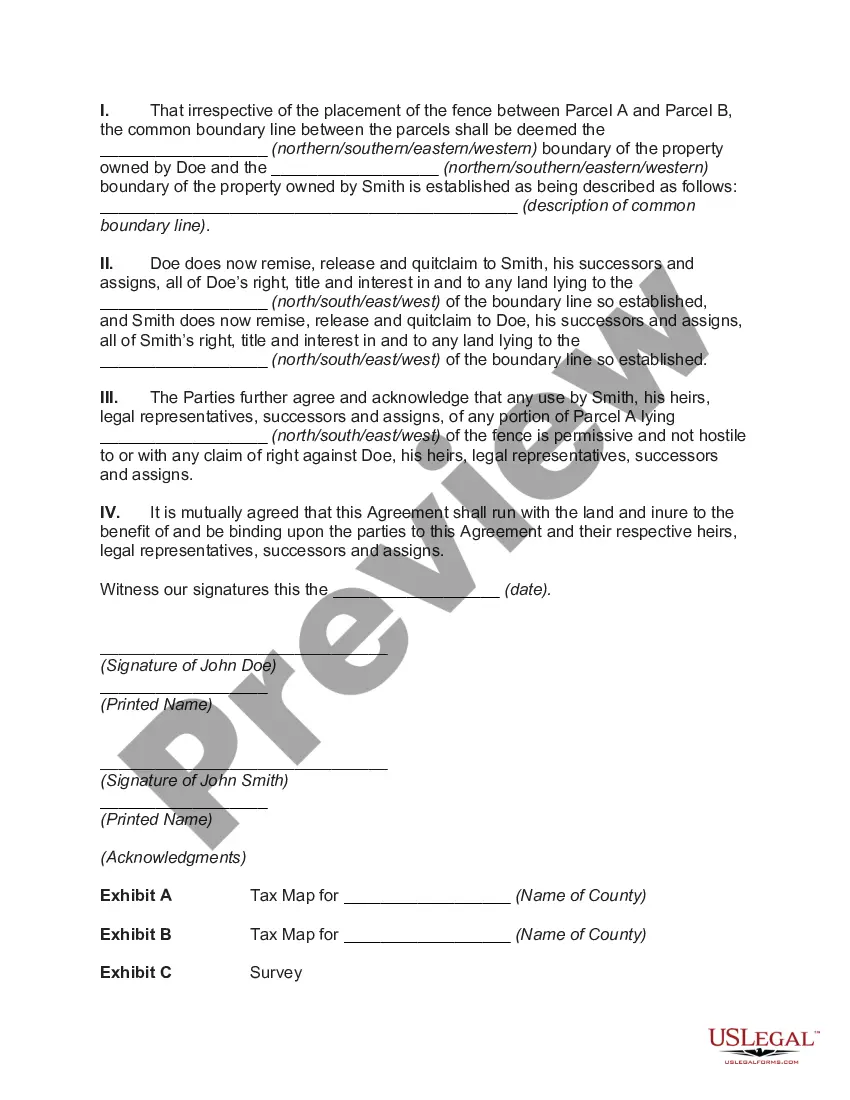
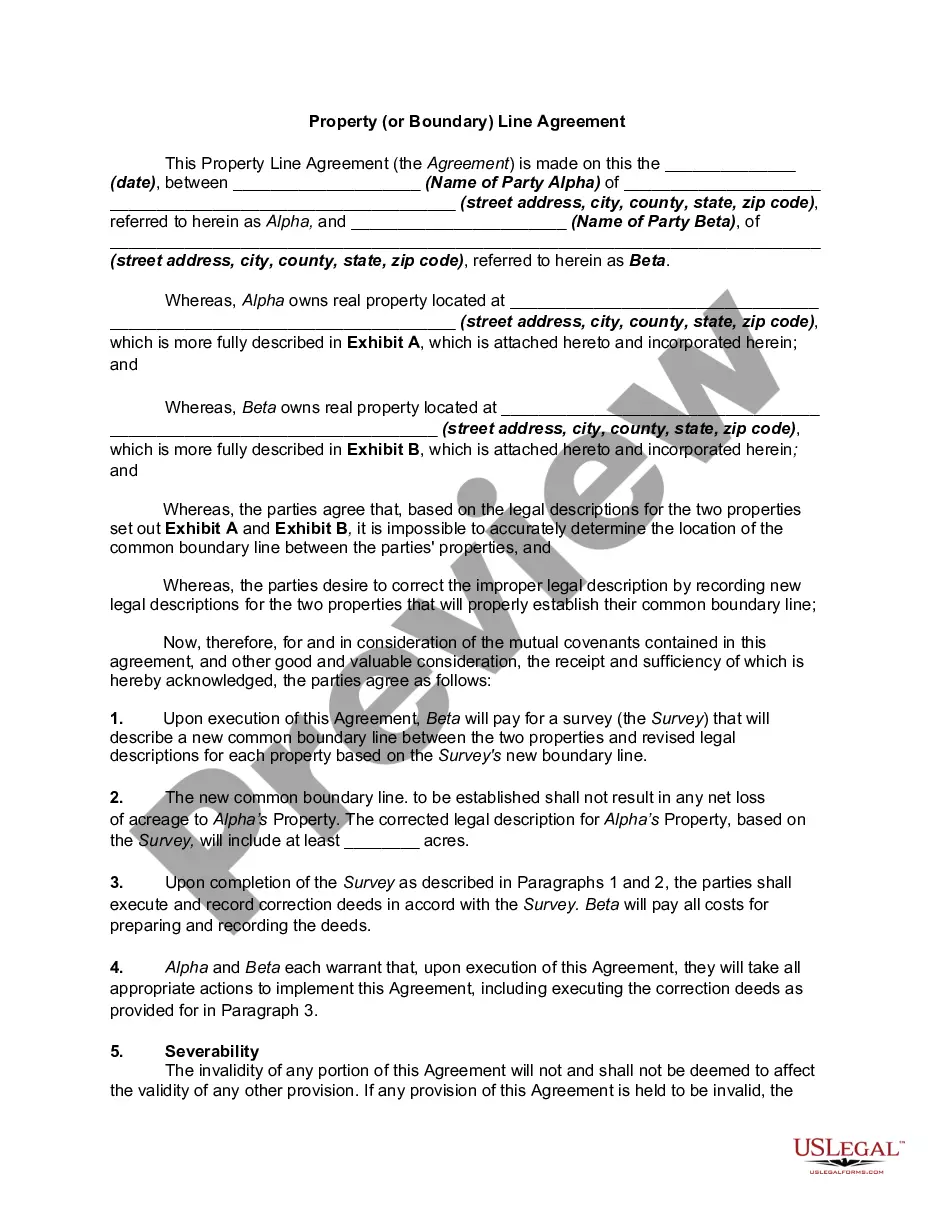
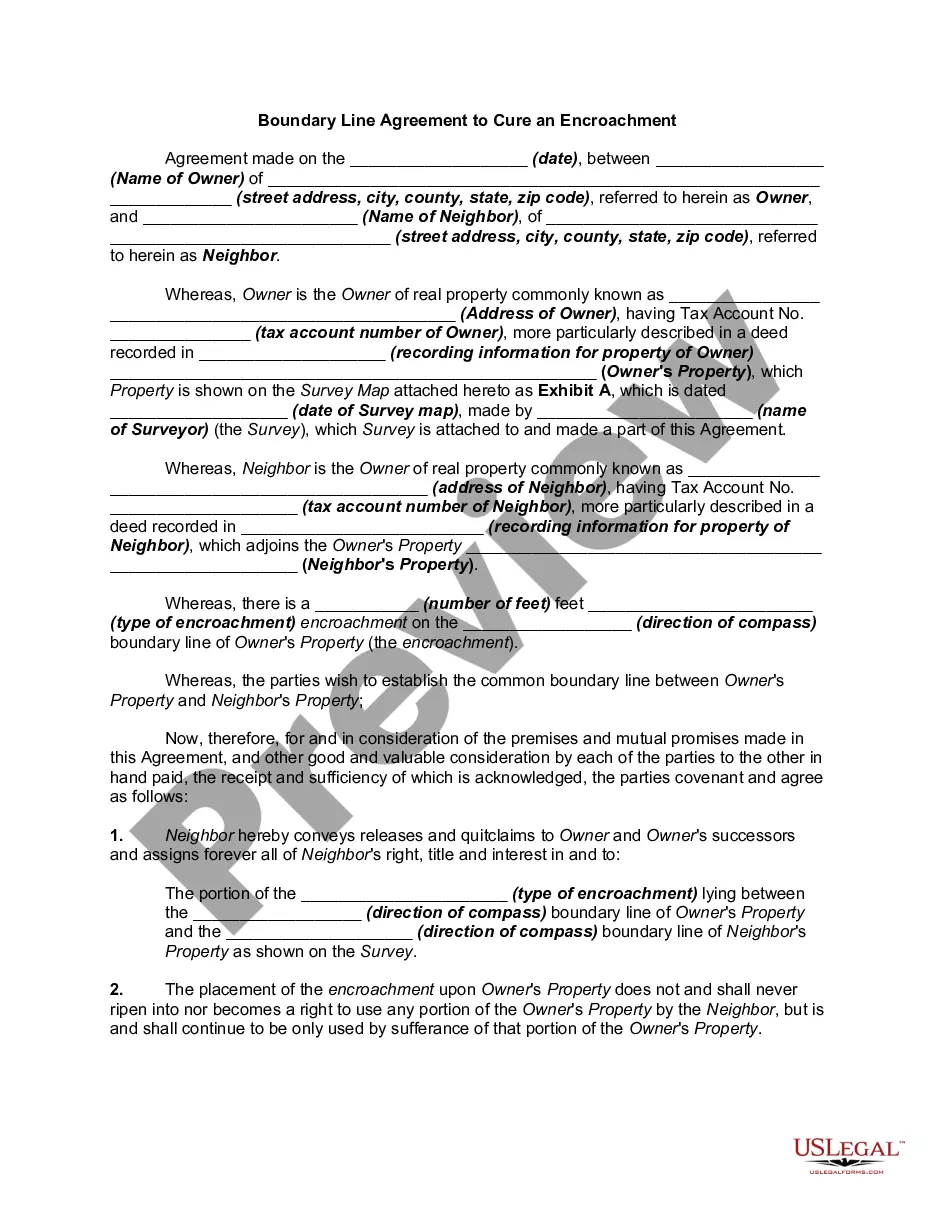
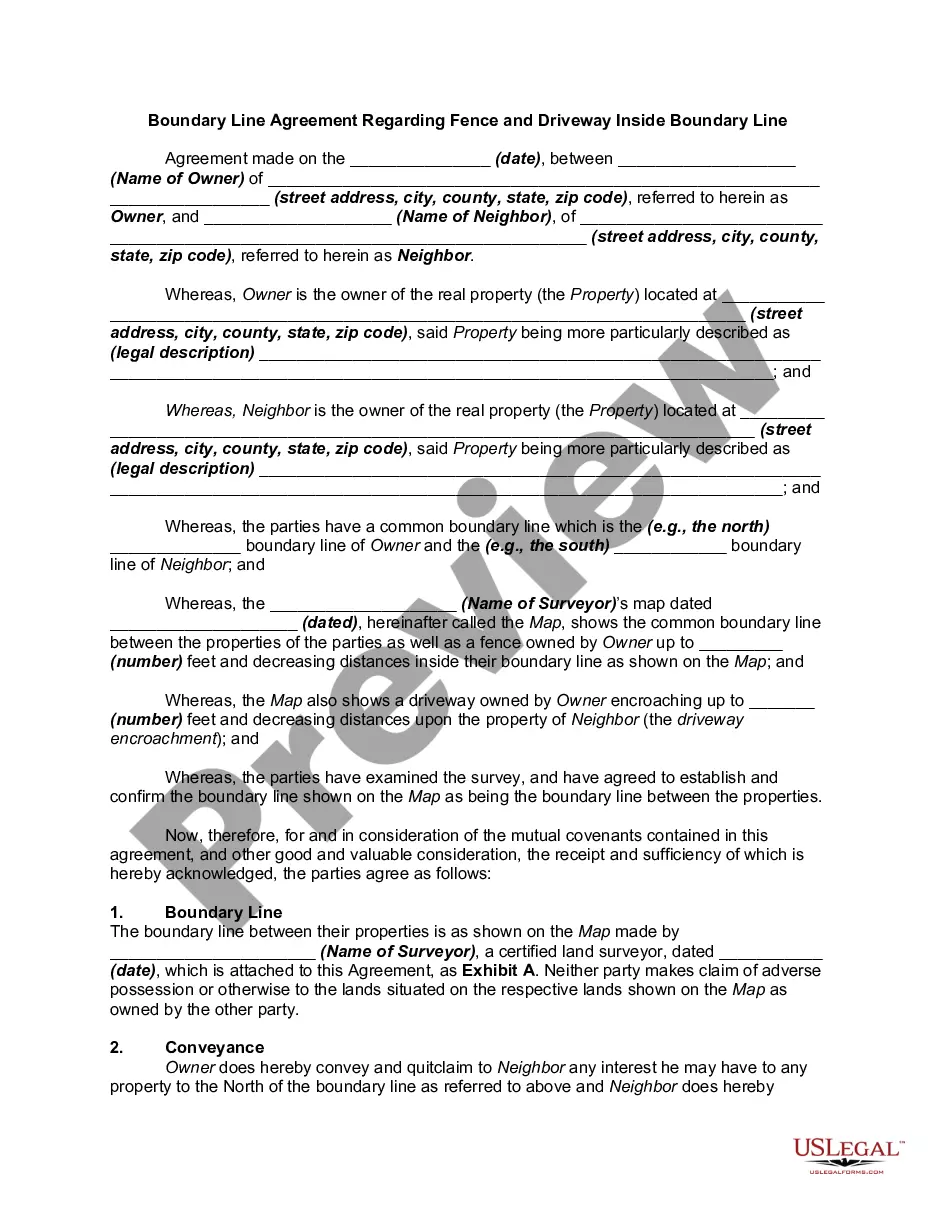
A boundary line agreement is signed between two property owners. The purpose is to makes it easier for either party to sell their property without any fuss over the boundaries. The terms include location of the boundary line, property details and the parties involved.
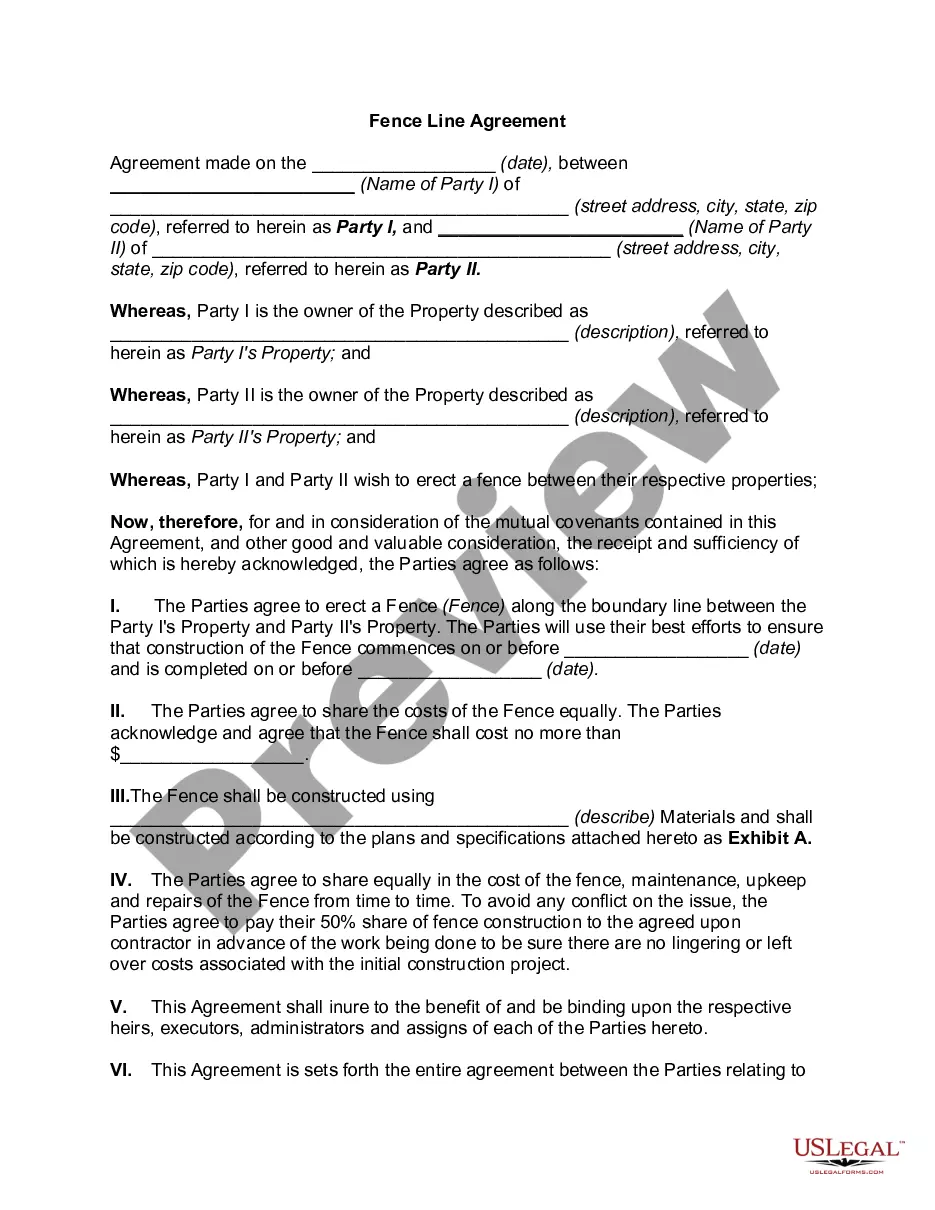
West Virginia Boundary Line Agreement regarding Encroachment of Fence, Driveway, or Structure
State:
Multi-State
Category:
Control #:
US-13199BG
Format:
Word;
Rich Text
113 downloads
Description
Free preview

Get your form ready online
Our built-in tools help you complete, sign, share, and store your documents in one place.
Built-in online Word editor
Make edits, fill in missing information, and update formatting in US Legal Forms—just like you would in MS Word.
Export easily
Download a copy, print it, send it by email, or mail it via USPS—whatever works best for your next step.
E-sign your document
Sign and collect signatures with our SignNow integration. Send to multiple recipients, set reminders, and more. Go Premium to unlock E-Sign.
Notarize online 24/7
If this form requires notarization, complete it online through a secure video call—no need to meet a notary in person or wait for an appointment.
Store your document securely
We protect your documents and personal data by following strict security and privacy standards.

Make edits, fill in missing information, and update formatting in US Legal Forms—just like you would in MS Word.

Download a copy, print it, send it by email, or mail it via USPS—whatever works best for your next step.

Sign and collect signatures with our SignNow integration. Send to multiple recipients, set reminders, and more. Go Premium to unlock E-Sign.

If this form requires notarization, complete it online through a secure video call—no need to meet a notary in person or wait for an appointment.

We protect your documents and personal data by following strict security and privacy standards.
Looking for another form?
How to fill out Boundary Line Agreement Regarding Encroachment Of Fence, Driveway, Or Structure?
Are you in a situation where you require documents for both business or specific tasks almost every workday.
There are numerous legal document templates accessible online, but finding ones you can trust is challenging.
US Legal Forms offers thousands of template options, such as the West Virginia Boundary Line Agreement concerning Fence, Driveway, or Structure encroachment, which can be crafted to satisfy federal and state requirements.
Once you acquire the appropriate template, click Purchase now.
Choose the payment plan you desire, fill in the necessary information to create your account, and pay for the order using your PayPal or credit card.
- If you are already familiar with the US Legal Forms website and possess an account, simply Log In.
- Next, you can download the West Virginia Boundary Line Agreement concerning Fence, Driveway, or Structure template.
- If you lack an account and wish to start using US Legal Forms, follow these steps.
- Locate the template you need and ensure it corresponds to the correct city/county.
- Utilize the Review button to examine the form.
- Read the information to confirm you have selected the correct template.
- If the template does not meet your requirements, use the Search area to find the template that satisfies your needs.
Form popularity
FAQ
Additionally, West Virginia has a special statute for hedge fences. A hedge fence may not extend more than 18 inches over the dividing line of a neighbor's property or into a public road. A violation of this statute could result in a 10 day notice to correct the problem.
The exact amount a building needs to be set back from the property line will vary from one location to another. However, the required setback on the side is typically between 5 10 feet, while the front and back require around 10 20 feet at a minimum.
According to our Property Laws, encroachment is described as a situation where the airspace over the neighbour's land is invaded by objects originating from the land owner's property or where a boundary line between properties is overreached.
Boundary FencesPartition fences must be "lawful" as defined by West Virginia Code, unless the adjoining landowners agree in writing to build a fence of different specifications.
Check Rules and Regulations Typically, fences are installed anywhere from 2 to 8 inches from a property line in most areas. Some areas might allow to go right up to a property line, especially if you live in an urban row house where every inch makes a difference!
How Close To The Property Line Can I Build? Fences are typically built between 2 and 8 inches from the line between properties. Some areas will allow the building of fences directly on the property line, but in this case, you'll have to cooperate with your neighbor and potentially share the cost of the fence.
Yes. Yes, you can build next to your neighbour's fence. As long as you're inside your property line you're fine. One consideration: your posts might have to be staggered relative to the fence posts of the existing fence.
West Virginia fencing requirements state that most fences should be at least four feet high for both property boundaries and those along public right of ways. Worm rail fences must be 4 1/2 feet tall, while stone fences need only be 3 1/2 feet tall and 2 feet wide.
The building distance limit depends on the structure you intend on building. It usually ranges between five to 15 feet. It is important to communicate property boundaries with your neighbor before beginning any permanent or semi-permanent projects, due to the risk of township or county penalties.