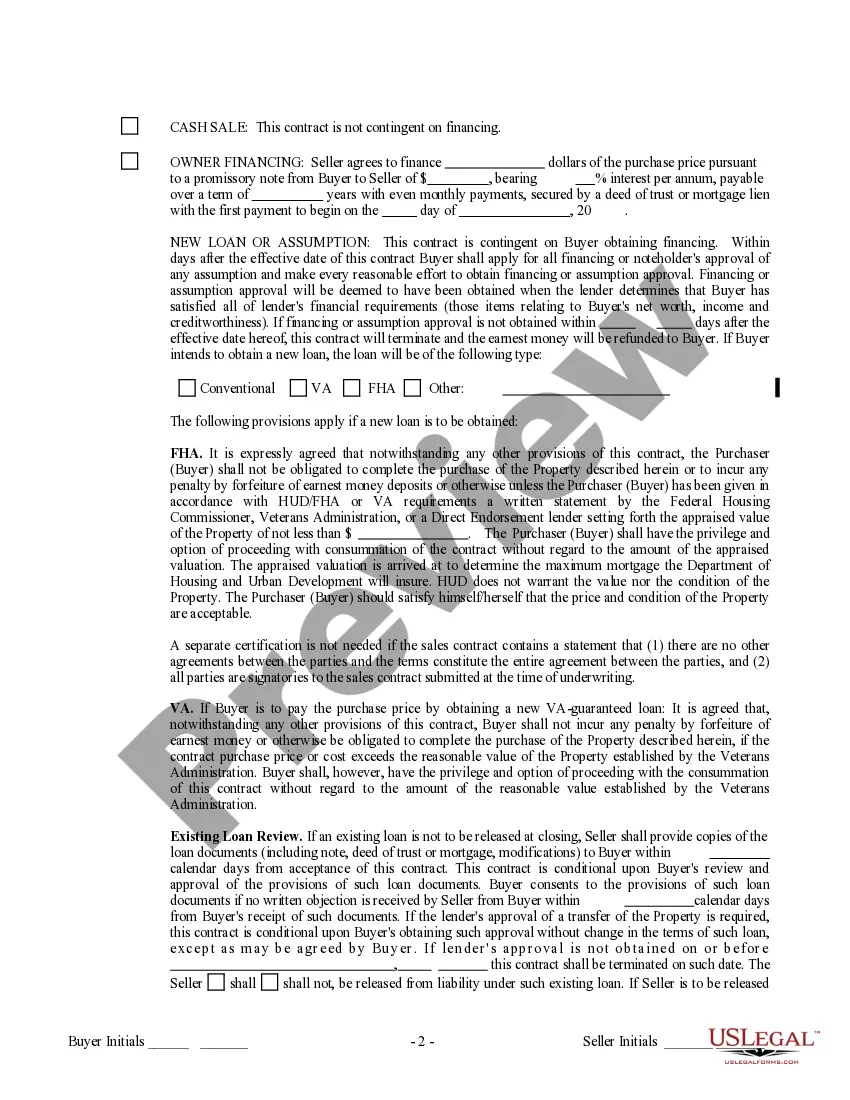
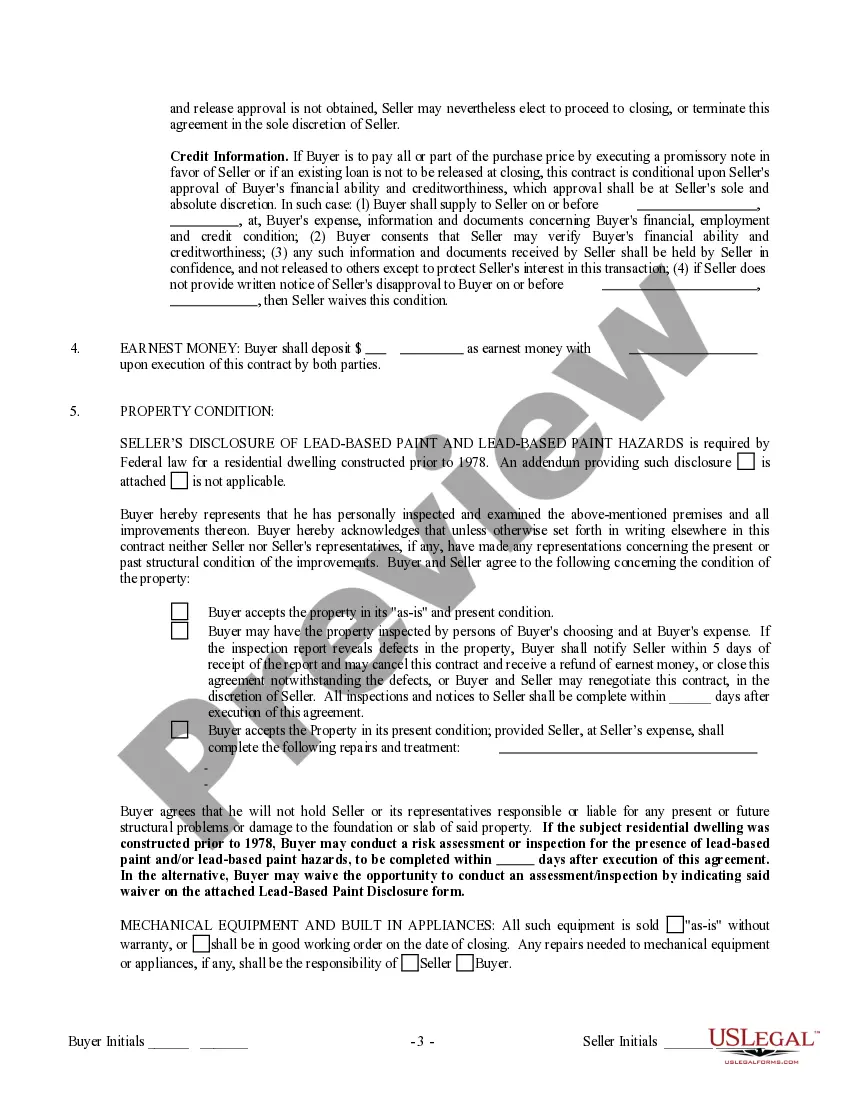
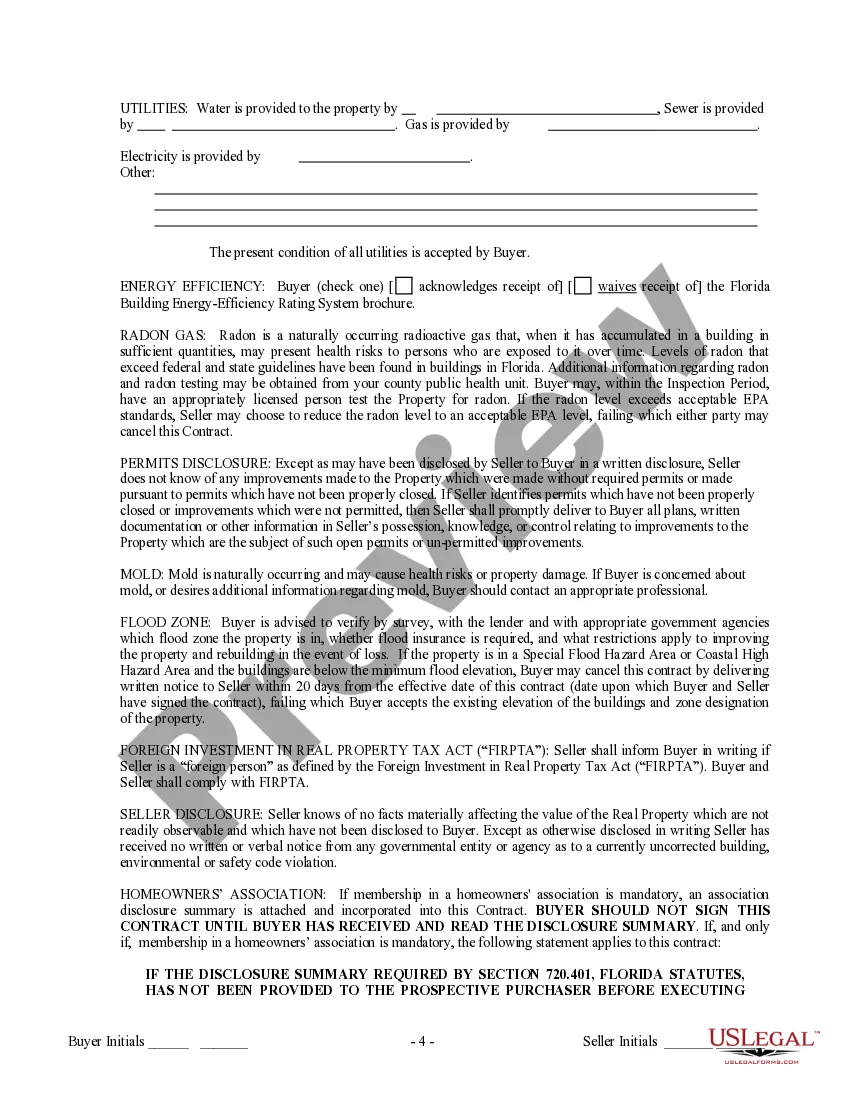
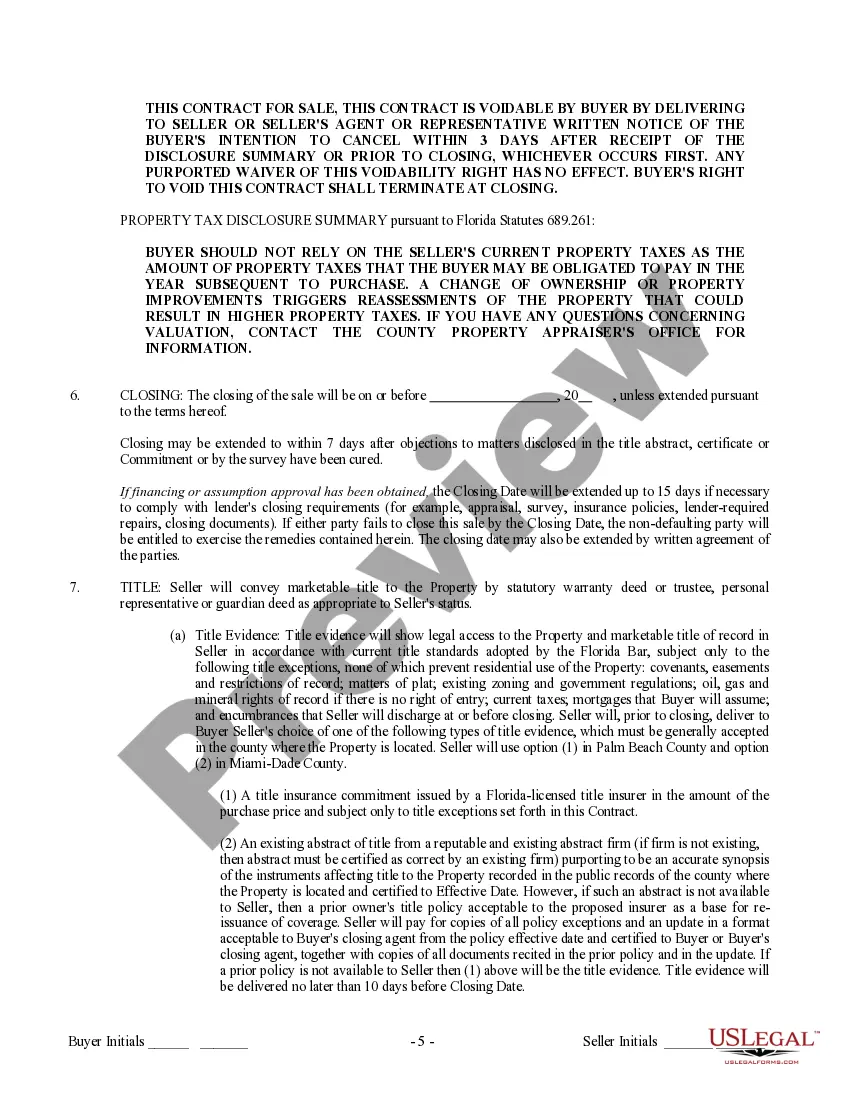
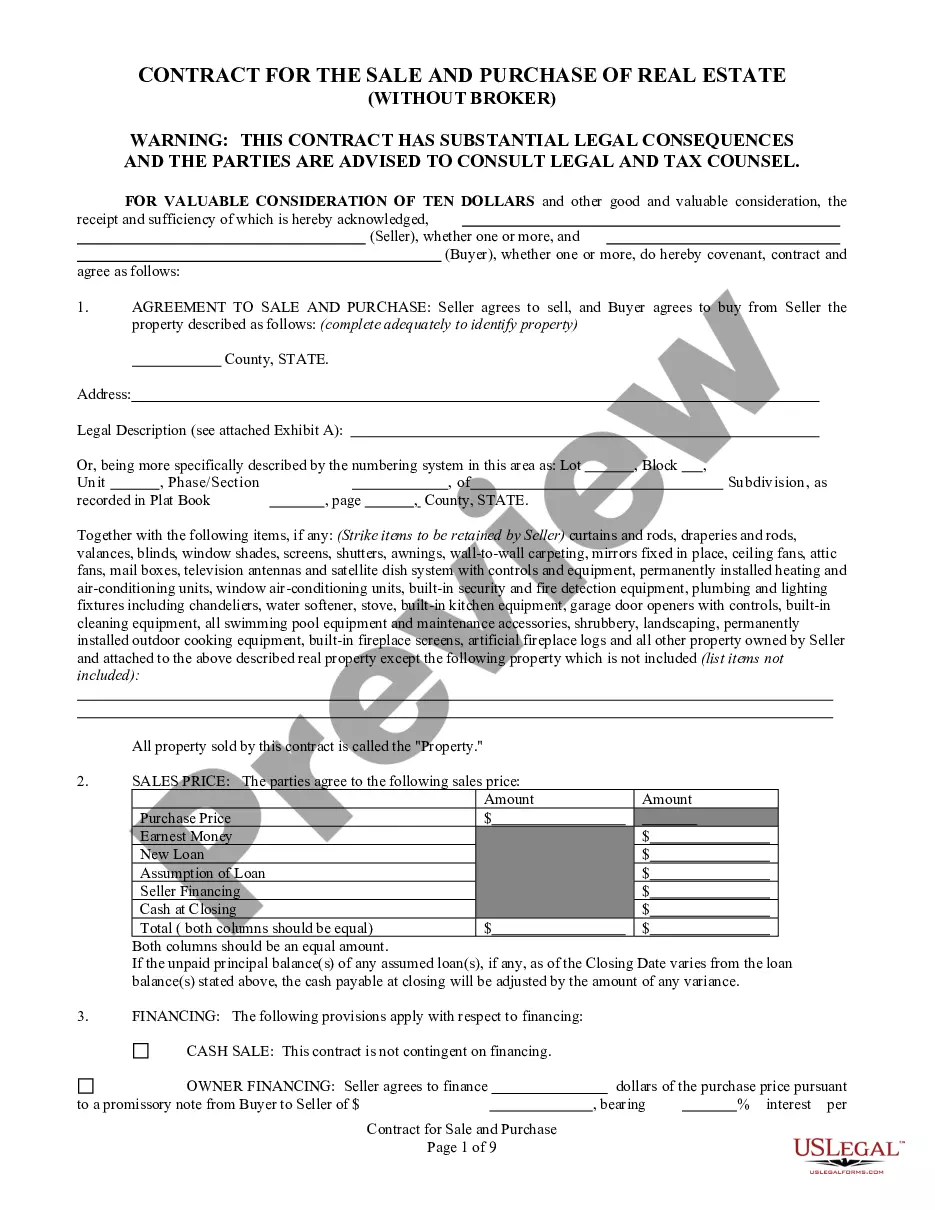
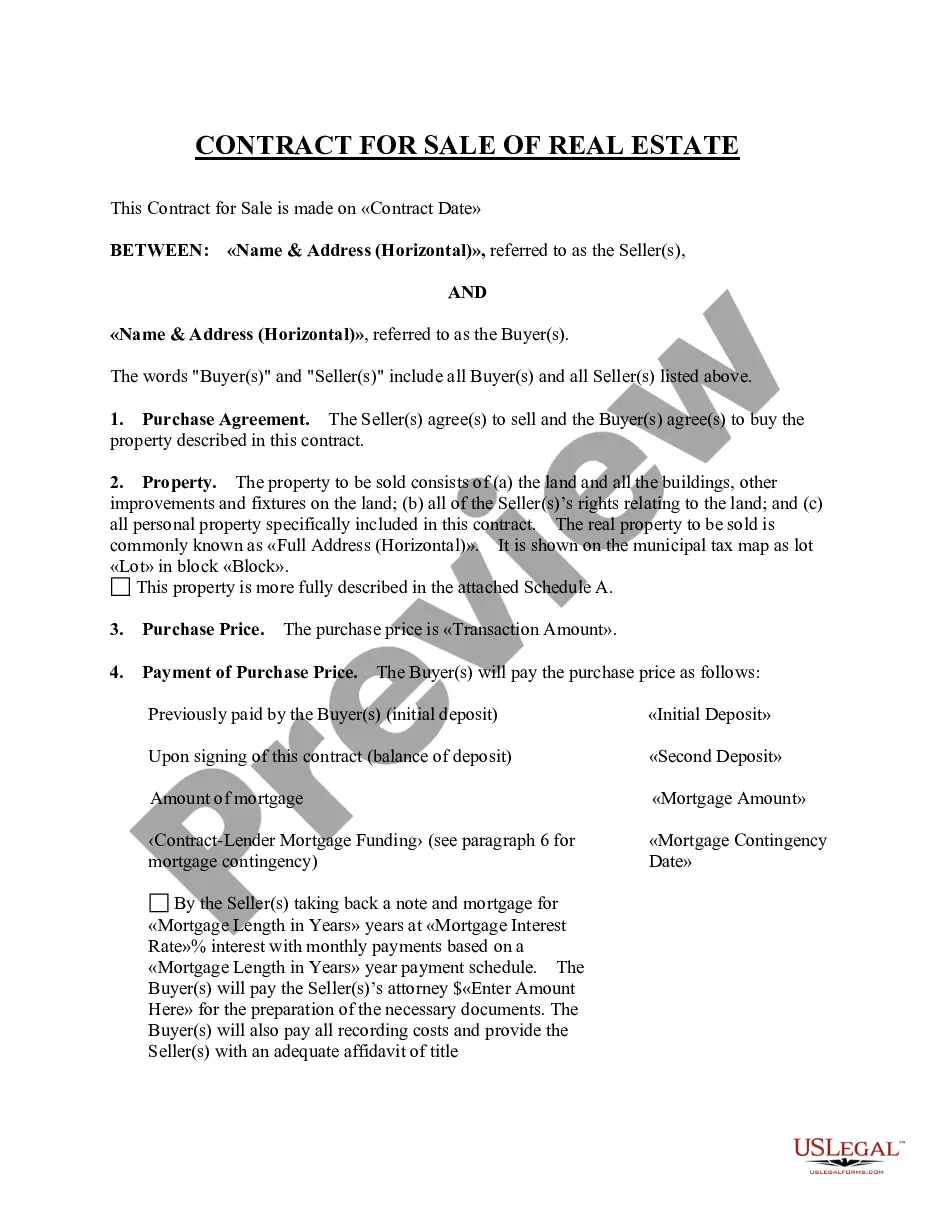
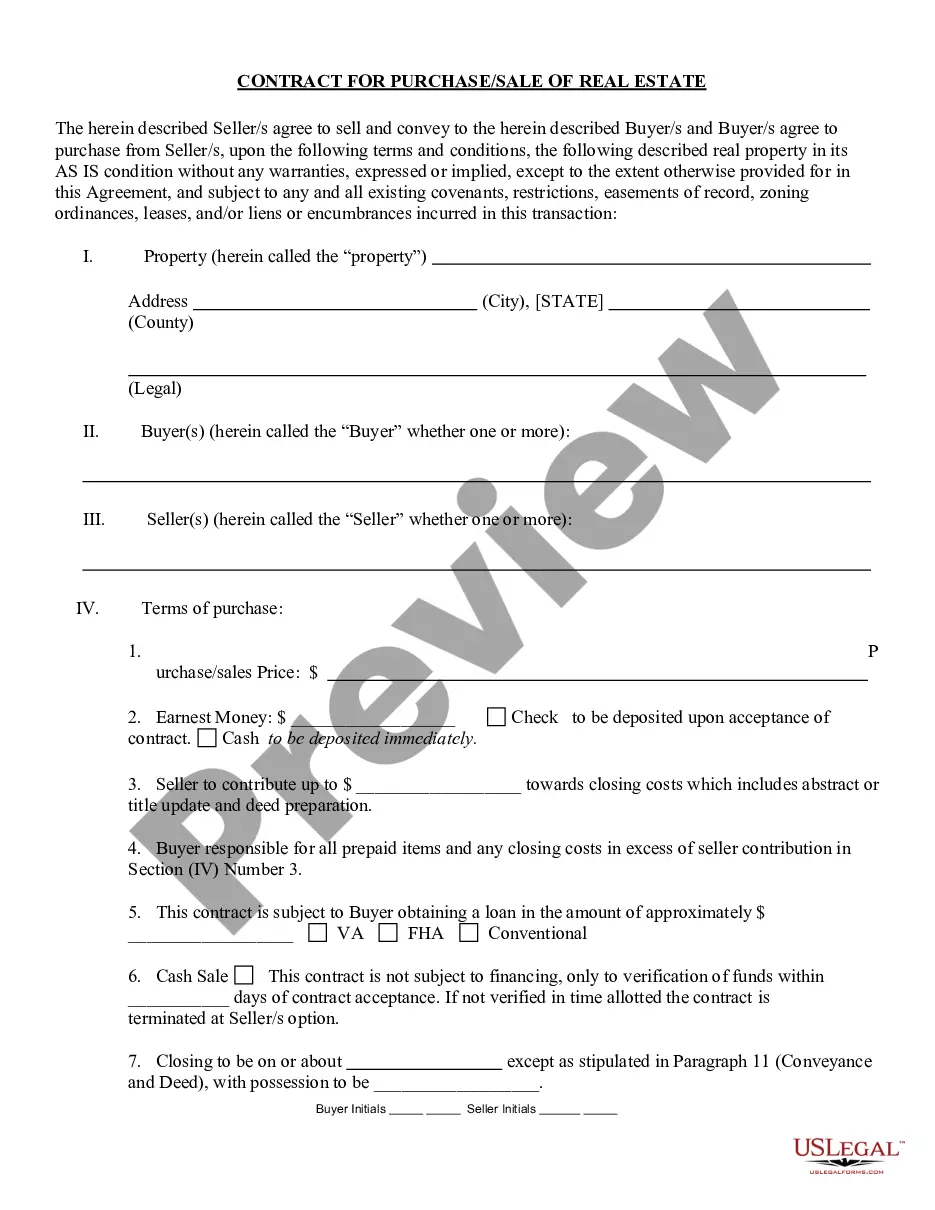
This form is a Contract for the sale of real estate for use in Florida. It can be used for a cash sale, assumption or new loan buyer. The contract contains provisions common to a real estate transaction. No broker involved.
Jacksonville Florida Contract for Sale and Purchase of Real Estate with No Broker for Residential Home Sale Agreement
Category:
State:
Florida
City:
Jacksonville
Control #:
FL-00472
Format:
Word;
Rich Text
Instant download
Description
Free preview
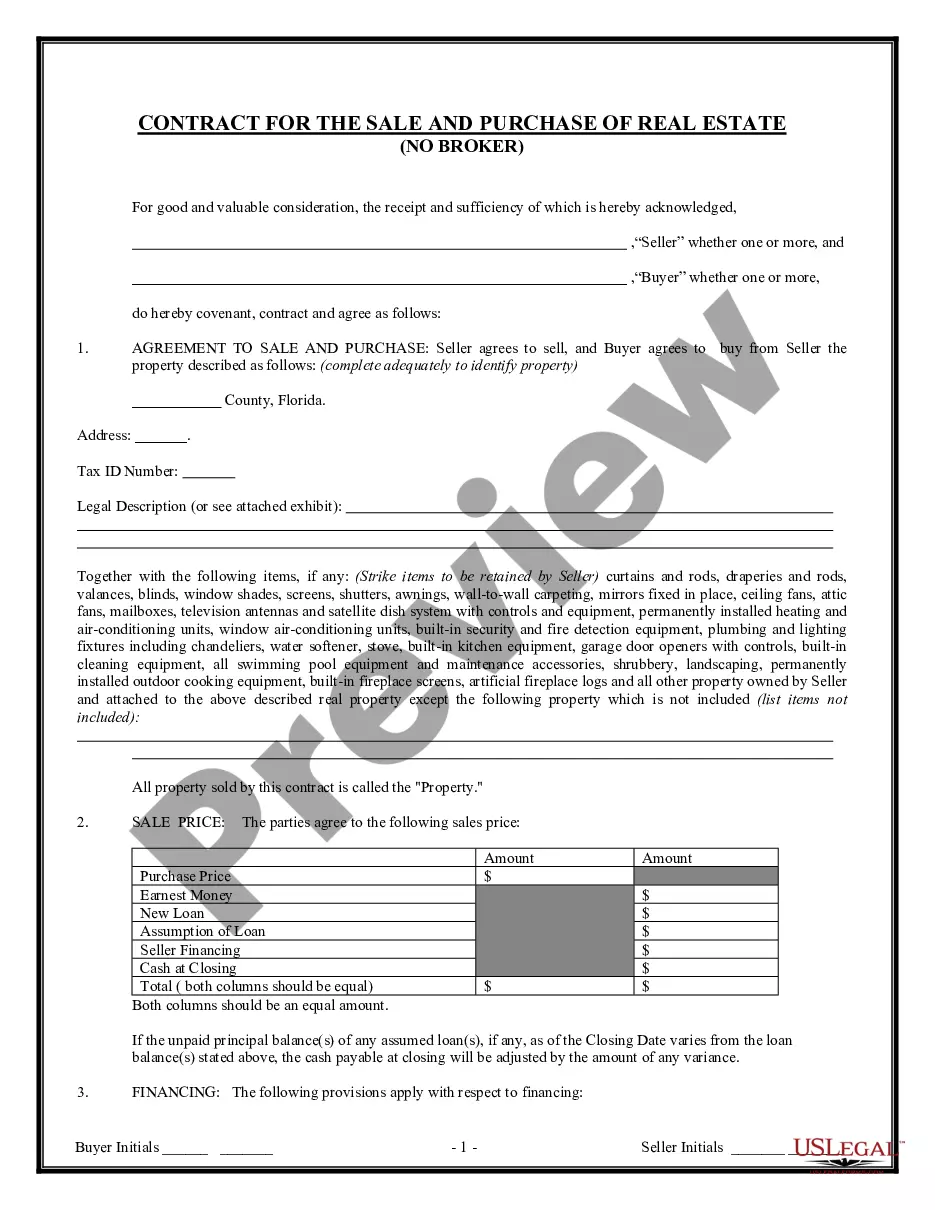
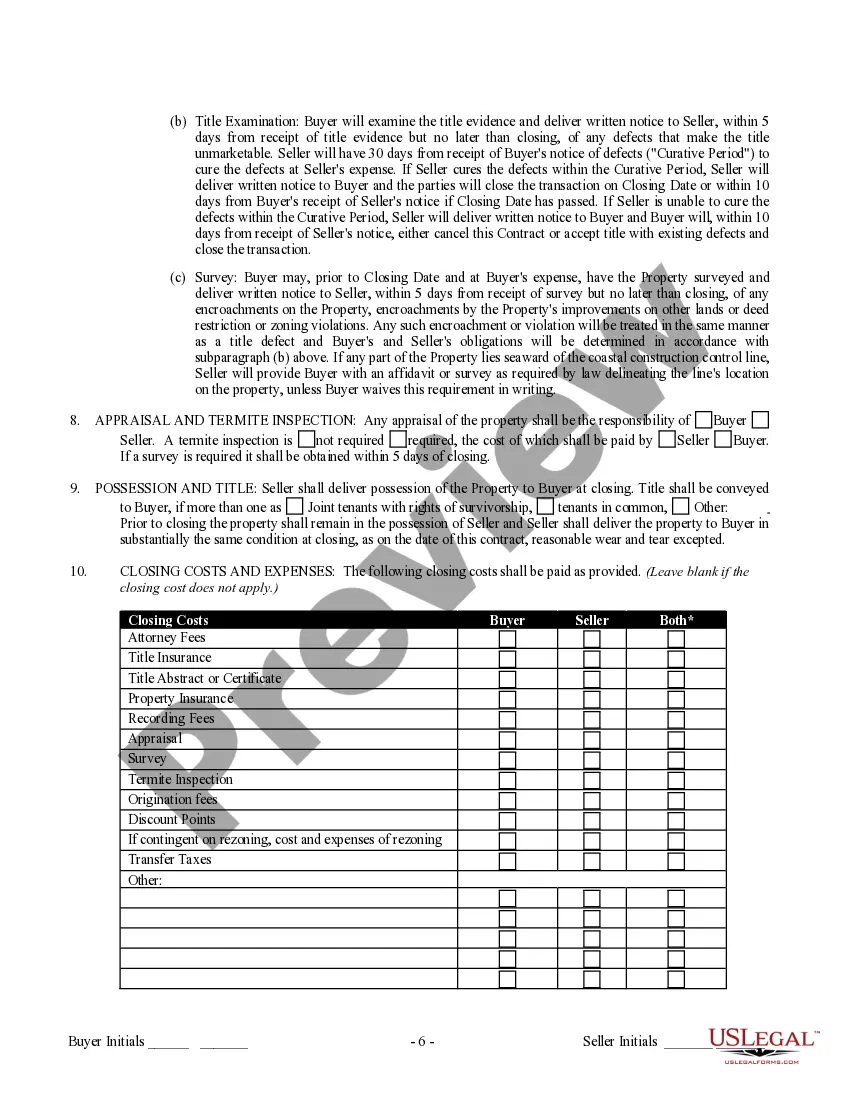
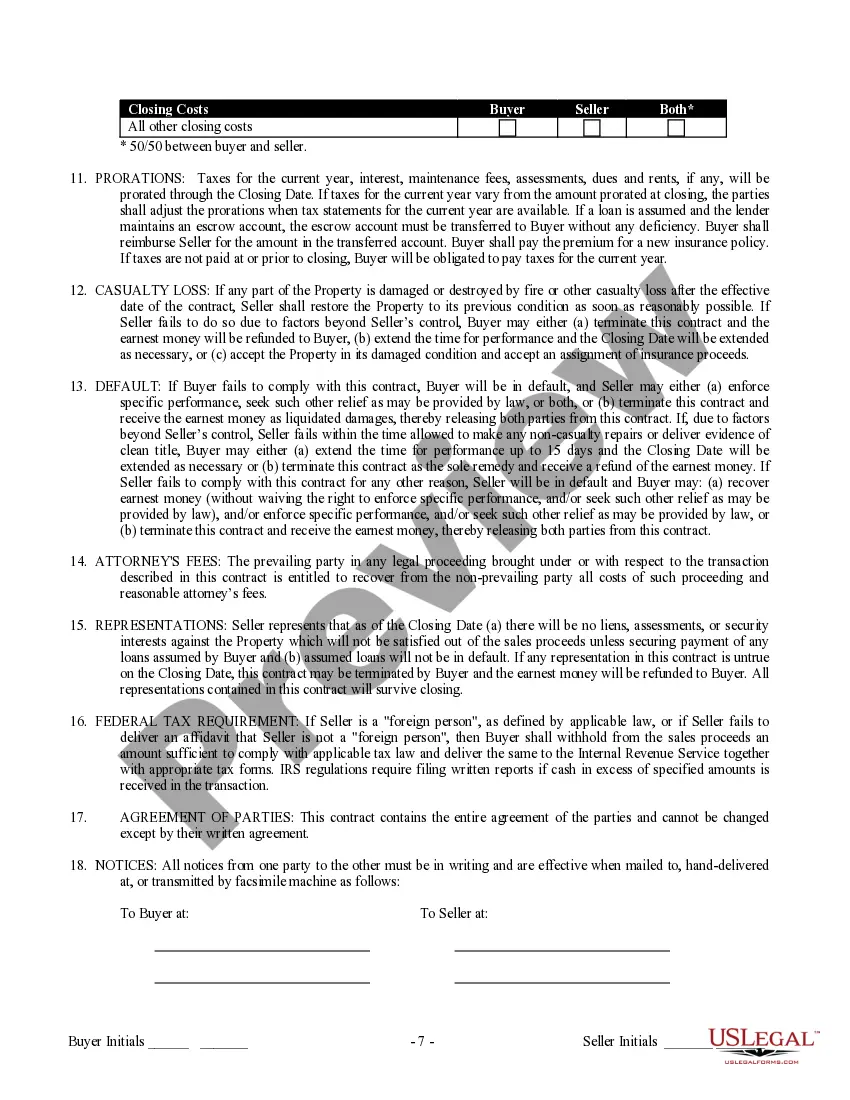
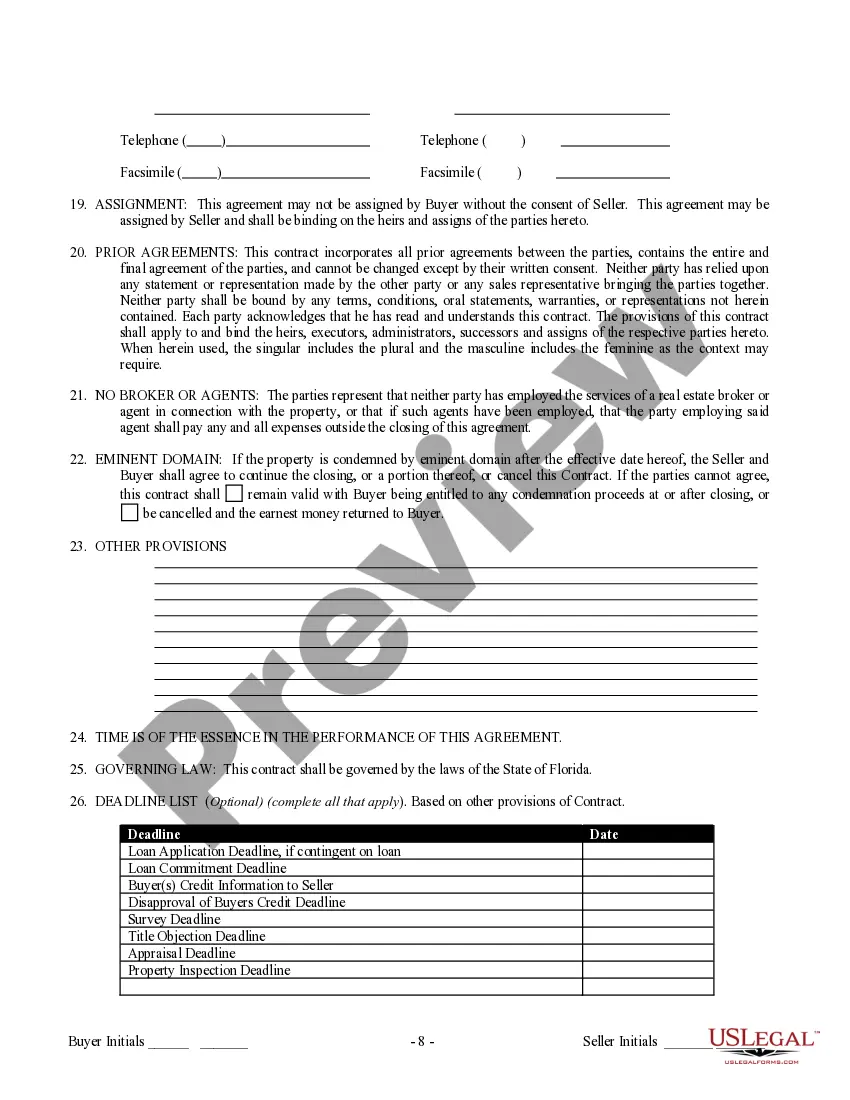
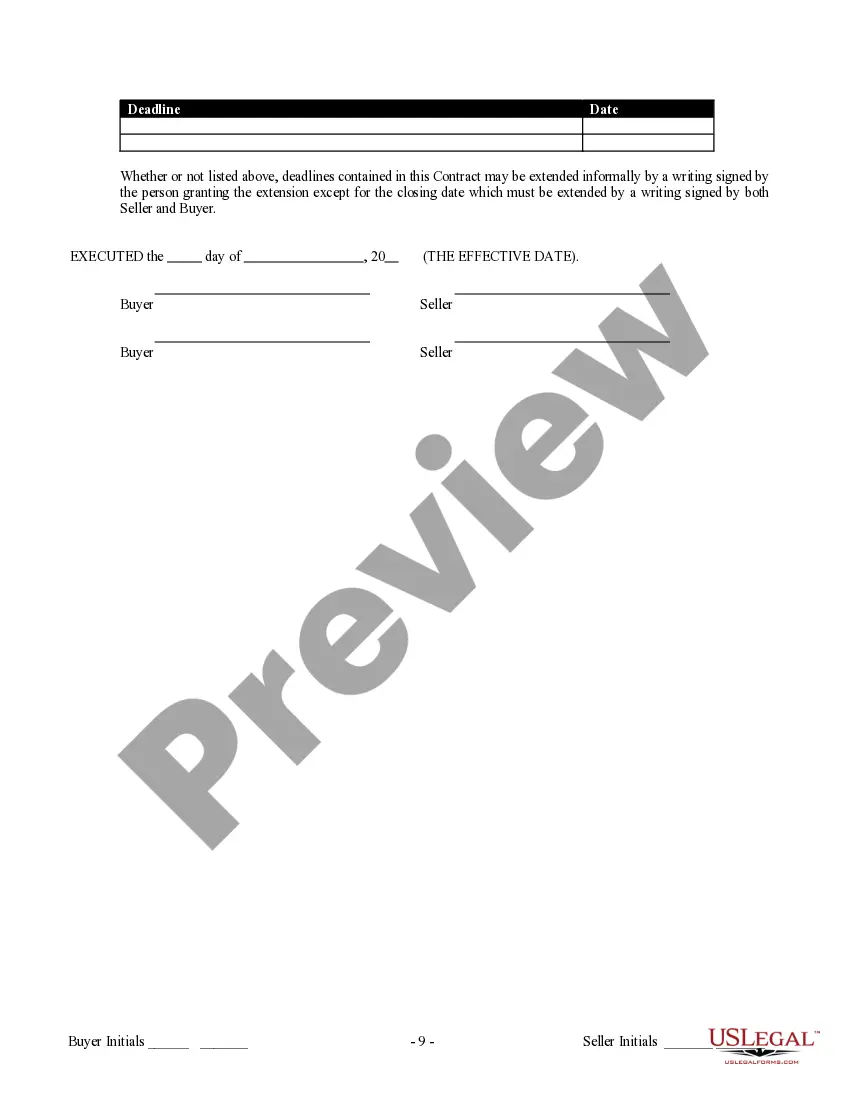



How to fill out Florida Contract For Sale And Purchase Of Real Estate With No Broker For Residential Home Sale Agreement?
Are you looking for a dependable and cost-effective provider of legal forms to purchase the Jacksonville Florida Contract for Sale and Purchase of Real Estate without a Broker for Residential Home Sale Agreement? US Legal Forms is your perfect choice.
Whether you require a straightforward agreement to establish guidelines for living together with your partner or a collection of documents to facilitate your separation or divorce through the judicial system, we've got you assisted. Our platform offers over 85,000 current legal document templates for individual and corporate use.
All templates we provide are not generic and are structured according to the specific regulations of different states and counties.
To obtain the form, you must Log In to your account, locate the desired template, and click the Download button adjacent to it. Please remember that you can retrieve your previously acquired form templates at any time from the My documents tab.
Now you are ready to create your account. Next, select a subscription plan and continue to payment. Once payment is completed, download the Jacksonville Florida Contract for Sale and Purchase of Real Estate without a Broker for Residential Home Sale Agreement in any available format. You can return to the website anytime and re-download the form at no additional cost.
Obtaining current legal documents has never been more straightforward. Try US Legal Forms now, and say goodbye to squandering your precious time figuring out legal documentation online for good.
- Are you a newcomer to our site? No problem.
- You can set up an account in a few minutes, but first, ensure to do the following.
- Confirm whether the Jacksonville Florida Contract for Sale and Purchase of Real Estate without a Broker for Residential Home Sale Agreement aligns with the laws of your state and locality.
- Examine the details of the form (if accessible) to understand who and what the form is designated for.
- Restart your search if the template does not suit your particular circumstances.
Form popularity
FAQ
Under Florida law, contracts involving goods priced at $500 or more, promises to pay the debts of another, promises made in consideration of marriage, and promises that cannot be fulfilled within one year must be written to be valid.
A Florida Real Estate Contract must be in writing and contain the following, in order to be legally binding; The parties to the contract - Buyers and Sellers identification. Identification of the Real Property by means of a legal description and street address.
The ?AS IS? Heading It is in fact one of the most common standard contracts used in Florida. The ?AS IS? Contract simply places no repair obligations on the seller, while the Standard Contract has default terms requiring that the seller make certain types of repairs up to a certain dollar amount.
While Florida law requires no particular form of contract for a real estate transaction, the FR/BAR Contract forms are the most utilized and well-recognized residential contract forms in Florida.
How to write a real estate purchase agreement. Identify the address of the property being purchased, including all required legal descriptions. Identify the names and addresses of both the buyer and the seller. Detail the price of the property and the terms of the purchase. Set the closing date and closing costs.
In order for a buyer to assign his or her rights in a sales contract to another party, the parties must have an assignable contract. Then Buyer 1 (assignor) and Buyer 2 (assignee) should enter into a written Assignment of Contract Agreement, which should be drafted by one of their attorneys.
It is in fact one of the most common standard contracts used in Florida. The ?AS IS? Contract simply places no repair obligations on the seller, while the Standard Contract has default terms requiring that the seller make certain types of repairs up to a certain dollar amount.
A purchase agreement is the most common type of real estate agreement. This contract specifies the details regarding the sale of property.
All real estate contracts must include the following essential elements: The contract must be in writing. Names of parties to the contract. Address and legal description of the property being sold/purchased. Purchase price. Acceptance and counteroffer period. Closing date. Disclosures. Default/dispute resolution.