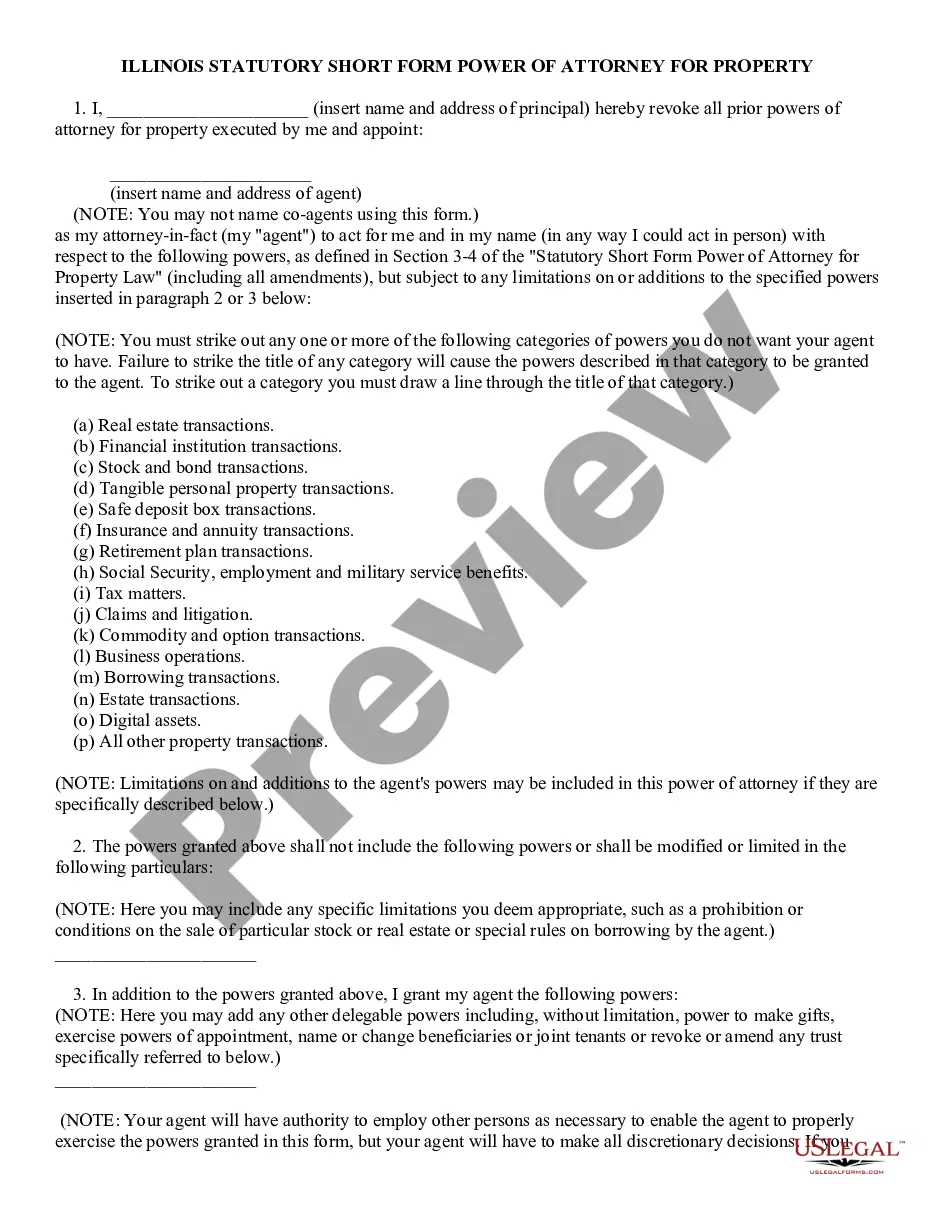
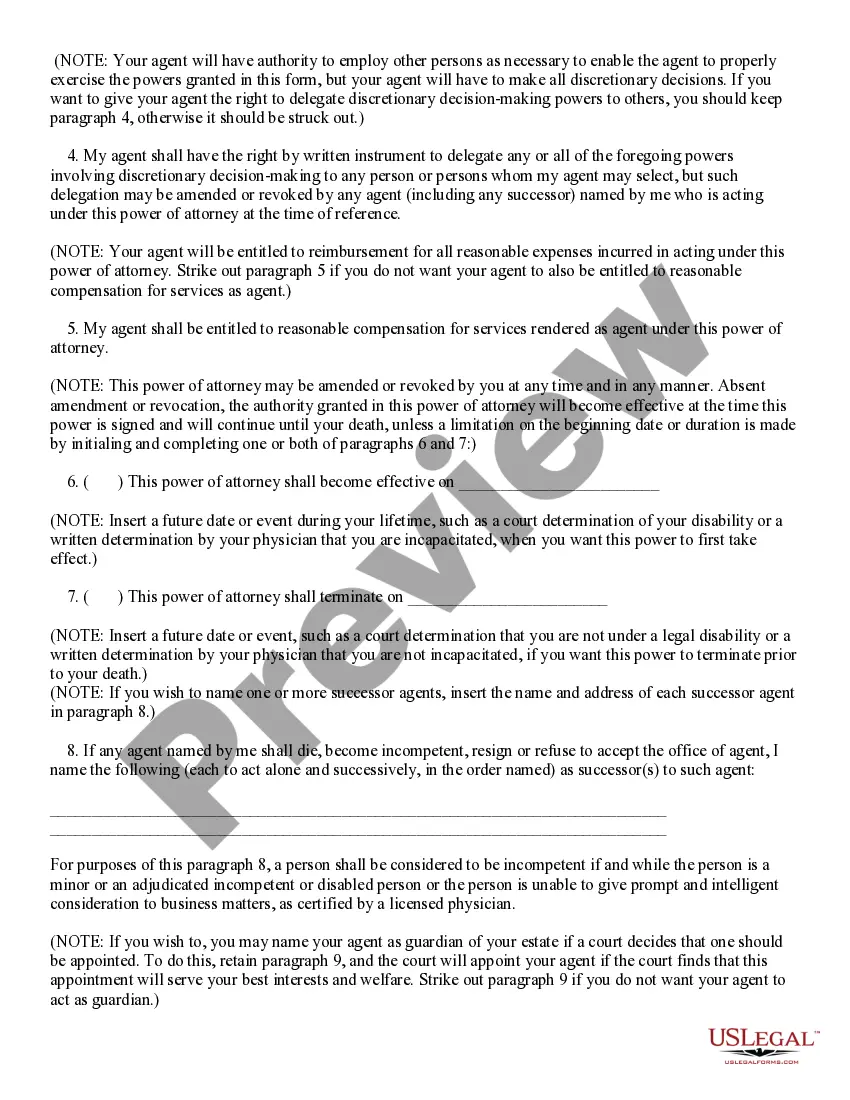
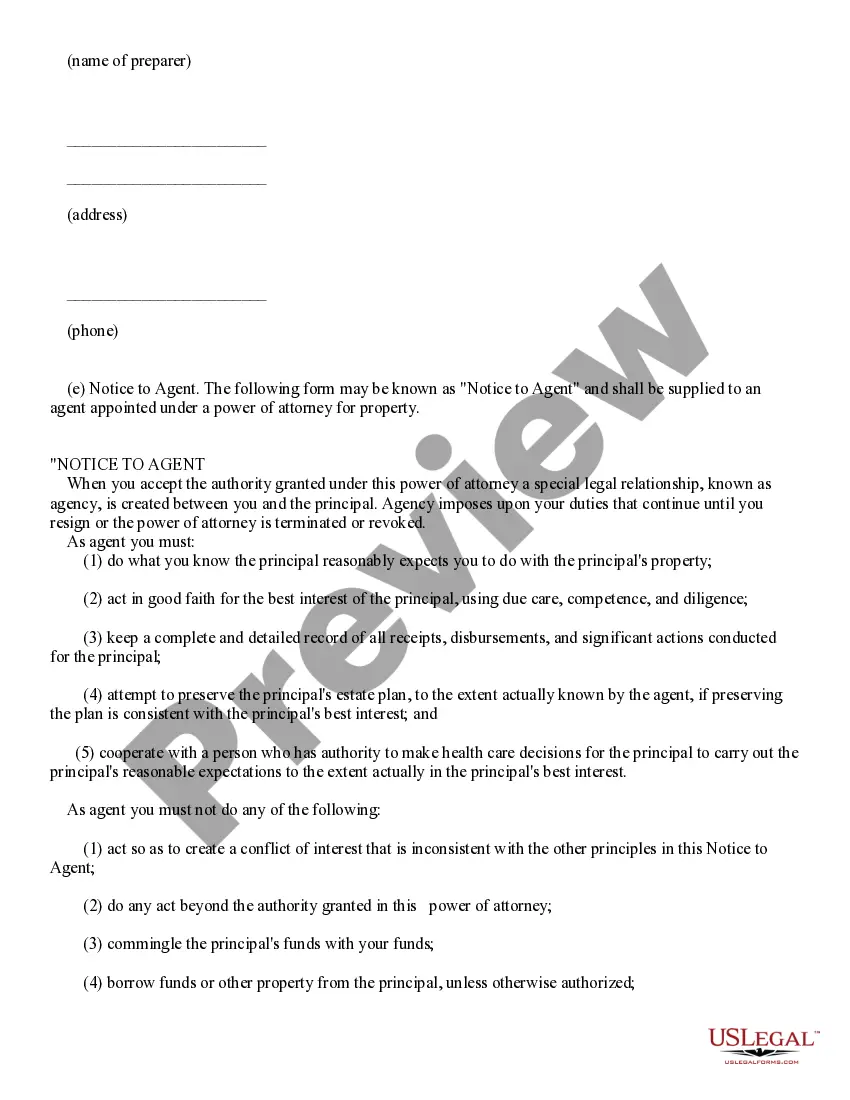
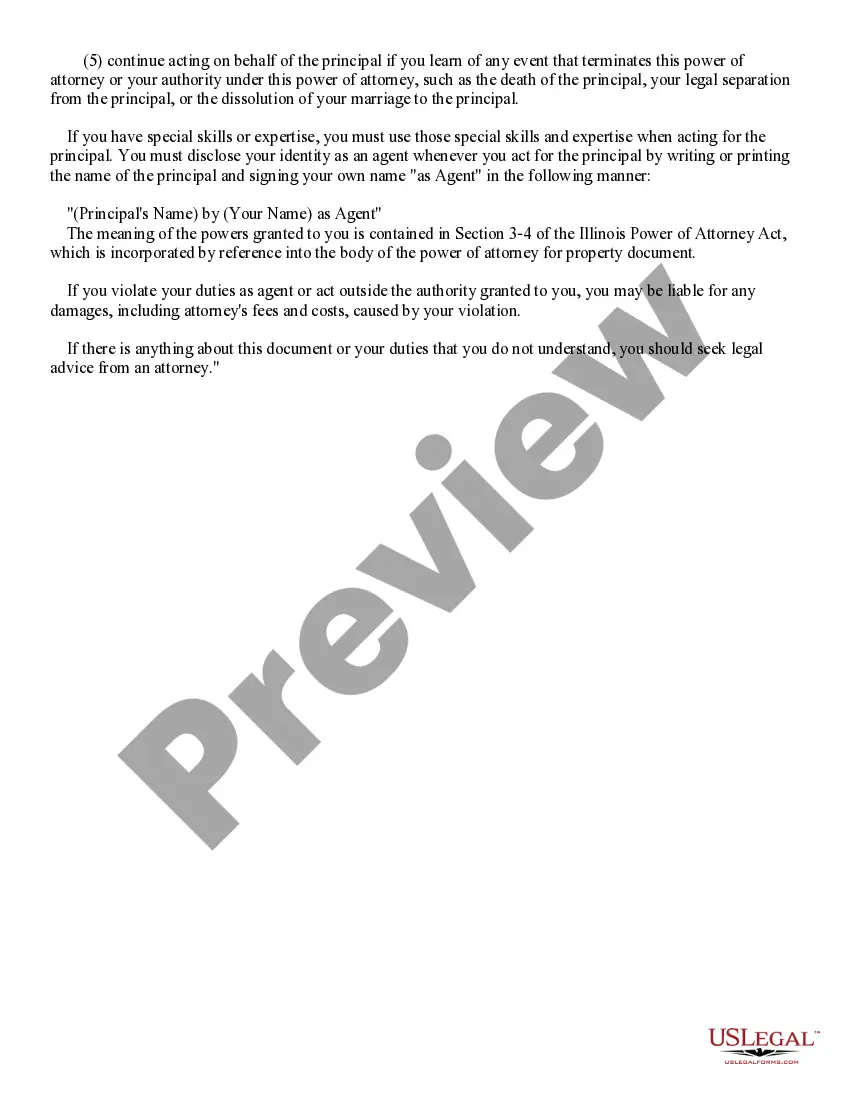
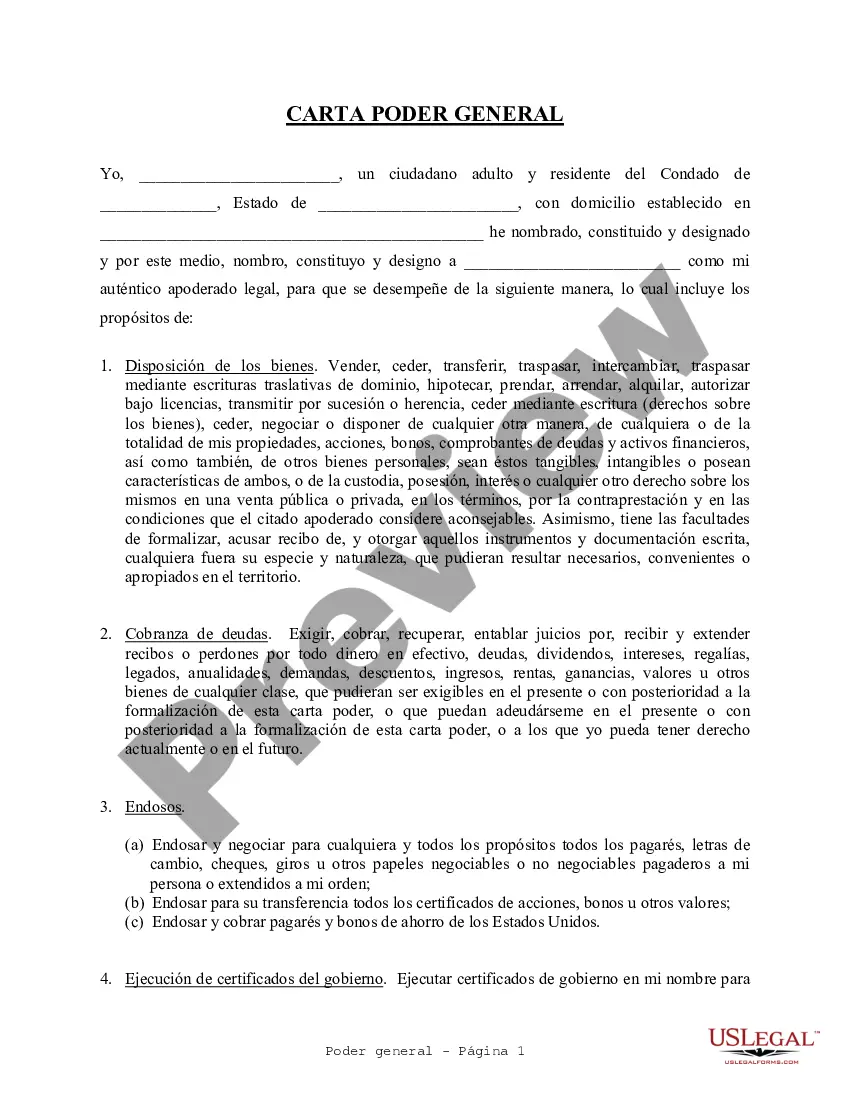
This Power of Attorney is a statutory form which means it has been approved by the state legislature. It provides for the appointment of an attorney-in-fact for various matters, which you select, including property, finances, real estate, business, banking, litigation and many more options. Note: Do not alter this statutory form other than to include the optional provisions listed.
Chicago Illinois Statutory General Power of Attorney with Durable Provisions - Short Form Power of Attorney for Property
Category:
State:
Illinois
City:
Chicago
Control #:
IL-P010
Format:
Word;
Rich Text
Instant download
Description
Free preview
Get your form ready online
Our built-in tools help you complete, sign, share, and store your documents in one place.
Built-in online Word editor
Make edits, fill in missing information, and update formatting in US Legal Forms—just like you would in MS Word.
Export easily
Download a copy, print it, send it by email, or mail it via USPS—whatever works best for your next step.
E-sign your document
Sign and collect signatures with our SignNow integration. Send to multiple recipients, set reminders, and more. Go Premium to unlock E-Sign.
Notarize online 24/7
If this form requires notarization, complete it online through a secure video call—no need to meet a notary in person or wait for an appointment.
Store your document securely
We protect your documents and personal data by following strict security and privacy standards.

Make edits, fill in missing information, and update formatting in US Legal Forms—just like you would in MS Word.

Download a copy, print it, send it by email, or mail it via USPS—whatever works best for your next step.

Sign and collect signatures with our SignNow integration. Send to multiple recipients, set reminders, and more. Go Premium to unlock E-Sign.

If this form requires notarization, complete it online through a secure video call—no need to meet a notary in person or wait for an appointment.

We protect your documents and personal data by following strict security and privacy standards.
Looking for another form?
How to fill out Illinois Statutory General Power Of Attorney With Durable Provisions - Short Form Power Of Attorney For Property?
Irrespective of social or career standing, completing legal-related documents is an unfortunate requirement in today’s society.
Frequently, it’s nearly impossible for individuals without any legal expertise to generate such paperwork from scratch, primarily because of the intricate terminology and legal nuances involved.
This is where US Legal Forms proves to be beneficial.
- Our platform offers a vast collection of over 85,000 ready-to-use state-specific documents suitable for nearly every legal situation.
- US Legal Forms is also an excellent resource for partners or legal advisors who wish to enhance their efficiency utilizing our DIY forms.
- Whether you need the Chicago Illinois Statutory General Power of Attorney with Durable Provisions - Short Form Power of Attorney for Property or any other documentation valid in your state or locality, everything is accessible with US Legal Forms.
- Here’s how to obtain the Chicago Illinois Statutory General Power of Attorney with Durable Provisions - Short Form Power of Attorney for Property swiftly using our reliable platform.
- If you are already a registered customer, you can proceed to Log In to your account to retrieve the appropriate document.
Form popularity
FAQ
For your power of attorney to be valid in Rhode Island, you must sign your POA in the presence of a notary public.
A statutory form is a form created by a government, usually designed to serve as a model form or a free form for the public. The text of the form resides within the government's statutes. For example, many states have statutory durable powers of attorney forms written into their laws.
AgeLab outlines very well the four types of power of attorney, each with its unique purpose: General Power of Attorney.Durable Power of Attorney.Special or Limited Power of Attorney.Springing Durable Power of Attorney.
A statutory short form power of attorney used by an individual residing in New York to authorize a third party to manage the individual's property and financial matters.
For real estate transaction, Illinois requires the filing of a standard power of attorney form called the Illinois Statutory Short Form Power of Attorney for Property. It is a boilerplate document anyone can fill out, sign, and have notarized with the help of a licensed attorney.
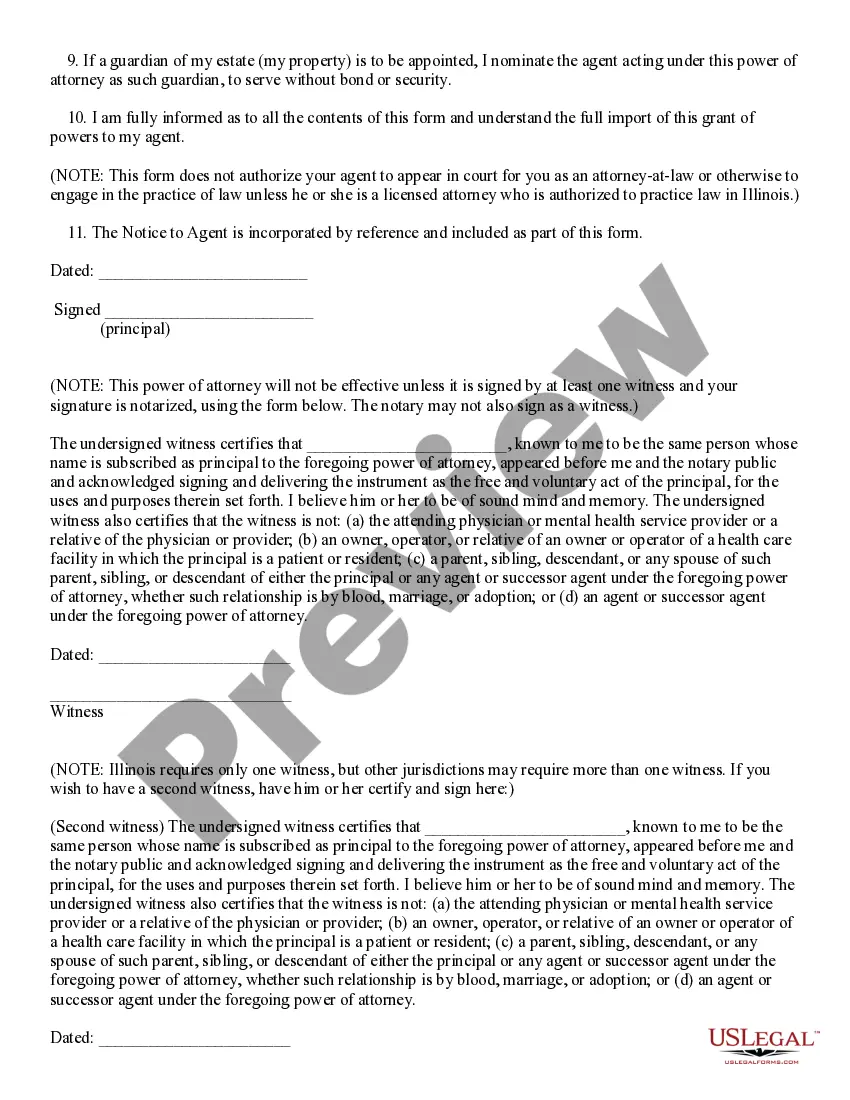
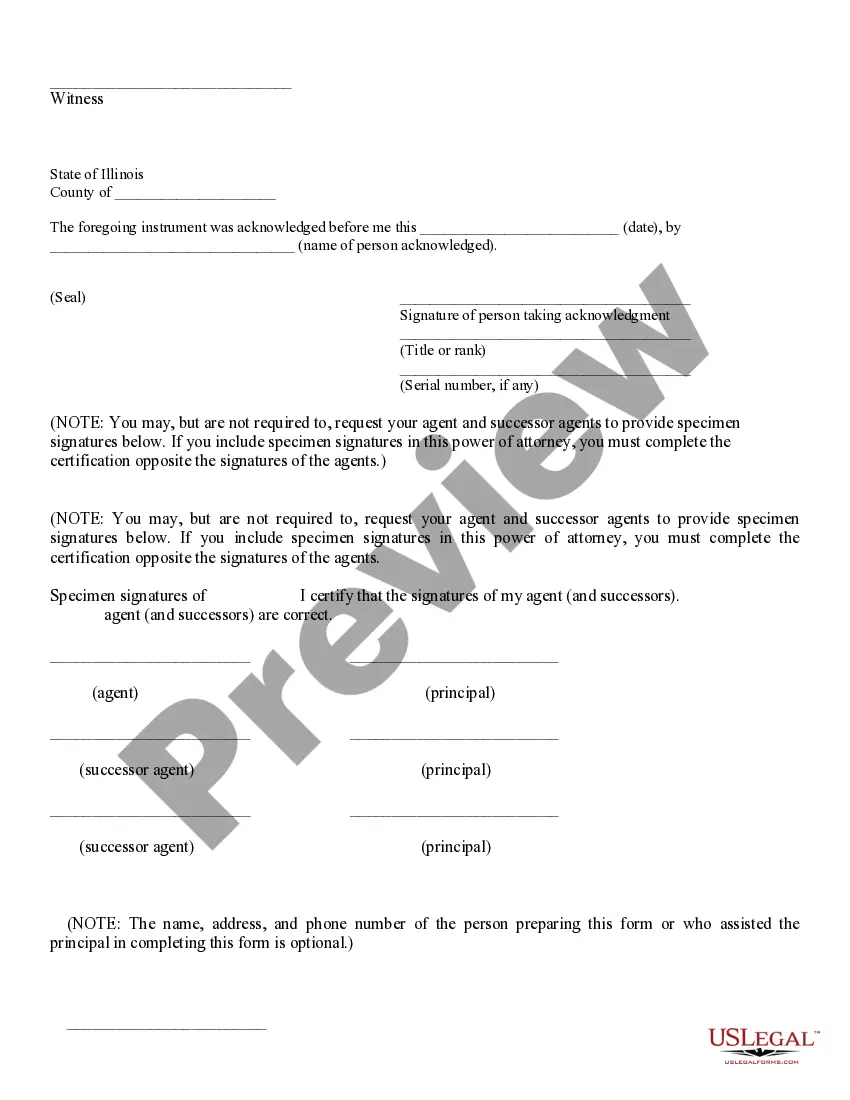
Witnessing and Notarization Requirement To make a POA in Illinois, you must sign the POA in the presence a notary public and at least one witness. The notary public cannot act as the witness.
The witness must be at least 18 years old and be mentally competent. The witness must not be: Your doctor or healthcare provider. A person you listed as an agent in the document.
NOTE: The Minnesota Legislature also publishes a sample form: Minn. Stat. § 523.23 Statutory short form of general power-of-attorney. For more information on the definitions and other legal issues, read Minn.
A power of attorney can only be given by deed and the following formalities must be satisfied: the deed must be in writing; it must be made clear that it is intended to be a deed (this can be done by using wording such as ?by way of deed?? at the start of the instrument and ?executed as a deed? at the end);
(NOTE: This power of attorney will not be effective unless it is signed by at least one witness and your signature is notarized, using the form below.