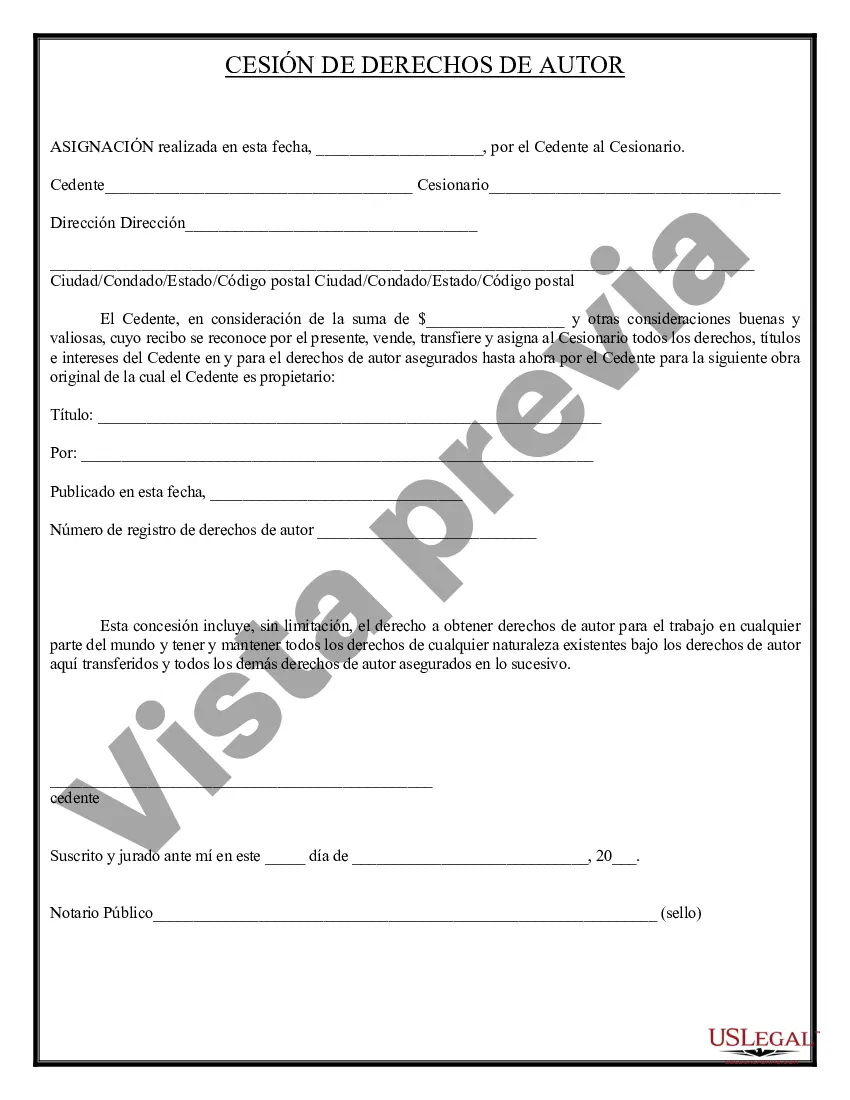
AZ-CPT-2
Para su conveniencia, debajo del texto en español le brindamos la versión completa de este formulario en inglés.
For your convenience, the complete English version of this form is attached below the Spanish version.
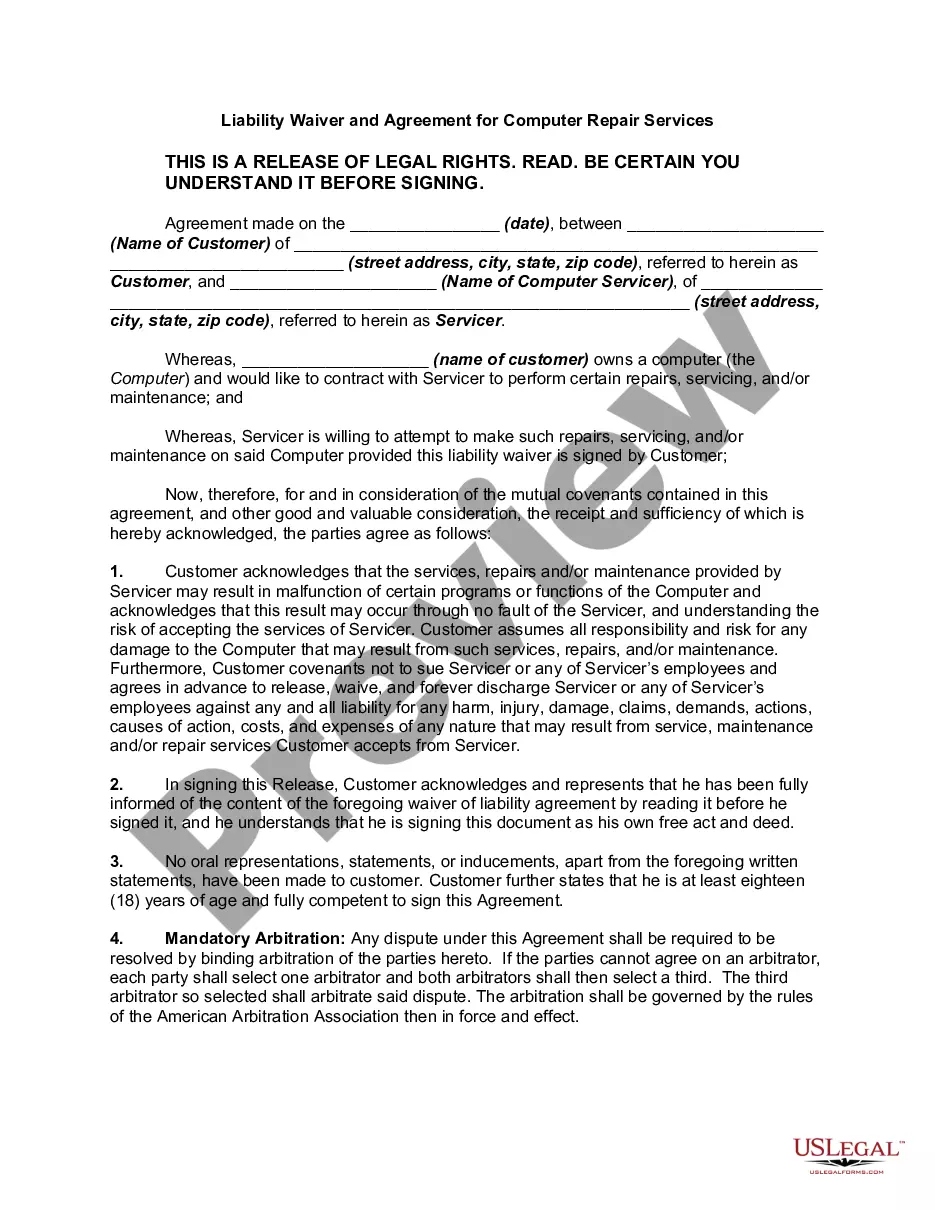
Yes, having it in black and white is crucial! A written agreement protects both parties and helps avoid any misunderstandings down the line.
Once you assign it, it’s like handing over the keys – you can't just take them back. It’s generally a permanent decision, unless the agreement allows for it to revert back to you.
Typically, copyright can only be assigned to one party at a time, meaning you can't split ownership. However, you can grant licenses or permissions to others, allowing them limited use of your work.
When you assign your copyright, you're giving up certain rights. This means you can't control how the work is used anymore, so it's wise to think it through before signing on the dotted line.
While it’s not a must, having a lawyer can help smooth out the bumps in the road. They can guide you through the legal maze and ensure everything is tidy and above board.
Anyone who holds the copyright of a work can assign it. This includes authors, musicians, photographers, and software developers. If you created it, you can transfer the rights!
The Assignment of Copyright refers to the process where a creator shifts their ownership rights of a piece of work to someone else. In Boston, this means that artists, writers, and other creators can legally transfer their rights to a company or another individual.
Trusted and secure by over 3 million people of the world’s leading companies