Boston Massachusetts Términos de la licencia de software gratuito - Freeware License Terms
Category:
State:
Multi-State
City:
Boston
Control #:
US-02973BG
Format:
Word
Instant download
Description
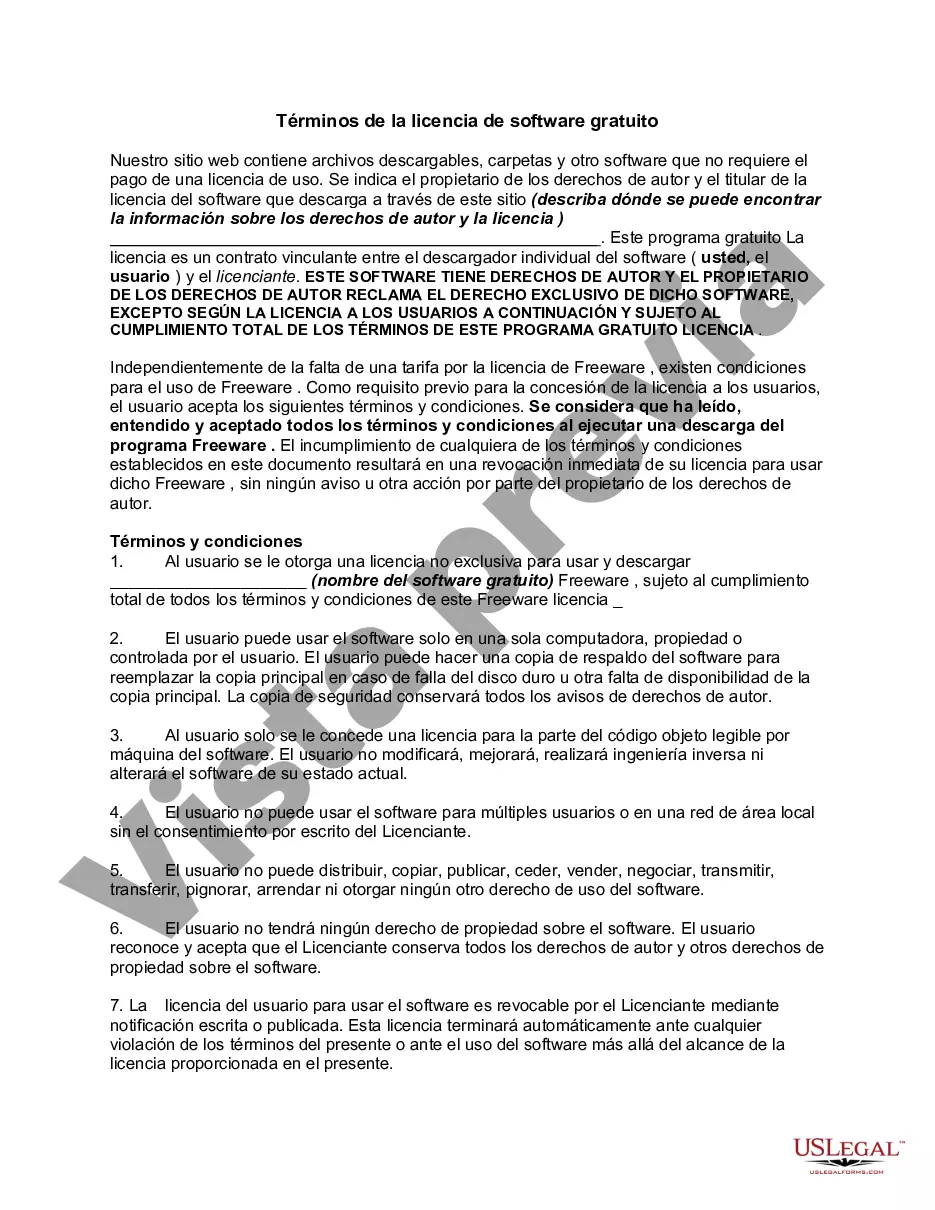
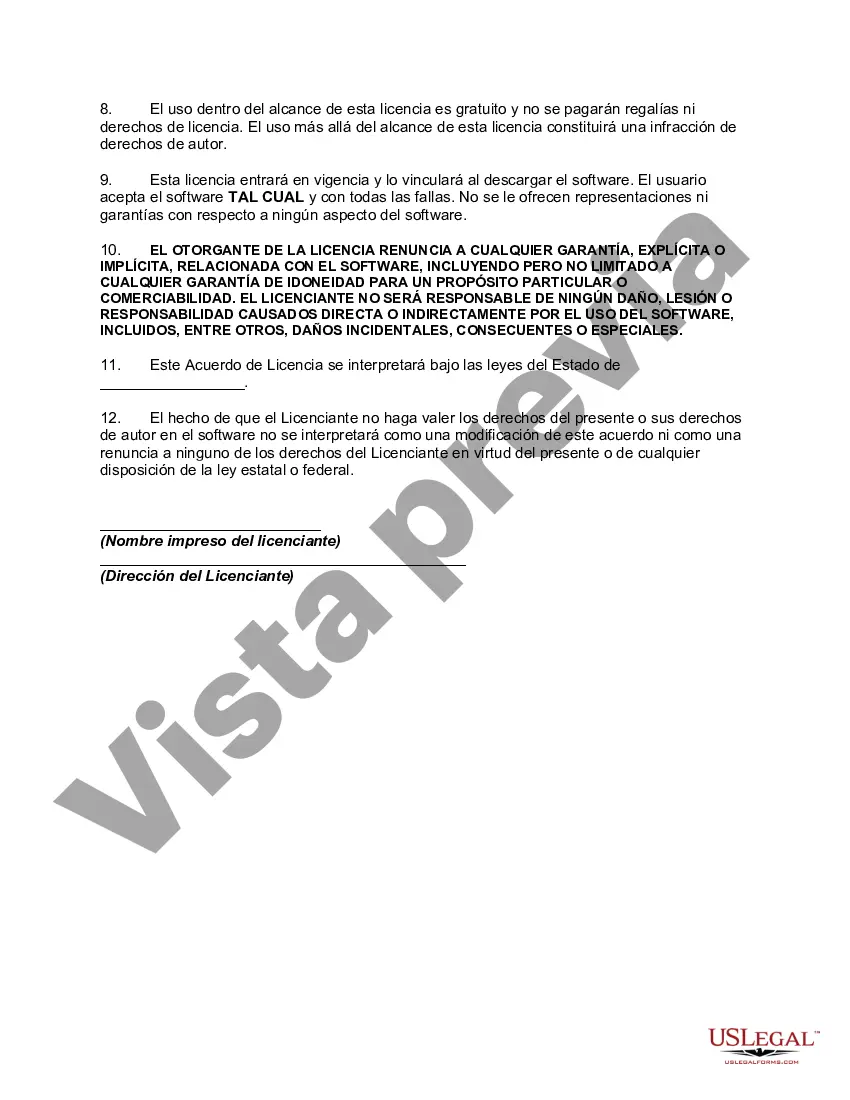
Freeware is software offered free of charge, downloadable off of the Internet. If the software requires the user to view ads while using the program. Though freeware does not require financial compensation, it does have a user license or EULA (End User License Agreement). Each license is specific to the freeware it is bundled with, but some restrictions are common to most programs. For example, most freeware forbids the user to alter the program, repackage it, or sell it. It might allow redistribution, however, as long as the program is unchanged and the license agreement intact.
Para su conveniencia, debajo del texto en español le brindamos la versión completa de este formulario en inglés.
For your convenience, the complete English version of this form is attached below the Spanish version.
Free preview