Loading
Get Incident Safety Officer Checklist
How it works
-

Open form follow the instructions
-

Easily sign the form with your finger
-

Send filled & signed form or save
How to fill out the Incident Safety Officer Checklist online
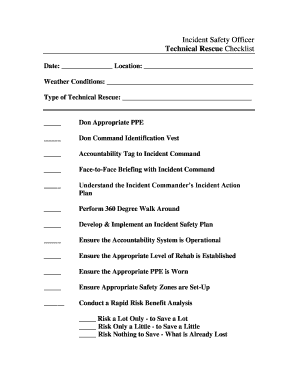
Filling out the Incident Safety Officer Checklist is essential for ensuring a thorough assessment during a technical rescue. This guide will walk you through the steps needed to complete the checklist effectively online.
Follow the steps to complete the checklist accurately.
- Click ‘Get Form’ button to obtain the form and open it for editing.
- Begin by filling in the date and location of the incident at the top of the checklist. This helps to provide essential context for all personnel involved.
- Record the weather conditions at the time of the incident, as this information can impact safety decisions.
- Indicate the type of technical rescue necessary by selecting the appropriate category from the provided options.
- Ensure all personnel don appropriate personal protective equipment (PPE) before engaging in any rescue activities.
- Record that command identification vests are donned by all team members. This ensures clear visibility of incident command roles.
- Accountability tags must be provided to incident command for tracking personnel and resource allocation.
- Conduct a face-to-face briefing with incident command to ensure all personnel understand their roles and responsibilities.
- Review the Incident Commander’s Incident Action Plan to align on objectives and strategies for the operation.
- Perform a 360-degree walk-around of the incident scene to assess hazards and operational needs.
- Develop and implement an incident safety plan that outlines risks and safety measures.
- Confirm that the accountability system is operational, ensuring tracking of personnel in the field.
- Establish the appropriate level of rehabilitation for crews working on site to maintain their effectiveness.
- Ensure all safety zones are clearly set up to protect personnel from potential hazards.
- Conduct a rapid risk-benefit analysis, noting the risks considered based on potential outcomes.
- Assess the need for additional safety officers based on the complexity of the incident.
- Ensure all personnel are operating in designated crews and emphasize the importance of teamwork.
- Confirm that all members are briefed on both the incident action plan and the incident safety plan to maintain uniform understanding.
- Ensure that adequate resources, including personnel, equipment, and technical experts, are available on scene.
- Identify and remove any non-essential personnel from the incident area to reduce risks.
- Isolate sources of vibration and assess any potential hazards present.
- Identify health hazards related to products on site, ensuring proper handling and safety measures.
- Confirm that all utilities are locked out and tagged out to prevent accidental activation during operations.
- Verify that the Incident Safety Officer has applied their lock, ensuring accountability in safety practices.
- Ensure proper use of special operations incident management system positions to coordinate efforts effectively.
- Establish and brief a rapid intervention team to be ready in case of emergencies.
- Address stability concerns related to the scene, including any building or environmental factors.
- Verify that crews are rotating as needed and that they are reporting to rehab to maintain their safety and performance.
- Monitor for signs of complacency among team members and implement strategies to keep morale high.
- Plan for extended operations by ensuring provisions are available for food, rest, and hygiene for all personnel.
- Review all filled sections carefully before submitting the form.
- After completing the form, save the changes, and you have the options to download, print, or share the checklist as necessary.
Complete your documents online today to ensure your safety operations are well-documented.
Related links form
NFPA 1521: Standard for Fire Department Safety Officer Professional Qualifications.