Loading
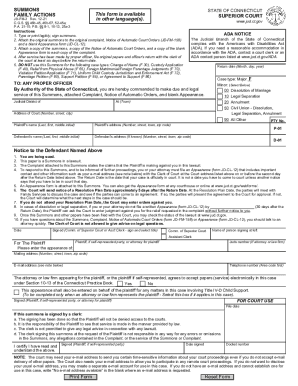
Get Summons - Family Actions
How it works
-

Open form follow the instructions
-

Easily sign the form with your finger
-

Send filled & signed form or save
How to fill out the SUMMONS - FAMILY ACTIONS online
Filling out the SUMMONS - FAMILY ACTIONS form is an important step in family law proceedings. This guide provides clear and detailed instructions to assist you in completing the form correctly and efficiently.
Follow the steps to complete the SUMMONS - FAMILY ACTIONS form online.
- Click ‘Get Form’ button to obtain the form and open it in your editor for completion.
- Begin by entering the return date in the specified format (month, day, year). This date is critical as it indicates when the case is officially in court.
- Select the case type from the provided options, ensuring to choose the appropriate category such as dissolution of marriage, legal separation, or annulment.
- Fill in the court address accurately, including the number, street, and city. This information is necessary for proper notification and legal procedures.
- Provide the plaintiff's details. Enter the full name of the plaintiff, including last name, first name, and middle initial. Follow this by entering the plaintiff's address.
- Input the defendant's information similarly, filling in their last name, first name, middle initial, and address if known.
- Review the notice section about the defendant, ensuring they understand the legal implications of the summons and their right to respond.
- Once all information is completed, you will need to sign the summons, either as the Commissioner of Superior Court or Assistant Clerk.
- After signing, revisit the completed form to check for any missing information or errors before finalizing.
- You can now save changes, download, print, or share the form as needed for submission.
Start completing your SUMMONS - FAMILY ACTIONS online today for a smooth legal process.
A summons gives a party formal notice that a lawsuit has been filed. It is the first proper notification that a defendant is being sued. The warrant may or may not include a specific court date depending on the situation.