Loading
Get Az Dog License Application - Maricopa County 2017-2026
How it works
-

Open form follow the instructions
-

Easily sign the form with your finger
-

Send filled & signed form or save
How to fill out the AZ Dog License Application - Maricopa County online
Obtaining a dog license in Maricopa County is a straightforward process that ensures your pet is legally registered and vaccinated. This guide provides user-friendly instructions on how to accurately complete the AZ Dog License Application online, ensuring compliance with local laws.
Follow the steps to successfully complete the application.
- Click ‘Get Form’ button to access the application form and open it in the editor.
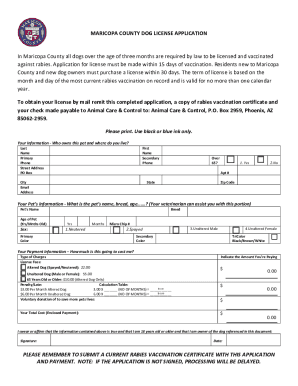
- Provide your information by filling in the required fields. Enter your last and first name, primary and secondary phone numbers, street address, apartment number (if applicable), city, state, zip code, and email address. Indicate whether you are over 65 years old by selecting 'Yes' or 'No'.
- Fill out your pet’s information, including their name, age (in years and months), sex, breed, microchip number (if applicable), primary color, and secondary color.
- Review the payment information section. Select the type of dog you have – altered or unaltered – and note the associated fee. Enter any applicable penalties for late applications and any voluntary donations you wish to include.
- Calculate your total cost by summing up the license fees, any penalties, and optional donations. Make sure to indicate the total amount you are enclosing with your application.
- Sign and date the application certifying that the information provided is true and that you are at least 18 years old and the owner of the dog mentioned.
- Ensure that you attach a current rabies vaccination certificate and submit your payment. After completing the above steps, you can save your changes, download, print, or share the application form for submission.
Complete your AZ Dog License Application online today to ensure your pet is properly registered and vaccinated.
Related links form
Make sure to measure length and depth of the wound and classify it. Classification categories include abrasion, puncture, laceration, avulsion, or crush. Include the amount of devitalized tissue, which helps give an idea as to the extent of injury.