Loading
Get Ca Laciv 100 2013-2026
How it works
-

Open form follow the instructions
-

Easily sign the form with your finger
-

Send filled & signed form or save
How to fill out the CA LACIV 100 online
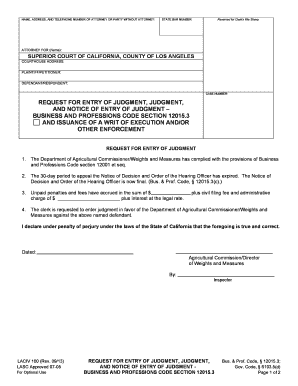
Filling out the CA LACIV 100 form is an essential step in the legal process to request entry of judgment. This guide provides clear instructions to assist users in completing the form accurately and efficiently.
Follow the steps to successfully fill out the CA LACIV 100 form online.
- Use the 'Get Form' button to access the CA LACIV 100 and open it for editing.
- Begin by entering the name, address, and telephone number of the attorney or the party without an attorney. Ensure all information is accurate and current.
- Leave the reserved space for clerk’s file stamp blank for the court clerk to fill out upon filing.
- Input the State Bar number of the attorney representing the case, if applicable.
- Specify the name of the attorney for the plaintiff or petitioner in the designated field.
- Provide the name of the plaintiff or petitioner and the defendant or respondent in the appropriate sections.
- Enter the case number associated with the legal proceedings in the designated area.
- Complete the section pertaining to the request for entry of judgment, ensuring to provide all required details related to the accrued penalties and fees.
- Have the Agricultural Commissioner or Director of Weights and Measures sign and date the form, affirming the information provided.
- Finalize the form by ensuring all fields are filled accurately. You may save your changes, download the completed form, print it for record-keeping, or share it as needed.
Start filling out the CA LACIV 100 online now to ensure your request is processed smoothly.
Rule 1.100 in California governs the standards for formatting legal documents, including the CA LACIV 100 form. This rule ensures clarity and consistency in legal filings, making it easier for everyone involved in a case to understand the materials presented. It's essential to adhere to these formatting guidelines to avoid potential complications or delays in your legal proceedings.