Loading
Get Ct Jd-cv-55 2003-2026
How it works
-

Open form follow the instructions
-

Easily sign the form with your finger
-

Send filled & signed form or save
How to fill out the CT JD-CV-55 online
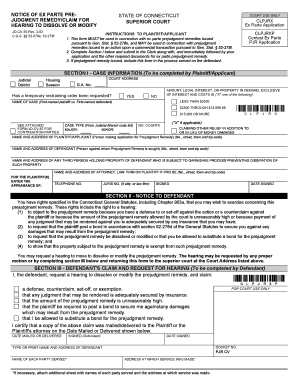
The CT JD-CV-55 form is essential for initiating an ex parte prejudgment remedy in Connecticut. This guide provides users with clear, step-by-step instructions to assist in completing the form accurately and efficiently online.
Follow the steps to complete the CT JD-CV-55 form online.
- Click ‘Get Form’ button to obtain the CT JD-CV-55 form and open it in your preferred document editor.
- In Section I, fill out the case information including the judicial district, court address, and G.A. number. Indicate if a temporary restraining order has been requested by selecting 'Yes' or 'No.'
- Specify the amount in demand by checking the appropriate box: less than $2,500, between $2,500 and $14,999.99, or $15,000 or more.
- Provide the names of the parties involved in the case. Enter the name of the case in the format 'First-named plaintiff vs. First-named defendant.'
- List the names and addresses of the plaintiff/applicant and defendant, ensuring all details are accurate and complete.
- If applicable, include the name and address of any third person holding property of the defendant subject to garnishee process.
- Input the name, address, and jurisdiction number of the attorney or law firm representing the plaintiff, or indicate if the plaintiff is proceeding pro se.
- In Section II, as appropriate, acknowledge the notice to the defendant about their rights concerning the prejudgment remedy.
- If you are the defendant and wish to request a hearing to dissolve or modify the prejudgment remedy, complete Section III with relevant claims.
- After filling in all sections, review the form for accuracy. Users can then save changes, download, print, or share the completed form.
Begin completing your CT JD-CV-55 form online today for a seamless process.
When pleadings are closed, it means that the parties in a lawsuit have finished exchanging their formal documents related to the case. At this point, no new claims or defenses can be introduced without court approval. Closing pleadings is a critical phase in legal proceedings, particularly relevant for those using the CT JD-CV-55. To ensure your case adheres to these standards, consider using resources like uslegalforms for guidance.