Loading
Get Ca Jv-310 2019-2026
How it works
-

Open form follow the instructions
-

Easily sign the form with your finger
-

Send filled & signed form or save
How to fill out the CA JV-310 online
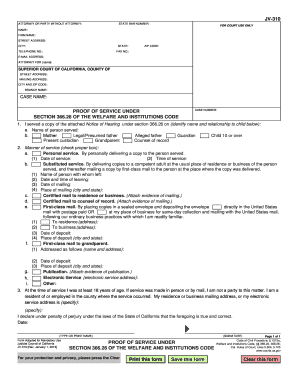
Filling out the CA JV-310 form online is a straightforward process that allows users to document proof of service under section 366.26 of the Welfare and Institutions Code. This guide provides step-by-step instructions to help you complete the form accurately.
Follow the steps to complete the CA JV-310 online.
- Press the ‘Get Form’ button to acquire the form and open it in the editor.
- Begin by entering your information in the 'Attorney or party without attorney' section. Include your name, state bar number, firm name, street address, city, state, telephone number, zip code, fax number, and email address.
- Specify the name of the individual you are representing in the field labeled 'Attorney for (name)'.
- Fill in the details for the Superior Court of California: include the county name, street address, mailing address, city, zip code, and branch name.
- In the 'Case name' section, provide the naming details for your case.
- Enter the case number in the designated field.
- Proceed to the statement about serving a copy of the attached notice of hearing. Specify who you served by providing their name and relationship to the child.
- Choose the manner of service that applies to your situation by checking the correct box. Complete the additional details required depending on your choice, such as date of service, name of person with whom service was left, or date and place of mailing.
- Confirm that you meet the requirements by specifying your age and residency information.
- Finally, type or print your name, provide the date, and sign the form.
- Once completed, you can save your changes, download, print, or share the form as needed.
Start completing your CA JV-310 form online today for a seamless filing experience.
Related links form
Gives you more space to write a declaration that you must sign under penalty of perjury. This is always attached to another form or court paper before it is filed.