Loading
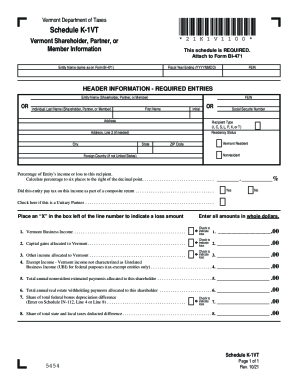
Get Vt Schedule K-1vt 2021-2026
How it works
-

Open form follow the instructions
-

Easily sign the form with your finger
-

Send filled & signed form or save
How to fill out the VT Schedule K-1VT online
Filling out the VT Schedule K-1VT is an essential step for individuals engaged in partnerships, S corporations, or limited liability entities in Vermont. This guide provides clear and detailed instructions to help users navigate the online completion of this important document.
Follow the steps to complete the VT Schedule K-1VT online effectively.
- Click ‘Get Form’ button to obtain the form and open it in the editor.
- Enter the entity name as it appears on Form BI-471, followed by the fiscal year ending date in the specified format (YYYYMMDD) and the Federal Employer Identification Number (FEIN).
- Input the recipient's information, including their type (whether they are an individual, corporation, or other) and residential status. Include the individual’s last name, first name, initial, and social security number.
- Fill in the address details of the recipient, ensuring to include city, state, and ZIP code. If applicable, add a foreign country name.
- Calculate the percentage of the entity’s income or loss allocated to the recipient, ensuring to provide this value with precision up to six decimal places.
- Indicate whether the entity paid tax on this income as part of a composite return by selecting 'Yes' or 'No'.
- Mark if the recipient is a unitary partner by placing an 'X' in the corresponding box provided.
- For each category of income, enter the whole dollar amounts, including Vermont business income, capital gains, and other specified income on the form. Check the box to indicate any loss amount as necessary.
- After completing all the sections, review the information carefully for accuracy.
- Once finalized, users can save changes, download, print, or share the completed form as needed.
Complete your VT Schedule K-1VT online today to ensure accurate and timely filing.
K-1s are provided to the IRS with the partnership's tax return and also to each partner so that they can add the information to their own tax returns. For example, if a business earns $100,000 of taxable income and has four equal partners, each partner should receive a K-1 with $25,000 of income on it.