Alimony Spouse Support For Disabled In Miami-Dade
Description

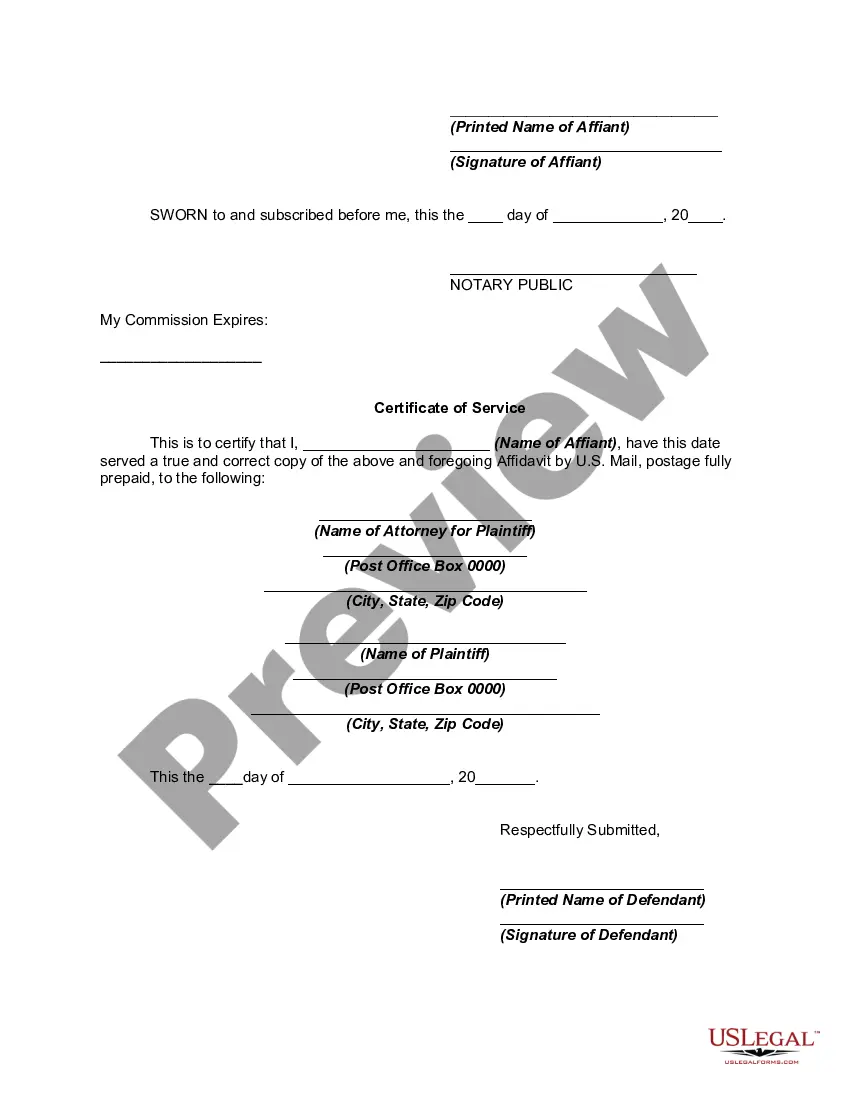




Get your form ready online
Our built-in tools help you complete, sign, share, and store your documents in one place.
Make edits, fill in missing information, and update formatting in US Legal Forms—just like you would in MS Word.
Download a copy, print it, send it by email, or mail it via USPS—whatever works best for your next step.
Sign and collect signatures with our SignNow integration. Send to multiple recipients, set reminders, and more. Go Premium to unlock E-Sign.
If this form requires notarization, complete it online through a secure video call—no need to meet a notary in person or wait for an appointment.
We protect your documents and personal data by following strict security and privacy standards.
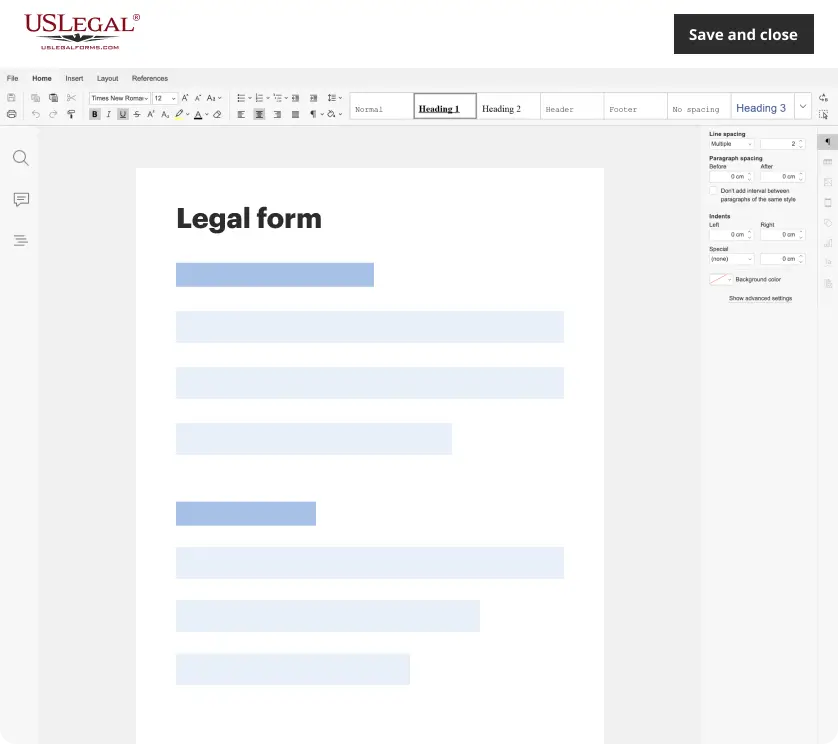
Make edits, fill in missing information, and update formatting in US Legal Forms—just like you would in MS Word.
Download a copy, print it, send it by email, or mail it via USPS—whatever works best for your next step.
Sign and collect signatures with our SignNow integration. Send to multiple recipients, set reminders, and more. Go Premium to unlock E-Sign.
If this form requires notarization, complete it online through a secure video call—no need to meet a notary in person or wait for an appointment.
We protect your documents and personal data by following strict security and privacy standards.
Looking for another form?
Form popularity
FAQ
What qualifies a recipient spouse for alimony in Florida are several factors, among them: The standard of living established during the marriage. The length of the marriage. Both spouse's financial resources, including the non-marital, marital property, assets, and liabilities.
If the court grants a divorce based on a spouse being incapacitated, the judge may award the insane spouse alimony. Also, a mentally ill spouse has just as much right to the marital estate as a sane spouse.
What qualifies a recipient spouse for alimony in Florida are several factors, among them: The standard of living established during the marriage. The length of the marriage. Both spouse's financial resources, including the non-marital, marital property, assets, and liabilities.
In Florida, self-sufficiency can disqualify you from receiving spousal support or alimony in Florida. If the court determines that you have the financial means or can gain employment to meet your needs of independently, you may not be eligible for alimony.
Although couples divorcing in Florida must divide marital assets based on fairness, they may also negotiate what appears fair to both parties. A nonworking spouse may obtain a fair settlement that includes a formerly shared home and financial accounts.
The only grounds for divorce in Florida unfortunately are irreconcilable differences or where one spouse has been living with a person who has been adjudicated by a court to be mentally incompetent.
While some jurisdictions will not allow an individual lacking capacity to file for divorce, others will permit it if a guardian/conservator can demonstrate that it's in the person's best interests. Certain states allow a guardian/ conservator, with court approval, to file on behalf of a ward, while others do not.
Individual Benefits: If you are receiving SSDI based on your own work record, your benefits will not change after divorce. You will continue to receive the same amount you were receiving prior to the divorce.
What qualifies a recipient spouse for alimony in Florida are several factors, among them: The standard of living established during the marriage. The length of the marriage. Both spouse's financial resources, including the non-marital, marital property, assets, and liabilities.
