Motion Strike Sample Format In Philadelphia
Description





Get your form ready online
Our built-in tools help you complete, sign, share, and store your documents in one place.
Make edits, fill in missing information, and update formatting in US Legal Forms—just like you would in MS Word.
Download a copy, print it, send it by email, or mail it via USPS—whatever works best for your next step.
Sign and collect signatures with our SignNow integration. Send to multiple recipients, set reminders, and more. Go Premium to unlock E-Sign.
If this form requires notarization, complete it online through a secure video call—no need to meet a notary in person or wait for an appointment.
We protect your documents and personal data by following strict security and privacy standards.
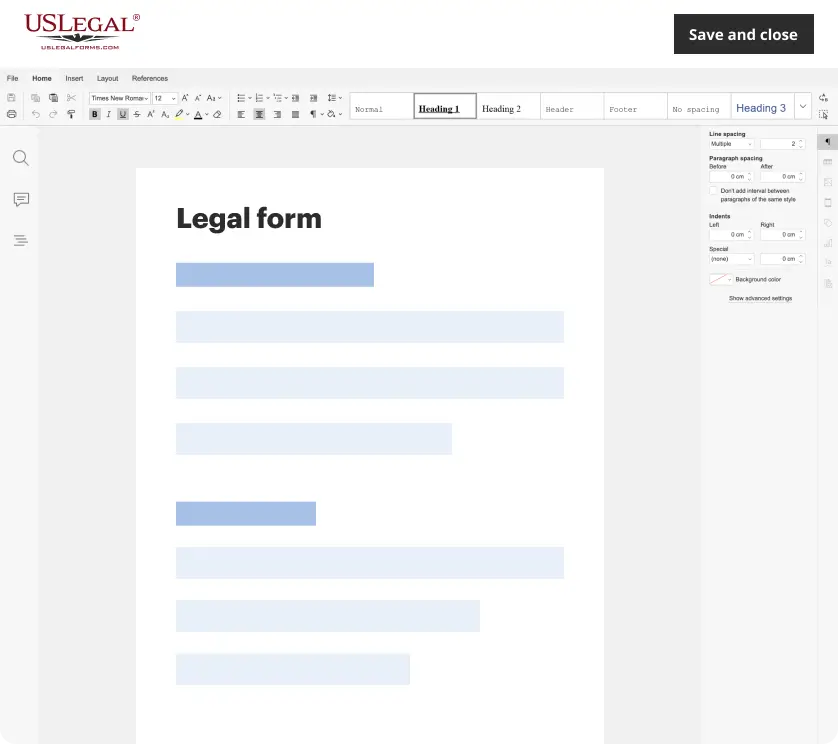
Make edits, fill in missing information, and update formatting in US Legal Forms—just like you would in MS Word.
Download a copy, print it, send it by email, or mail it via USPS—whatever works best for your next step.
Sign and collect signatures with our SignNow integration. Send to multiple recipients, set reminders, and more. Go Premium to unlock E-Sign.

If this form requires notarization, complete it online through a secure video call—no need to meet a notary in person or wait for an appointment.
We protect your documents and personal data by following strict security and privacy standards.
Looking for another form?
Form popularity
FAQ
In Pennsylvania, defendants are given a timeframe of 10 days to file a motion for reconsideration in the clerk's office of the same court where the case was originally heard. Once a motion is filed, it is sent to all parties involved in a case.
A motion for reconsideration shall point out specifically the findings or conclusions of the judgment or final order which are not supported by the evidence or which are contrary to law, making express reference to the testimonial or documentary evidence or to provisions of law alleged to be contrary to such findings ...
After a trial, there are several types of motions that can be filed to address possible trial errors. The most common type of post-trial motion is a Motion for Reconsideration in which you are asking the judge to reconsider his/her ruling and change one specific part of the court order or the court's overall ruling.
Hearings will only be continued for a valid reason. To request a continuance, send a letter to Patricia R. McDermott, Deputy Court Administrator, 34 S. 11th Street, 5th Floor, Philadelphia, PA 19107, with a copy to the other parties at least ten days before the hearing date.
8.2A. Rule 8.2A - Motion For Reconsideration (a) Any motion for reconsideration filed pursuant to Pennsylvania Supreme Court Orphans' Court Rule 8.2 must be filed within twenty (20) days after the date of the filing of any order, decree or adjudication as to which reconsideration is sought.
Rule 1037.2 - Judgments by Default-Assessment of Damages (A) In order for the Office of Judicial Records to assess damages pursuant to Pa. R.C.P. 1037(b)(1) upon default for failure to answer, a complaint in an action must pray for specific items and amounts.
This is roughly a 5 percent success rate for all motions.
Other than as provided in Phila. Civ. R. 208.3(a) and except for Summary Judgment Motions (which have a thirty (30) day response period, all Motions have a twenty (20) day response period.
(d) When default judgment is entered in a matter involving a complaint for civil penalties, the Board may assess civil penalties in the amount of the plaintiff's claim or may assess the amount of the penalty following an evidentiary hearing, as directed by the Board, at which the issues shall be limited to the amount ...
