Motion For Strike Court In Utah
Description







Form popularity
FAQ
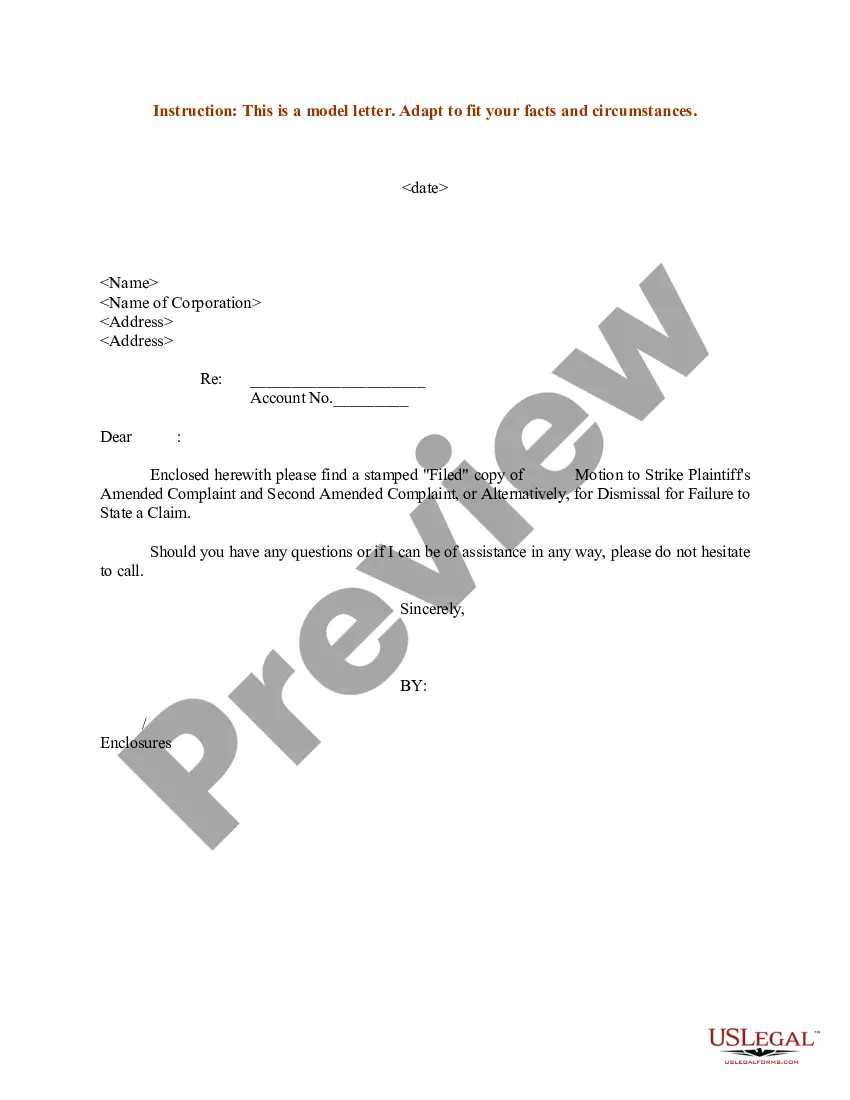
C.C.P. § 436 allows for a motion to strike “any irrelevant, false, or improper matter asserted in any pleading” or portion of a pleading “not drawn of filed in conformity with the laws of this state.” A motion to strike is proper “when a substantive defect is clear from the face of a complaint.” (PH II, Inc.
The Federal Rules of Civil Procedure states that "The court may strike from a pleading an insufficient defense or any redundant, immaterial, impertinent, or scandalous matter." Similarly, for example, the California Code of Civil Procedure provides that a motion to strike may be made to strike out any "irrelevant, ...
A strike is a conviction in California for “violent” or “serious” felonies. These violent and serious felonies can be anything from murder to robbery.
What happens next? If we filed the motion to strike in a trial court, then we will set the motion to be heard by a judge or magistrate, and be ruled upon. If we filed it in an appeals court, the appeals court will read the motion and offending document and will rule on it without hearing.
A motion to strike is a request by one party in a United States trial requesting that the presiding judge order the removal of all or part of the opposing party's pleading to the court.
If the judge makes a decision without a hearing or if the judge or commissioner takes the matter under advisement, they will usually decide on the motion within 60 days after the motion was submitted.
General format - each motion generally consists of a case caption, a title that briefly identifies the relief sought, a series of numbered paragraphs that explains -- in a logical way -- why you are entitled to that relief, a prayer for relief, a signature block, a certification that a copy of the motion was sent to ...
Write a short and clear introduction. Draft a factually accurate narrative. Know the standard that must be met and craft an explanation of the standard. Use the most persuasive components of the relevant law. Apply the law to the facts in a convincing and credible manner. Conclusion.
Things You Should Know Write your legal argument by stating the rule and explaining how your facts apply to it. Then, add your signature, a Certificate of Service, and a Notice of Hearing. File your motion with the clerk of court overseeing your case. Then, give copies to each defendant.
