Spousal Support Conditions In Chicago
Description




Get your form ready online
Our built-in tools help you complete, sign, share, and store your documents in one place.
Make edits, fill in missing information, and update formatting in US Legal Forms—just like you would in MS Word.
Download a copy, print it, send it by email, or mail it via USPS—whatever works best for your next step.
Sign and collect signatures with our SignNow integration. Send to multiple recipients, set reminders, and more. Go Premium to unlock E-Sign.
If this form requires notarization, complete it online through a secure video call—no need to meet a notary in person or wait for an appointment.
We protect your documents and personal data by following strict security and privacy standards.
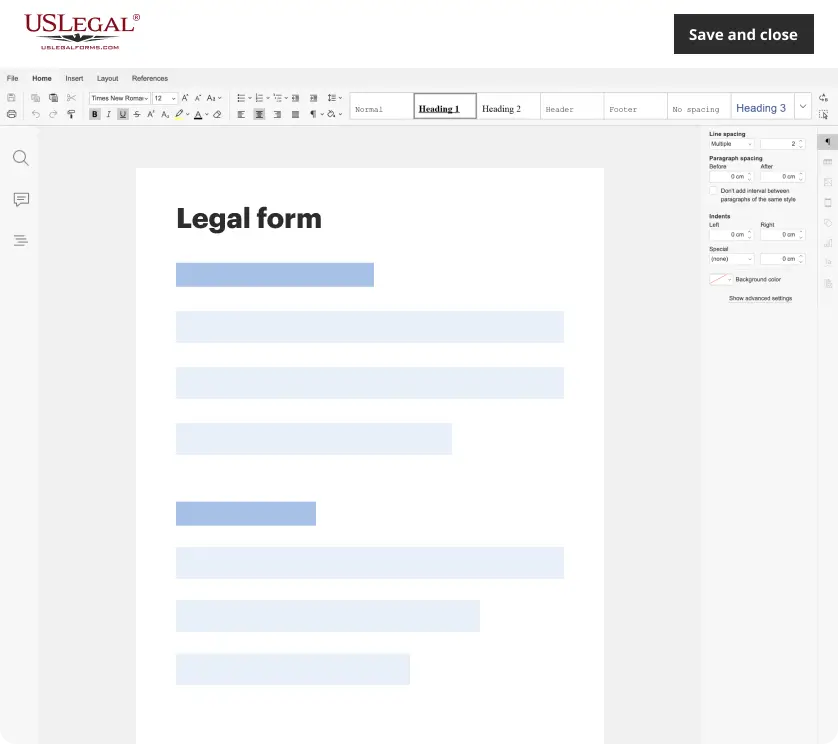
Make edits, fill in missing information, and update formatting in US Legal Forms—just like you would in MS Word.
Download a copy, print it, send it by email, or mail it via USPS—whatever works best for your next step.
Sign and collect signatures with our SignNow integration. Send to multiple recipients, set reminders, and more. Go Premium to unlock E-Sign.
If this form requires notarization, complete it online through a secure video call—no need to meet a notary in person or wait for an appointment.
We protect your documents and personal data by following strict security and privacy standards.
Looking for another form?






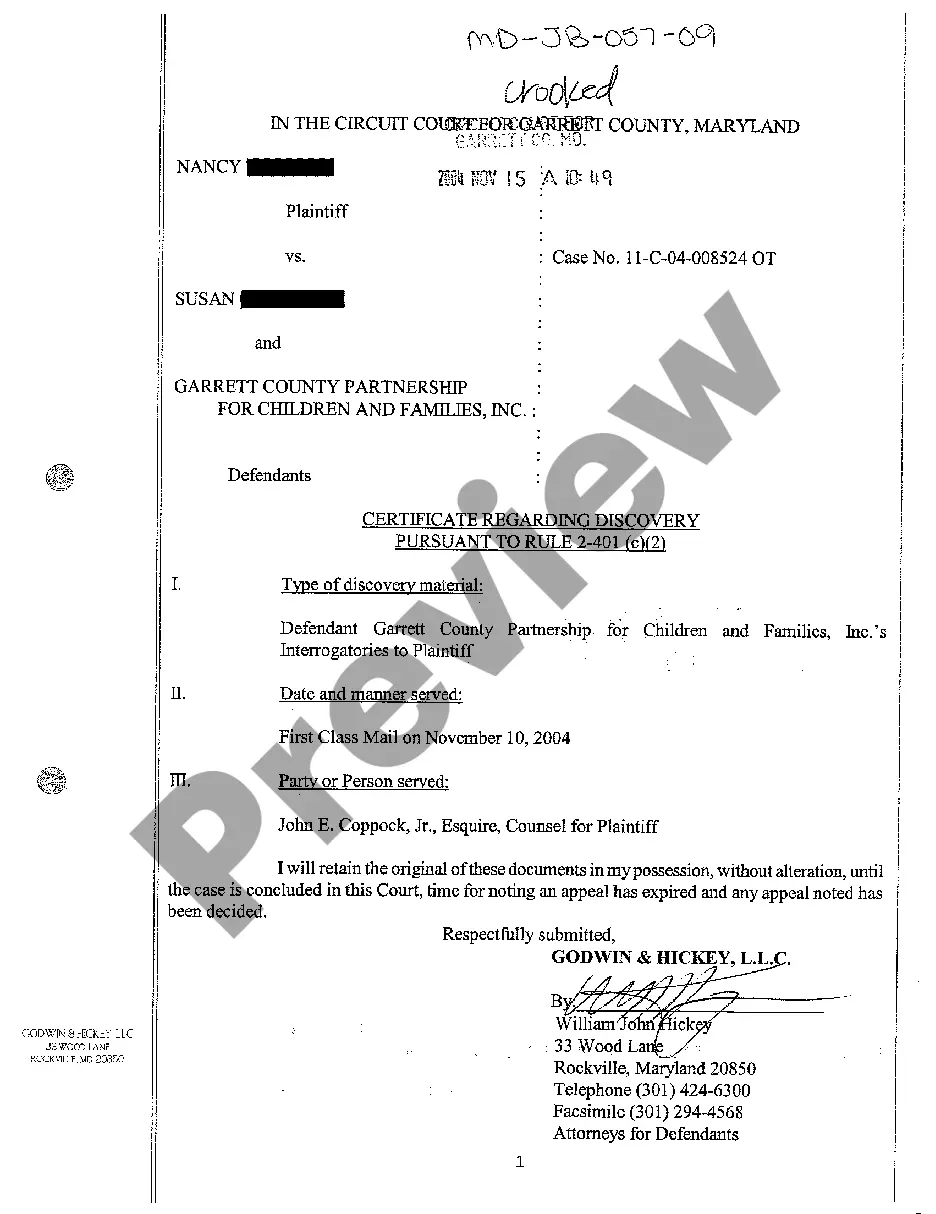


Form popularity
FAQ
Fixed-term: This type of alimony lasts a certain number of years. The major factor in determining the length is how long the marriage was. Indefinite: This type is also called permanent alimony. This alimony is usually awarded after a marriage that lasted 20 or more years.
What qualifies you for spousal support in Illinois? There is no single factor that will automatically qualify you for spousal support. In general, if the other party makes significantly more than you and has supported you for a long time, alimony is likely in your case.
In Illinois, the duration of alimony, or spousal maintenance, depends on the marriage's duration. In a marriage of under 5 years, maintenance payments last for 20% of the marriage's length. For a 9-10 year marriage, alimony payments last 40% of the marriage's length.
A spouse may be disqualified from receiving alimony if it's determined that they have ample resources to support themselves or if the marriage was of a very short duration. Other specifics may include the discovery of a spouse's non-monetary contributions or any valid agreement between the parties.
The court doesn't divide non-marital property in a divorce. Instead, each spouse keeps their own. For marital property, the court decides on a division that is fair, which could be a 50/50 split or another arrangement based on the couple's situation.
In general, someone can ask for spousal support if they are divorcing or separating and need financial support from the other party. But the final decision is up to the courts.
In Illinois family courts, a maintenance award isn't mandatory or guaranteed. It's based on the needs of the requesting spouse and the other spouse's ability to provide support, whether short-term or long-term.
In Illinois, alimony is not guaranteed and is awarded on a case-by-case basis. ing to the Illinois Marriage and Dissolution of Marriage Act (IMDMA), courts must consider the following statutory factors when determining eligibility for alimony: Length of the marriage. Standard of living established during marriage.
In a legal separation, you stay married but the court divides your property and debts and makes orders about financial support. If you have children together, you can also ask for orders about their care and support.