State Bar Association In Texas In Massachusetts
Description
Get your form ready online
Our built-in tools help you complete, sign, share, and store your documents in one place.
Make edits, fill in missing information, and update formatting in US Legal Forms—just like you would in MS Word.
Download a copy, print it, send it by email, or mail it via USPS—whatever works best for your next step.
Sign and collect signatures with our SignNow integration. Send to multiple recipients, set reminders, and more. Go Premium to unlock E-Sign.
If this form requires notarization, complete it online through a secure video call—no need to meet a notary in person or wait for an appointment.
We protect your documents and personal data by following strict security and privacy standards.
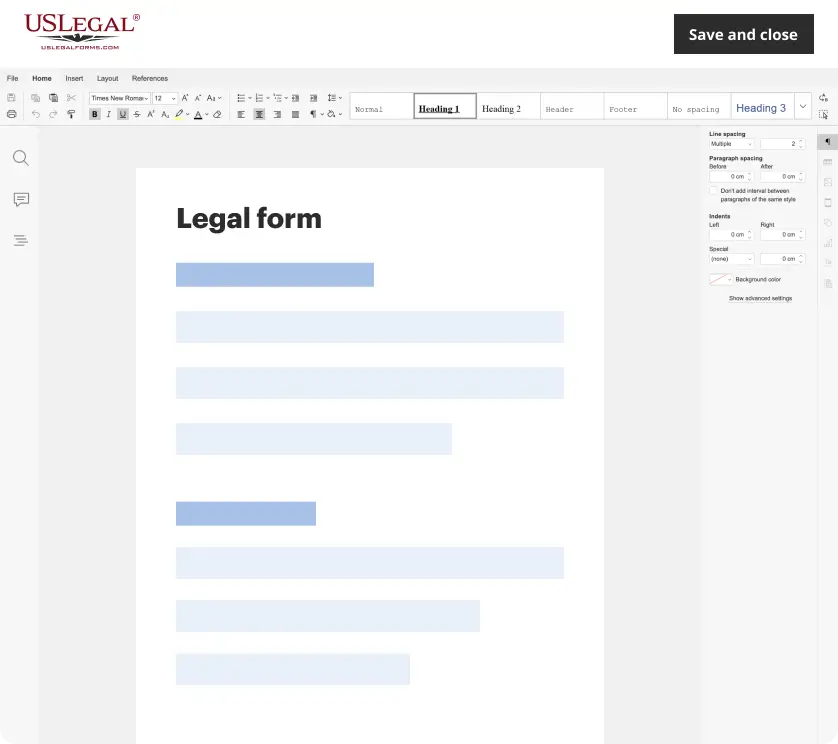
Make edits, fill in missing information, and update formatting in US Legal Forms—just like you would in MS Word.
Download a copy, print it, send it by email, or mail it via USPS—whatever works best for your next step.
Sign and collect signatures with our SignNow integration. Send to multiple recipients, set reminders, and more. Go Premium to unlock E-Sign.

If this form requires notarization, complete it online through a secure video call—no need to meet a notary in person or wait for an appointment.
We protect your documents and personal data by following strict security and privacy standards.
Looking for another form?






Form popularity
FAQ
In order to be licensed in Texas without taking the Texas Bar Examination, you must demonstrate that you: Hold a J.D. from an ABA-approved U.S. law school or satisfy each element of a Rule 13 exemption from the law study requirement. Are licensed to practice law in another state.
Rule XIII of the Rules Governing Admission to the Bar of Texas governs admission to the Texas Bar for attorneys licensed in other jurisdictions. The process is called Texas Admission Without Examination.
With 95,437 active members, the State Bar of Texas is one of the largest state bars in the United States. Unlike the American Bar Association (ABA), the State Bar of Texas (SBOT) is a mandatory bar.
If you're considering a career in law, but don't want to be necessarily tied down to a specific state, then you do have options. Your first option is to take the bar exam in multiple states, which may be something you'll have to do if the state you're moving to does not have any reciprocal agreements in place.
The process in Texas is not based on reciprocity with other jurisdictions. Attorneys meeting the requirements may apply for admission.
Massachusetts has entered into agreements for reciprocity with Connecticut, Kentucky, Maryland, New Jersey, Tennessee, Vermont, and Washington D.C. The Board of Bar Examiners is continuing to work with a number of jurisdictions that will administer the same remote exam to expand this list of reciprocal jurisdictions.
Most states have a bar that is a government-sanctioned body, charged with the regulation and licensing of attorneys. Some states also have a voluntary bar association that focuses on advancing and improving the legal profession. In other states, one organization serves both functions.
Attorneys licensed to practice law in another state or jurisdiction may seek full licensure in California or seek to practice law in California under limited circumstances through one of several State Bar special admissions programs.
A voluntary association, the MBA represents a diverse group of attorneys, judges and legal professionals across the commonwealth.
Massachusetts has entered into agreements for reciprocity with Connecticut, Kentucky, Maryland, New Jersey, Tennessee, Vermont, and Washington D.C. The Board of Bar Examiners is continuing to work with a number of jurisdictions that will administer the same remote exam to expand this list of reciprocal jurisdictions.
