State Bar Of Texas Computer And Technology Section In Texas
Description
Get your form ready online
Our built-in tools help you complete, sign, share, and store your documents in one place.
Make edits, fill in missing information, and update formatting in US Legal Forms—just like you would in MS Word.
Download a copy, print it, send it by email, or mail it via USPS—whatever works best for your next step.
Sign and collect signatures with our SignNow integration. Send to multiple recipients, set reminders, and more. Go Premium to unlock E-Sign.
If this form requires notarization, complete it online through a secure video call—no need to meet a notary in person or wait for an appointment.
We protect your documents and personal data by following strict security and privacy standards.
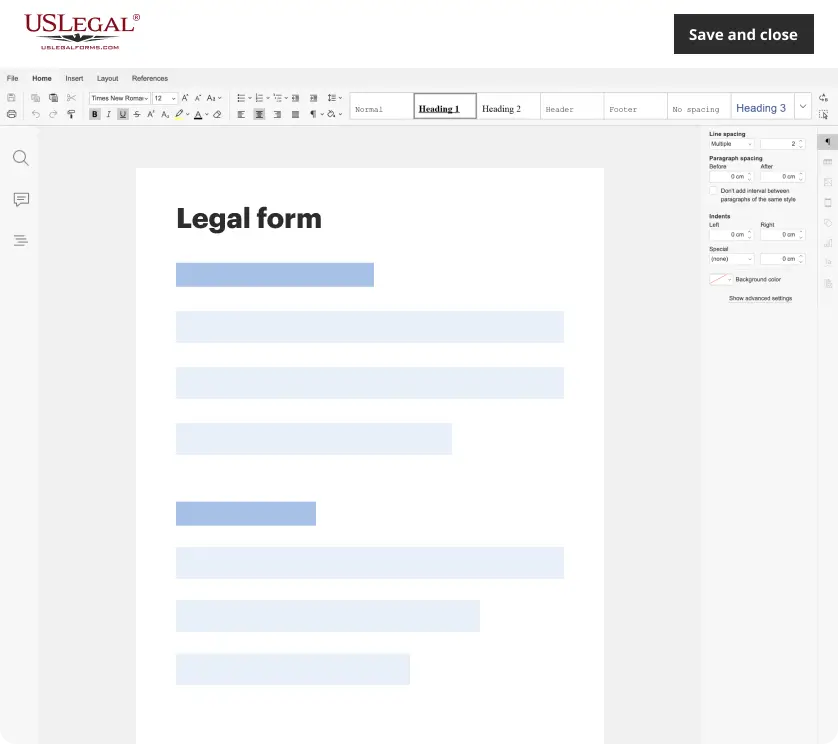
Make edits, fill in missing information, and update formatting in US Legal Forms—just like you would in MS Word.
Download a copy, print it, send it by email, or mail it via USPS—whatever works best for your next step.
Sign and collect signatures with our SignNow integration. Send to multiple recipients, set reminders, and more. Go Premium to unlock E-Sign.

If this form requires notarization, complete it online through a secure video call—no need to meet a notary in person or wait for an appointment.
We protect your documents and personal data by following strict security and privacy standards.
Looking for another form?

Form popularity
FAQ
Complainants are required to use the State Bar's current grievance form, effective September 1, 2023, to report attorney misconduct. A grievance can be submitted electronically at , or the current grievance form can be downloaded from there.
Can I Take the Bar Without Going To Law School In Texas? No, you can't take the bar without attending Texas law school. Currently, Texas is not one of the states that allow a person to take the bar exam without attending law school.
Other Licensing Requirements. Be certified by the Board as having present good moral character and fitness. Score 85 or higher on the MPRE. Satisfy the requirements of Rule 2(a)(5). Complete the Texas Law Course. Be willing to take the required Oath.
With 95,437 active members, the State Bar of Texas is one of the largest state bars in the United States. Unlike the American Bar Association (ABA), the State Bar of Texas (SBOT) is a mandatory bar.
How to become a lawyer in Texas Obtain a bachelor's degree. A bachelor's degree is required so you can qualify for law school. Pass the LSAT. Graduate from law school. Take the Texas bar examination. Be sworn into the State Bar of Texas. Seek a position as a lawyer. Continue your education to stay compliant.
Other Licensing Requirements. Be certified by the Board as having present good moral character and fitness. Score 85 or higher on the MPRE. Satisfy the requirements of Rule 2(a)(5). Complete the Texas Law Course. Be willing to take the required Oath.
TEXAS BOARD of LAW EXAMINERS The Texas Supreme Court has the exclusive authority to grant licenses to practice law in Texas.
Eligibility Requirements Have been actively and substantially engaged in the lawful practice of law as your principal business or occupation for at least 5 of the 7 years immediately preceding your application.
A UBE score is “earned” on the last day of the exam administration. Scores that were earned more than five years ago cannot be transferred. Once you submit your UBE Transfer Application, we will conduct a character and fitness investigation. This investigation can take up to nine months.
After graduating from a law school approved by the American Bar Association with a doctor of jurisprudence degree, candidates must then take the bar examination – a comprehensive test of knowledge in many areas of law. After passing this test, the person is licensed to practice law.

