Types Of Torts With Examples In Alameda
Description





Get your form ready online
Our built-in tools help you complete, sign, share, and store your documents in one place.
Make edits, fill in missing information, and update formatting in US Legal Forms—just like you would in MS Word.
Download a copy, print it, send it by email, or mail it via USPS—whatever works best for your next step.
Sign and collect signatures with our SignNow integration. Send to multiple recipients, set reminders, and more. Go Premium to unlock E-Sign.
If this form requires notarization, complete it online through a secure video call—no need to meet a notary in person or wait for an appointment.
We protect your documents and personal data by following strict security and privacy standards.

Make edits, fill in missing information, and update formatting in US Legal Forms—just like you would in MS Word.

Download a copy, print it, send it by email, or mail it via USPS—whatever works best for your next step.

Sign and collect signatures with our SignNow integration. Send to multiple recipients, set reminders, and more. Go Premium to unlock E-Sign.

If this form requires notarization, complete it online through a secure video call—no need to meet a notary in person or wait for an appointment.

We protect your documents and personal data by following strict security and privacy standards.
Looking for another form?
Form popularity
FAQ
(b) Declaration regarding notice (3) That, for reasons specified, the applicant should not be required to inform the opposing party.
Rule 3.31. Unless otherwise authorized by the court, discovery meet and confer obligations require an in-person, telephonic, or video conference between parties.
(a) Fields occupied The Judicial Council has preempted all local rules relating to pleadings, demurrers, ex parte applications, motions, discovery, provisional remedies, and the form and format of papers.
Superior Court of Alameda County.
(a) Except as permitted by statute, an applicable code of judicial ethics or code of judicial conduct, or standards governing employees of a tribunal, a lawyer shall not directly or indirectly give or lend anything of value to a judge, official, or employee of a tribunal.
Four of them are personal: assault, battery, intentional infliction of emotional distress, and false imprisonment. The other three are trespass to chattels, trespass to property, and conversion.
This chapter addresses the four intentional torts, assault, battery, false imprisonment, and intentional infliction of emotional distress, that involve injury to persons—what some call the “dignitary” torts.
Under tort law, seven intentional torts exist. Four of them are personal: assault, battery, intentional infliction of emotional distress, and false imprisonment. The other three are trespass to chattels, trespass to property, and conversion.
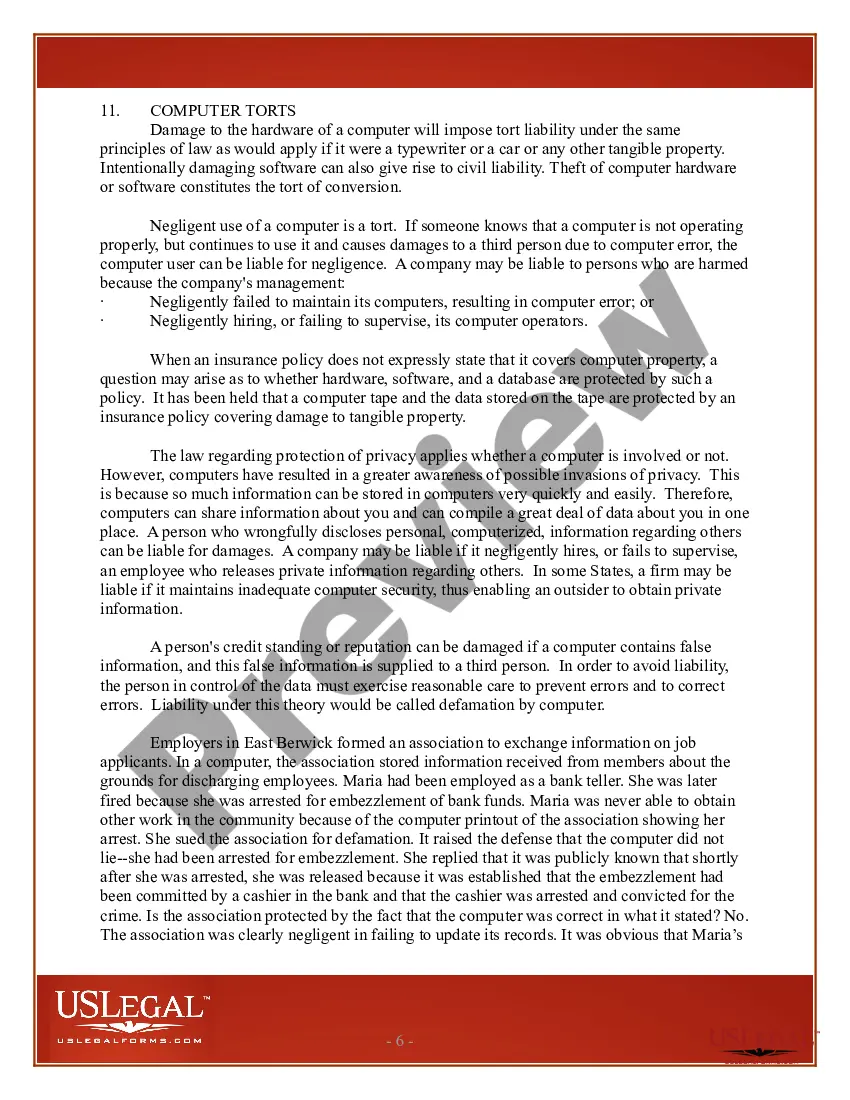
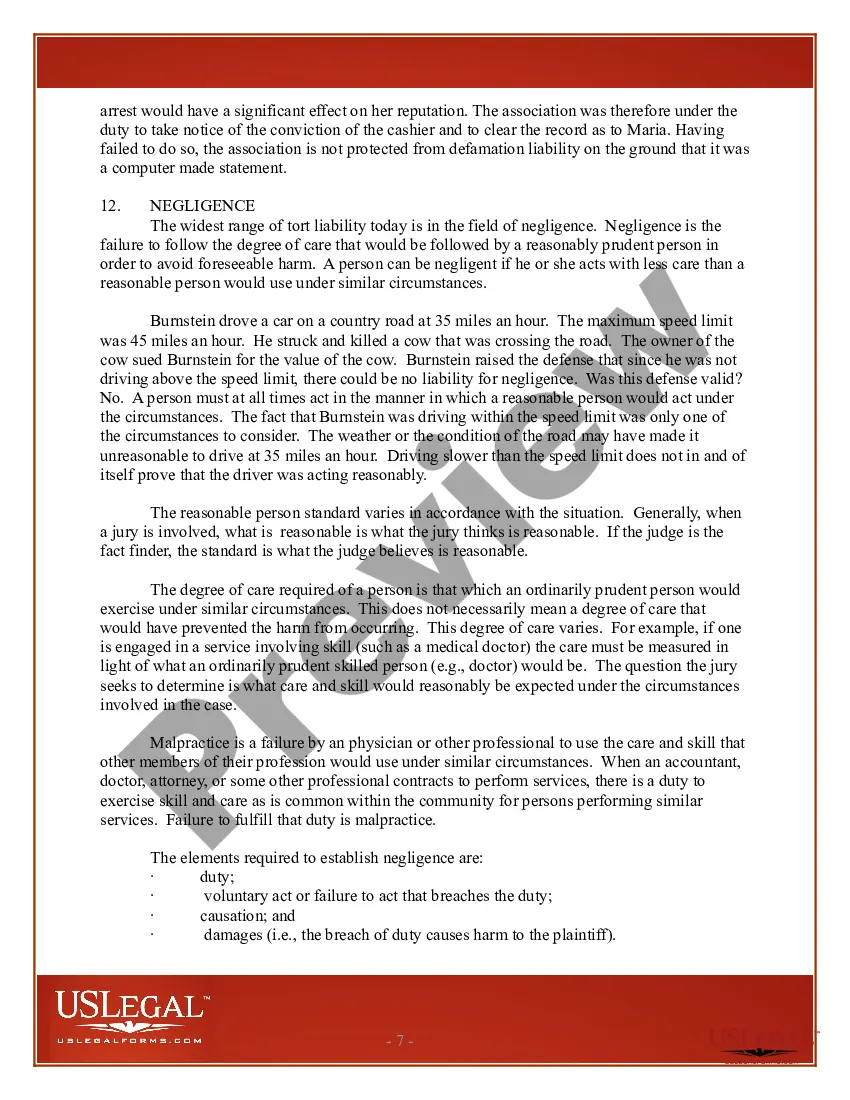
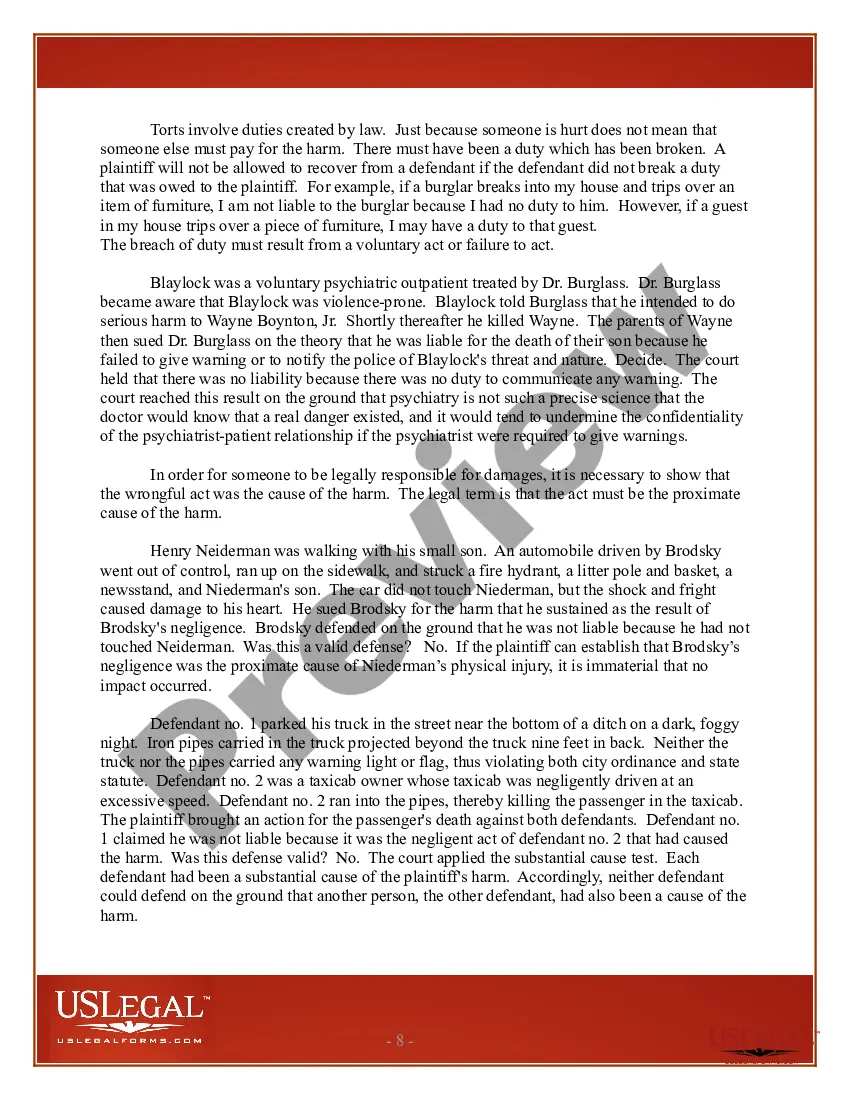
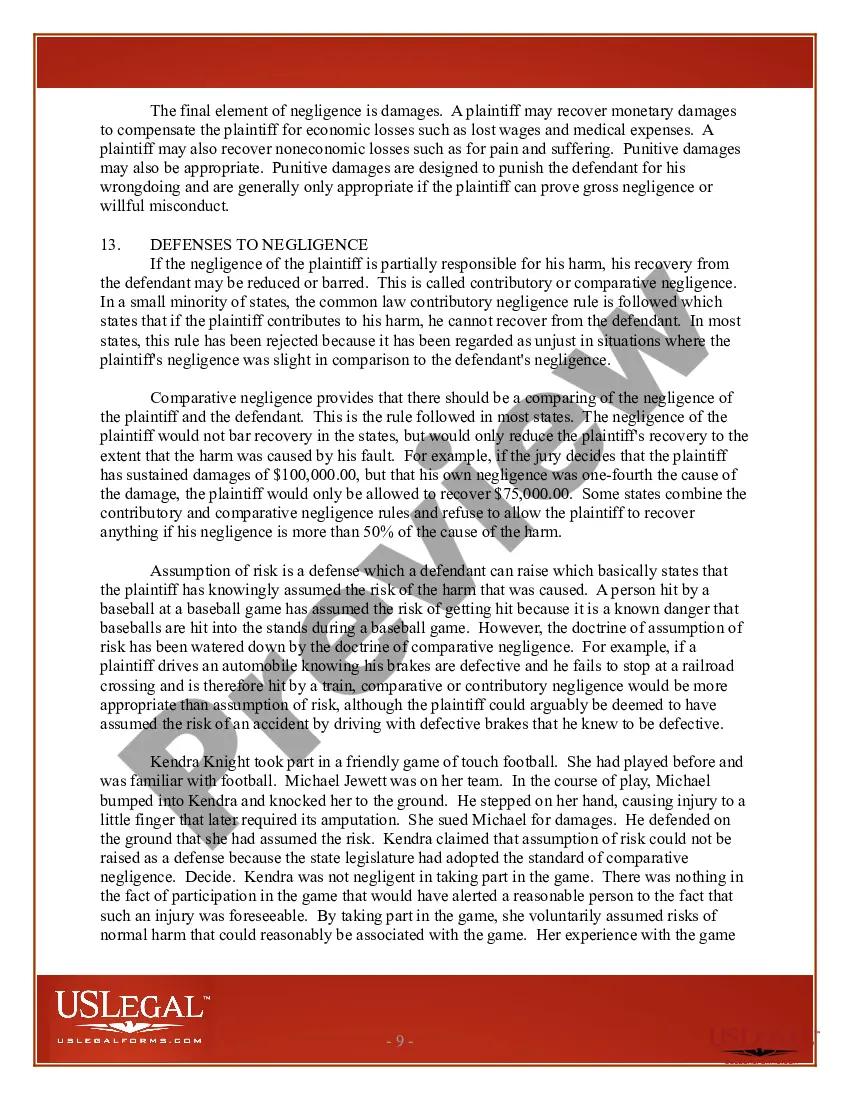
Identifying the Four Tort Elements The accused had a duty, in most personal injury cases, to act in a way that did not cause you to become injured. The accused committed a breach of that duty. An injury occurred to you. The breach of duty was the proximate cause of your injury.
Torts fall into three general categories: Intentional torts (e.g., intentionally hitting a person); Negligent torts (e.g., causing an accident by failing to obey traffic rules); and. Strict liability torts (e.g., liability for making and selling defective products - see Products Liability).
