Types Of Torts In Nursing In Broward
Description





Get your form ready online
Our built-in tools help you complete, sign, share, and store your documents in one place.
Make edits, fill in missing information, and update formatting in US Legal Forms—just like you would in MS Word.
Download a copy, print it, send it by email, or mail it via USPS—whatever works best for your next step.
Sign and collect signatures with our SignNow integration. Send to multiple recipients, set reminders, and more. Go Premium to unlock E-Sign.
If this form requires notarization, complete it online through a secure video call—no need to meet a notary in person or wait for an appointment.
We protect your documents and personal data by following strict security and privacy standards.

Make edits, fill in missing information, and update formatting in US Legal Forms—just like you would in MS Word.

Download a copy, print it, send it by email, or mail it via USPS—whatever works best for your next step.

Sign and collect signatures with our SignNow integration. Send to multiple recipients, set reminders, and more. Go Premium to unlock E-Sign.

If this form requires notarization, complete it online through a secure video call—no need to meet a notary in person or wait for an appointment.

We protect your documents and personal data by following strict security and privacy standards.
Looking for another form?
Form popularity
FAQ
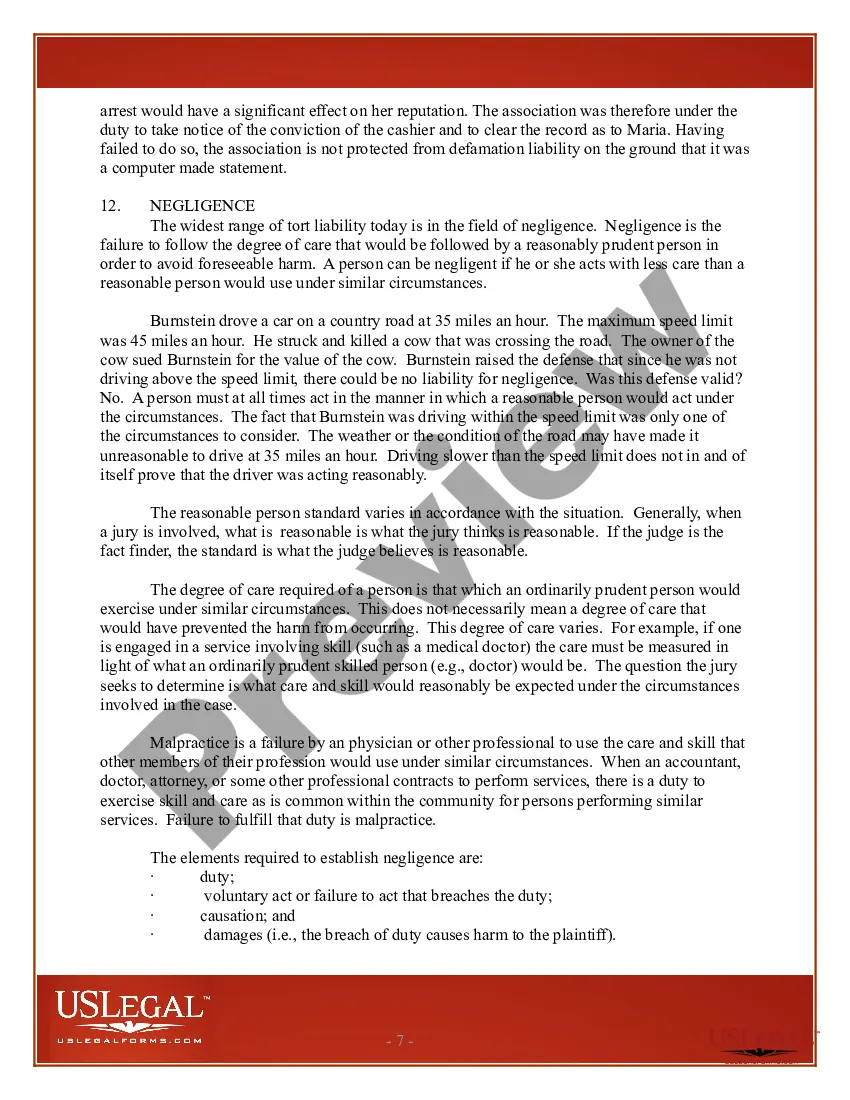
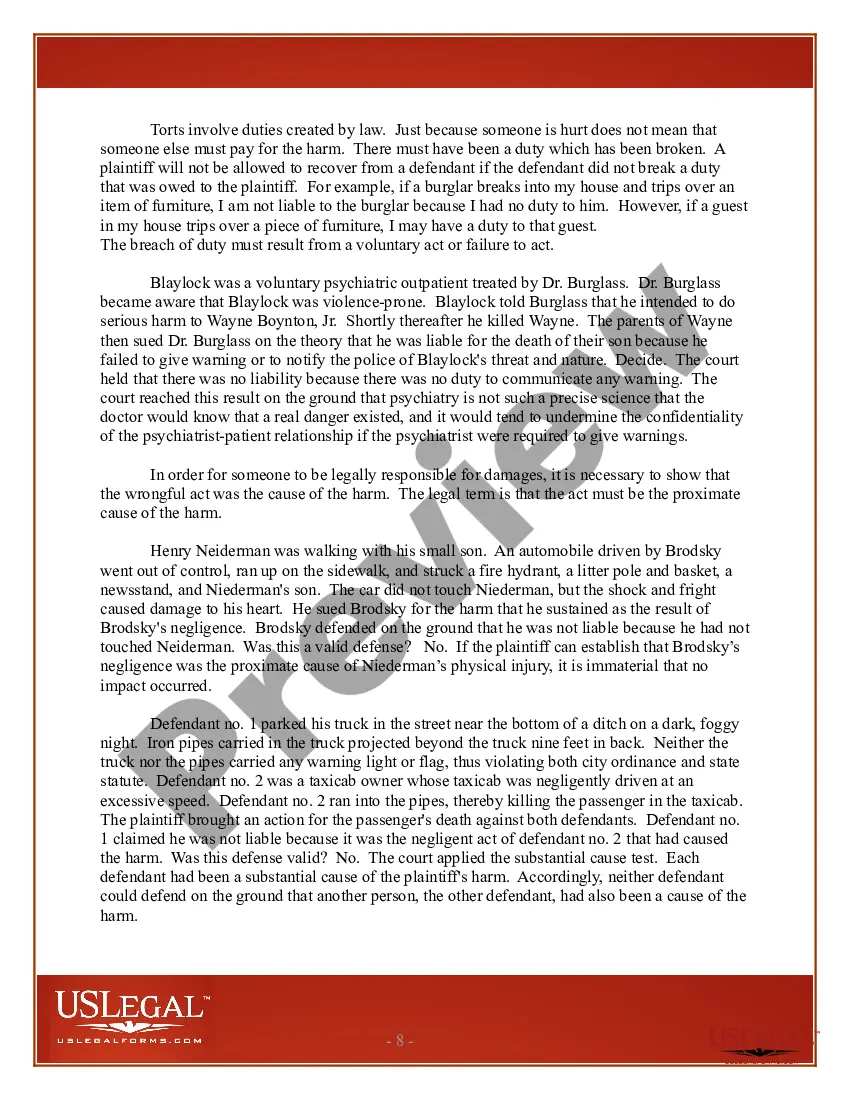
The four elements of nursing malpractice are: Duty. There must be a duty owed to the patient. Breach of Duty. The specific duty owed to the patient has been breached, meaning that the duty has not been met. Damages. The breach of duty must have caused injuries that result in damages. Causation.
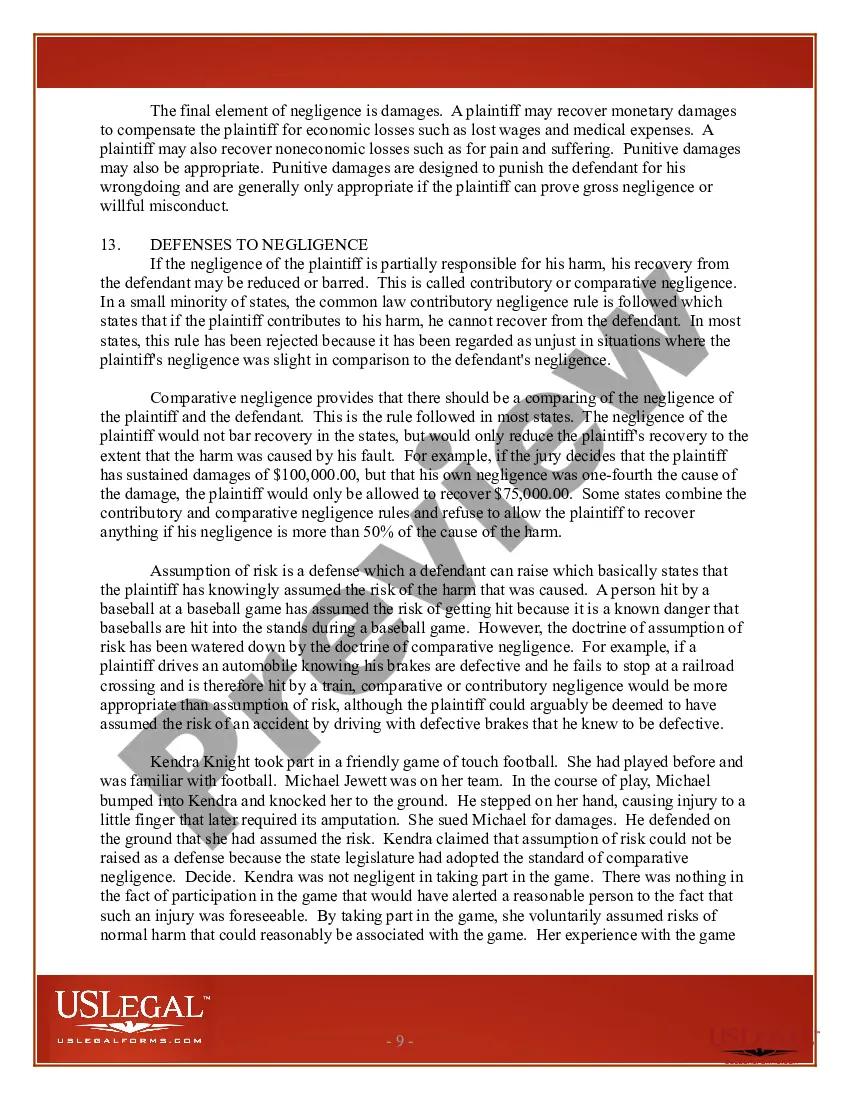
Intentional Torts Assault. Battery is defined as the harmful touching of someone without their consent. False imprisonment is the unlawful physical restraint of a patient. Invasion of privacy which occurs with improper disclosure of medical treatment information and violations protected under HIPAA.
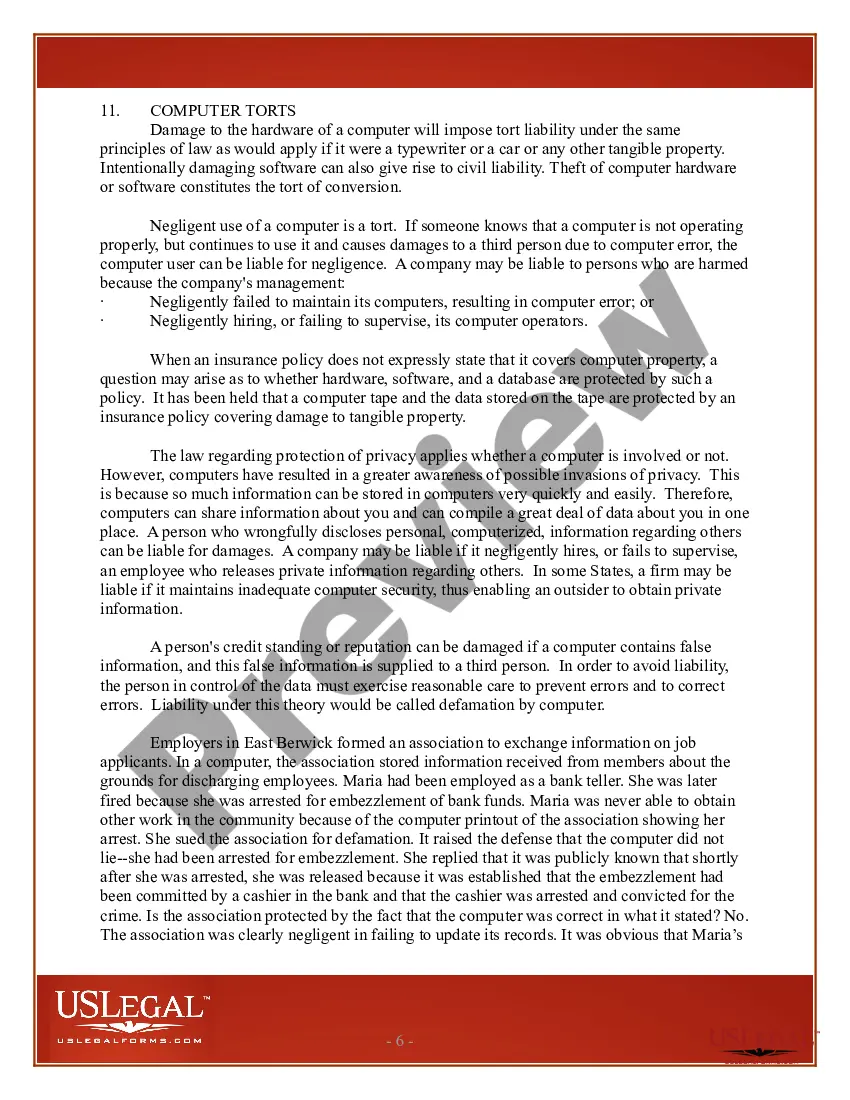
Examples of intentional torts include assault, battery, false imprisonment, slander, libel, and breach of privacy or client confidentiality. Unintentional torts occur when the defendant's actions or inactions were unreasonably unsafe.
The classic intentional tort in medical practice is forcing unwanted medical care on a patient. The care may benefit the patient, but if it was refused and the physician has no state mandate to force care on the patient, the patient may sue for the intentional tort of battery.
Simply put, a tort is an action by one party which results in loss or harm to another party and is governed by civil, not criminal, law. There are three main categories of torts: intentional, negligent, and strict liability. Assault, battery, and fraud are common examples of intentional torts.
In nursing torts, battery is the touching of a patient, without consent, that causes harm. For example, you administered a medication to a patient after they refused, that would be battery.
Torts fall into three general categories: Intentional torts (e.g., intentionally hitting a person); Negligent torts (e.g., causing an accident by failing to obey traffic rules); and. Strict liability torts (e.g., liability for making and selling defective products - see Products Liability).
There are numerous specific torts including trespass, assault, battery, negligence, products liability, and intentional infliction of emotional distress. There are also separate areas of tort law including nuisance, defamation, invasion of privacy, and a category of economic torts.
If you are the one suing, you must fill out summons forms (one for each defendant) and present them to the clerk's office, where a clerk will sign them and stamp them with the court's seal.
In Broward County, Florida. Filing Small Claims. Have Defendant Served. Know the defendant's full name and address. Attend Pretrial. Conference. Court Enters Judgment. File Your Claim. Check Venue. 491 N State Road 7, Plantation, FL, 33317.