Types Of Torts In Canada In Chicago
Description

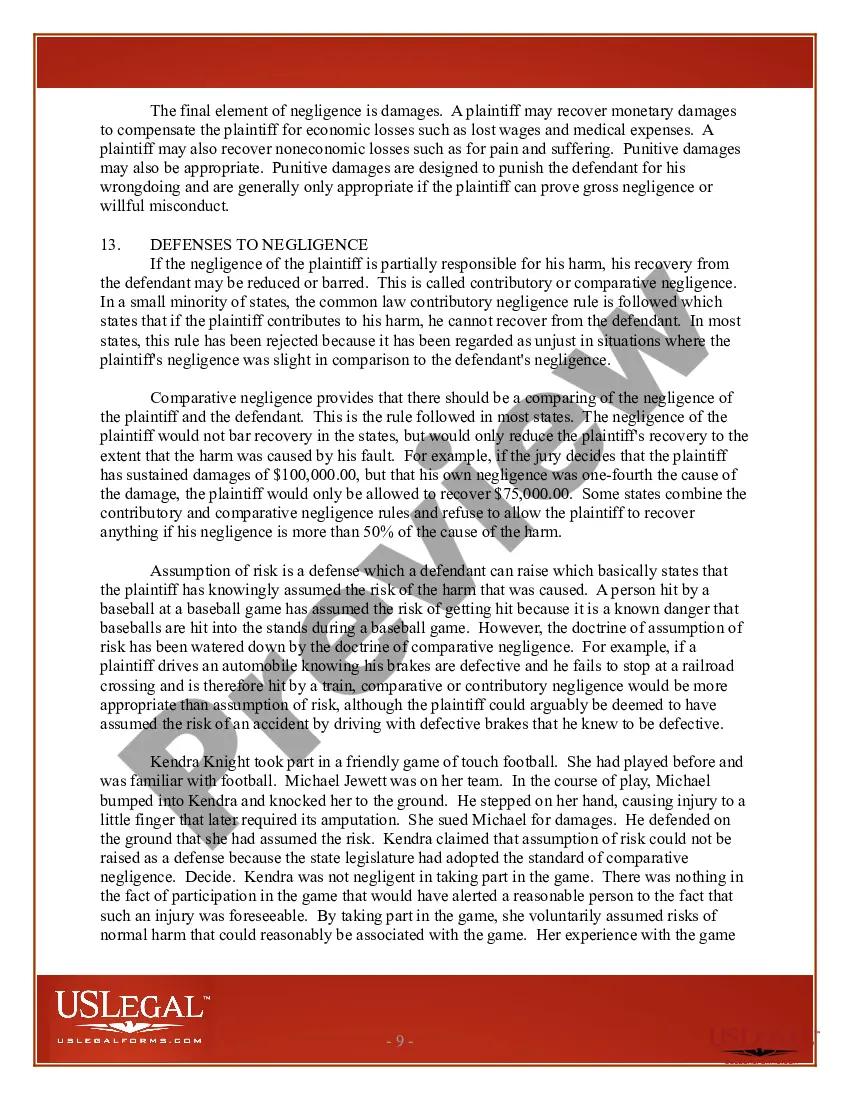
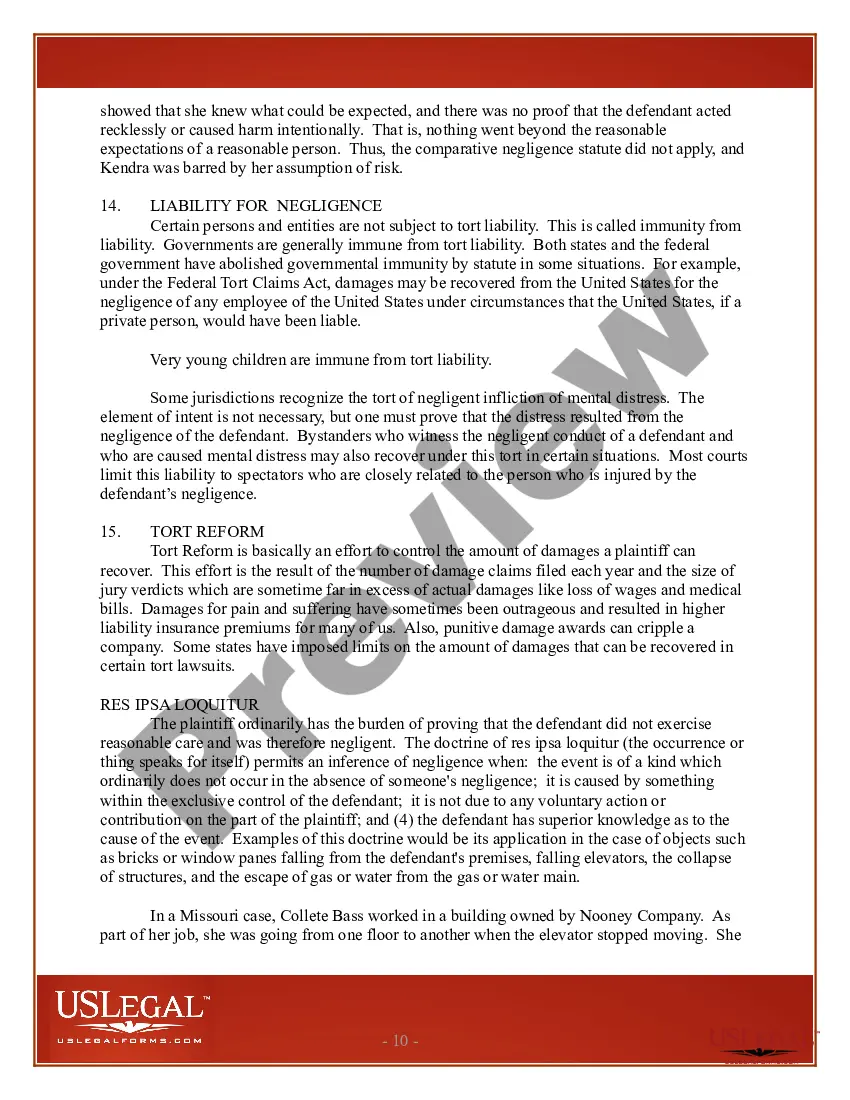



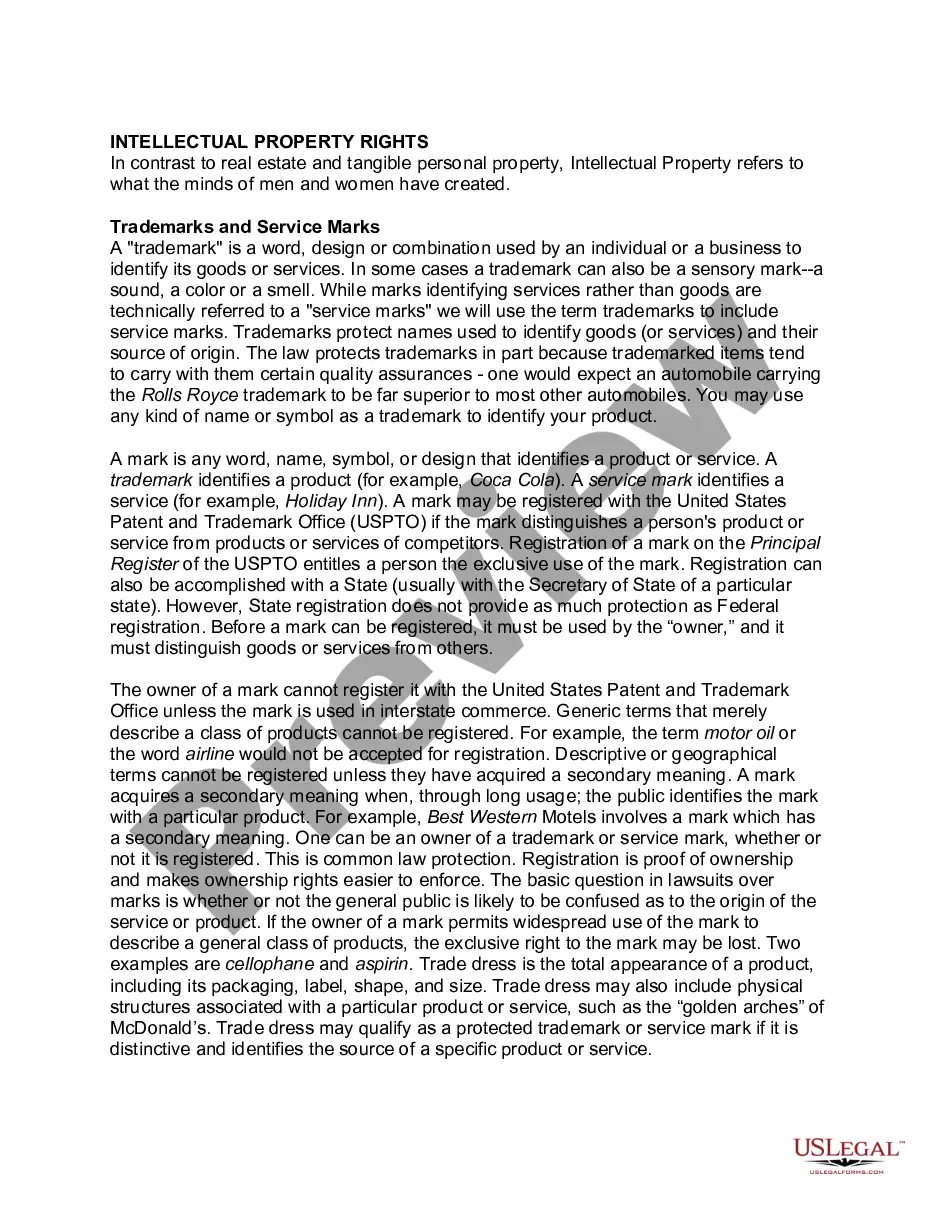
Get your form ready online
Our built-in tools help you complete, sign, share, and store your documents in one place.
Make edits, fill in missing information, and update formatting in US Legal Forms—just like you would in MS Word.
Download a copy, print it, send it by email, or mail it via USPS—whatever works best for your next step.
Sign and collect signatures with our SignNow integration. Send to multiple recipients, set reminders, and more. Go Premium to unlock E-Sign.
If this form requires notarization, complete it online through a secure video call—no need to meet a notary in person or wait for an appointment.
We protect your documents and personal data by following strict security and privacy standards.

Make edits, fill in missing information, and update formatting in US Legal Forms—just like you would in MS Word.

Download a copy, print it, send it by email, or mail it via USPS—whatever works best for your next step.

Sign and collect signatures with our SignNow integration. Send to multiple recipients, set reminders, and more. Go Premium to unlock E-Sign.

If this form requires notarization, complete it online through a secure video call—no need to meet a notary in person or wait for an appointment.

We protect your documents and personal data by following strict security and privacy standards.
Looking for another form?
Form popularity
FAQ
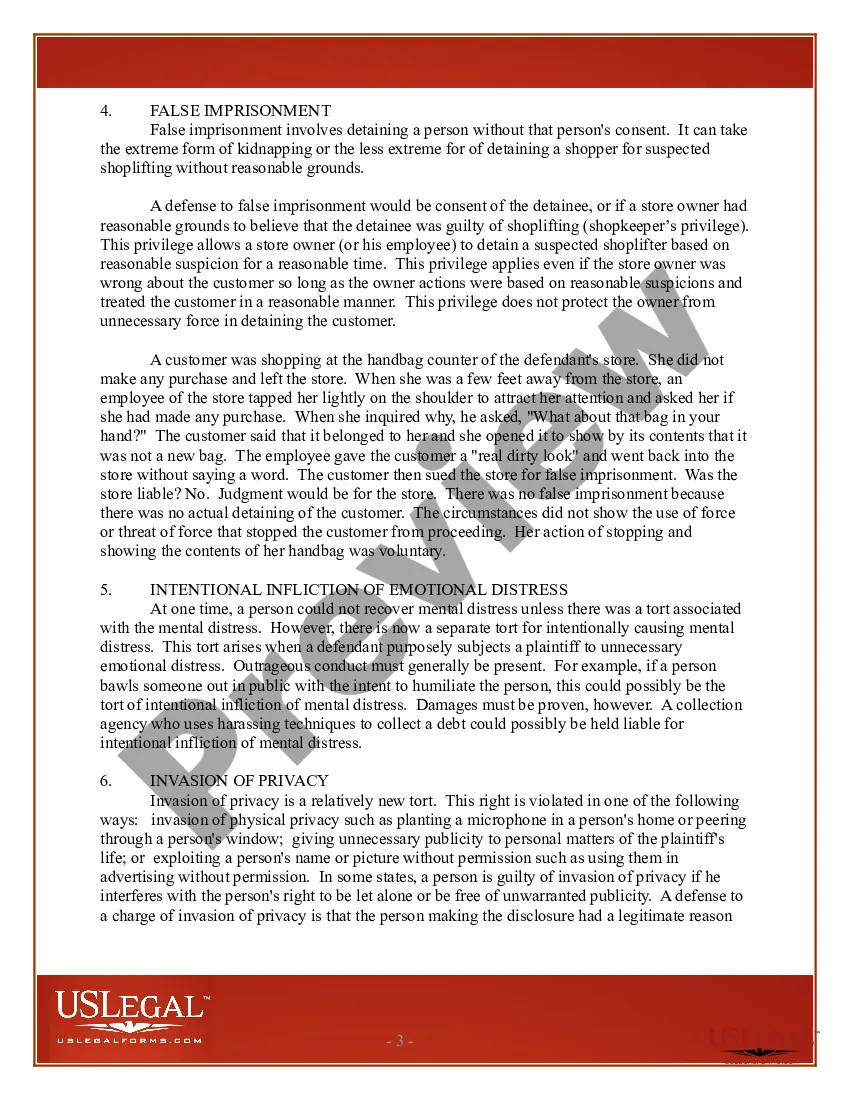
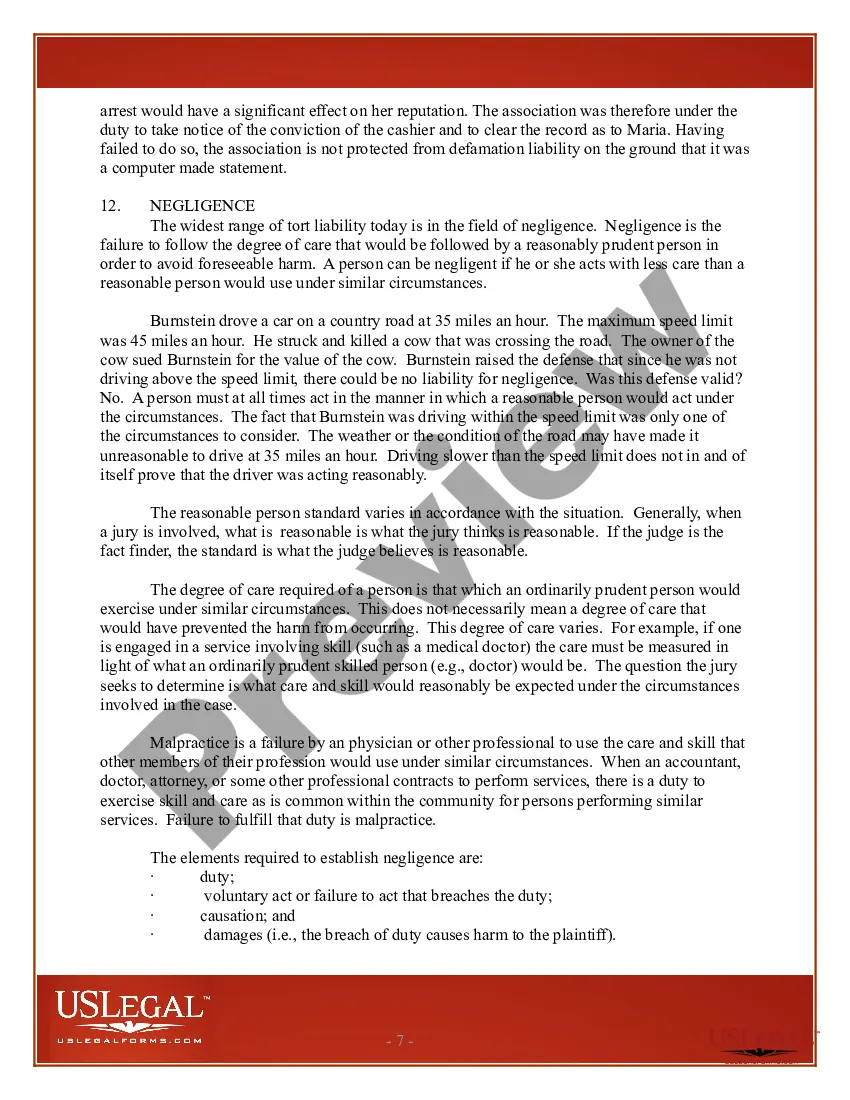
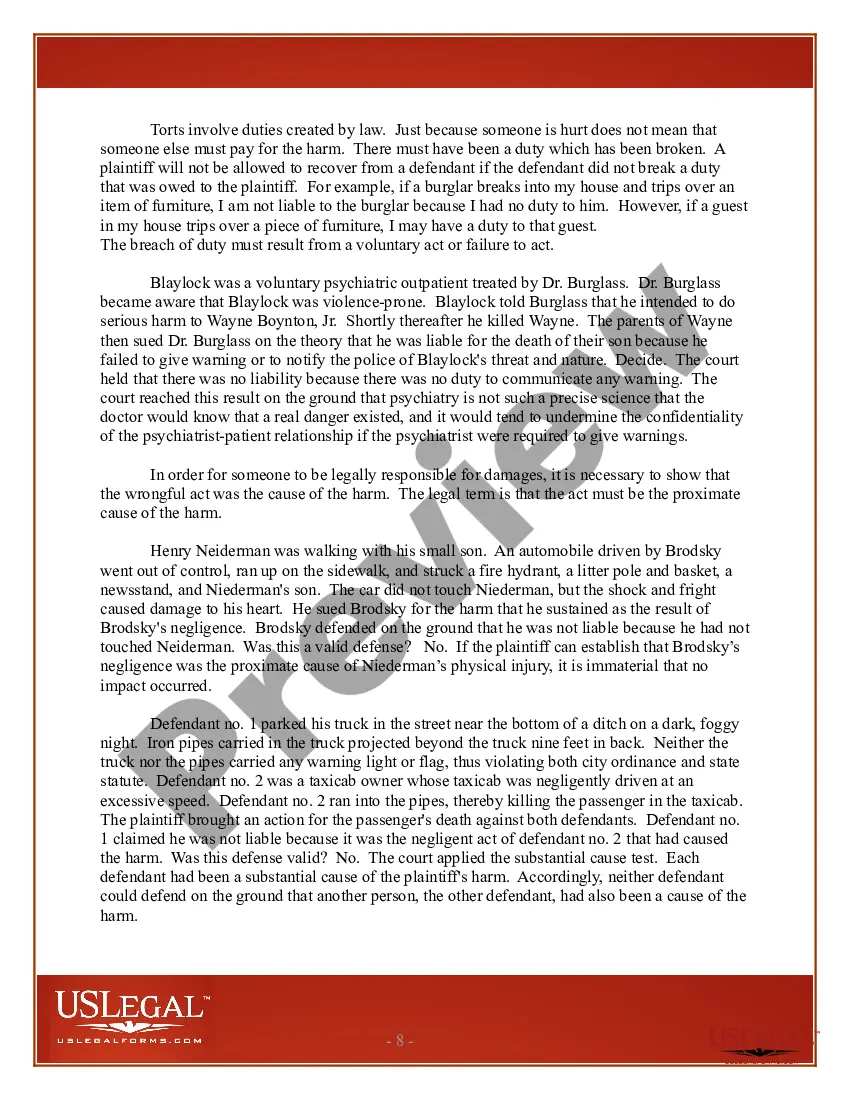
To win a tort case, there are 3 elements that must be established in a claim: The defendant had a legal duty to act in a certain way, The defendant breached this duty by failing to act appropriately, and. The plaintiff suffered injury or loss as a direct result of the defendant's breach.
Illinois Tort law is an area of civil law that allows an individual take legal action against another individual, business, organization for any injury or harm suffered from their actions. It is a broad area of the state's civil law that governs wrongdoings committed against another person.
What is Tort Law in Canada? Torts are roughly equivalent to extra-contractual civil liability in civil law . While common law and civil law often have practical similarities, there are significant theoretical differences. Torts can be understood as legal wrongs that result in civil liability.
Torts fall into three general categories: Intentional torts (e.g., intentionally hitting a person); Negligent torts (e.g., causing an accident by failing to obey traffic rules); and. Strict liability torts (e.g., liability for making and selling defective products - see Products Liability).
There are three states of mind which a student needs to be aware of in tort law. These are malice, intention and negligence. Where a tort does not require any of these it is said to be a tort of strict liability.
To file a claim, complete these steps: Complete Standard Form 95. Explain in detail what happened, using additional pages if necessary. Attach all documents that support your claim, which may include the following. Submit the completed Standard Form 95 and supporting documents to the OPM Office of the General Counsel.
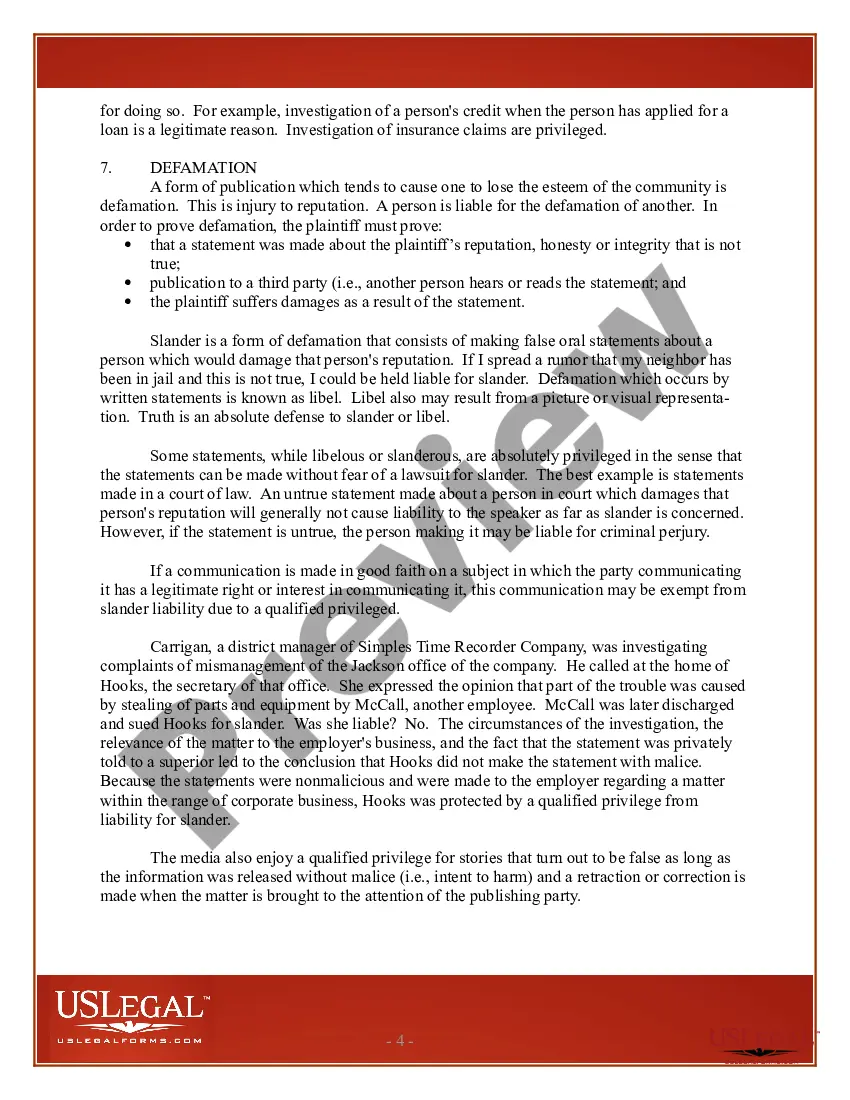
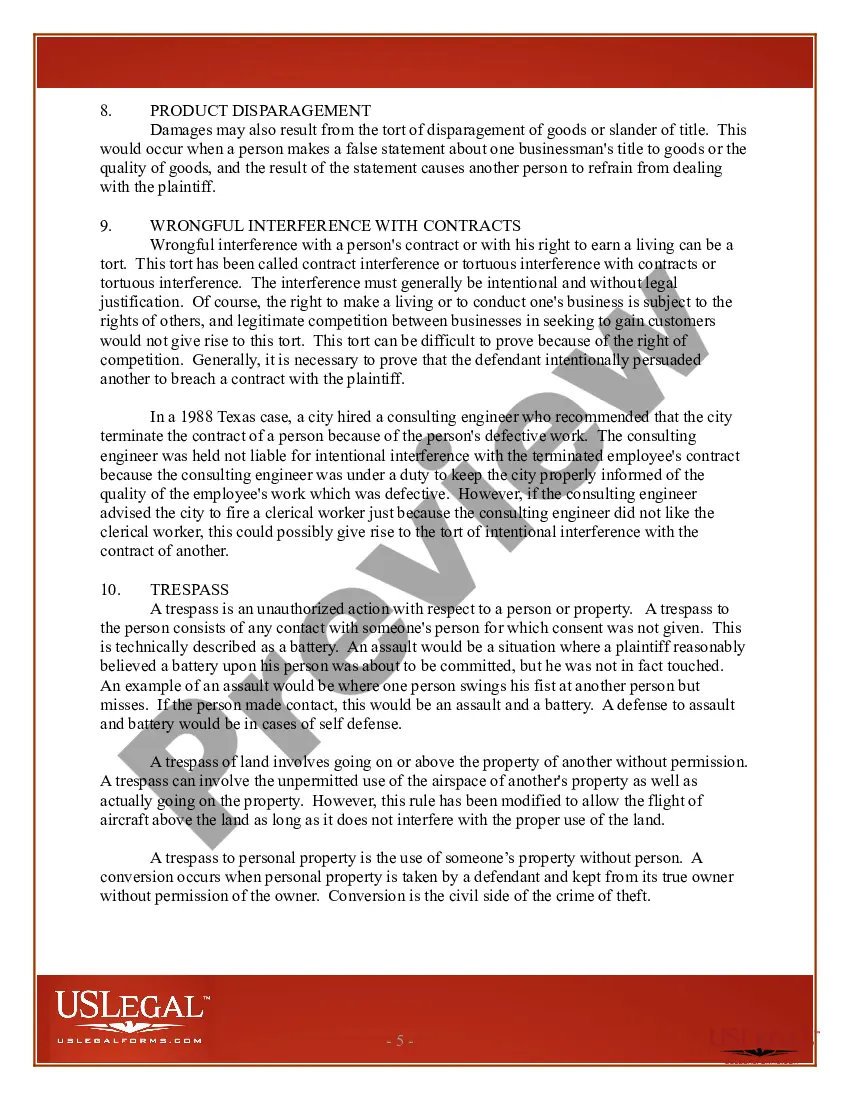
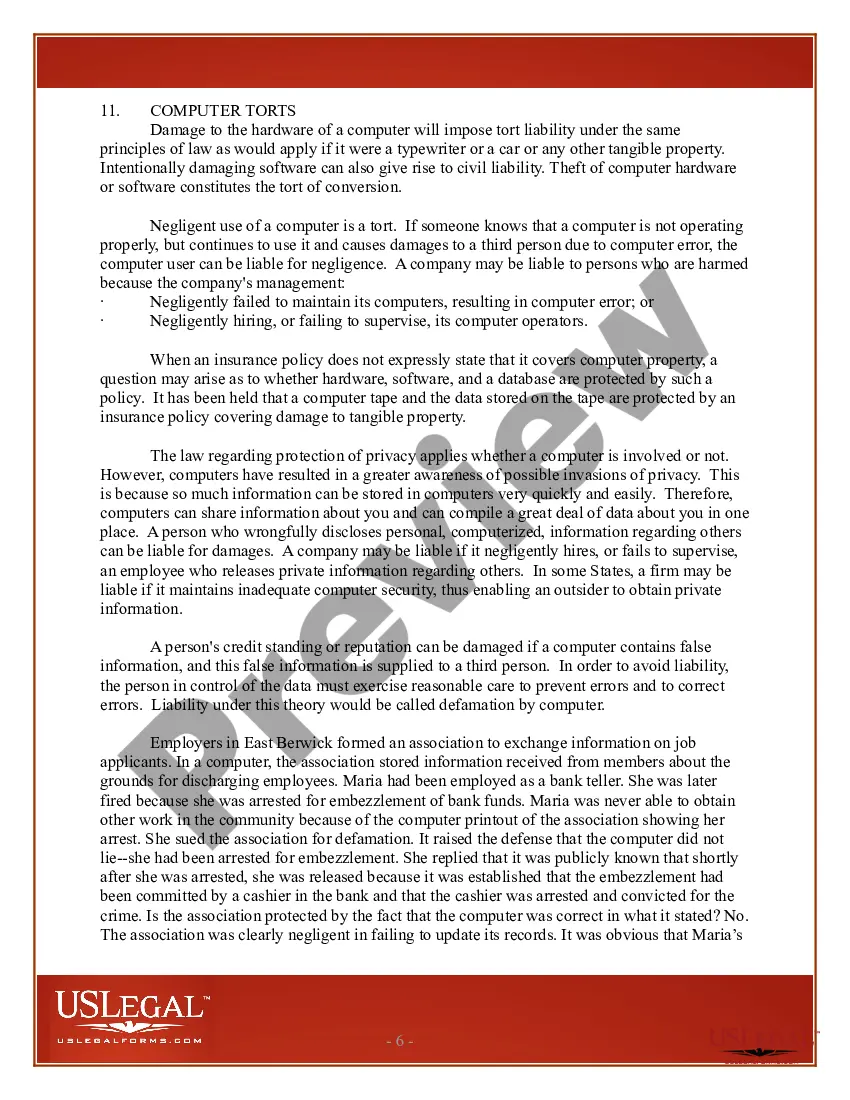
There are three types of torts, namely: (1) intentional torts, (2) negligence, and (3) strict liability. In intentional tort, the tortfeasor intended to cause harm to the person or property. Examples of this type of tort are assault, fraud, defamation, and invasion of privacy.
Types of Intentional Torts Assault and battery. Assault and battery are often used interchangeably, but they are actually separate wrongful acts. False imprisonment. False imprisonment is the unlawful restraint of another person without their consent. Defamation. Trespass to land and chattels.
Torts: A tort is a wrongful act that injures or interferes with another's person or property. A tort case is a civil court proceeding. The accused is the "defendant" and the victim is a "plaintiff."
Torts fall into three general categories: Intentional torts (e.g., intentionally hitting a person); Negligent torts (e.g., causing an accident by failing to obey traffic rules); and. Strict liability torts (e.g., liability for making and selling defective products - see Products Liability).