Torts Form With 2 Points In Cook
Description






Form popularity
FAQ
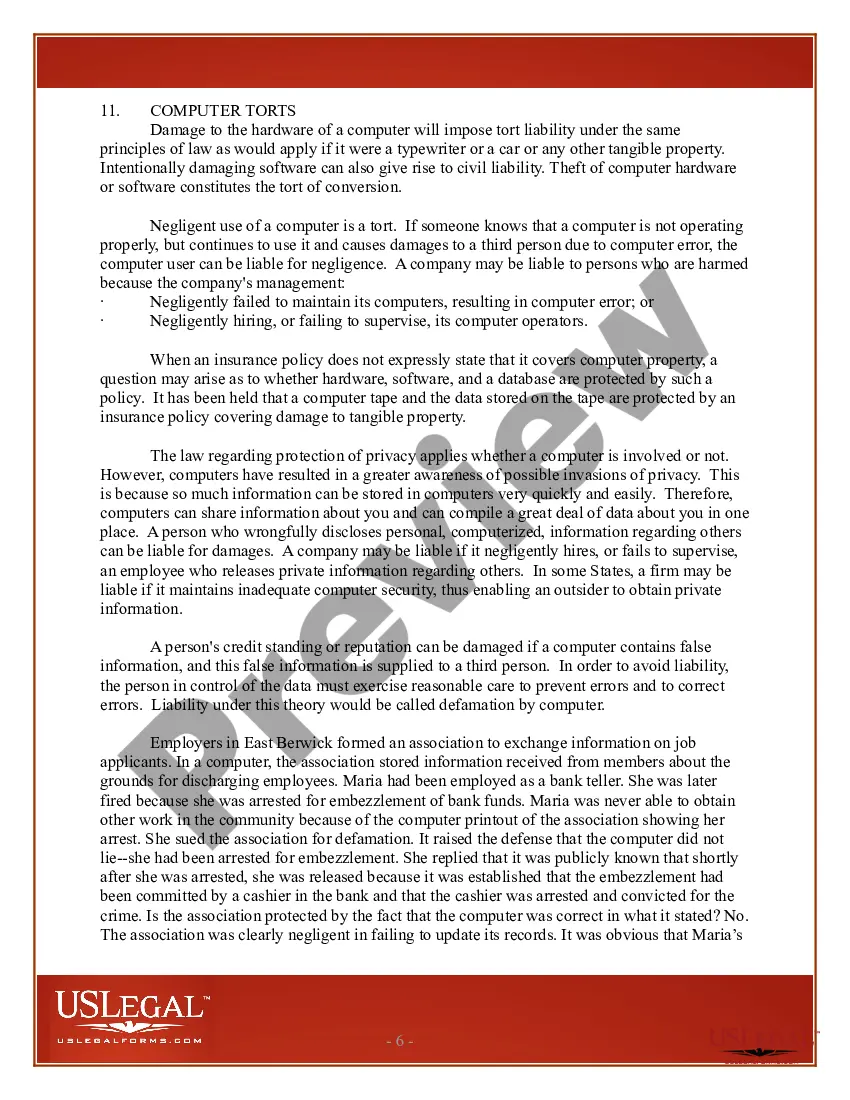
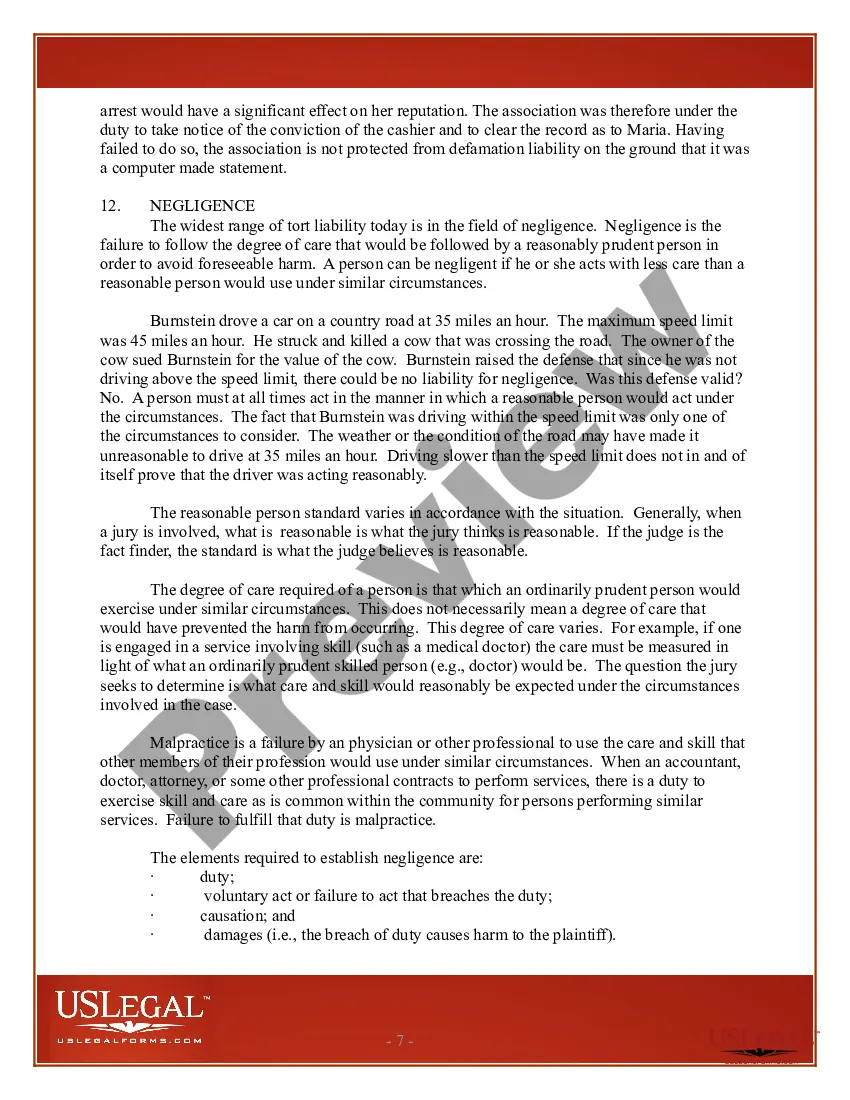
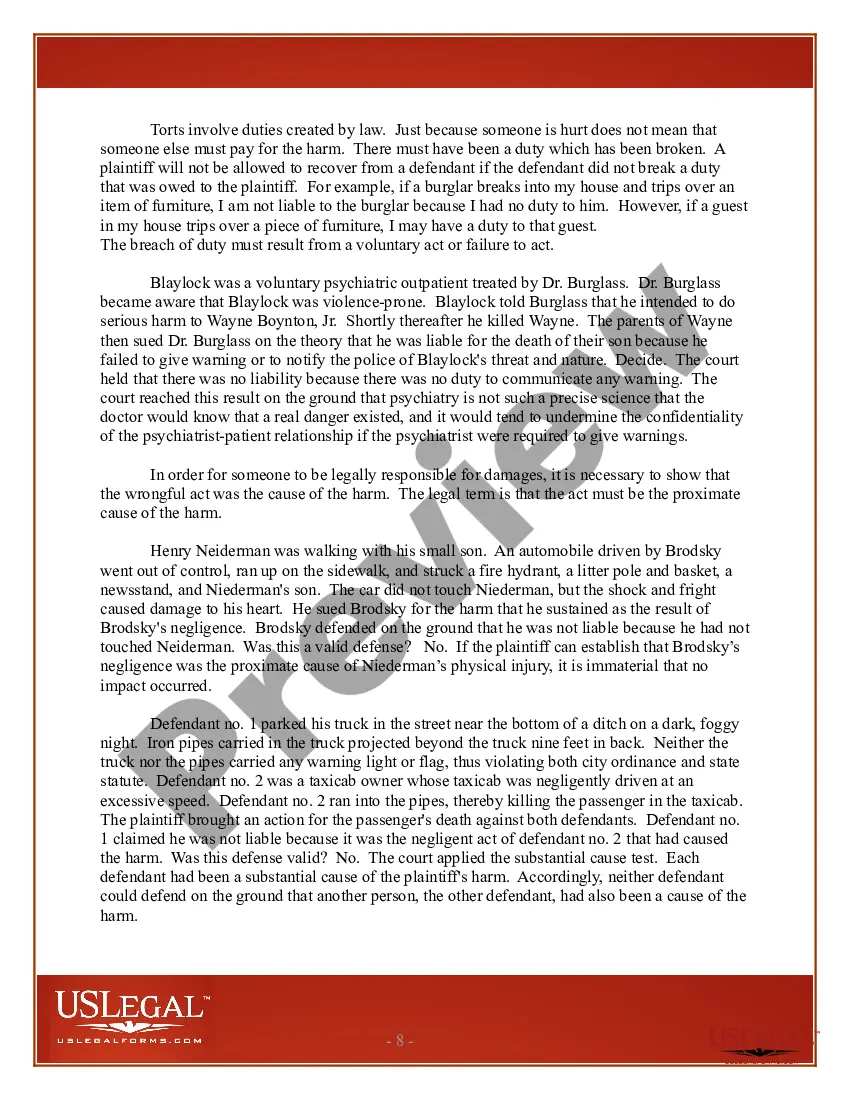
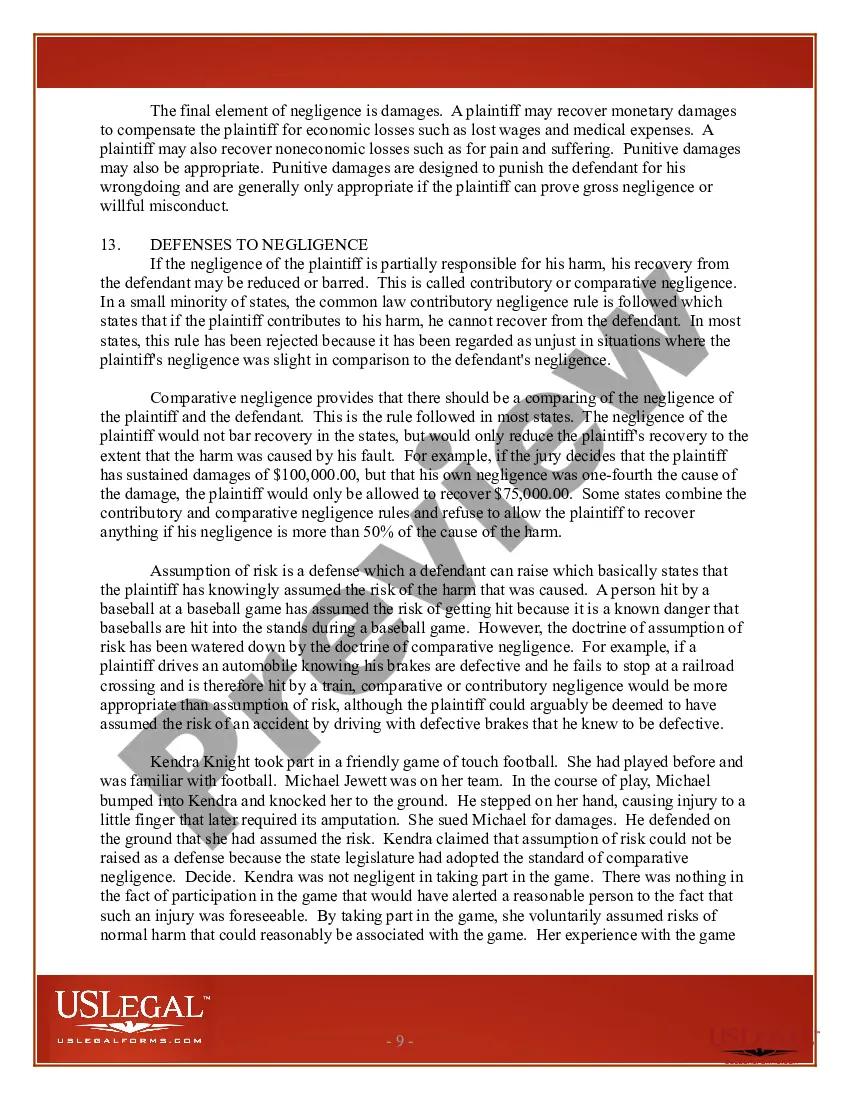
Identifying the Four Tort Elements The accused had a duty, in most personal injury cases, to act in a way that did not cause you to become injured. The accused committed a breach of that duty. An injury occurred to you. The breach of duty was the proximate cause of your injury.
There are some general elements in torts viz., act and omission, voluntary and involuntary acts and mental elements e.g., malice, intention, negligence, recklessness and motives.
In order to state a valid claim, the claimant must demonstrate that (1) he was injured or his property was damaged by a federal government employee; (2) the employee was acting within the scope of his official duties; (3) the employee was acting negligently or wrongfully; and (4) the negligent or wrongful act ...
To file a claim, complete these steps: Complete Standard Form 95. Explain in detail what happened, using additional pages if necessary. Attach all documents that support your claim, which may include the following. Submit the completed Standard Form 95 and supporting documents to the OPM Office of the General Counsel.
Under California law, there are four legal principles of negligence required for a claim include duty of care, breach of duty of care, causation, and damages.
Negligence Torts This usually involves car accidents, slip and fall accidents, or medical malpractice. To succeed in a negligence claim, you must prove duty, breach, causation, and damages.
Torts fall into three general categories: Intentional torts (e.g., intentionally hitting a person); Negligent torts (e.g., causing an accident by failing to obey traffic rules); and. Strict liability torts (e.g., liability for making and selling defective products - see Products Liability).
The Four Elements of a Tort The accused had a duty, in most personal injury cases, to act in a way that did not cause you to become injured. The accused committed a breach of that duty. An injury occurred to you. The breach of duty was the proximate cause of your injury.
Examples of unintentional torts may include: Slip and falls. Dog bites. Workplace accidents. Medical malpractice.
Examples of unintentional torts may include: Slip and falls. Dog bites. Workplace accidents. Medical malpractice.