Tort Negligence Liability For Teachers In Dallas
Description




Get your form ready online
Our built-in tools help you complete, sign, share, and store your documents in one place.
Make edits, fill in missing information, and update formatting in US Legal Forms—just like you would in MS Word.
Download a copy, print it, send it by email, or mail it via USPS—whatever works best for your next step.
Sign and collect signatures with our SignNow integration. Send to multiple recipients, set reminders, and more. Go Premium to unlock E-Sign.
If this form requires notarization, complete it online through a secure video call—no need to meet a notary in person or wait for an appointment.
We protect your documents and personal data by following strict security and privacy standards.

Make edits, fill in missing information, and update formatting in US Legal Forms—just like you would in MS Word.

Download a copy, print it, send it by email, or mail it via USPS—whatever works best for your next step.

Sign and collect signatures with our SignNow integration. Send to multiple recipients, set reminders, and more. Go Premium to unlock E-Sign.

If this form requires notarization, complete it online through a secure video call—no need to meet a notary in person or wait for an appointment.

We protect your documents and personal data by following strict security and privacy standards.
Looking for another form?


Form popularity
FAQ
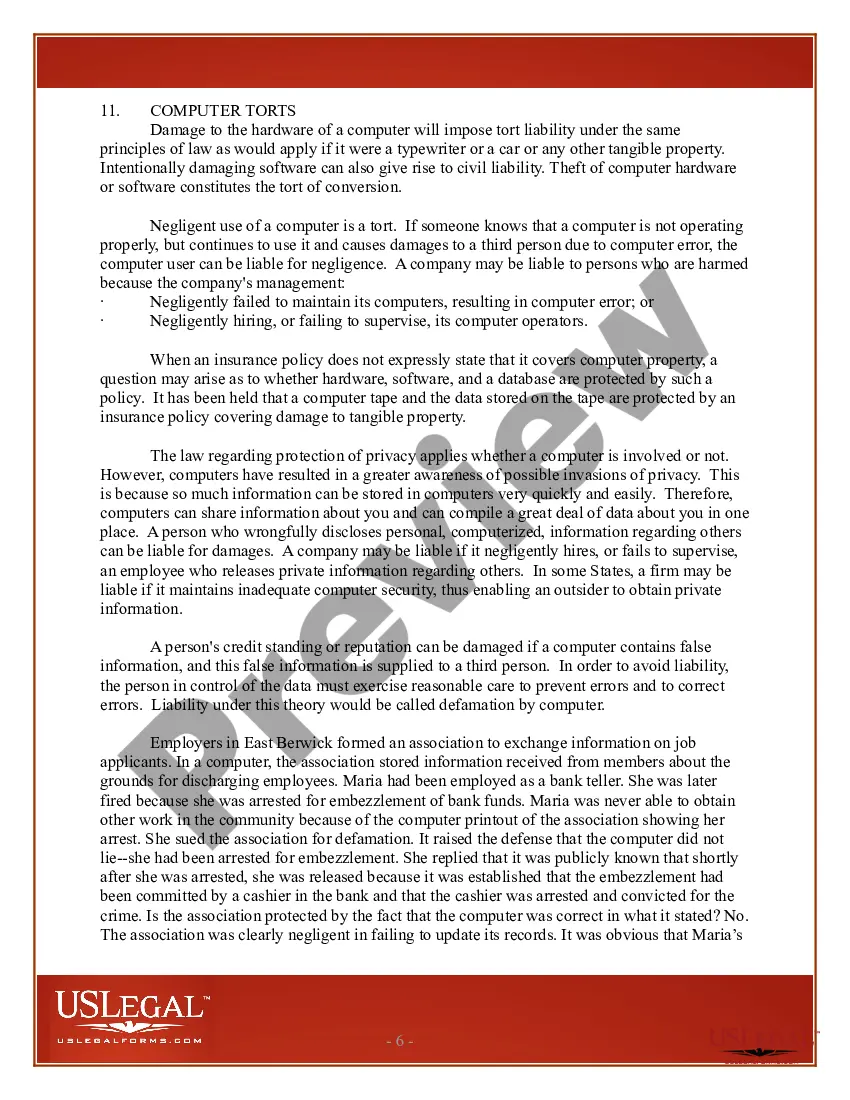
7.2 This Term of Reference has been formulated around the elements of the tort of negligence, namely duty of care, breach of duty (that is, standard of care), causation and remoteness of damage.
What is the Statute of Limitations for a Texas Government Tort Claim? Most government tort claims have a two-year statute of limitations for filing lawsuits. However, that is assuming you filed a timely notice of your claim with the correct government entity.
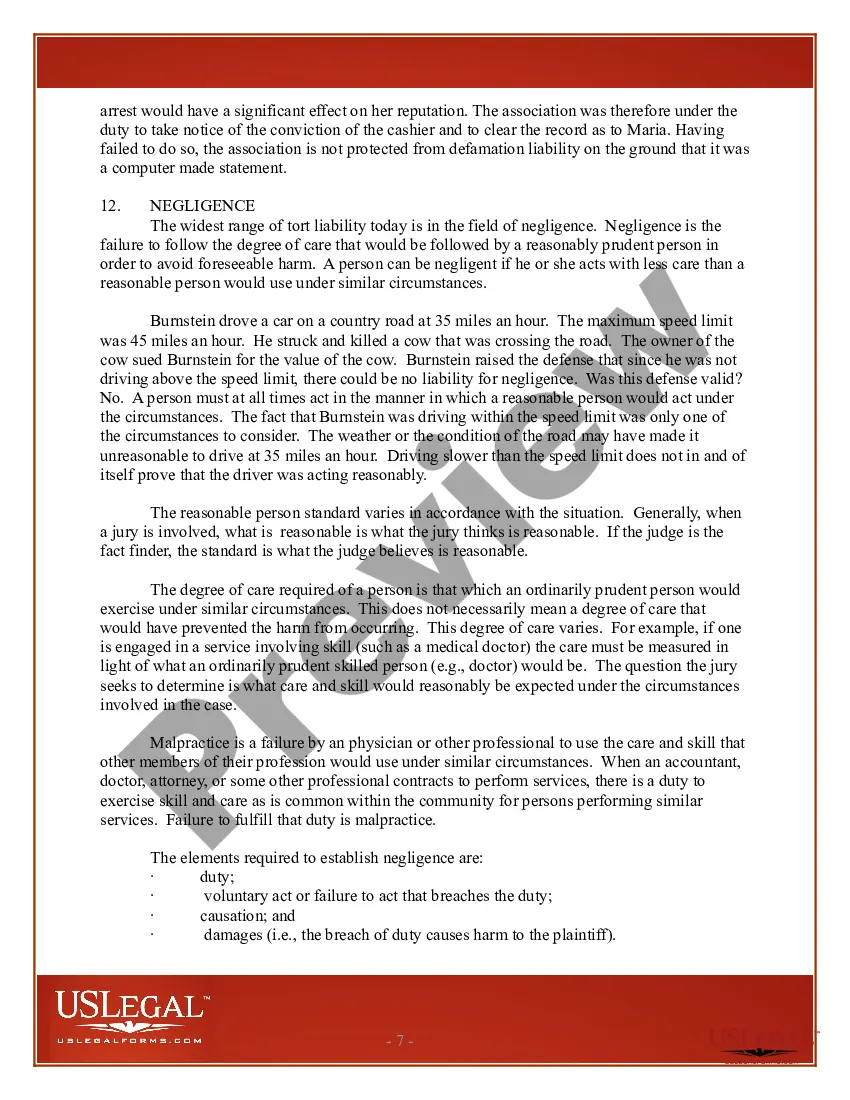
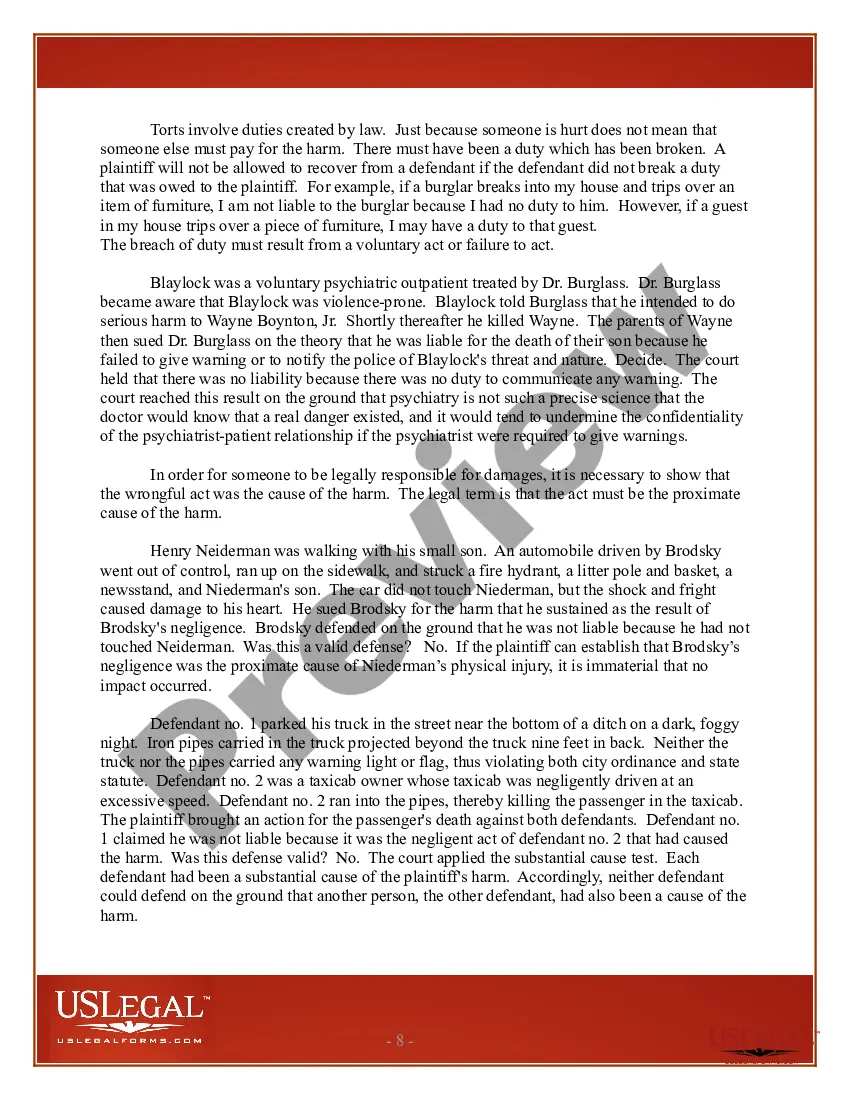
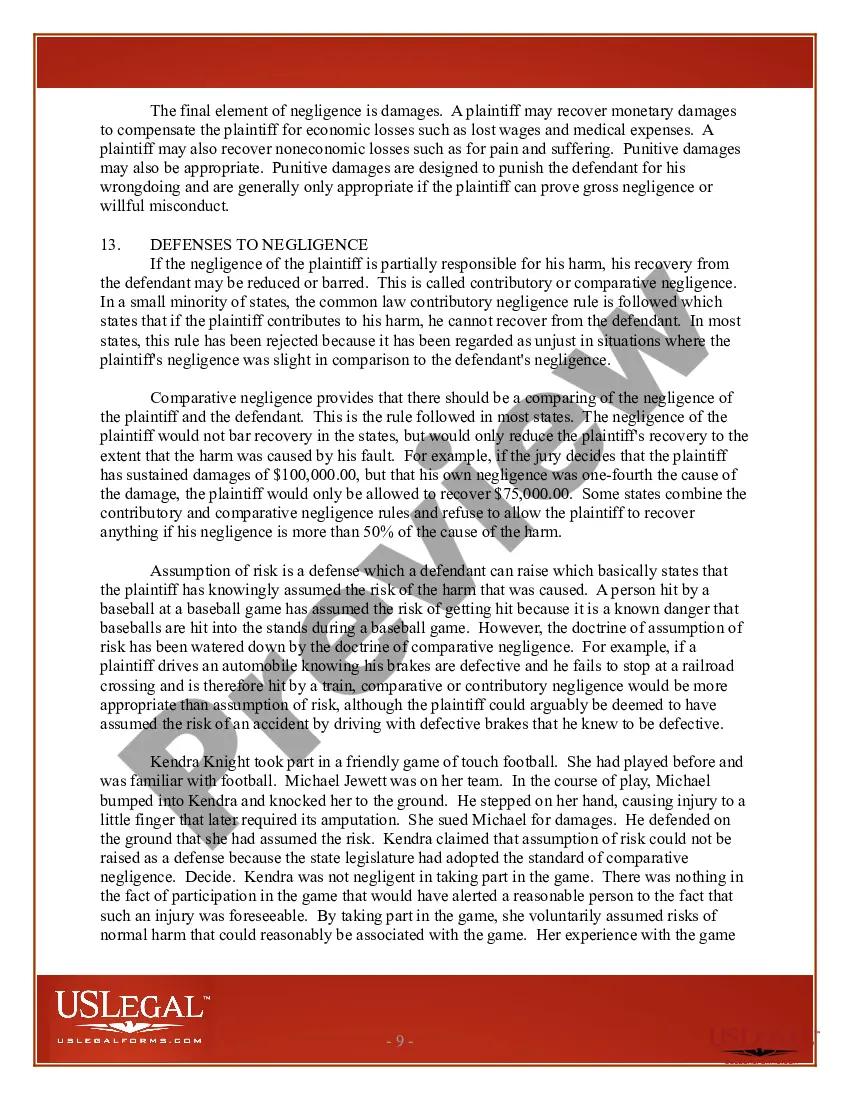
The Elements Of Negligence Duty. The plaintiff must show that the defendant owed her a legal duty of care under the circumstances. Breach. This describes the situation when the defendant failed to meet their duty of care by acting or failing to act in the required way. Causation. Damages.
The tort liability of teacher qua teacher encompasses a rather narrow ambit and is largely restricted to cases in which it is alleged that the right of the teacher to enforce discipline has been abused and that the teacher is therefore liable in damages for the commission of an intentional tort.
The following five elements may typically be required to prove negligence: The existence of a legal duty that the defendant owed the plaintiff. Defendant's breach of that duty. Harm to the plaintiff. Defendant's actions are the proximate cause of harm to the plaintiff.
So you should say something like: “In order to sue B in negligence for compensation for injury to his leg, A will have to show that: (1) B owed him a duty of care; (2) B breached that duty of care; (3) B's breach caused A to suffer the leg injury for which he wants compensation; and (4) that loss is actionable (that is ...
Most civil lawsuits for injuries allege the wrongdoer was negligent. To win in a negligence lawsuit, the victim must establish 4 elements: (1) the wrongdoer owed a duty to the victim, (2) the wrongdoer breached the duty, (3) the breach caused the injury (4) the victim suffered damages.
If not, use the three-stage Caparo test (foreseeability of harm, proximity between the parties and whether it is fair, just and reasonable to impose a duty of care). HOW does it relate to negligence?
The amount you can sue a school for negligence will depend on various factors, including the extent of your child's injuries, the costs of medical treatment and rehabilitation, any emotional trauma or pain and suffering experienced by your child, and any other damages incurred as a result of the negligence.
It is important to note that public schools may not be sued for simple negligence but must be sued for willful or intentional negligence, and the claim must be based on something illegal, such as discrimination.
