Tort Negligence Liability For Psychiatric Damage In Fairfax
Description

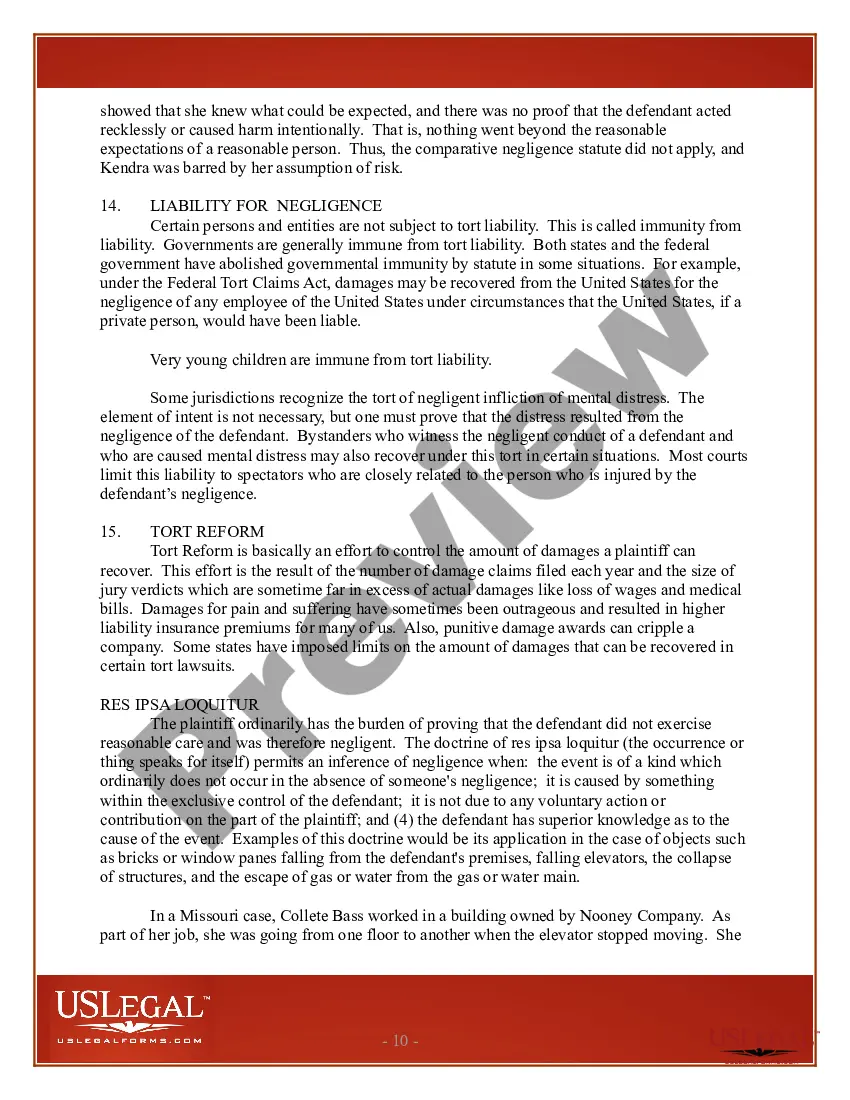



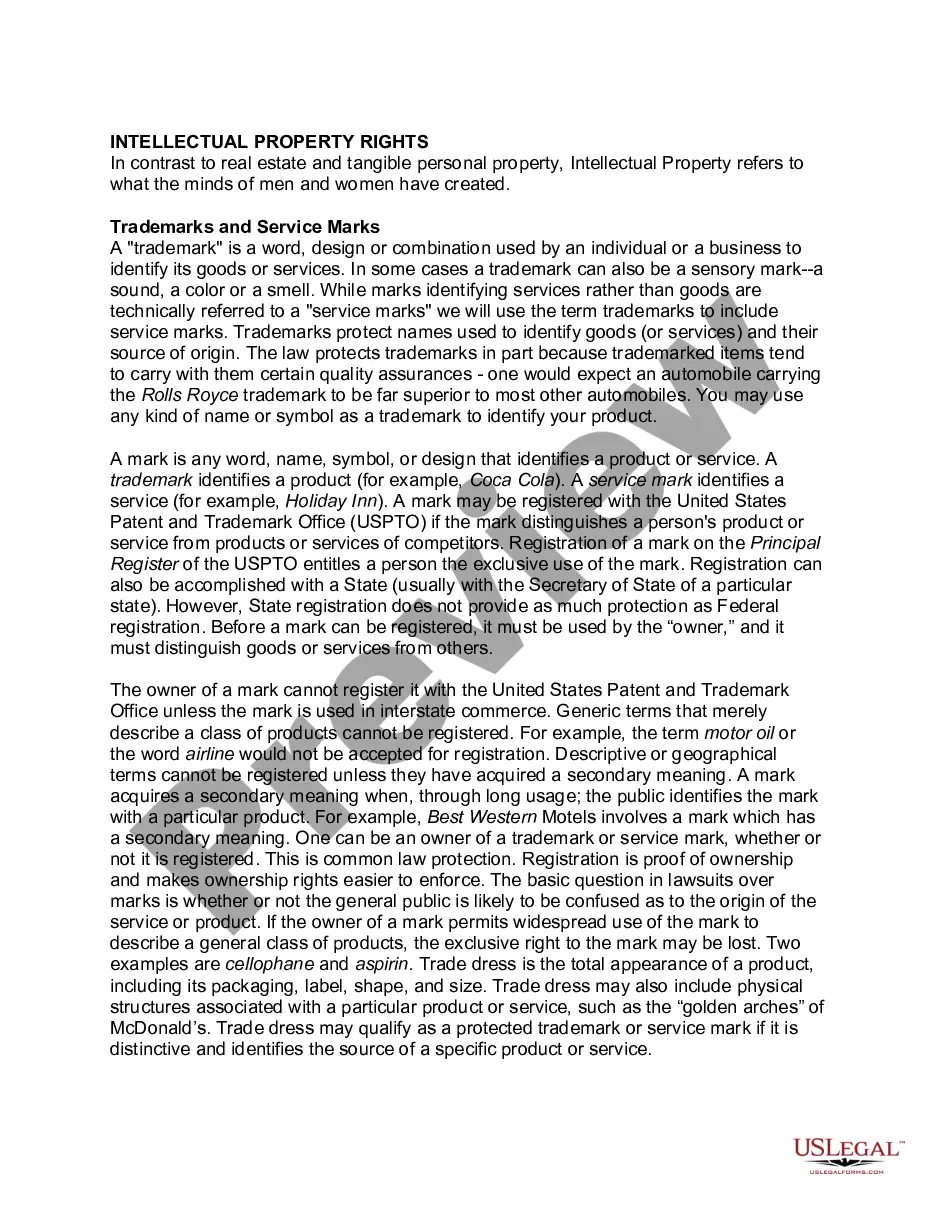
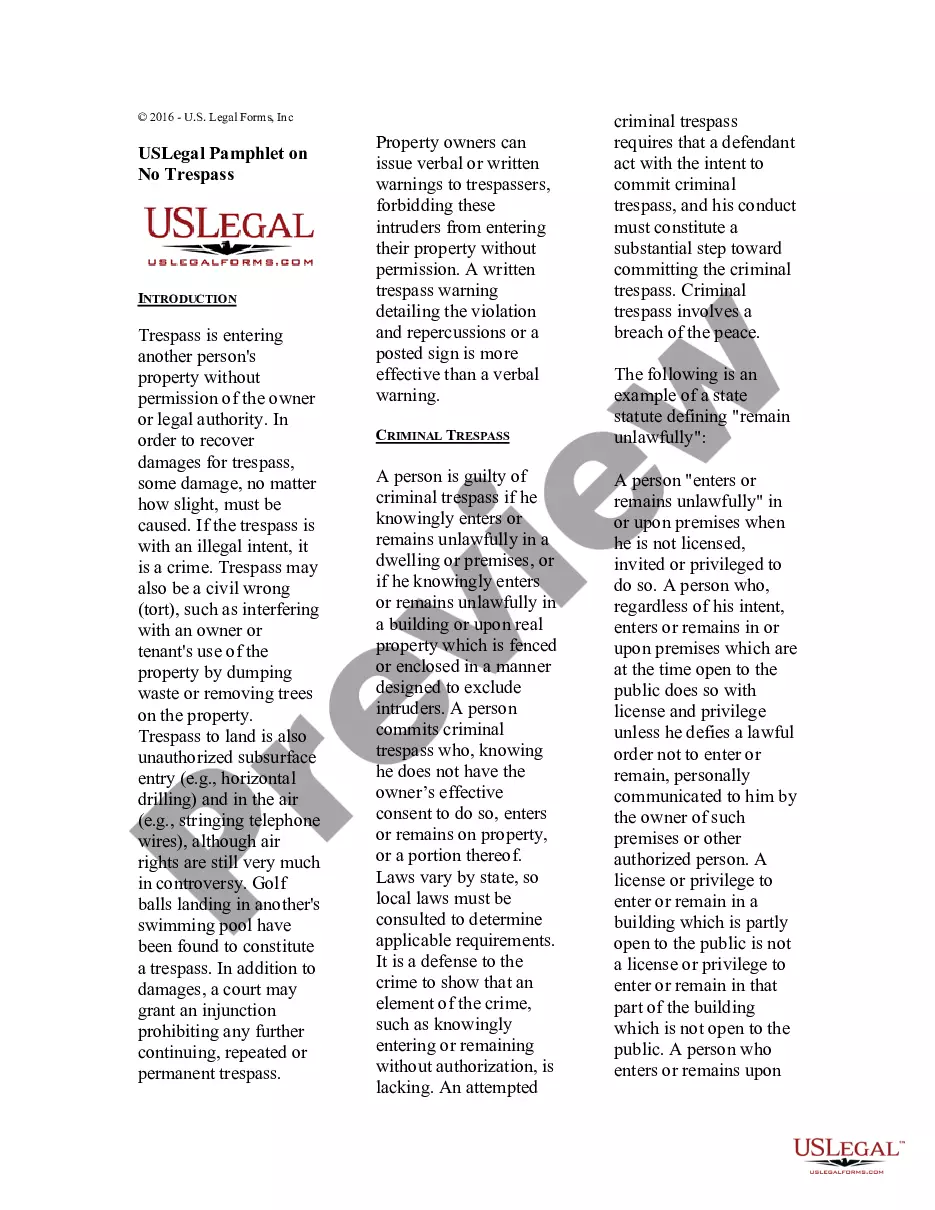
Get your form ready online
Our built-in tools help you complete, sign, share, and store your documents in one place.
Make edits, fill in missing information, and update formatting in US Legal Forms—just like you would in MS Word.
Download a copy, print it, send it by email, or mail it via USPS—whatever works best for your next step.
Sign and collect signatures with our SignNow integration. Send to multiple recipients, set reminders, and more. Go Premium to unlock E-Sign.
If this form requires notarization, complete it online through a secure video call—no need to meet a notary in person or wait for an appointment.
We protect your documents and personal data by following strict security and privacy standards.

Make edits, fill in missing information, and update formatting in US Legal Forms—just like you would in MS Word.

Download a copy, print it, send it by email, or mail it via USPS—whatever works best for your next step.

Sign and collect signatures with our SignNow integration. Send to multiple recipients, set reminders, and more. Go Premium to unlock E-Sign.

If this form requires notarization, complete it online through a secure video call—no need to meet a notary in person or wait for an appointment.

We protect your documents and personal data by following strict security and privacy standards.
Looking for another form?



Form popularity
FAQ
The Federal Tort Claims Act (FTCA) allows veterans, survivors, or their estate to pursue a medical malpractice claim against VA. Alternatively, 38 U.S.C. § 1151 allows veterans to apply for VA disability compensation for injuries incurred through negligent care at VA.
The Administrative Claims Process Before filing a lawsuit against the federal government under the Federal Tort Claims Act, an injured party must first file an administrative claim. Once the administrative claims process begins, the government has 6 months to respond.
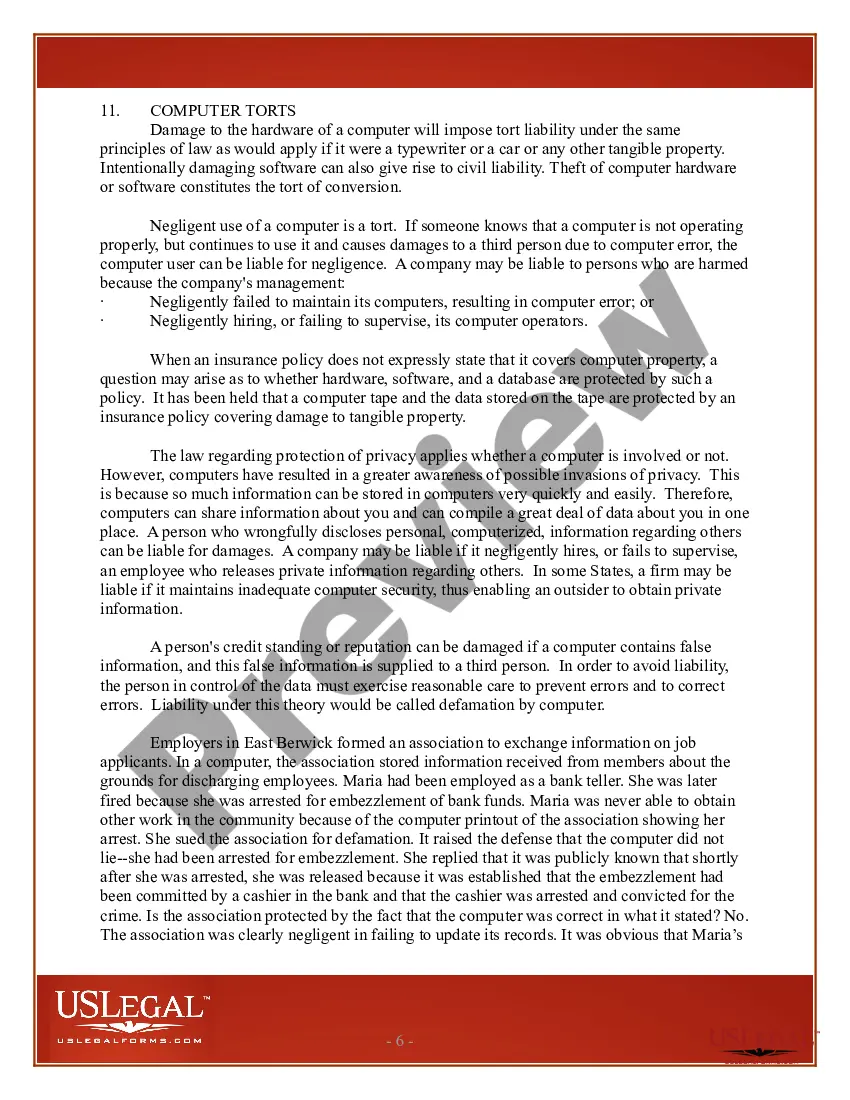
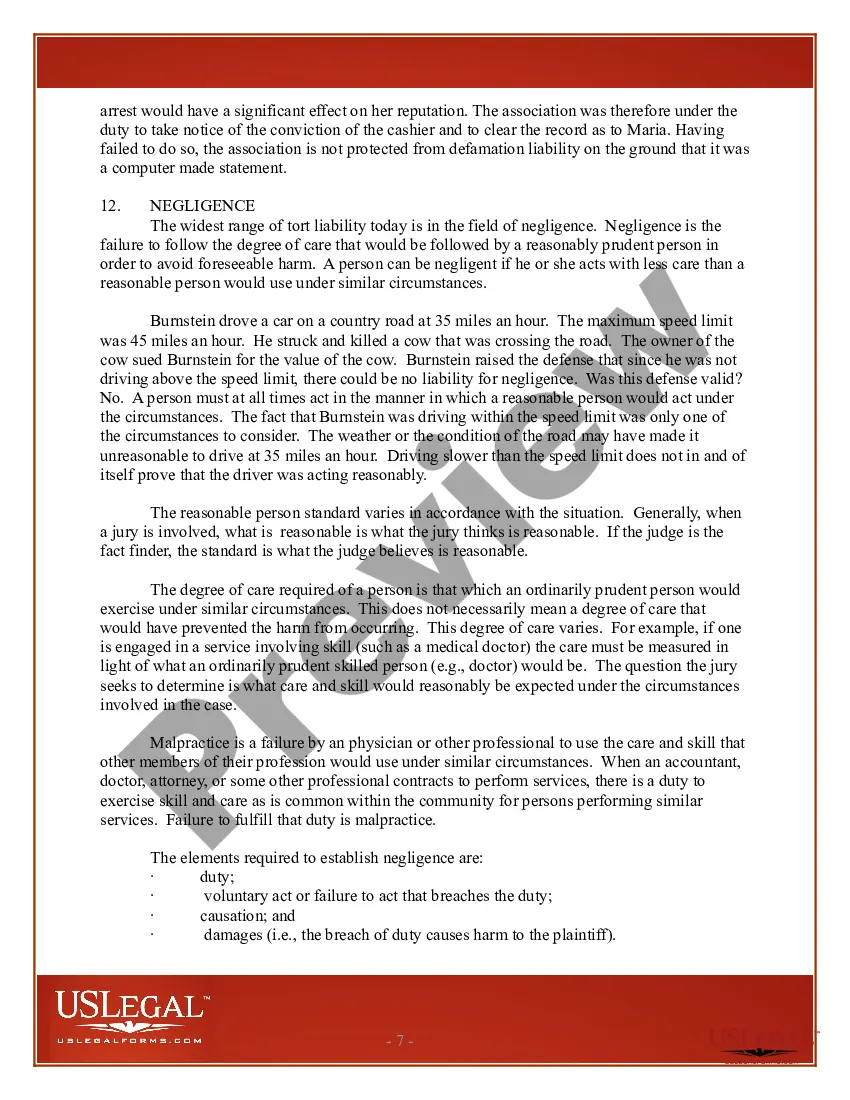
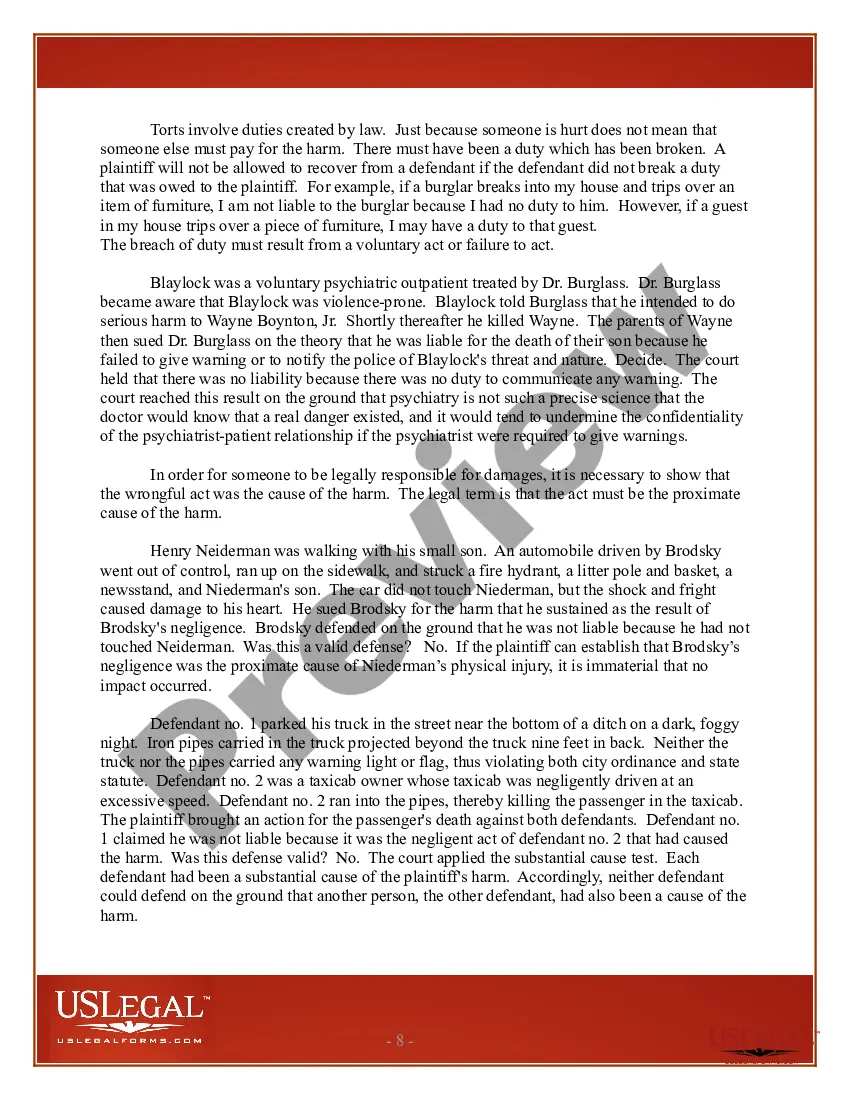
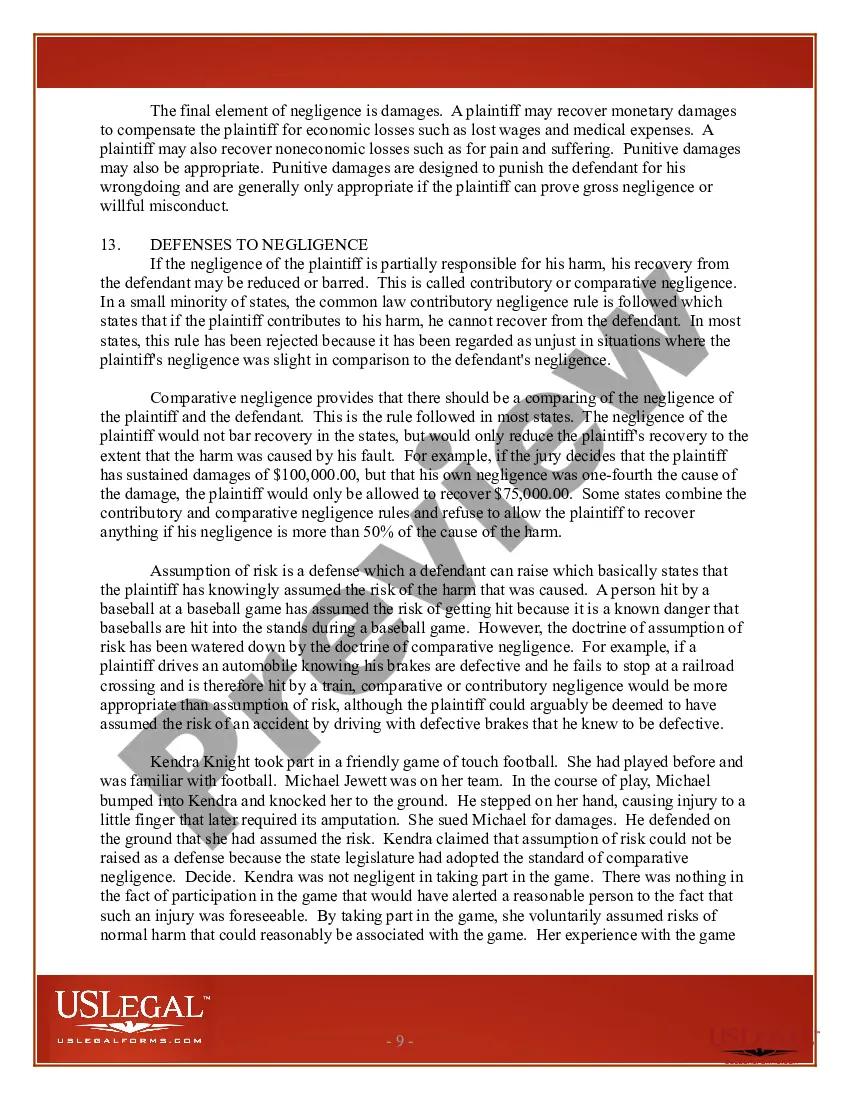
In claims of negligently inflicted psychiatric illness, the plaintiff's reaction to a traumatic event is usually measured against a standard of normal susceptibility and disposition. This measurement is used to determine the question of whether the defendant should have reasonably foreseen the plaintiff's injury.
Thankfully, in order to prove negligence and claim damages, a claimant has to prove a number of elements to the court. These are: the defendant owed them a duty of care. the defendant breached that duty of care, and.
The distinction between the liability of a lunatic or insane person in civil actions for torts committed by him, and in crimi- nal prosecutions, is well defined, and it has always been held, and upon sound reason, that though not punishable criminally, he is liable to a civil action for any tort he may commit."
A tort claim against the United States, based on a negligent or wrongful act or omission of an employee of the Department of Veterans Affairs acting within the scope of his or her employment, may be filed by the injured person or his or her legal representative using Standard Form 95, Claim for Damage, Injury, or Death ...
Claims should be filed on a Standard Form 95 (Claim for Damage, Injury or Death). A copy of Standard Form 95 can be found here. Instructions are on the back of the claim form. If you are unsure where to file a claim, you may mail the completed Standard Form 95 to U.S. Army Claims Service.
In order to state a valid claim, the claimant must demonstrate that (1) he was injured or his property was damaged by a federal government employee; (2) the employee was acting within the scope of his official duties; (3) the employee was acting negligently or wrongfully; and (4) the negligent or wrongful act ...
First, there exists a garden variety emotional distress claim where you assert the claim but do not need to find and obtain a medical opinion by a therapist or psychiatrist. Generally, these claims are worth $30,000-$50,000.
The tort of intentional infliction of mental suffering goes by many names - intentional infliction of emotional harm, intentional infliction of emotional distress and so forth. Basically, this tort involves intentionally causing severe emotional harm to another individual.
