Types Of Torts In Australia In Georgia
Description





Get your form ready online
Our built-in tools help you complete, sign, share, and store your documents in one place.
Make edits, fill in missing information, and update formatting in US Legal Forms—just like you would in MS Word.
Download a copy, print it, send it by email, or mail it via USPS—whatever works best for your next step.
Sign and collect signatures with our SignNow integration. Send to multiple recipients, set reminders, and more. Go Premium to unlock E-Sign.
If this form requires notarization, complete it online through a secure video call—no need to meet a notary in person or wait for an appointment.
We protect your documents and personal data by following strict security and privacy standards.

Make edits, fill in missing information, and update formatting in US Legal Forms—just like you would in MS Word.

Download a copy, print it, send it by email, or mail it via USPS—whatever works best for your next step.

Sign and collect signatures with our SignNow integration. Send to multiple recipients, set reminders, and more. Go Premium to unlock E-Sign.

If this form requires notarization, complete it online through a secure video call—no need to meet a notary in person or wait for an appointment.

We protect your documents and personal data by following strict security and privacy standards.
Looking for another form?
Form popularity
FAQ
Talk to Tort. That's it. Simple! Get to Level 1,000, then visit the Castle on the Sea to talk to Tort.
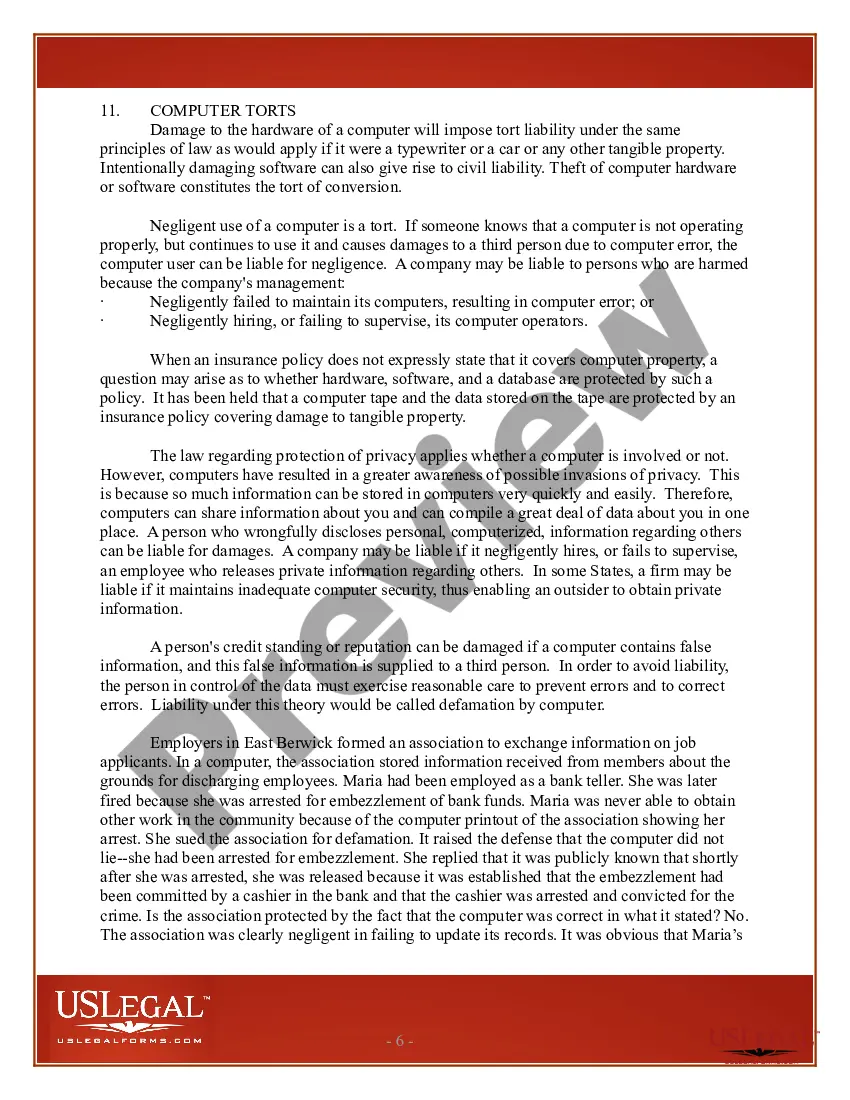
A tort is an act or omission that causes legally cognizable harm to persons or property. Tort law, in turn, is the body of rules concerned with remedying harms caused by a person's wrongful or injurious actions.
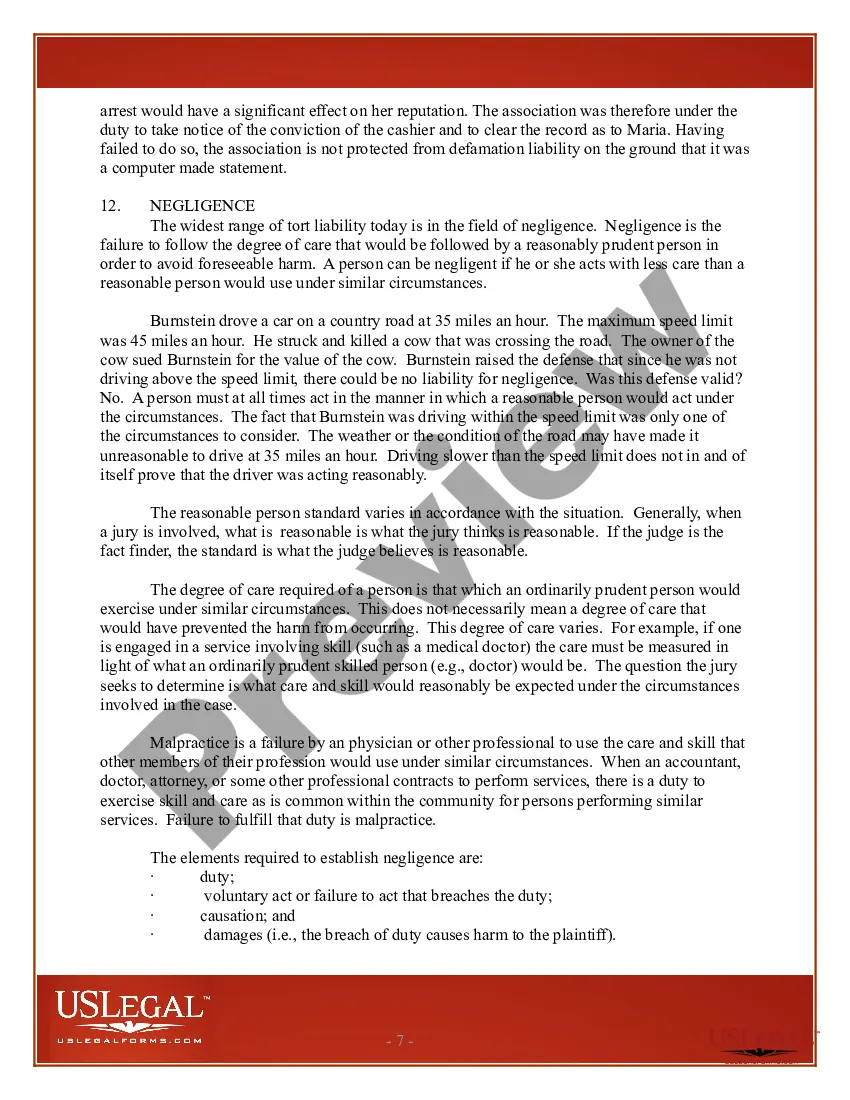
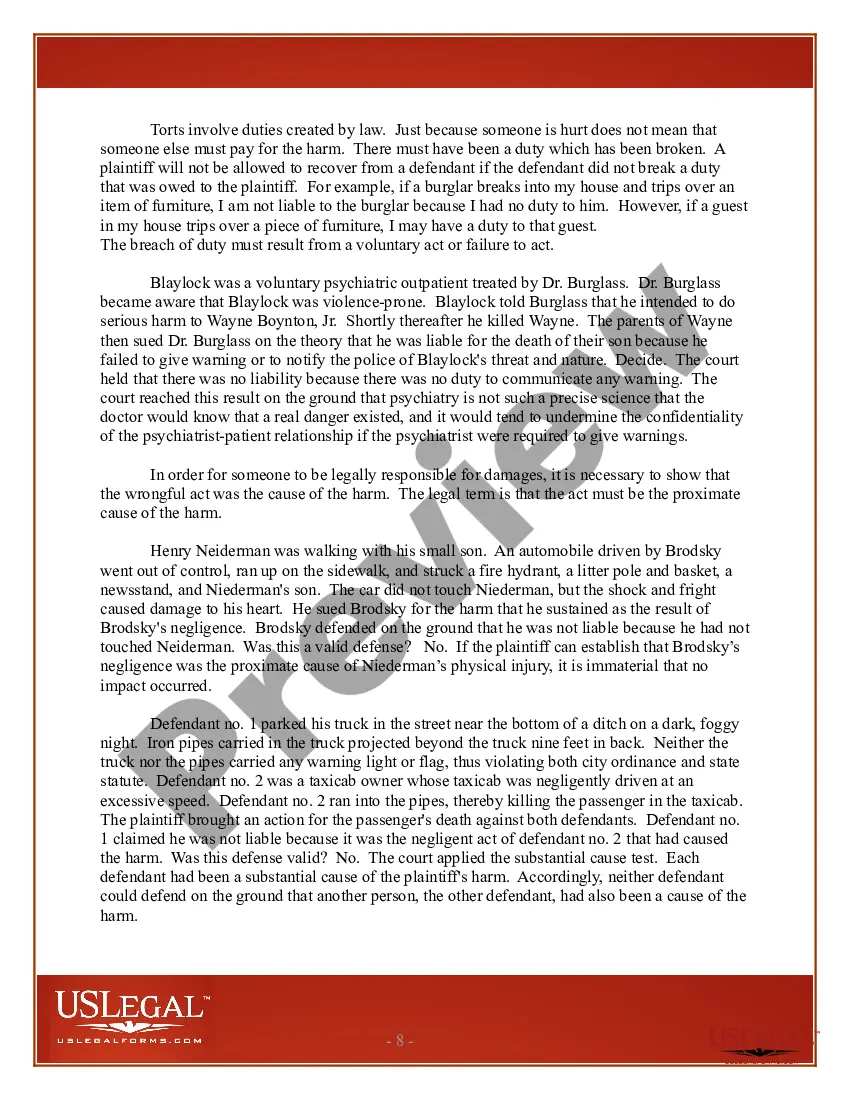
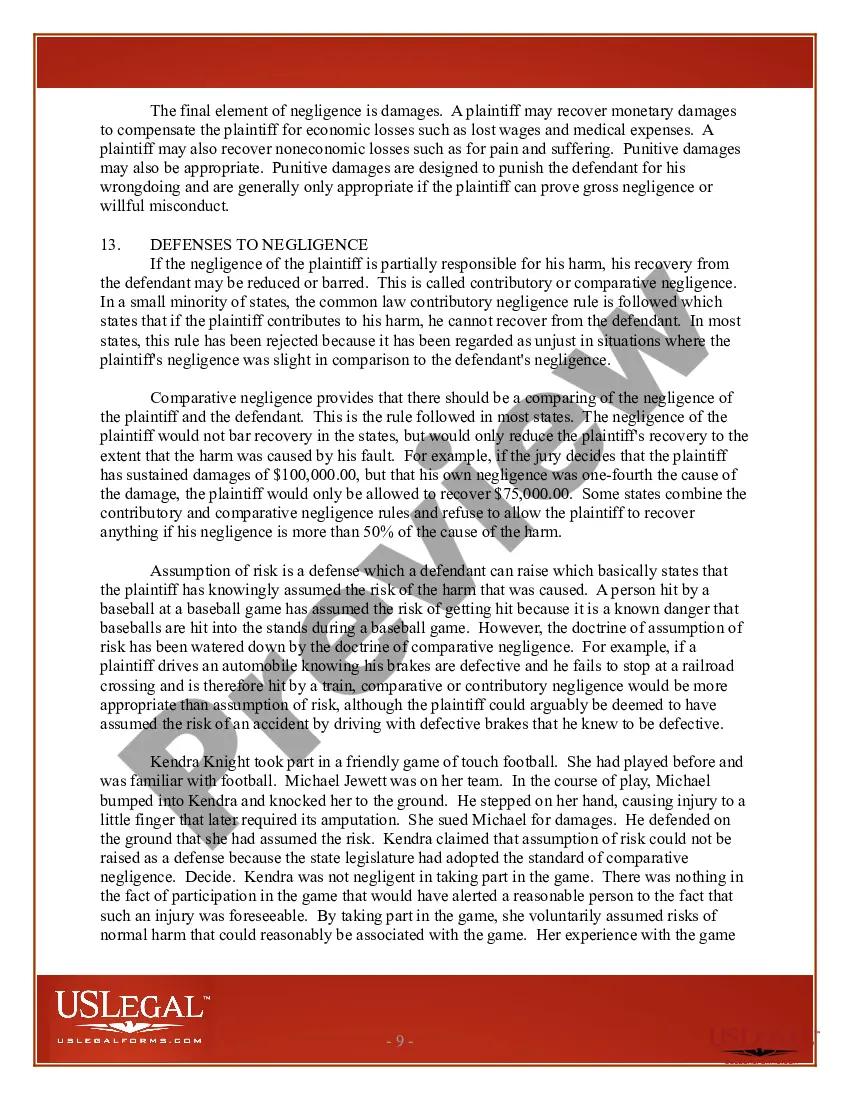
The 4 elements to every successful tort case are: duty, breach of duty, causation and injury. For a tort claim to be well-founded, there must have been a breach of duty made by the defendant against the plaintiff, which resulted in an injury.
Four of them are personal: assault, battery, intentional infliction of emotional distress, and false imprisonment. The other three are trespass to chattels, trespass to property, and conversion.
The Four Elements of a Tort The accused had a duty, in most personal injury cases, to act in a way that did not cause you to become injured. The accused committed a breach of that duty. An injury occurred to you. The breach of duty was the proximate cause of your injury.
A Georgia statute defines a “tort” as “the unlawful violation of a private legal right other than a mere breach of contract, express or implied,” and states that “a tort may also be the violation of a public duty if, as a result of the violation, some special damage accrues to the individual.”
Required Elements of a Georgia Tort Claims Act (GTCA) Notification The name of the government agency. The negligence that forms the basis of your case. The date and time of the accident or incident. The location where the accident occurred. The nature of the resulting loss. The amount of your compensation request.
The Four Elements of a Tort The accused had a duty, in most personal injury cases, to act in a way that did not cause you to become injured. The accused committed a breach of that duty. An injury occurred to you. The breach of duty was the proximate cause of your injury.
Tort law is considered to be a form of restorative justice since it seeks to remedy losses or injury by providing monetary compensation. There are three main categories of tort law, including suits alleging negligence, intentional harm, and strict liability.
