Types Of Torts In Canada In Pima
Description

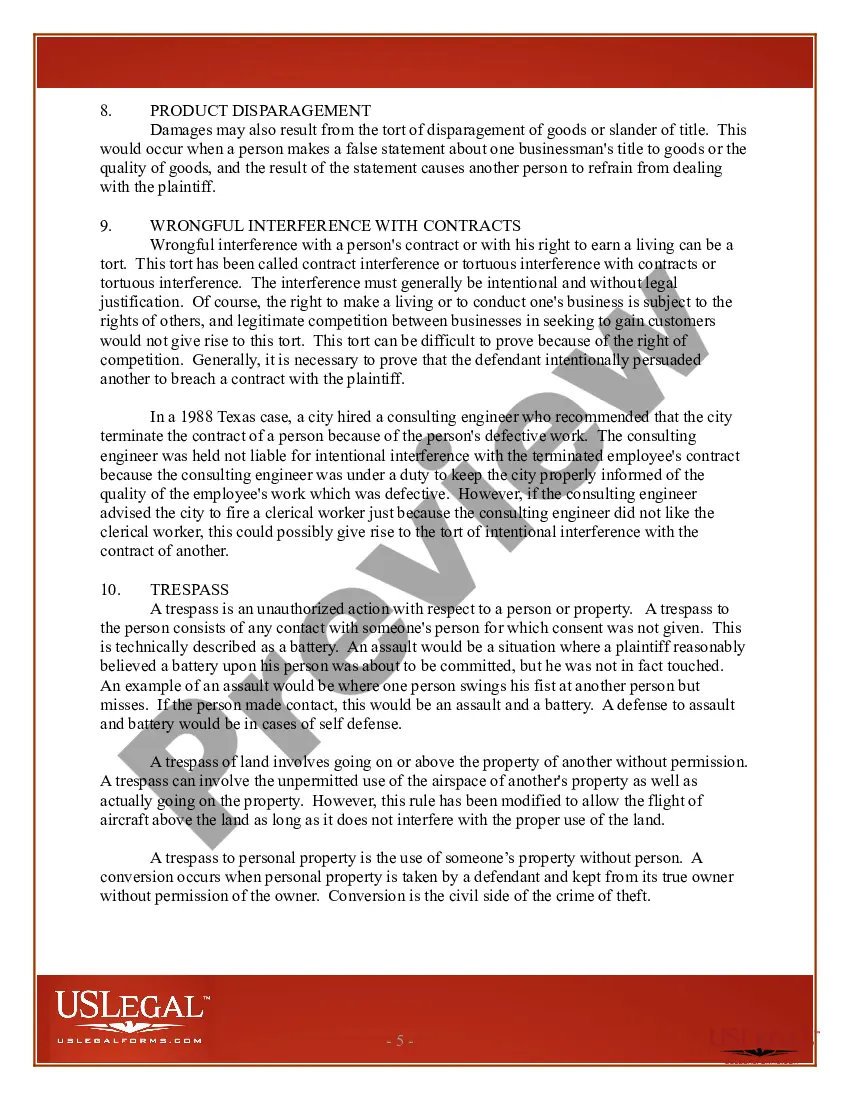
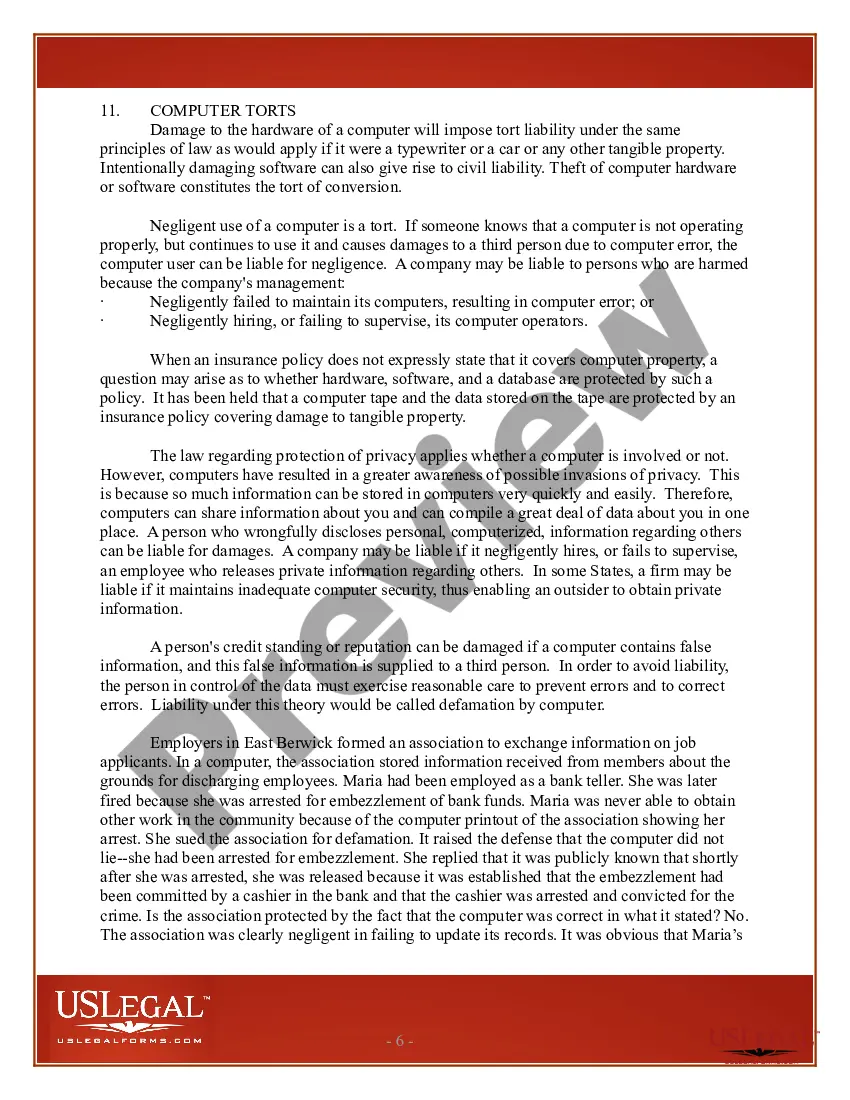
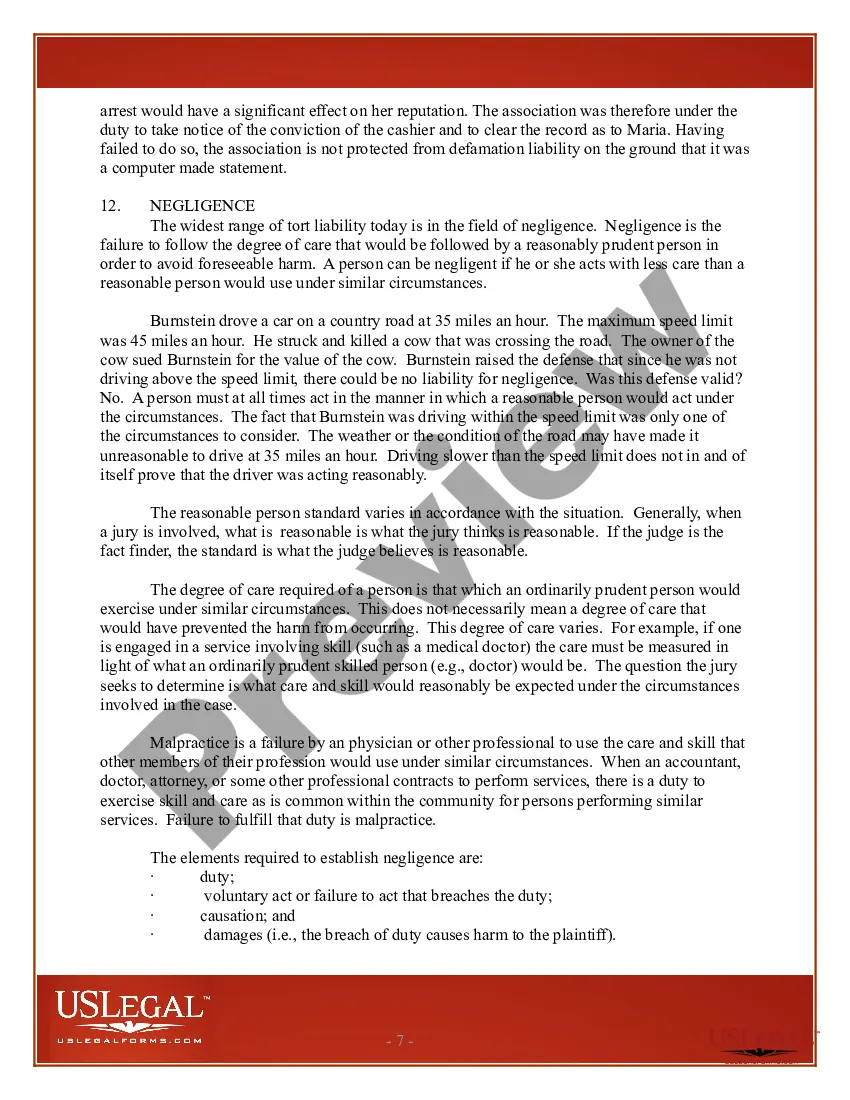
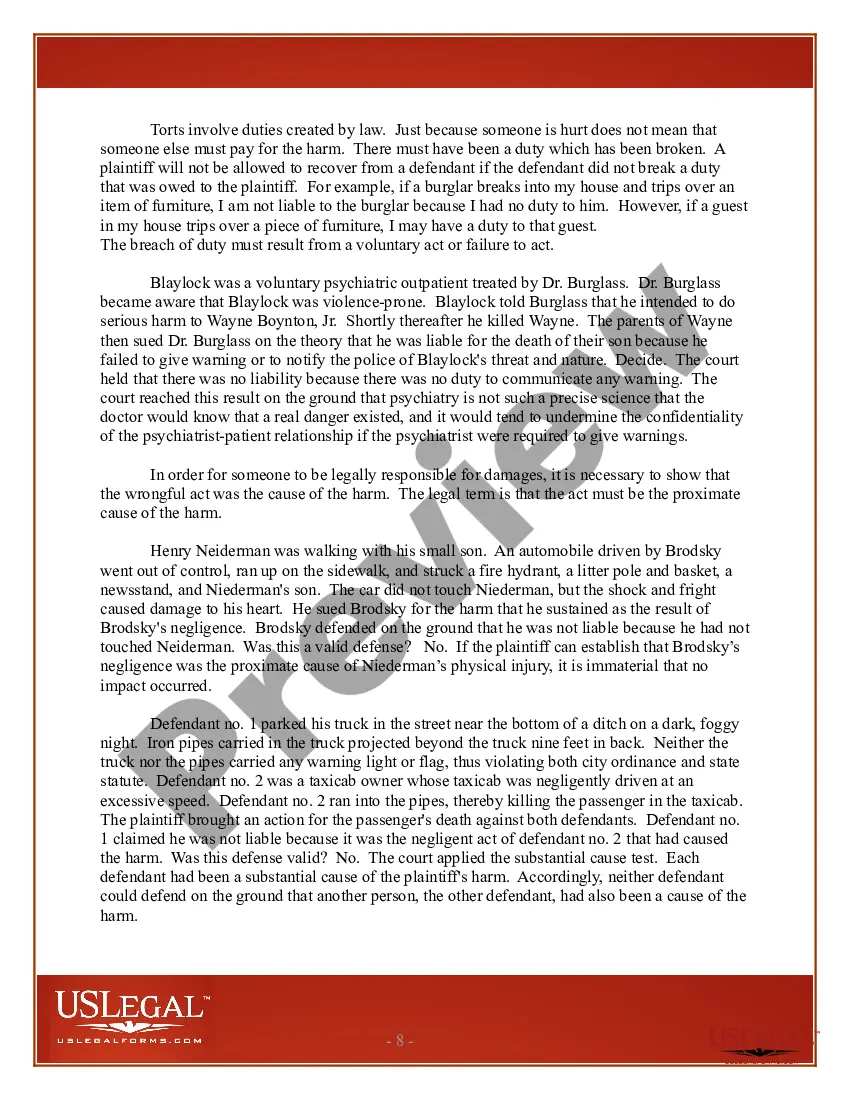



Get your form ready online
Our built-in tools help you complete, sign, share, and store your documents in one place.
Make edits, fill in missing information, and update formatting in US Legal Forms—just like you would in MS Word.
Download a copy, print it, send it by email, or mail it via USPS—whatever works best for your next step.
Sign and collect signatures with our SignNow integration. Send to multiple recipients, set reminders, and more. Go Premium to unlock E-Sign.
If this form requires notarization, complete it online through a secure video call—no need to meet a notary in person or wait for an appointment.
We protect your documents and personal data by following strict security and privacy standards.

Make edits, fill in missing information, and update formatting in US Legal Forms—just like you would in MS Word.

Download a copy, print it, send it by email, or mail it via USPS—whatever works best for your next step.

Sign and collect signatures with our SignNow integration. Send to multiple recipients, set reminders, and more. Go Premium to unlock E-Sign.

If this form requires notarization, complete it online through a secure video call—no need to meet a notary in person or wait for an appointment.

We protect your documents and personal data by following strict security and privacy standards.
Looking for another form?
Form popularity
FAQ
People who commit an intentional tort may plead that they had a valid defence, such as the victim's consent; self-defence; defence of property; necessity; or lawful authority.
There are 3 main defences from intentional tort claims. If any of these factors are found, the defendant will not be found liable. They are consent, self-defence, and legal authority.
While many people think of assault as involving physical contact, the tort of assault actually deals with instances where there is no physical contact. Rather, there must be an intent to cause a reasonable apprehension of immediate or offensive contact.
What is Tort Law in Canada? Torts are roughly equivalent to extra-contractual civil liability in civil law . While common law and civil law often have practical similarities, there are significant theoretical differences. Torts can be understood as legal wrongs that result in civil liability.
General Defences in Tort Law General defences can be explained as a special set of circumstances, due to the existence of which, a tortfeasor can be absolved from liability even though they fulfil all the elements of the act. In simpler words, they are an 'excuse' for committing a tort.
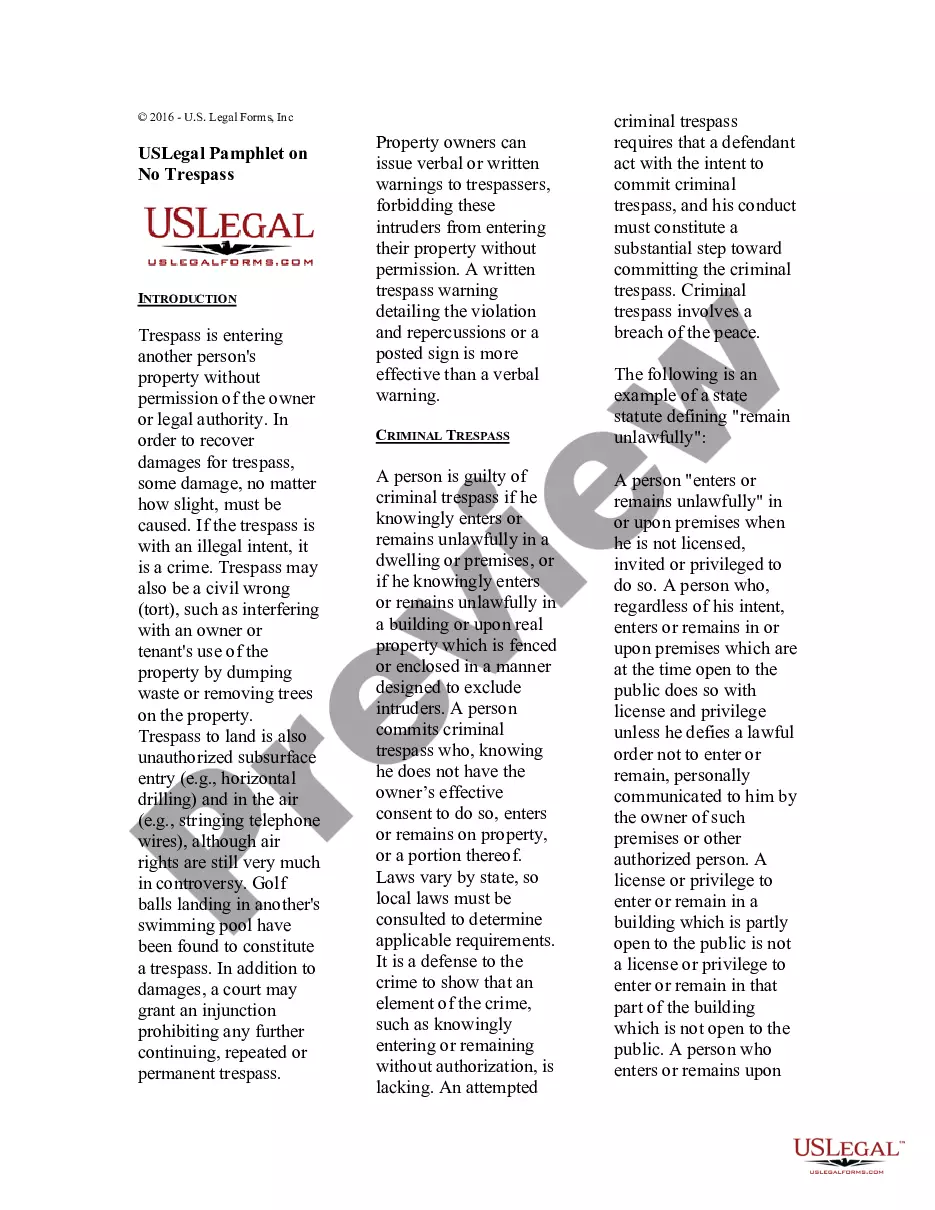
As a tort, trespass to property is very broad and involves presence upon and interference with the land of another as well, technically, could arise at any time an uninvited person enters upon the lands of another, or when invited, oversteps or uses the lands of another in an unauthorized way.
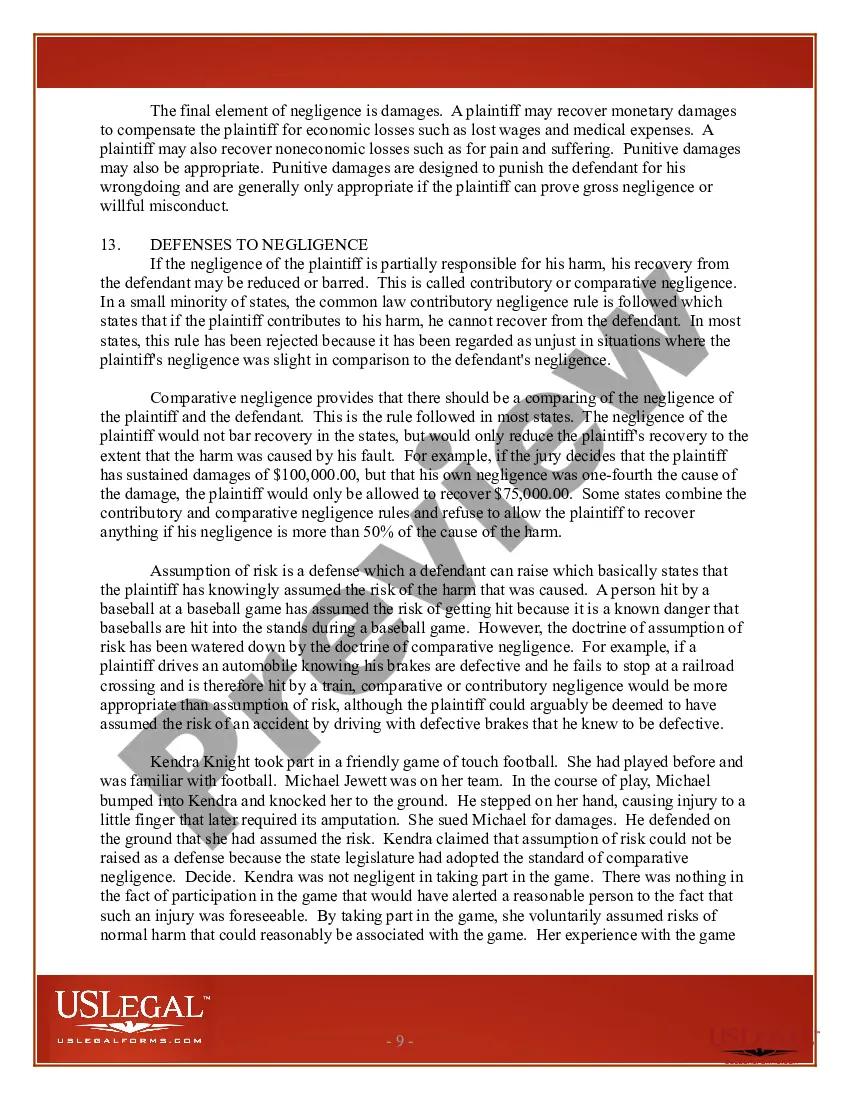
There are a number of defenses which a defendant can use in a negligence claim. Specifically, a defendant being sued for negligence has two main defenses: assumption of risk by the plaintiff; and (2) comparative negligence.
The most common defenses against the intentional torts are consent and self-defense. Additional defenses on behalf of others and defense of property are also sometimes available, as are the defenses of public and private necessity.
Tort law in British Columbia covers a wide range of issues, including negligence, intentional torts, strict liability, and defamation. It provides a legal framework for individuals to seek compensation for harm caused by the actions of others. In British Columbia, tort law is enforced through the court system.
There are three states of mind which a student needs to be aware of in tort law. These are malice, intention and negligence. Where a tort does not require any of these it is said to be a tort of strict liability.