Discrimination Laws For Illinois In Palm Beach
Description




Get your form ready online
Our built-in tools help you complete, sign, share, and store your documents in one place.
Make edits, fill in missing information, and update formatting in US Legal Forms—just like you would in MS Word.
Download a copy, print it, send it by email, or mail it via USPS—whatever works best for your next step.
Sign and collect signatures with our SignNow integration. Send to multiple recipients, set reminders, and more. Go Premium to unlock E-Sign.
If this form requires notarization, complete it online through a secure video call—no need to meet a notary in person or wait for an appointment.
We protect your documents and personal data by following strict security and privacy standards.
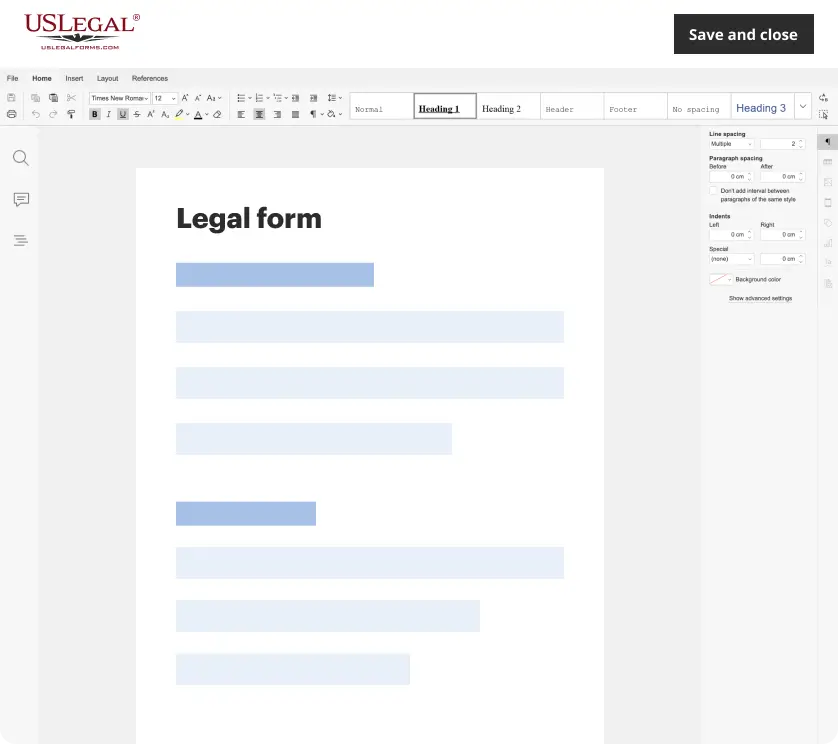
Make edits, fill in missing information, and update formatting in US Legal Forms—just like you would in MS Word.
Download a copy, print it, send it by email, or mail it via USPS—whatever works best for your next step.
Sign and collect signatures with our SignNow integration. Send to multiple recipients, set reminders, and more. Go Premium to unlock E-Sign.
If this form requires notarization, complete it online through a secure video call—no need to meet a notary in person or wait for an appointment.
We protect your documents and personal data by following strict security and privacy standards.
Looking for another form?
Form popularity
FAQ
You have the option to file a discrimination claim in state or federal court. Under state law, punitive damages (damages intended to punish employer) cannot exceed three times the amount awarded for actual (compensatory) damages.
It will not only benefit you, but your co-workers as well because it will likely make your workplace safer by creating a better environment for all. When you sue, you can also obtain a legal remedy for the discrimination you have faced. Employers often offer a significant sum in these cases.
The Illinois Human Rights Act prohibits discrimination, harassment, sexual harassment, and retaliation against individuals in connection with employment, real estate transactions, access to credit, public accommodations, and education.
Examples of Employment Discrimination Failure to hire. Harassment. Quid pro quo: Conditioning employment or promotion on sexual favors. Hostile Work Environment: Continuous actions and comments based on protected characteristics that create an uncomfortable and hostile workplace.
Age. Age discrimination involves treating someone (an applicant or employee) less favorably because of age. Disability. Genetic Information. Unlawful Workplace Harassment (Harassment) ... National Origin. Pregnancy. Race/Color. Religion.
Report discrimination to a local Fair Employment Practices Agency (FEPA). If the discrimination breaks both a state and federal law, the FEPA will also send your complaint to the EEOC. Use the EEOC's directory of field offices to find the FEPA near you.
Responding to unlawful discrimination speak to the person involved if it is safe to do so. speak to your manager or supervisor about what is happening. consider any policies that your workplace has about discrimination and dealing with a grievance. speak to Human Resources team, if your workplace has one.
Any employee who feels that he/she has been unfairly discriminated against or that an employer has contravened the laws may lodge a grievance in writing with their employer. The matter may thereafter be referred to the CCMA if the issue cannot be resolved at the workplace.
However, discrimination is a state of mind and, therefore, notoriously hard to prove. Sophisticated employers are well aware that discrimination is illegal. Thus, most cases are established through circumstantial evidence.
