• US Legal Forms

Recovery And Subrogation In California

State:
Multi-State
Control #:
US-000279
Format:
Word; 
Rich Text
Instant download

Description

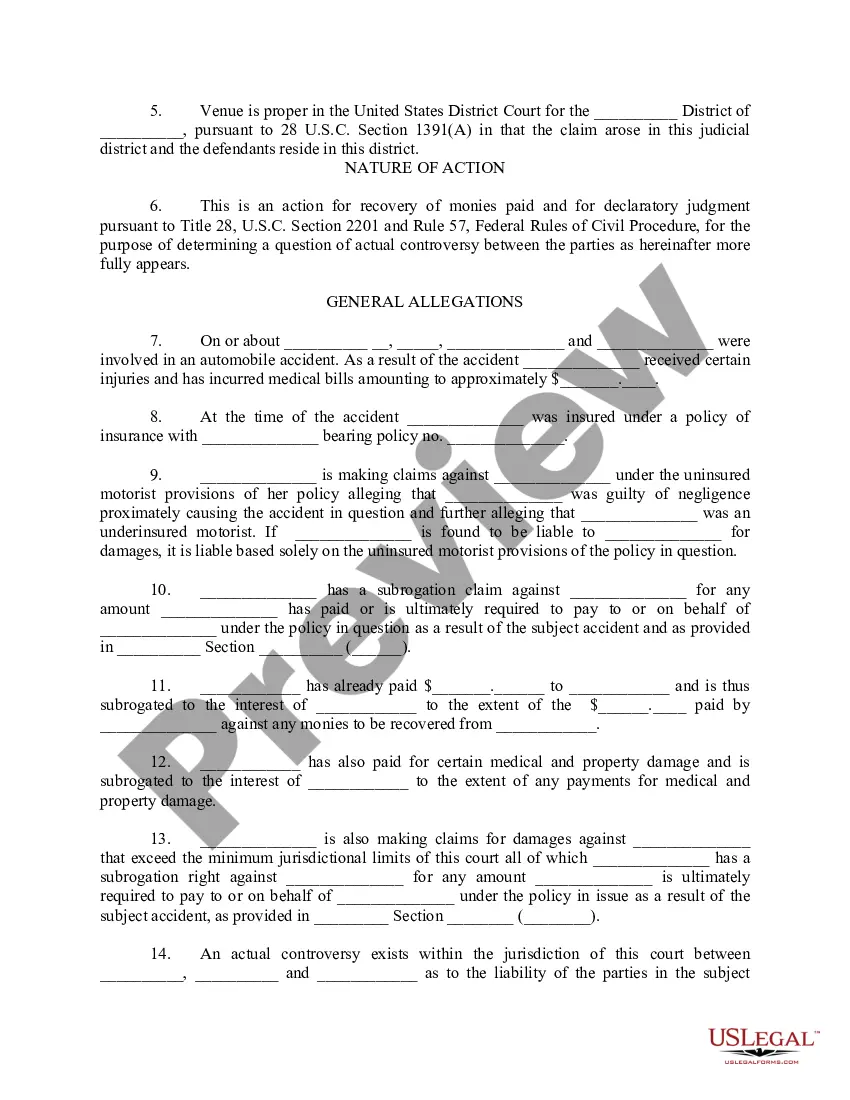
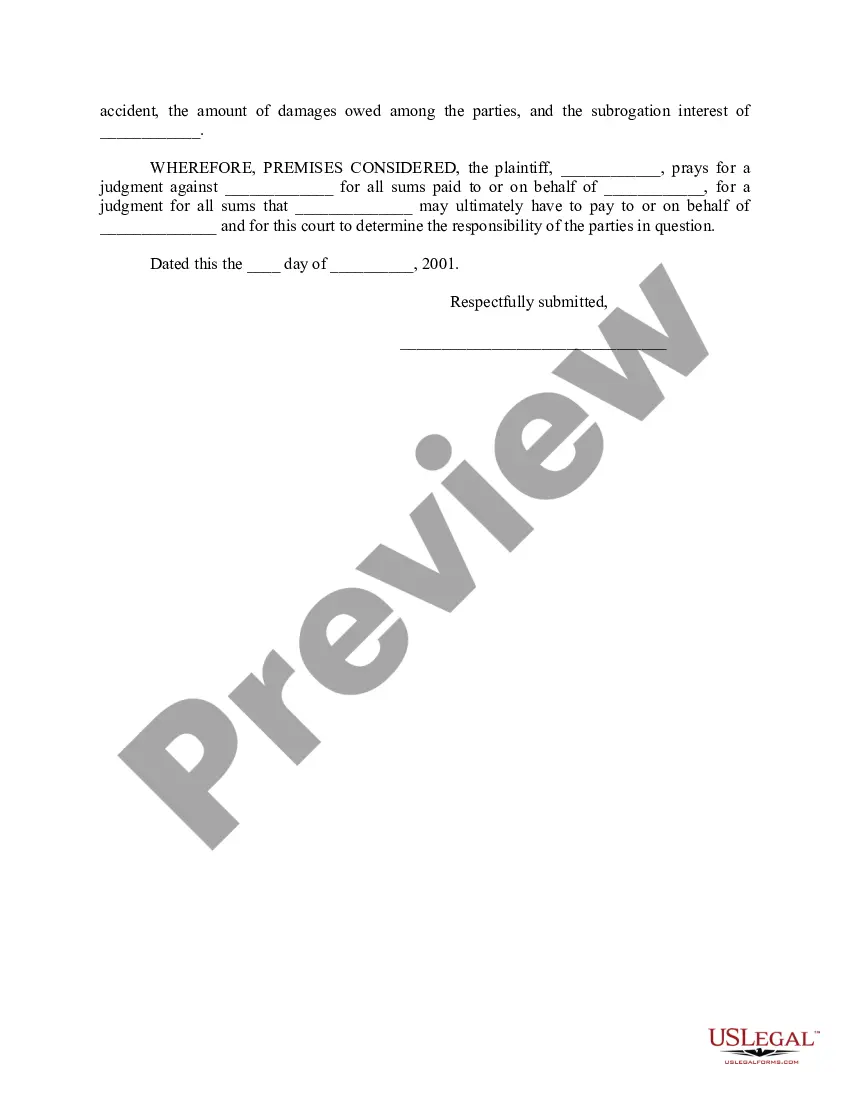
The document is a Complaint for Recovery and Declaratory Judgment, intended for use in legal proceedings concerning recovery and subrogation in California. It is designed to help plaintiffs, particularly those involved in automobile accidents, seek recourse for medical expenses and other damages recovered under an insurance policy. Key features include the identification of parties, jurisdiction and venue details, general allegations pertaining to the accident, and specific claims for subrogation that the insurer may pursue against liable defendants. The form allows for clear presentation of the amounts paid by the plaintiff and the basis for the claims, which is crucial in establishing the insurer's right to recover funds. Filling out this form requires accurate information about the parties and details of the incident and should be accompanied by any supporting documentation. The target audience—attorneys, partners, owners, associates, paralegals, and legal assistants—can leverage this form to efficiently navigate insurance claims and recovery processes in court, ensuring all procedural requirements are met. The form also provides a structure for presenting the case, fostering clarity around damages and liabilities among involved parties.
Free preview
  • Preview Complaint for Recovery of Monies Paid and for Declaratory Judgment as to Parties' Responsibility and Subrogation
  • Preview Complaint for Recovery of Monies Paid and for Declaratory Judgment as to Parties' Responsibility and Subrogation
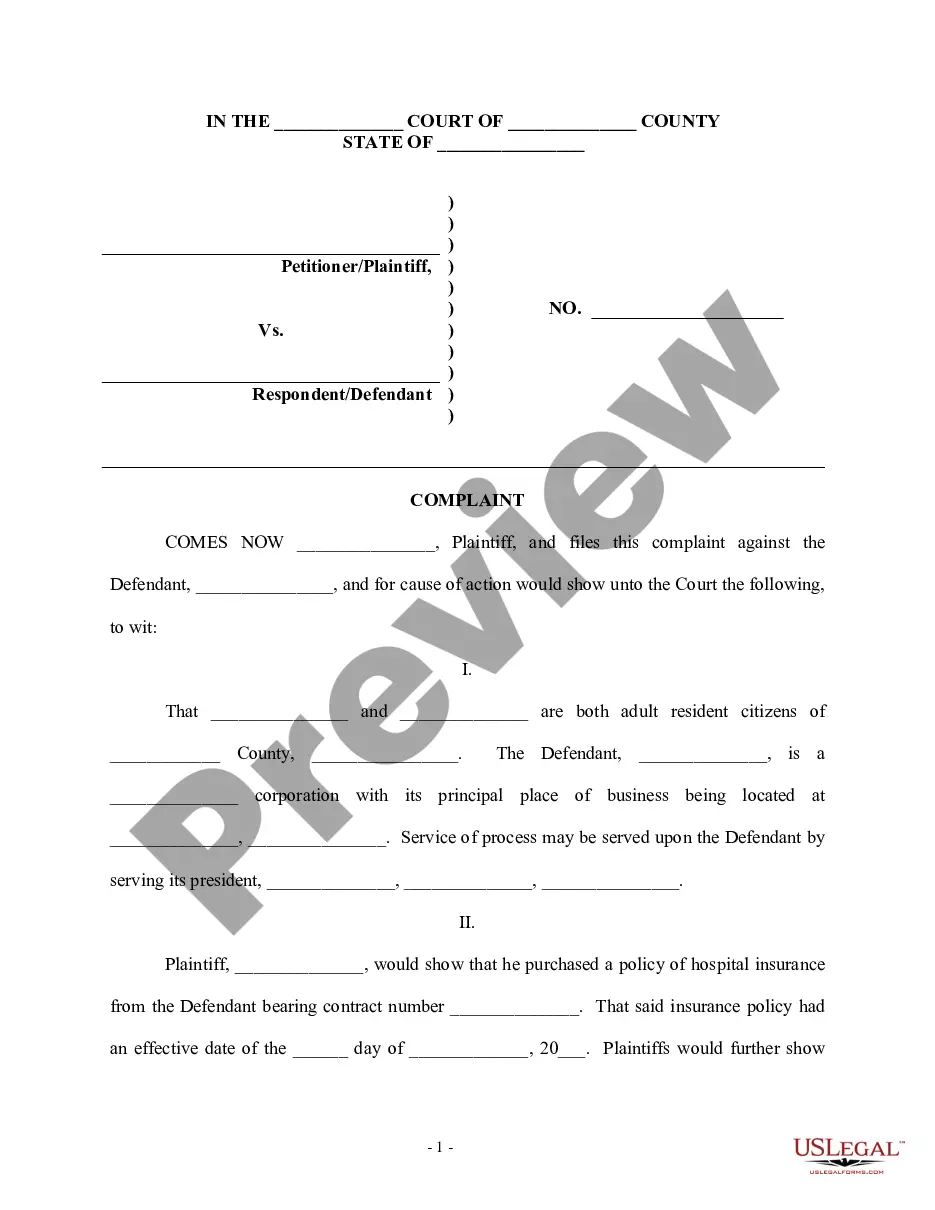
  • Preview Complaint for Recovery of Monies Paid and for Declaratory Judgment as to Parties' Responsibility and Subrogation

Form popularity

FAQ

This is known as subrogation. For example: Your insurance company pays your doctor for your treatment following an auto accident that someone else caused. Legally, your company can seek reimbursement from the at-fault person or their insurance company.

You will want to immediately notify your own insurer to determine how they can assist you. A subrogation claim is not going to go away on its own. If you ignore the letter, the insurer will file a lawsuit against you, the party being held responsible, and the insurer will win, almost every time.

The Anti-Subrogation Rule (“ASR”) is a common law defense to subrogation. It states that a subrogated insurance company standing in the shoes of its insured cannot bring a subrogation action against or sue its own insured.

Demand Letter Components Facts of the case. An outline of what happened. Statement of the issue. A brief description of the problem. Demand. The dollar amount or action necessary to resolve the case. Response deadline. The date by which the recipient must respond. Noncompliance consequences.

7 Tips for Writing a Demand Letter to the Insurance Company Detail Your Version of Events. Gather & Organize Your Expenses. Calculate Anticipated Expenses. Detail the Negative Impact the Accident Has Had on Your Life. Discuss Your Road to Recovery. Include a Fair and Reasonable Demand Amount.

When you file a claim, your insurer can try to recover costs from the person responsible for your injury or property damage. This is known as subrogation.

California law states your insurance company must file a subrogation claim within three years of the accident that caused your injuries.

Trusted and secure by over 3 million people of the world’s leading companies

Recovery And Subrogation In California