Arrest For Battery In Houston
Description






Get your form ready online
Our built-in tools help you complete, sign, share, and store your documents in one place.
Make edits, fill in missing information, and update formatting in US Legal Forms—just like you would in MS Word.
Download a copy, print it, send it by email, or mail it via USPS—whatever works best for your next step.
Sign and collect signatures with our SignNow integration. Send to multiple recipients, set reminders, and more. Go Premium to unlock E-Sign.
If this form requires notarization, complete it online through a secure video call—no need to meet a notary in person or wait for an appointment.
We protect your documents and personal data by following strict security and privacy standards.
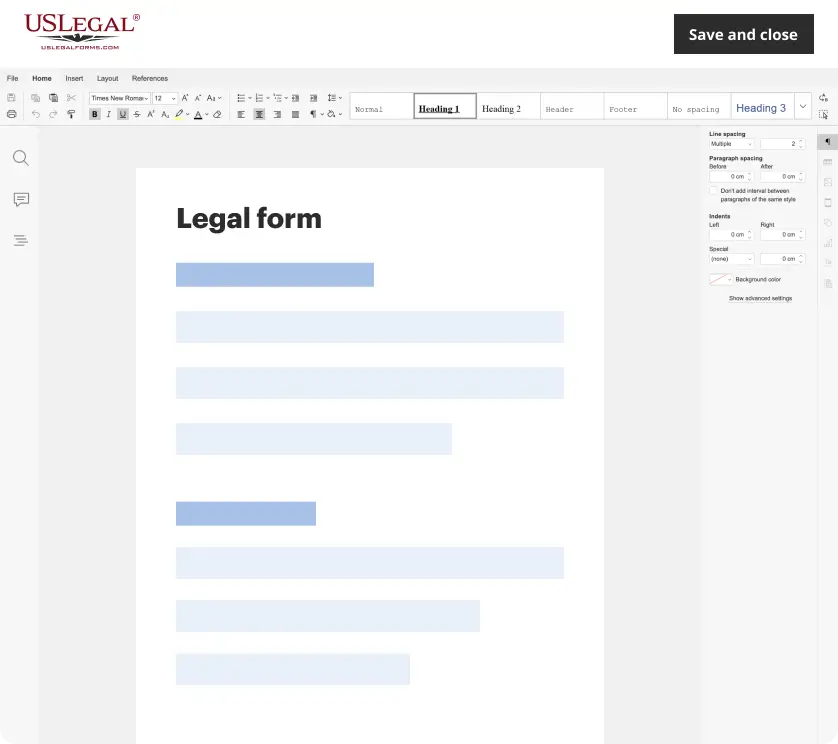
Make edits, fill in missing information, and update formatting in US Legal Forms—just like you would in MS Word.
Download a copy, print it, send it by email, or mail it via USPS—whatever works best for your next step.
Sign and collect signatures with our SignNow integration. Send to multiple recipients, set reminders, and more. Go Premium to unlock E-Sign.
If this form requires notarization, complete it online through a secure video call—no need to meet a notary in person or wait for an appointment.
We protect your documents and personal data by following strict security and privacy standards.
Looking for another form?
Form popularity
FAQ
To press charges, an alleged crime must be committed. This can include lower-level misdemeanor crimes such as petty theft or driving under the influence. Higher-level felony crimes – usually defined as crimes punishable by more than one year in prison – include crimes such as assault, burglary or murder.
Section 45.019 - Repealed Effective 1/1/2025 Requisites of Complaint (a) A complaint is sufficient, without regard to its form, if it substantially satisfies the following requisites: (1) it must be in writing; (2) it must commence "In the name and by the authority of the State of Texas"; (3) it must state the name ...
Inmate mail All inmate mail must contain the sender's full name and complete return address, the inmate's full name (the name he/she is booked into jail under), the inmate's SPN, the inmate's housing facility and cell block location. All inmate mail is inspected upon receipt by the Harris County Sheriff's Office.
If you have been a victim of a criminal offense, you should contact the nearest local law enforcement agency to conduct the investigation and file the appropriate criminal charges through the District Attorney's Office.
A criminal proceeding in a Justice Court may be commenced by the filing of a complaint in the Justice of the Peace precinct in which the offense was committed or in which the accused resides. Harris County is divided into eight (8) Justice of the Peace precincts, each of which has two (2) Justices of the Peace.
If you have been a victim of a criminal offense, you should contact the nearest local law enforcement agency to conduct the investigation and file the appropriate criminal charges through the District Attorney's Office.
Causing Offensive Contact The third type of assault under Texas law includes causing physical contact with another person while intending or knowing that the contact might be provocative or offensive.
And the reason for this is because the two offenses are closely related. The term “assault” refers to any action that puts someone else under threat of bodily injury, while “battery” refers to any type of physical contact to the other person.
Class C Assault The lowest form of assault is considered a Class C Misdemeanor. The highest penalty one can receive for a Class C Misdemeanor assault is a fine that can be no higher than $500.
For example, a battery conviction in Texas is subject to the following sentencing schedule: Class C misdemeanor: A fine of up to $500. Class B misdemeanor: Up to 180 days in jail, plus a fine of up to $2,000. Class A misdemeanor: Up to one year in jail, plus a fine of up to $4,000.
