False Imprisonment Us With Violence In Maricopa
Description






Get your form ready online
Our built-in tools help you complete, sign, share, and store your documents in one place.
Make edits, fill in missing information, and update formatting in US Legal Forms—just like you would in MS Word.
Download a copy, print it, send it by email, or mail it via USPS—whatever works best for your next step.
Sign and collect signatures with our SignNow integration. Send to multiple recipients, set reminders, and more. Go Premium to unlock E-Sign.
If this form requires notarization, complete it online through a secure video call—no need to meet a notary in person or wait for an appointment.
We protect your documents and personal data by following strict security and privacy standards.
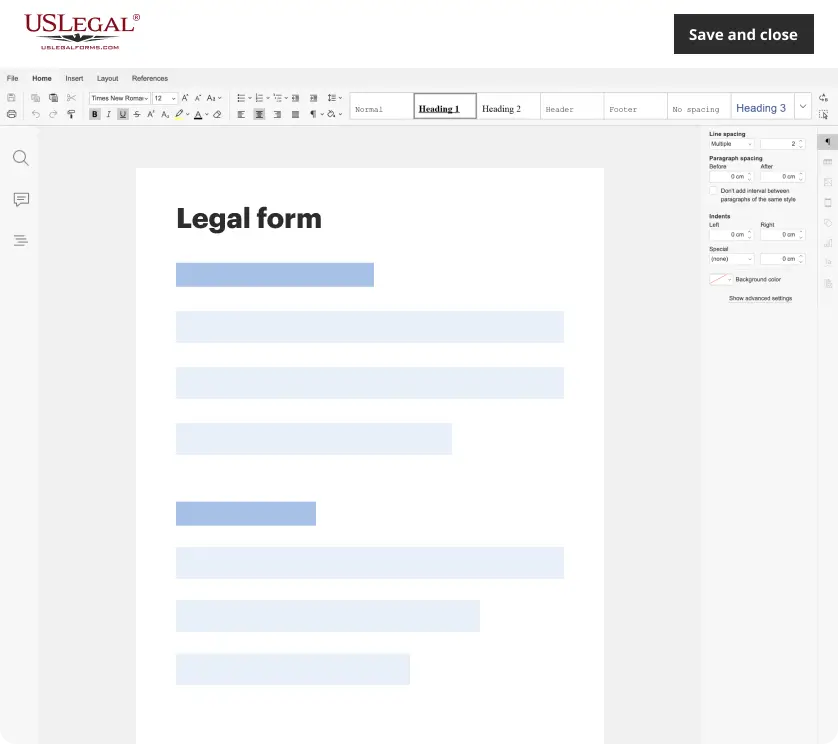
Make edits, fill in missing information, and update formatting in US Legal Forms—just like you would in MS Word.
Download a copy, print it, send it by email, or mail it via USPS—whatever works best for your next step.
Sign and collect signatures with our SignNow integration. Send to multiple recipients, set reminders, and more. Go Premium to unlock E-Sign.
If this form requires notarization, complete it online through a secure video call—no need to meet a notary in person or wait for an appointment.

We protect your documents and personal data by following strict security and privacy standards.
Looking for another form?
Form popularity
FAQ
False Imprisonment Defenses. Consent, justification, and self-defense or defense of others are all defenses to hostage false imprisonment.
Examples of false imprisonment: You prevent someone from leaving by grabbing that person's arm; You lock someone in a bedroom; You tie someone to a chair.
False Imprisonment Defenses. Consent, justification, and self-defense or defense of others are all defenses to hostage false imprisonment.
In general, to make out a false imprisonment claim, you'll need to show these four common elements: the intentional restraint of another person in a confined area. the restrained person doesn't consent to the restraint. the restrained person is aware of the restraint, and. the restraint is without legal justification.
Steps to Take If You Are Wrongfully Convicted of a Crime Contact an Experienced Criminal Defense Lawyer. File an Appeal. Investigate New Evidence. Consider Post-Conviction Motions. Seek Support from Justice Organizations. Stay Strong and Never Give Up Hope.
The most common defense is consent. In other words, the victim voluntarily agreed to being confined.
Examples of false imprisonment may include: A person locking another person in a room without their permission. A person grabbing onto another person without their consent, and holding them so that they cannot leave.
False imprisonment under California law is the “unlawful violation of the personal liberty of another.” The tort of false imprisonment is the non-consensual, intentional confinement of a person, without lawful privilege, for an appreciable length of time, however short.
Examples of false imprisonment: You prevent someone from leaving by grabbing that person's arm; You lock someone in a bedroom; You tie someone to a chair.
