Discrimination Definition By Scholars In Arizona
Description




Get your form ready online
Our built-in tools help you complete, sign, share, and store your documents in one place.
Make edits, fill in missing information, and update formatting in US Legal Forms—just like you would in MS Word.
Download a copy, print it, send it by email, or mail it via USPS—whatever works best for your next step.
Sign and collect signatures with our SignNow integration. Send to multiple recipients, set reminders, and more. Go Premium to unlock E-Sign.
If this form requires notarization, complete it online through a secure video call—no need to meet a notary in person or wait for an appointment.
We protect your documents and personal data by following strict security and privacy standards.
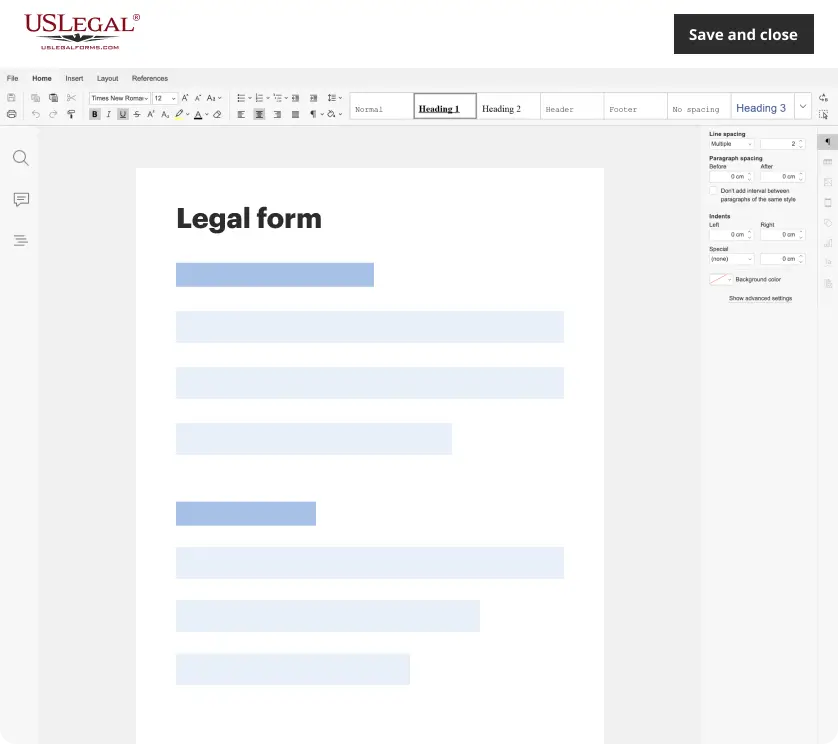
Make edits, fill in missing information, and update formatting in US Legal Forms—just like you would in MS Word.
Download a copy, print it, send it by email, or mail it via USPS—whatever works best for your next step.
Sign and collect signatures with our SignNow integration. Send to multiple recipients, set reminders, and more. Go Premium to unlock E-Sign.
If this form requires notarization, complete it online through a secure video call—no need to meet a notary in person or wait for an appointment.
We protect your documents and personal data by following strict security and privacy standards.
Looking for another form?

Form popularity
FAQ
Discrimination is thus the act of treating two – otherwise identical individuals – differently based on any attribute, behaviour, or characteristic that allows one to distinguish them.
Age. Age discrimination involves treating someone (an applicant or employee) less favorably because of age. Disability. Genetic Information. Unlawful Workplace Harassment (Harassment) ... National Origin. Pregnancy. Race/Color. Religion.
Discrimination is the unfair or prejudicial treatment of people and groups based on characteristics such as race, gender, age, or sexual orientation.
Legally, the term “discrimination” covers only actions that are taken against people because they belong to certain protected classes such as age, gender, race, and the many others that will be discussed in detail throughout this chapter.
What is not considered unlawful discrimination? Treating someone differently is not necessarily unlawful discrimination. Some different treatment such as general performance management may not be an unlawful discrimination issue.
Discrimination refers to different treatment for similarly situated parties, especially when no legitimate reason appears to exist. For example, an employer who rejects all female applicants and hires the first male applicant with the same qualifications might be discriminating on the basis of gender.
To treat a person or particular group of people differently, especially in a worse way from the way in which you treat other people, because of their race, gender, sexuality, etc.: be discriminated against She felt she had been discriminated against because of her age.
Explain as clearly as possible what happened, why you believe it happened, and how you were discriminated against. Please include how other persons were treated differently from you, if applicable. If you were denied a benefit or service, please provide a copy of the denial letter.
Discrimination is the unfair or prejudicial treatment of people and groups based on characteristics such as race, gender, age, or sexual orientation.
Moral philosophers have defined discrimination using a moralized definition. Under this approach, discrimination is defined as acts, practices, or policies that wrongfully impose a relative disadvantage or deprivation on persons based on their membership in a salient social group.