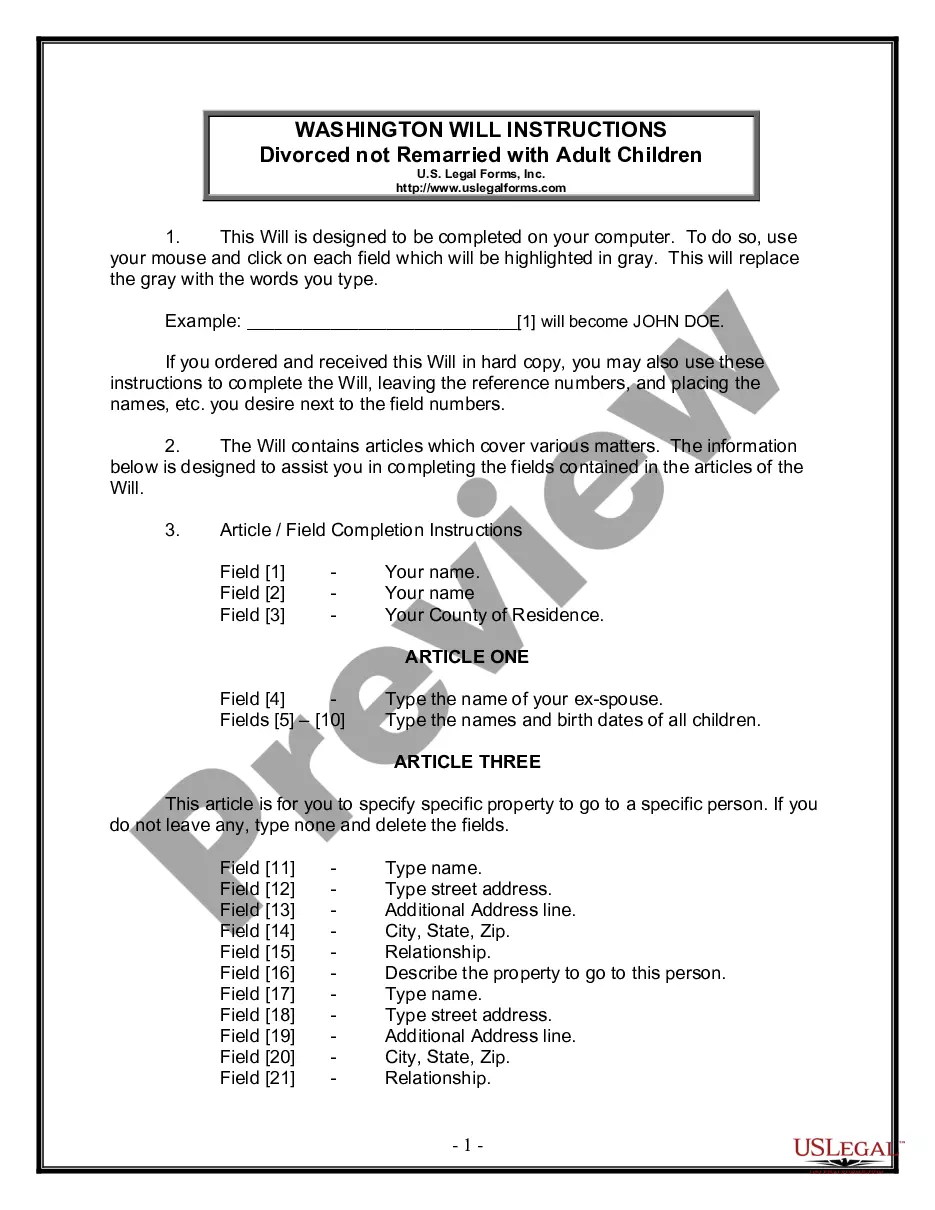
Discrimination Definition By Oxford In Bexar
Description




Get your form ready online
Our built-in tools help you complete, sign, share, and store your documents in one place.
Make edits, fill in missing information, and update formatting in US Legal Forms—just like you would in MS Word.
Download a copy, print it, send it by email, or mail it via USPS—whatever works best for your next step.
Sign and collect signatures with our SignNow integration. Send to multiple recipients, set reminders, and more. Go Premium to unlock E-Sign.
If this form requires notarization, complete it online through a secure video call—no need to meet a notary in person or wait for an appointment.
We protect your documents and personal data by following strict security and privacy standards.
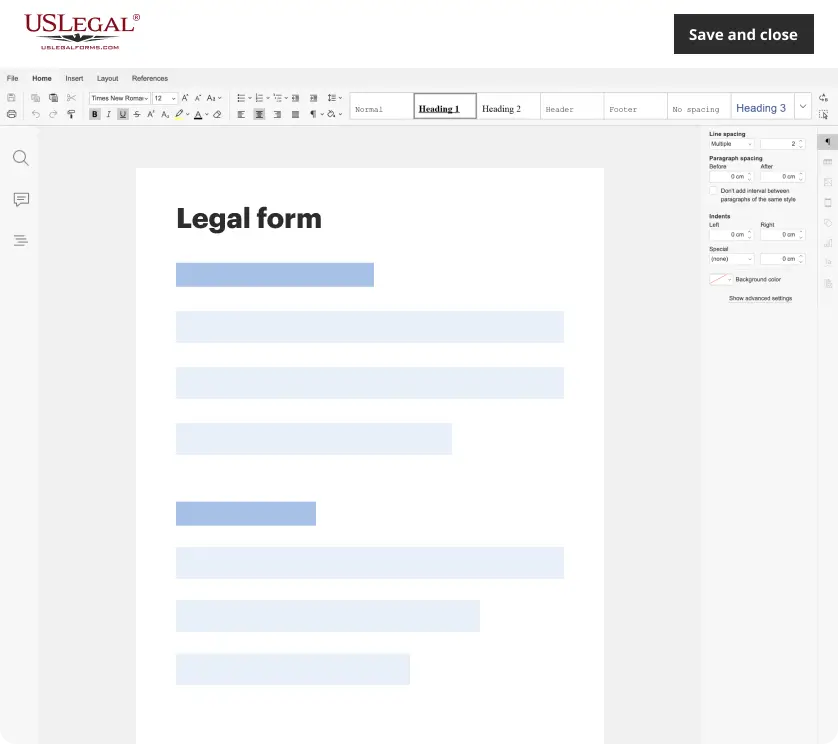
Make edits, fill in missing information, and update formatting in US Legal Forms—just like you would in MS Word.
Download a copy, print it, send it by email, or mail it via USPS—whatever works best for your next step.
Sign and collect signatures with our SignNow integration. Send to multiple recipients, set reminders, and more. Go Premium to unlock E-Sign.
If this form requires notarization, complete it online through a secure video call—no need to meet a notary in person or wait for an appointment.
We protect your documents and personal data by following strict security and privacy standards.
Looking for another form?




Form popularity
FAQ
What is discrimination? Discrimination is the unfair or prejudicial treatment of people and groups based on characteristics such as race, gender, age, or sexual orientation.
This is a form of discrimination that favours someone by treating them differently in a positive way. An example might be an organisation appointing someone from an underrepresented group into a role without considering whether they have right skills for the post.
Positive discrimination is the direct opposite to regular discrimination. It's when you treat one person more favourably than another because of a protected characteristic. This is allowed if it means making reasonable adjustments for disability. Other than that, it is illegal.
Affirmative action is the American term, and positive discrimination is the British term. However, positive action is the special one, and is more popular in Europe (where positive discrimination is unlawful).
A simplified description of the legal definition of discrimination is when a person is treated disfavourably or when a person's dignity is violated. The disfavourable treatment or the violation of a person's dignity must also be related to one of the seven grounds of discrimination.
Treating one or more members of a specified group unfairly as compared with other people.
Responding to unlawful discrimination speak to the person involved if it is safe to do so. speak to your manager or supervisor about what is happening. consider any policies that your workplace has about discrimination and dealing with a grievance. speak to Human Resources team, if your workplace has one.
You can submit your complaint online with the Employment Discrimination Complaint Form. You can also submit your complaint by email, by postal mail or in person. Submit a complaint via email at EEOintake@twc.texas. If you have questions, call: 512-463-2642 or 888-452-4778.
Direct evidence of discrimination is usually found where an employer admits to the employee or someone else, verbally or in writing, that their intent or motive is to take an Adverse Employment Action (described above) against an employee because the employee is a member of a Protected Class.
However, discrimination is a state of mind and, therefore, notoriously hard to prove. Sophisticated employers are well aware that discrimination is illegal. Thus, most cases are established through circumstantial evidence.