Discrimination Definition For Students In Collin
Description




Get your form ready online
Our built-in tools help you complete, sign, share, and store your documents in one place.
Make edits, fill in missing information, and update formatting in US Legal Forms—just like you would in MS Word.
Download a copy, print it, send it by email, or mail it via USPS—whatever works best for your next step.
Sign and collect signatures with our SignNow integration. Send to multiple recipients, set reminders, and more. Go Premium to unlock E-Sign.
If this form requires notarization, complete it online through a secure video call—no need to meet a notary in person or wait for an appointment.
We protect your documents and personal data by following strict security and privacy standards.
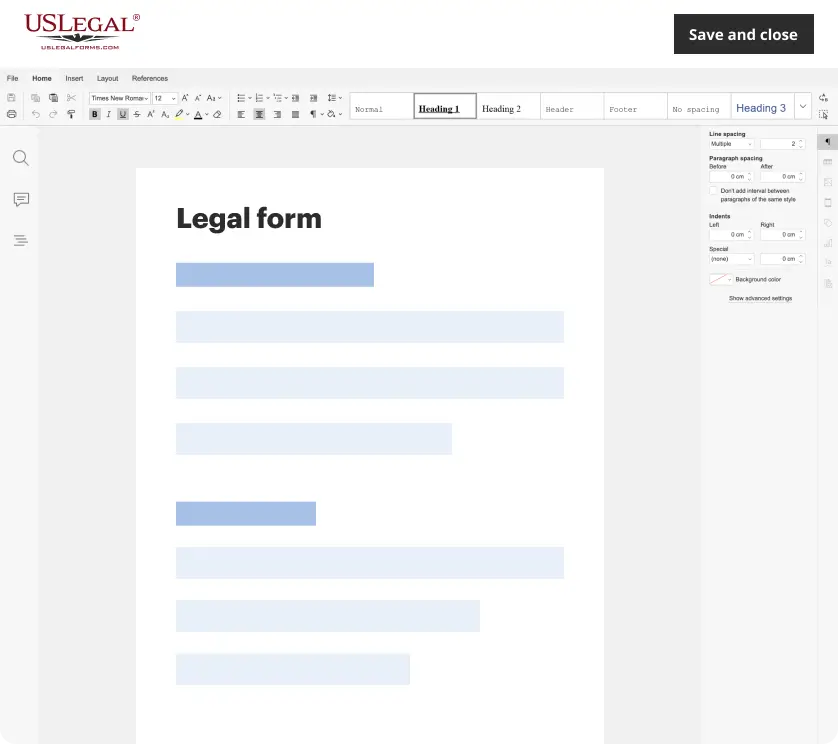
Make edits, fill in missing information, and update formatting in US Legal Forms—just like you would in MS Word.
Download a copy, print it, send it by email, or mail it via USPS—whatever works best for your next step.
Sign and collect signatures with our SignNow integration. Send to multiple recipients, set reminders, and more. Go Premium to unlock E-Sign.
If this form requires notarization, complete it online through a secure video call—no need to meet a notary in person or wait for an appointment.
We protect your documents and personal data by following strict security and privacy standards.
Looking for another form?
Form popularity
FAQ
There should be no discrimination on the grounds of color. She believes the research understates the amount of discrimination women suffer. She will be remembered as an unrelenting opponent of racial discrimination. The law has done little to prevent racial discrimination and inequality.
Noun. 1. an act or instance of discriminating. 2. treatment or consideration of, or making a distinction in favor of or against, a person or thing based on the group, class, or category to which that person or thing belongs rather than on individual merit.
To treat a person or particular group of people differently, especially in a worse way from the way in which you treat other people, because of their race, gender, sexuality, etc.: be discriminated against She felt she had been discriminated against because of her age.
Discrimination is the unequal treatment of different categories of people when this treatment cannot be justified on the basis of objective and reasonable criteria. Children are more vulnerable to discrimination than adults as they are often disadvantaged in terms of social power.
A simplified description of the legal definition of discrimination is when a person is treated disfavourably or when a person's dignity is violated. The disfavourable treatment or the violation of a person's dignity must also be related to one of the seven grounds of discrimination. age.
1. unfair treatment of a person, racial group, minority, etc; action based on prejudice. 2. subtle appreciation in matters of taste.
Discriminatory harassment occurs when conduct is: 1. Based on a student's protected class, AND 2. Serious enough to create a hostile environment. Discriminatory harassment can involve conduct between students, employee-to-student conduct, and conduct involving school visitors.
Types of discrimination Direct discrimination. Direct discrimination happens when an employer treats an employee less favourably than someone else because of one of the above reasons. Indirect discrimination. Harassment. Victimisation. Being treated unfairly for other reasons.
Discrimination is when a student is treated worse or bullied because of the student's immigration status, disability, gender, nationality, race or ethnicity, religion, or sexual orientation.
Discrimination is the unfair or prejudicial treatment of people and groups based on characteristics such as race, gender, age, or sexual orientation.