Title Vii Of The Dodd-frank Act In Kings
Description




Get your form ready online
Our built-in tools help you complete, sign, share, and store your documents in one place.
Make edits, fill in missing information, and update formatting in US Legal Forms—just like you would in MS Word.
Download a copy, print it, send it by email, or mail it via USPS—whatever works best for your next step.
Sign and collect signatures with our SignNow integration. Send to multiple recipients, set reminders, and more. Go Premium to unlock E-Sign.
If this form requires notarization, complete it online through a secure video call—no need to meet a notary in person or wait for an appointment.
We protect your documents and personal data by following strict security and privacy standards.
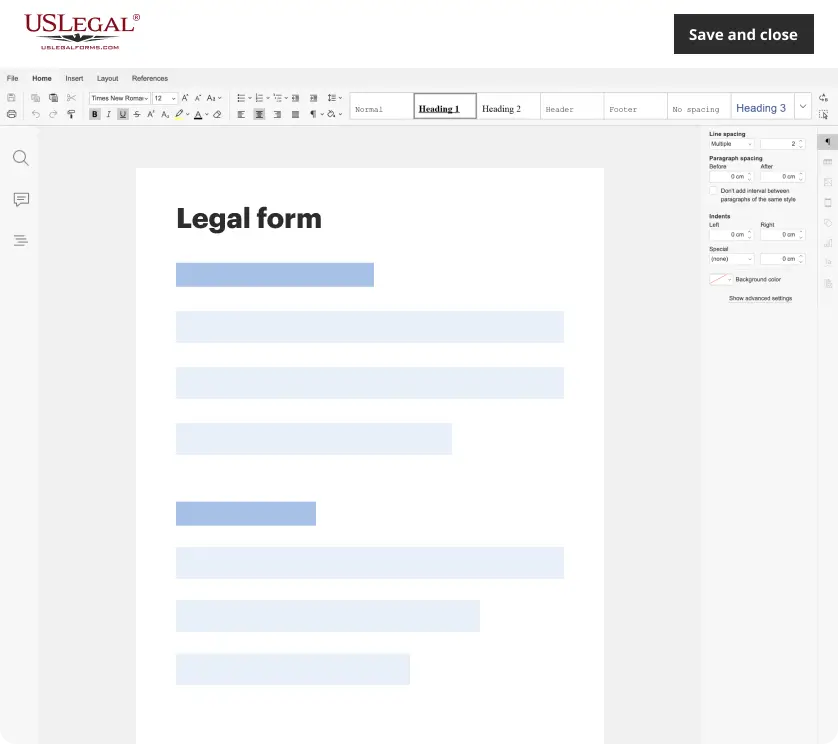
Make edits, fill in missing information, and update formatting in US Legal Forms—just like you would in MS Word.
Download a copy, print it, send it by email, or mail it via USPS—whatever works best for your next step.
Sign and collect signatures with our SignNow integration. Send to multiple recipients, set reminders, and more. Go Premium to unlock E-Sign.

If this form requires notarization, complete it online through a secure video call—no need to meet a notary in person or wait for an appointment.
We protect your documents and personal data by following strict security and privacy standards.
Looking for another form?
Form popularity
FAQ
Title VII of the Dodd-Frank Act ("Title VII'), provides that the Securities and Exchange Commission ("SEC') and the Commodity Futures Trading Commission ("CFTC') (collectively, "the Commissions'), in consultation with the Board of Governors of the Federal Reserve System, shall jointly further define certain key terms ( ...
To achieve Dodd-Frank compliance for communication, financial organizations must take steps to preserve email communication for specific periods of time with redundancy and fail-safe procedures to ensure that it is protected. Firms must also make email communications accessible for e-discovery when necessary.
Consumer protection, resolution authority, systemic risk regulation, Volcker rule, and derivatives.
The Act's intentions are to provide rigorous standards and supervision to protect the economy and American consumers, investors and businesses; end taxpayer-funded bailouts of financial institutions; provide for an advanced warning system on the stability of the economy; create new rules on executive compensation and ...
The Dodd-Frank Act was enacted on July 21, 2010. Title VII of the Dodd-Frank Act provides for the comprehensive regulation of swaps and security-based swaps and includes definitions of key terms relating to such regulation.
Title VII of the Dodd-Frank Act ("Title VII'), provides that the Securities and Exchange Commission ("SEC') and the Commodity Futures Trading Commission ("CFTC') (collectively, "the Commissions'), in consultation with the Board of Governors of the Federal Reserve System, shall jointly further define certain key terms ( ...
Title VII subjects dealers and market participants to new internal and external business conduct requirements, such as establishing procedures for detecting internal conflicts of interests and requiring increased disclosures of material information about a swap or SBS to counterparties.
This might include making false or exaggerated claims, greenwashing, data manipulation, carbon offset fraud, and many other unethical practices. The Dodd-Frank Act provides protections for whistleblowers who report violations of securities law, especially those related to ESG fraud.
To achieve Dodd-Frank compliance for communication, financial organizations must take steps to preserve email communication for specific periods of time with redundancy and fail-safe procedures to ensure that it is protected. Firms must also make email communications accessible for e-discovery when necessary.