Discrimination Definition For Middle School In Los Angeles
Description




Get your form ready online
Our built-in tools help you complete, sign, share, and store your documents in one place.
Make edits, fill in missing information, and update formatting in US Legal Forms—just like you would in MS Word.
Download a copy, print it, send it by email, or mail it via USPS—whatever works best for your next step.
Sign and collect signatures with our SignNow integration. Send to multiple recipients, set reminders, and more. Go Premium to unlock E-Sign.
If this form requires notarization, complete it online through a secure video call—no need to meet a notary in person or wait for an appointment.
We protect your documents and personal data by following strict security and privacy standards.
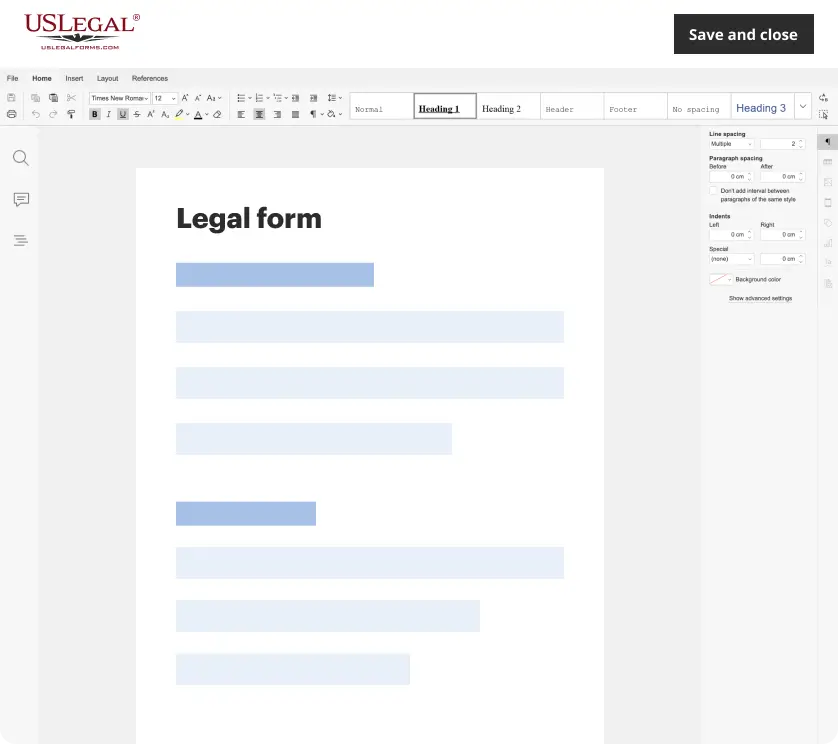
Make edits, fill in missing information, and update formatting in US Legal Forms—just like you would in MS Word.
Download a copy, print it, send it by email, or mail it via USPS—whatever works best for your next step.
Sign and collect signatures with our SignNow integration. Send to multiple recipients, set reminders, and more. Go Premium to unlock E-Sign.
If this form requires notarization, complete it online through a secure video call—no need to meet a notary in person or wait for an appointment.
We protect your documents and personal data by following strict security and privacy standards.
Looking for another form?









Form popularity
FAQ
Examples of discrimination in education a school refuses to admit a pupil with a facial disfigurement because of concerns that she may upset other pupils - this would be direct discrimination because of disability.
Direct evidence often involves a statement from a decision-maker that expresses a discriminatory motive. Direct evidence can also include express or admitted classifications, in which a recipient explicitly distributes benefits or burdens based on race, color, or national origin.
Online: You may file a complaint with OCR using OCR's electronic complaint form at the following website: . Mail or Facsimile: You may mail or send by facsimile information to the address or phone number available at this link.
It might be possible to sue a school for discrimination if they violated your or your child's civil rights by discriminating based on race, gender, disability, sexual orientation, gender identity, gender expression, or any other protected status.
Direct evidence often involves a statement from a decision-maker that expresses a discriminatory motive. Direct evidence can also include express or admitted classifications, in which a recipient explicitly distributes benefits or burdens based on race, color, or national origin.
Direct evidence often involves a statement from a decision-maker that expresses a discriminatory motive. Direct evidence can also include express or admitted classifications, in which a recipient explicitly distributes benefits or burdens based on race, color, or national origin.
If you have a complaint, submit it in writing to your school, district, or county office of education, following the governing board policies and procedures. The local governing board has ultimate authority over many subjects, including: hiring and evaluation of staff.